BACK TO finalistS
Finalist: Architectural Category
REVITALIZING TANJONG PAGAR: CULTURE AS CURRENCY IN SHAPING HISTORIC DISTRICT
Revitalizing Tanjong Pagar: Culture as Currency in Shaping a Historic DistrictTheme/Concept: Cultural Heritage, Context, and Social unity Design Concept Statement Italo Calvino once described cities as layered with invisible structures—complex networks shaped not just by architecture and infrastructure, but by stories, traditions, and lived experiences. In the context of Singapore, a city shaped by state-planned […]

Revitalizing Tanjong Pagar: Culture as Currency in Shaping a Historic District
Theme/Concept: Cultural Heritage, Context, and Social unity
Design Concept Statement
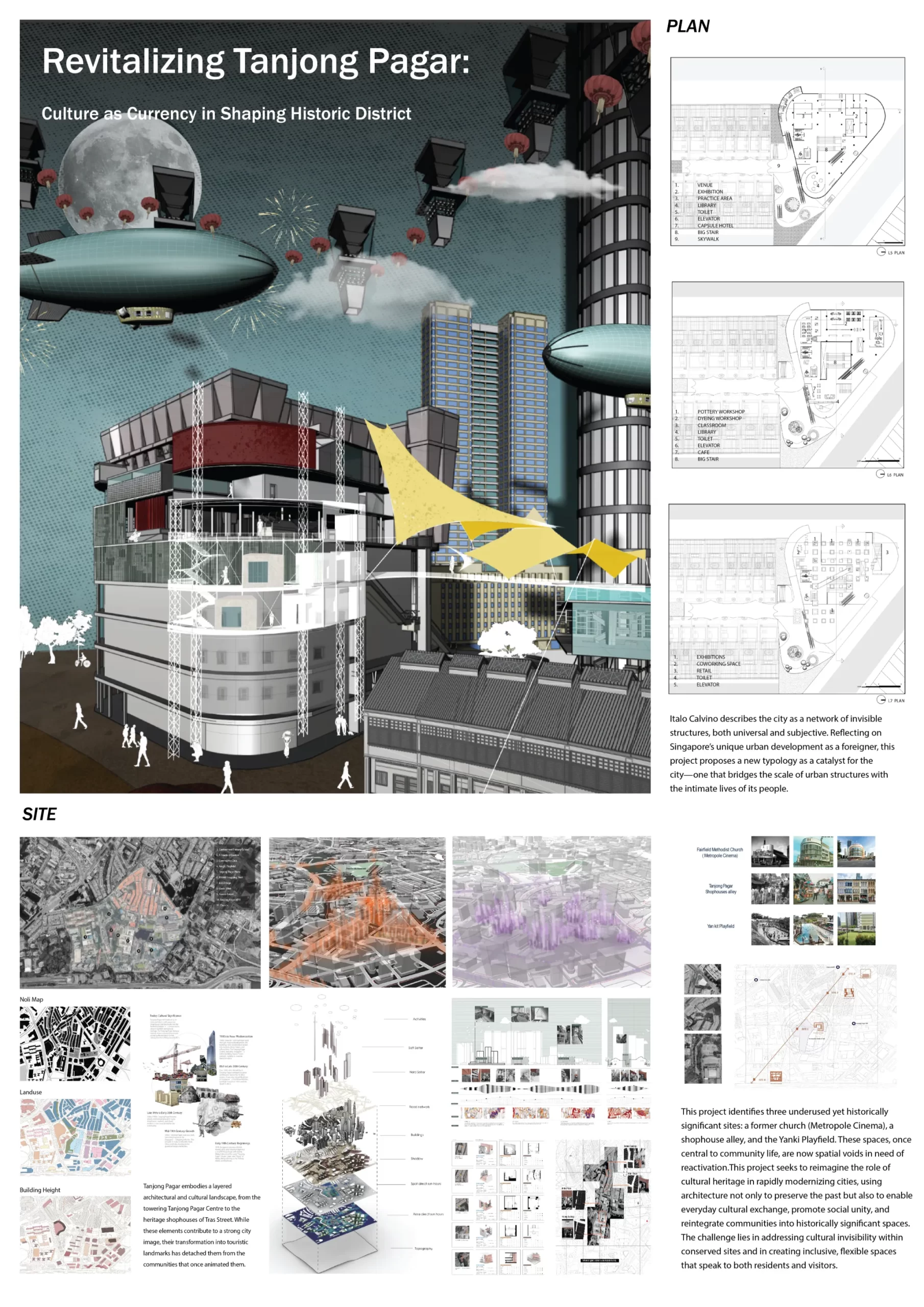
Italo Calvino once described cities as layered with invisible structures—complex networks shaped not just by architecture and infrastructure, but by stories, traditions, and lived experiences. In the context of Singapore, a city shaped by state-planned efficiency and global ambition, this project proposes a new typology—one that bridges macro-scale urban development with the nuanced, intimate lives of its people. As a foreigner observing this landscape, I saw not only skyscrapers and conserved facades, but the invisible rhythms of multicultural coexistence that too often remain unspoken in the built environment.
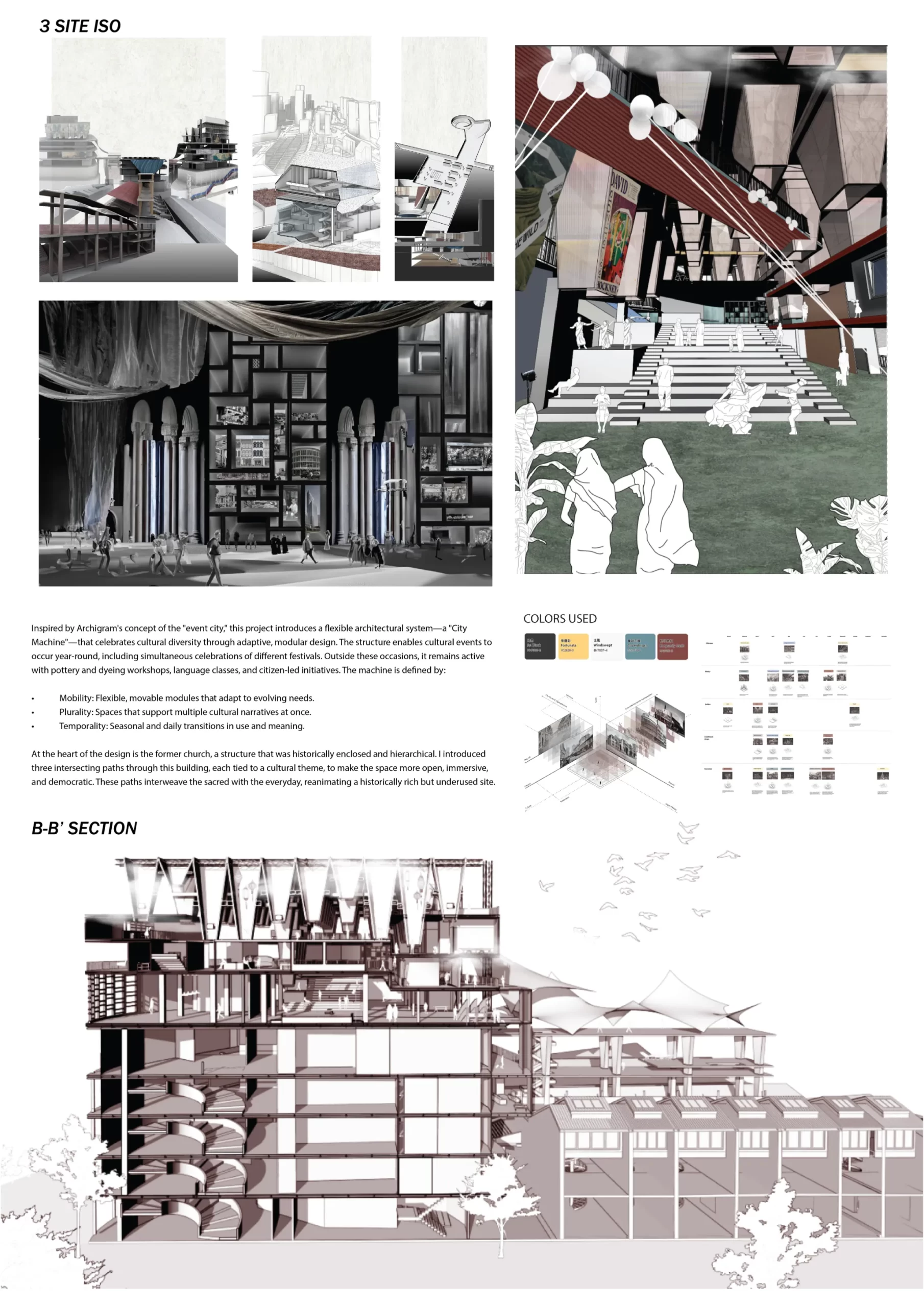
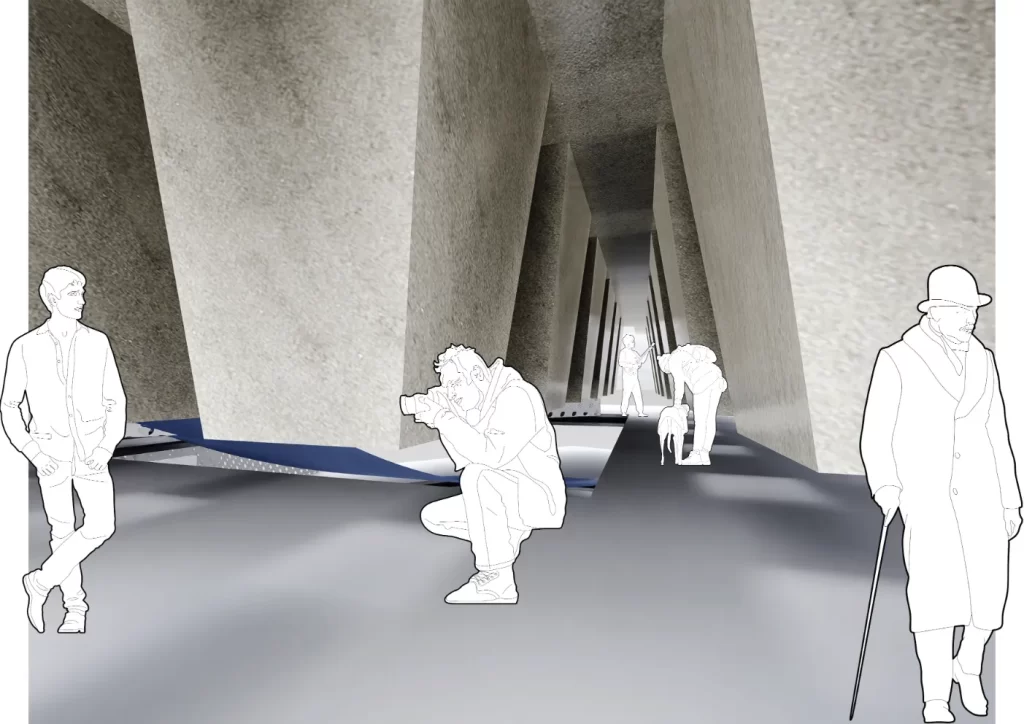
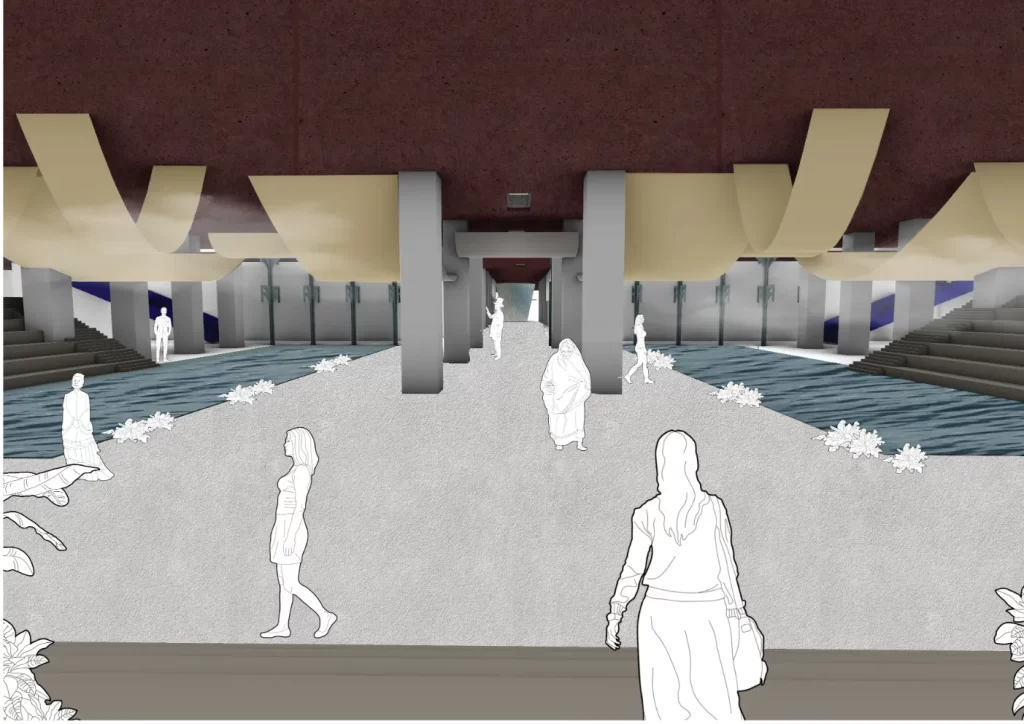
The foundation of this proposal lies in Singapore’s multi-ethnic composition: 75% Chinese, 15% Malay, and 9% Indian. This diverse cultural makeup is not merely demographic—it is a living archive of traditions, rituals, and festivals that define the nation’s identity. The project introduces a “city machine” a dynamic, adaptive structure that serves as an urban platform for year-round cultural engagement. It allows different ethnic groups to celebrate their festivals simultaneously in a shared space, breaking the pattern of isolated celebrations. Outside of major events, the space remains activated with pottery and dyeing workshops, language classes, and citizen-led initiatives—ensuring that cultural exchange becomes part of daily urban life, not just ceremonial occasions.
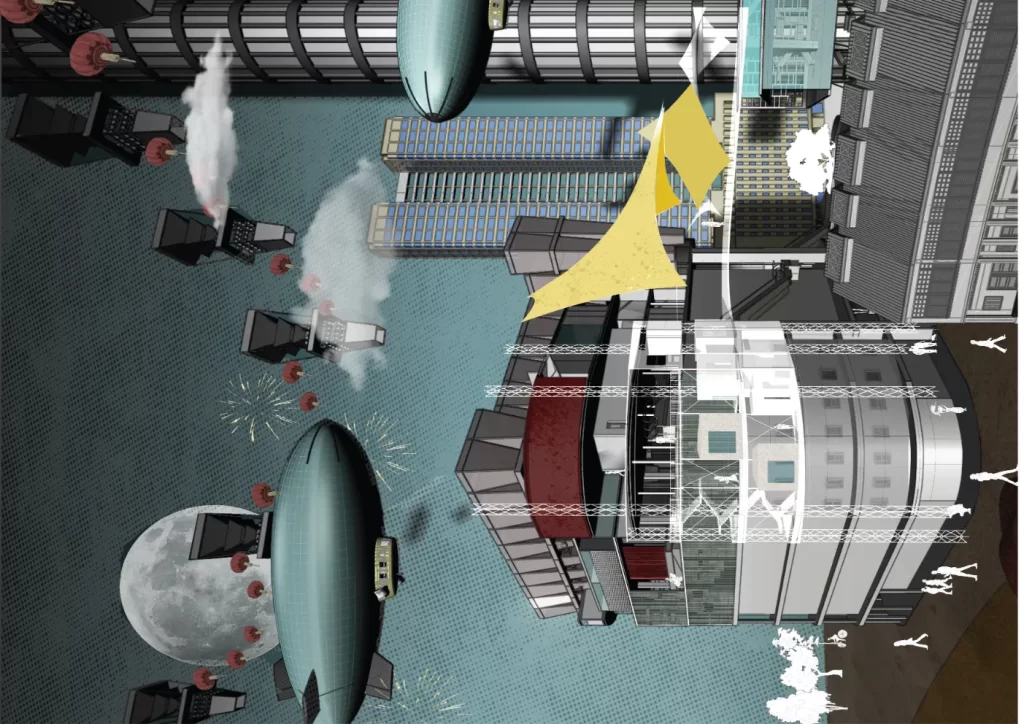
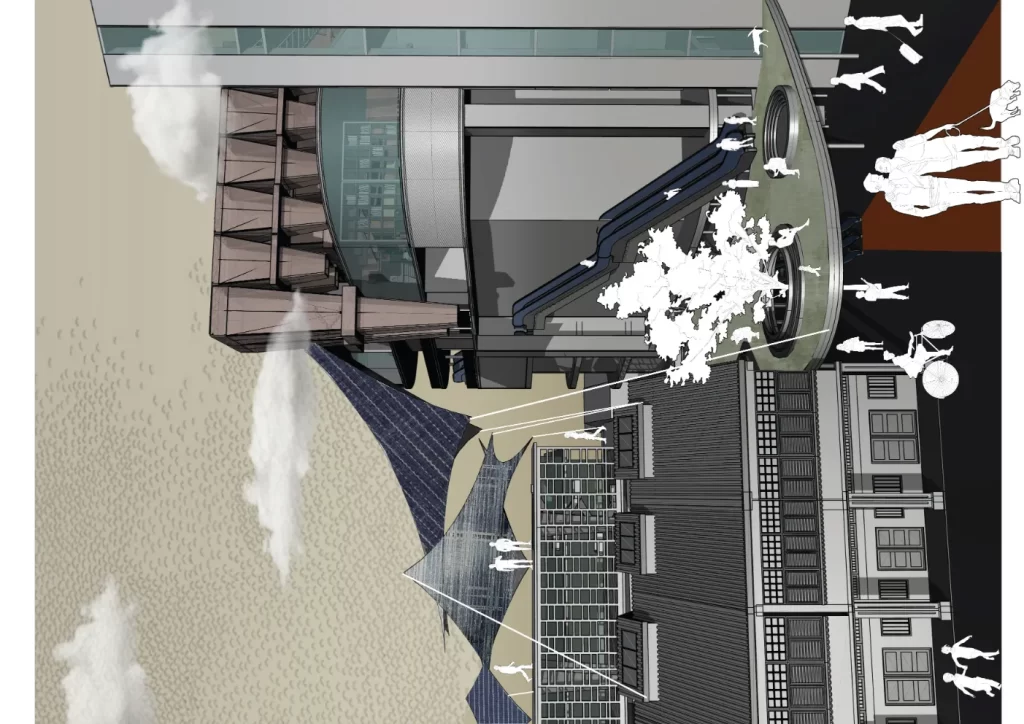
The selected site, Tanjong Pagar, is a district of contrasts. It is home to the tallest skyscraper in Singapore—Tanjong Pagar Centre—and yet retains historic shophouses along Tras Street, forming a dense urban fabric rich in architectural and cultural variety. This juxtaposition of vertical growth and low rise heritage encapsulates the broader tension in Singapore’s urbanism: a push for modernization that often sidelines the everyday, informal life of its people. In the back alleys of Tanjong Pagar, migrant workers have built temporary, soft shelters—subtle, adaptive interventions within the city’s rigid framework. These informal structures became a key inspiration in imagining an architecture that is responsive, flexible, and inclusive.
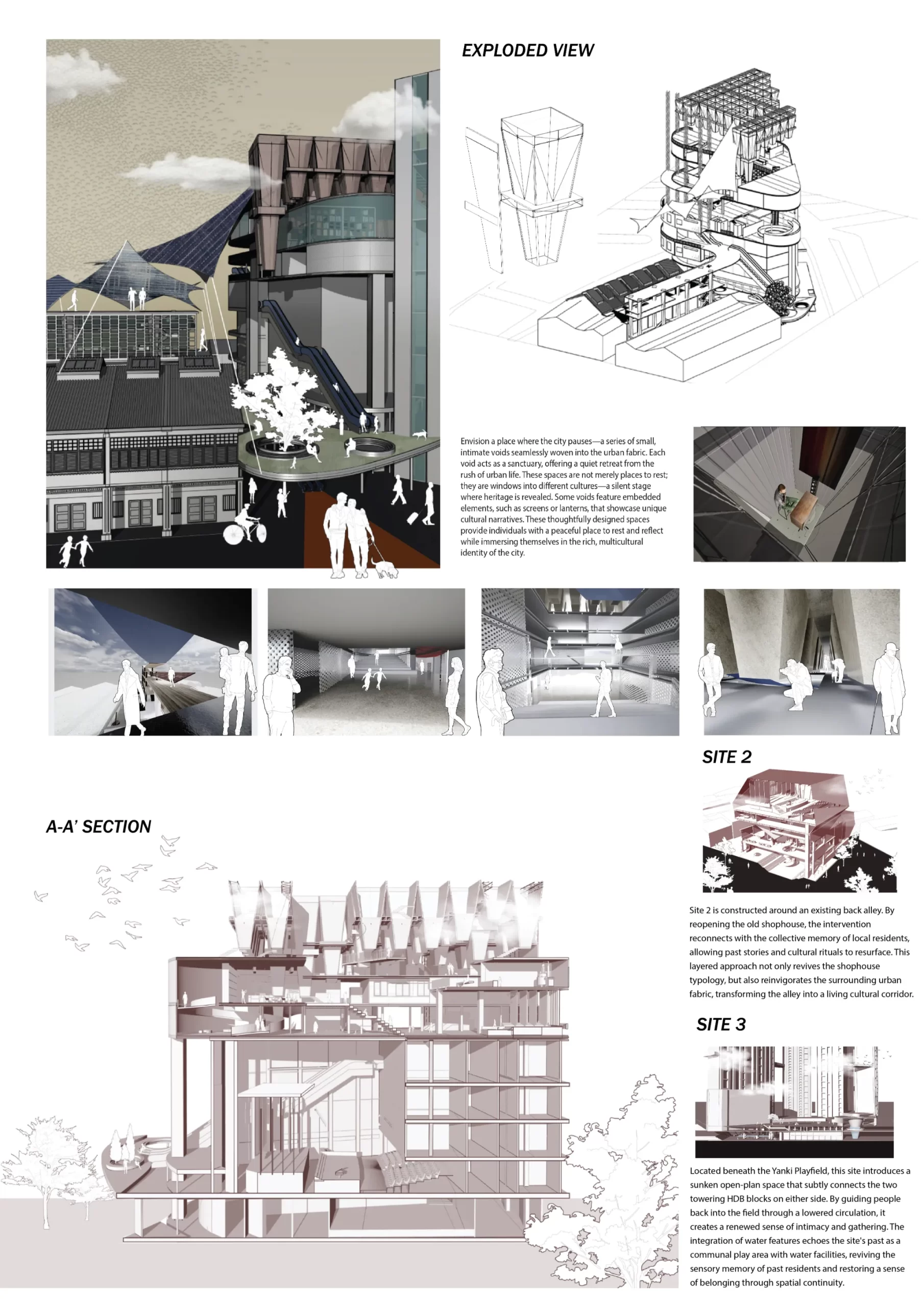
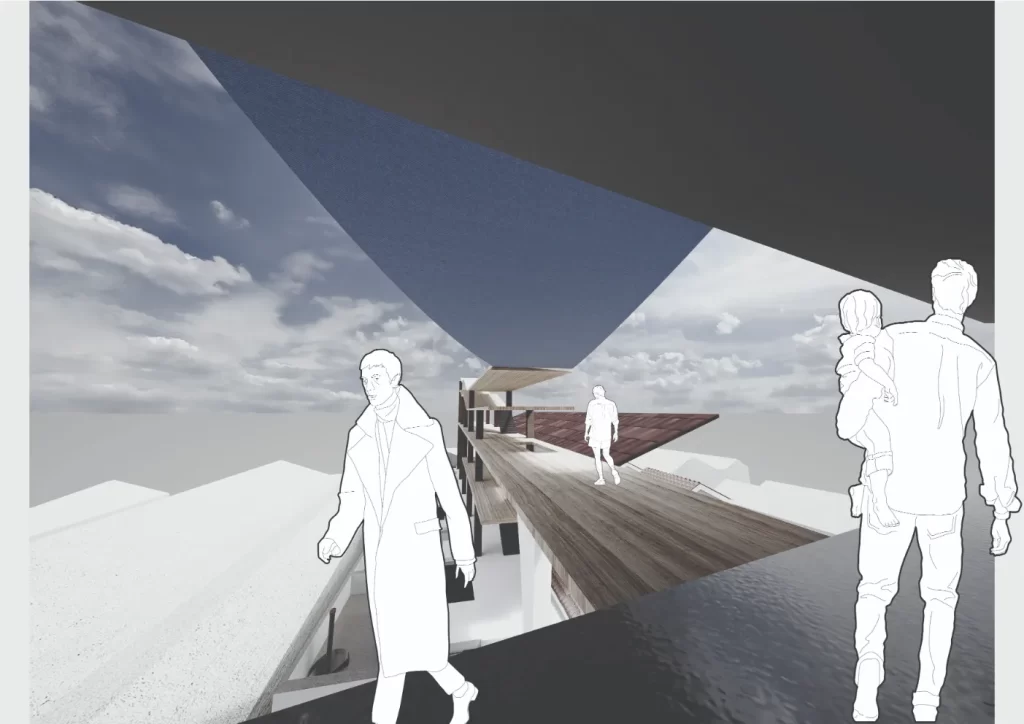
The urban analysis identifies three key anchor points: the former Metropole Cinema (now a church), a narrow alley framed by conserved shophouses, and the underutilized Yanki Playfield. Once vital community spaces, these sites have lost their civic relevance due to gentrification and the rise of high density housing. Though the city has preserved the physical image of heritage, it has failed to regenerate the social and cultural vibrancy that once animated these spaces. This project seeks to re-engage those who live and work in the area through an architectural intervention that doesn’t overwrite history, but gently overlays it—embedding contemporary uses above, within, and around the historic fabric.
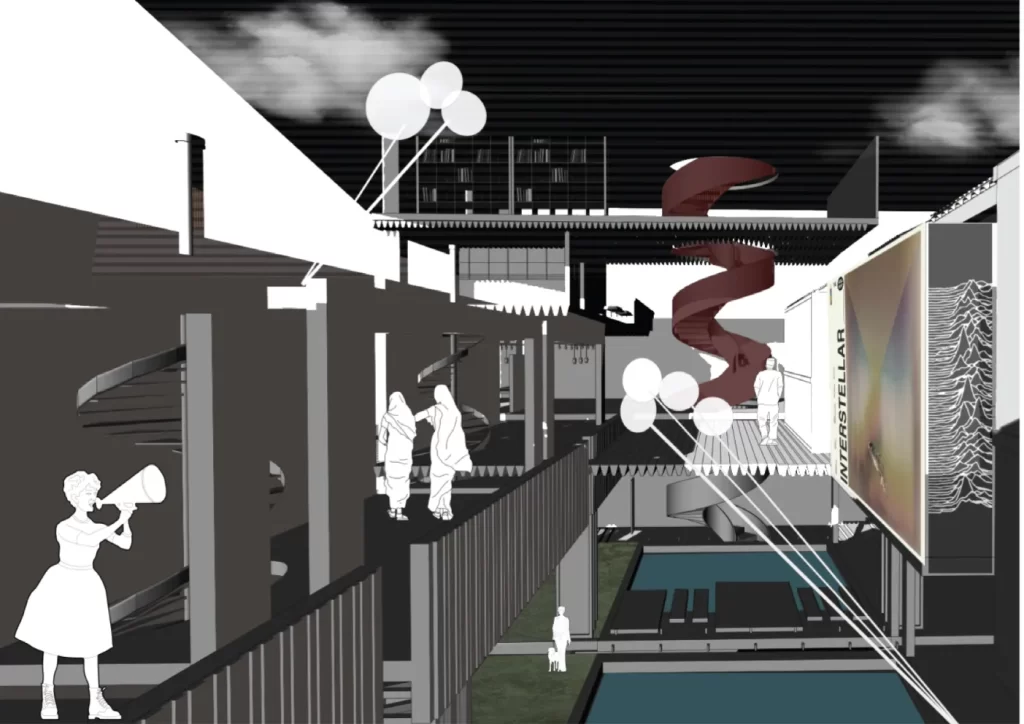
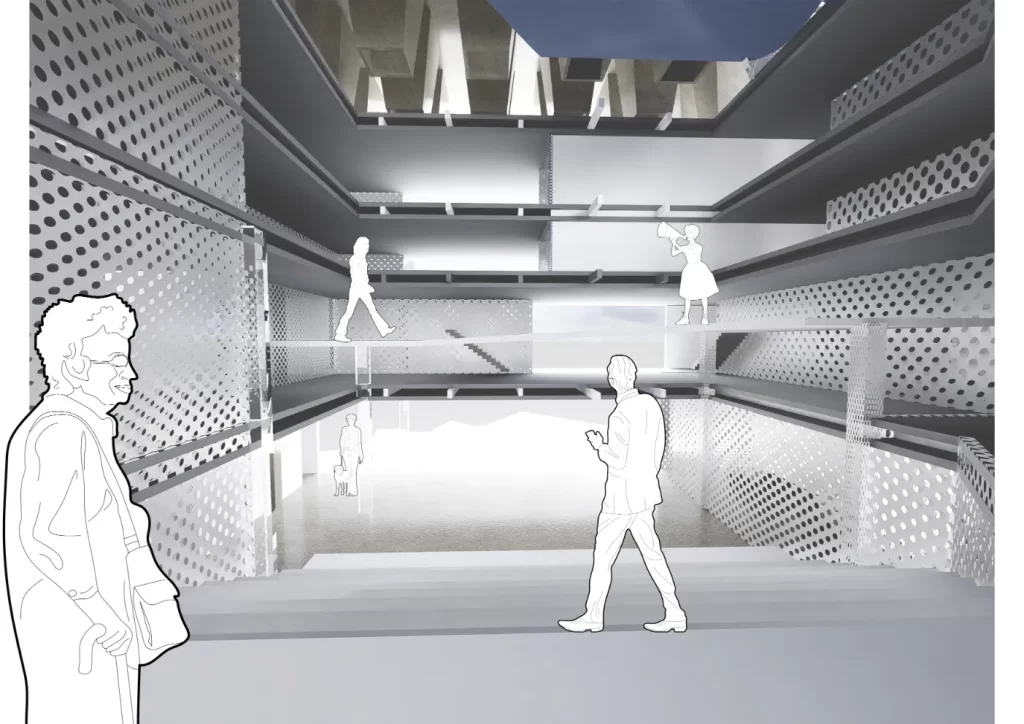
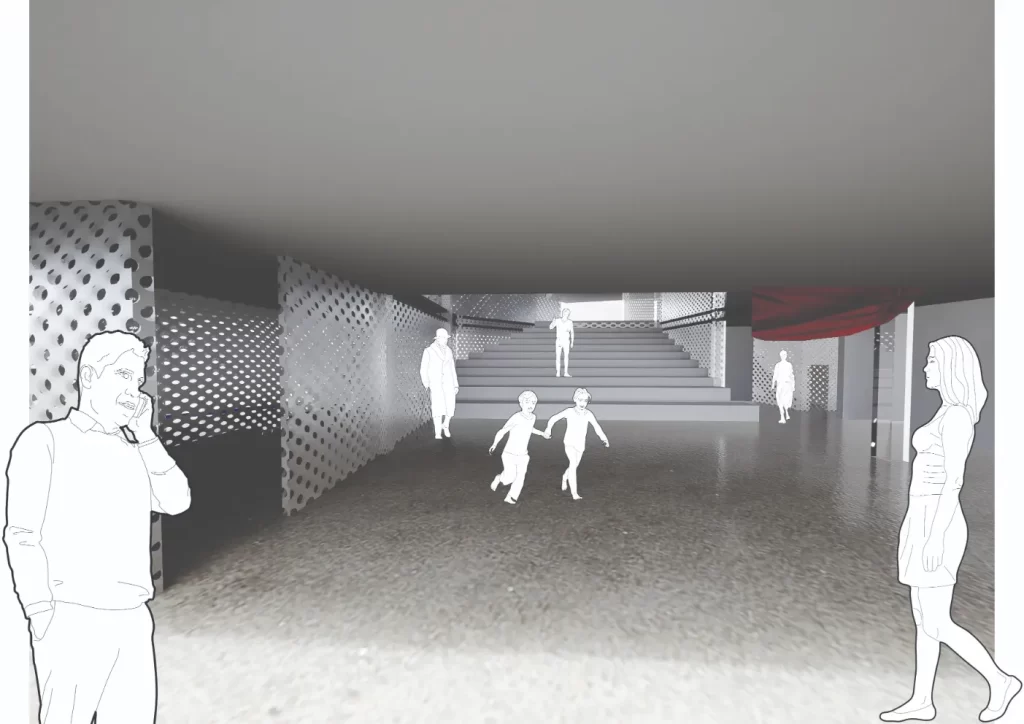
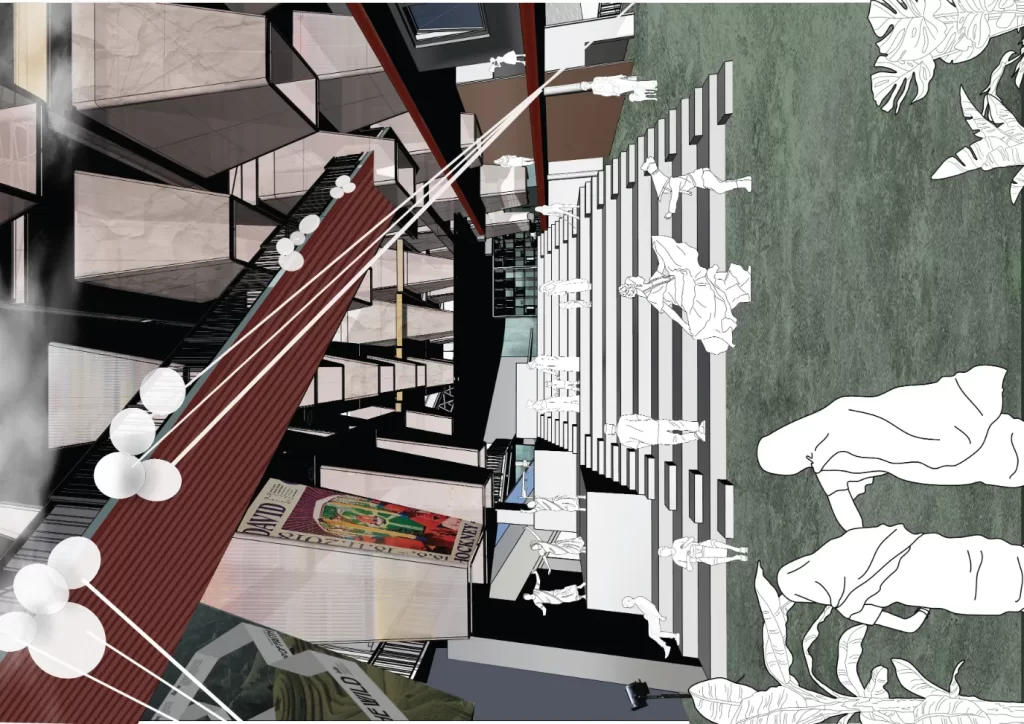
Drawing inspiration from Archigram’s “event city,” the proposal features an immersive architectural installation: a temporary but catalytic structure designed for performative, educational, and interactive use. This event machine is modular and reconfigurable—encouraging ongoing reinterpretation by its users. It brings together residents, workers, and visitors, fostering multicultural collaboration through shared experience and layered programming. Through sustainable materials and modular systems, the structure promotes environmental responsibility while supporting spontaneous human interaction.
At the core of the project is the church—a spatially and symbolically potent structure that has long remained physically closed-off from the surrounding community. Three new pathways are introduced, transforming its typology from a singular, enclosed space to an open, multi-directional hub. These paths represent immersive journeys through different cultural narratives, linking the church to surrounding public life and reflecting Singapore’s spiritual and cultural plurality.
Scattered across the district, a network of small “voids” is introduced—intimate sanctuaries for reflection, rest, and reconnection. These spatial pauses are intentionally quiet, designed not as spectacles but as thoughtful interludes in the urban sequence. Each void houses culturally specific elements—lanterns, embedded screens, or small installations—that share stories of Singapore’s diverse communities. These micro-interventions help reconnect individuals with place, memory, and identity while humanizing the city’s fast-paced environment.
Fundamentally, this project sees architecture as an act of contextual revelation—a medium through which the stories, needs, and aspirations of communities can be honored and expressed. Amid rapid urban development, there is a growing urgency to rethink heritage not as static preservation but as a living process. By creating spaces that embrace multiplicity, change, and shared authorship, the proposal seeks to transform Tanjong Pagar into a vibrant cultural commons—where history meets innovation, and diversity becomes the driving force of design.
Showcase your design to an international audience
SUBMIT NOW
Image: Agrapolis Urban Permaculture Farm by David Johanes Palar
Top
Revitalizing Tanjong Pagar: Culture as Currency in Shaping a Historic District Design Concept Statement Italo Calvino once described cities as layered with invisible structures—complex networks shaped not just by architecture and infrastructure, but by stories, traditions, and lived experiences. In the context of Singapore, a city shaped by state-planned efficiency and global ambition, this project proposes a new typology—one that bridges macro-scale urban development with the nuanced, intimate lives of its people. As a foreigner observing this landscape, I saw not only skyscrapers and conserved facades, but the invisible rhythms of multicultural coexistence that too often remain unspoken in the built environment.
Theme/Concept: Cultural Heritage, Context, and Social unity
The foundation of this proposal lies in Singapore’s multi-ethnic composition: 75% Chinese, 15% Malay, and 9% Indian. This diverse cultural makeup is not merely demographic—it is a living archive of traditions, rituals, and festivals that define the nation’s identity. The project introduces a “city machine” a dynamic, adaptive structure that serves as an urban platform for year-round cultural engagement. It allows different ethnic groups to celebrate their festivals simultaneously in a shared space, breaking the pattern of isolated celebrations. Outside of major events, the space remains activated with pottery and dyeing workshops, language classes, and citizen-led initiatives—ensuring that cultural exchange becomes part of daily urban life, not just ceremonial occasions.
The selected site, Tanjong Pagar, is a district of contrasts. It is home to the tallest skyscraper in Singapore—Tanjong Pagar Centre—and yet retains historic shophouses along Tras Street, forming a dense urban fabric rich in architectural and cultural variety. This juxtaposition of vertical growth and low rise heritage encapsulates the broader tension in Singapore’s urbanism: a push for modernization that often sidelines the everyday, informal life of its people. In the back alleys of Tanjong Pagar, migrant workers have built temporary, soft shelters—subtle, adaptive interventions within the city’s rigid framework. These informal structures became a key inspiration in imagining an architecture that is responsive, flexible, and inclusive.
The urban analysis identifies three key anchor points: the former Metropole Cinema (now a church), a narrow alley framed by conserved shophouses, and the underutilized Yanki Playfield. Once vital community spaces, these sites have lost their civic relevance due to gentrification and the rise of high density housing. Though the city has preserved the physical image of heritage, it has failed to regenerate the social and cultural vibrancy that once animated these spaces. This project seeks to re-engage those who live and work in the area through an architectural intervention that doesn’t overwrite history, but gently overlays it—embedding contemporary uses above, within, and around the historic fabric.
Drawing inspiration from Archigram’s “event city,” the proposal features an immersive architectural installation: a temporary but catalytic structure designed for performative, educational, and interactive use. This event machine is modular and reconfigurable—encouraging ongoing reinterpretation by its users. It brings together residents, workers, and visitors, fostering multicultural collaboration through shared experience and layered programming. Through sustainable materials and modular systems, the structure promotes environmental responsibility while supporting spontaneous human interaction.
At the core of the project is the church—a spatially and symbolically potent structure that has long remained physically closed-off from the surrounding community. Three new pathways are introduced, transforming its typology from a singular, enclosed space to an open, multi-directional hub. These paths represent immersive journeys through different cultural narratives, linking the church to surrounding public life and reflecting Singapore’s spiritual and cultural plurality.
Scattered across the district, a network of small “voids” is introduced—intimate sanctuaries for reflection, rest, and reconnection. These spatial pauses are intentionally quiet, designed not as spectacles but as thoughtful interludes in the urban sequence. Each void houses culturally specific elements—lanterns, embedded screens, or small installations—that share stories of Singapore’s diverse communities. These micro-interventions help reconnect individuals with place, memory, and identity while humanizing the city’s fast-paced environment.
Fundamentally, this project sees architecture as an act of contextual revelation—a medium through which the stories, needs, and aspirations of communities can be honored and expressed. Amid rapid urban development, there is a growing urgency to rethink heritage not as static preservation but as a living process. By creating spaces that embrace multiplicity, change, and shared authorship, the proposal seeks to transform Tanjong Pagar into a vibrant cultural commons—where history meets innovation, and diversity becomes the driving force of design.

The AYDA Awards is part of Nippon Paint’s vision to nurture the next generation of Architectural and Interior Design talents. It serves as a platform to inspire students of these disciplines to develop their skills through cross-learning.