BACK TO finale_winnerS
NIPPON PAINT COLOUR AWARD: ARCHITECTURAL CATEGORY
HARDSHIP'S PARADISE: THE STORY OF PAPER AND ITS MAKERS
Design Concept Statement – Hardship’s Paradise: The Story of Paper and its Makers In an era where automatization accelerates efficiency but erodes intimacy, what would it mean to embrace hardship as the foundation of community? Hardship Paradise reimagines traditional joss paper making in Gu Keng, Yunlin, Taiwan, as an intergenerational catalyst for cultural revival and […]

Design Concept Statement – Hardship’s Paradise: The Story of Paper and its Makers
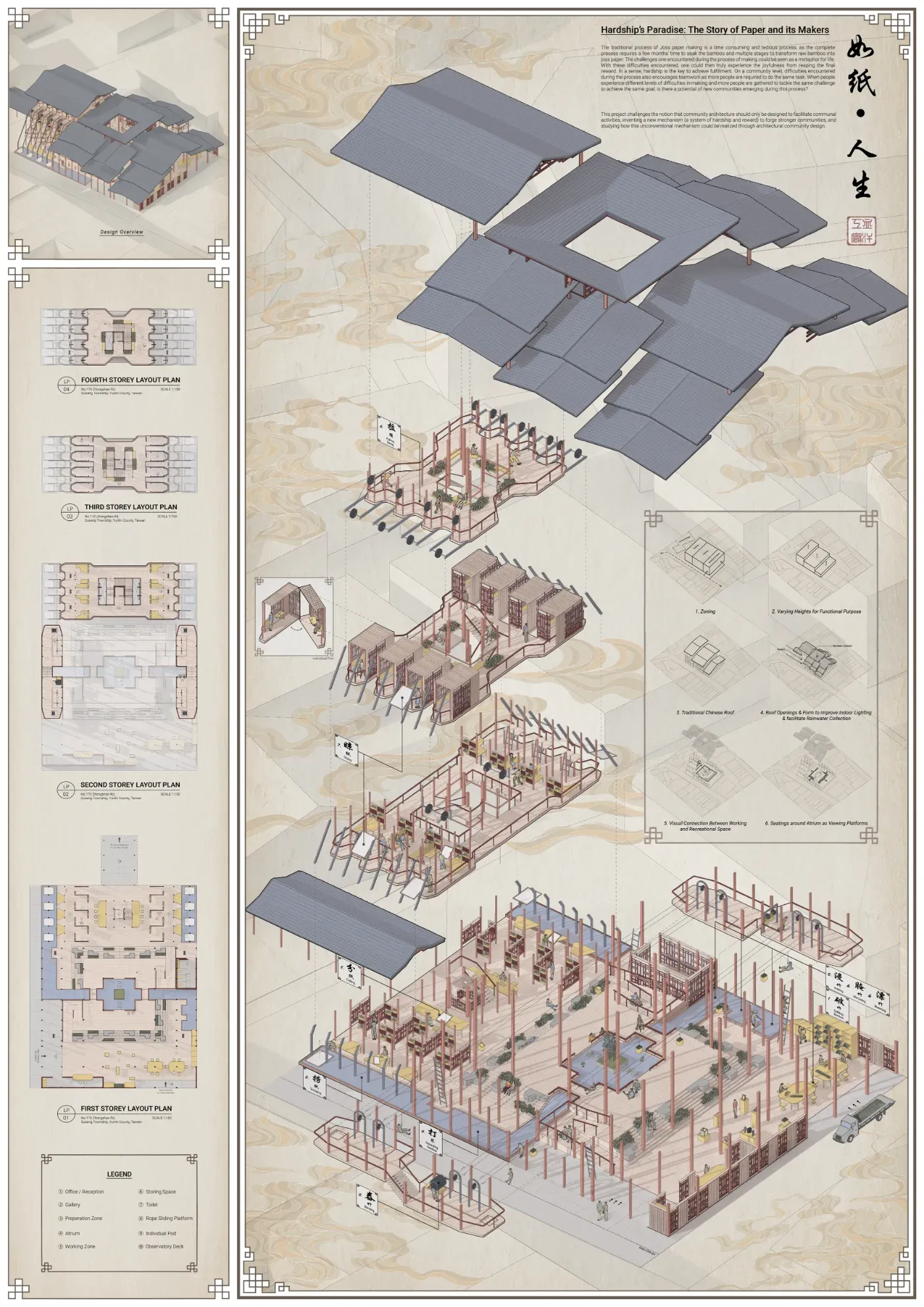
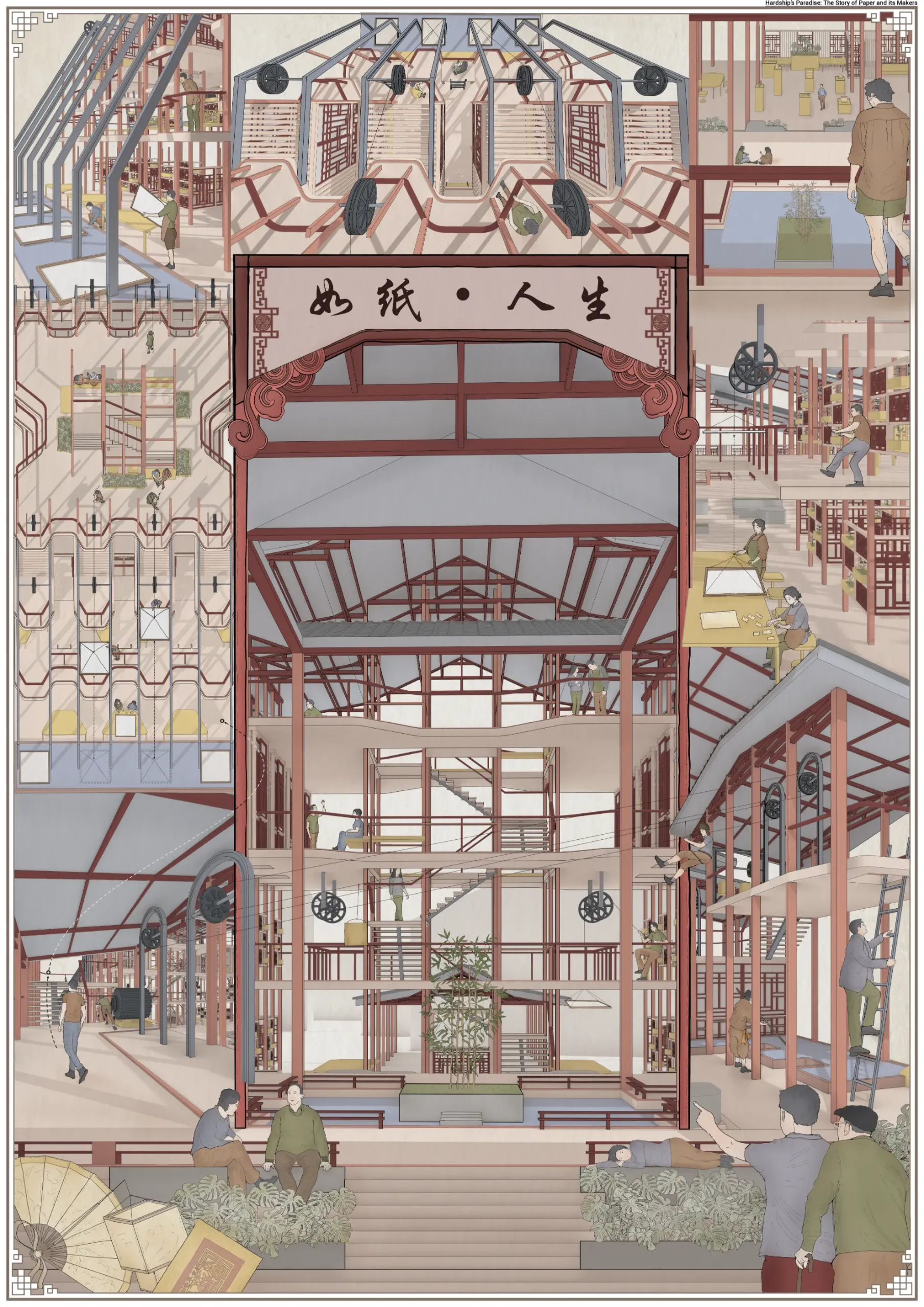
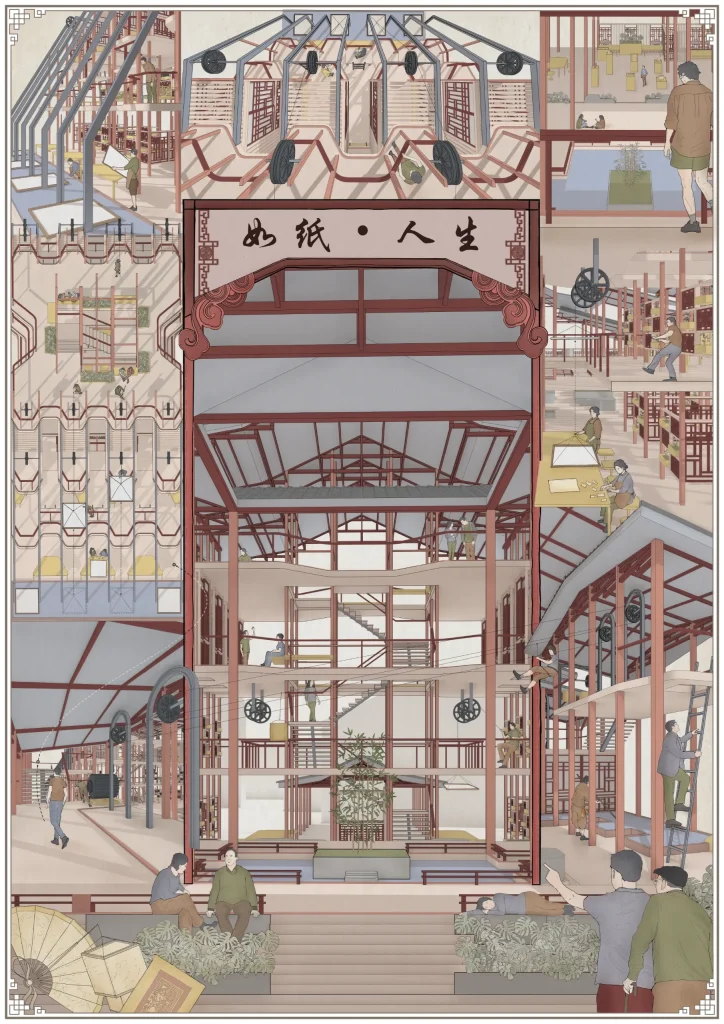
In an era where automatization accelerates efficiency but erodes intimacy, what would it mean to embrace hardship as the foundation of community? Hardship Paradise reimagines traditional joss paper making in Gu Keng, Yunlin, Taiwan, as an intergenerational catalyst for cultural revival and social connection. Can we build a more inclusive community through hardships in the process of making?
Traditional Joss paper making, once integral to Taiwanese spiritual life, has been overtaken by machines. Yet its essence ---- labor, repetition and patience ---- embodies values of resilience and respect for the century-old heritage. Reviving this craft is not just nostalgia, but an act of cultural continuity: keeping alive a tactile, embodied tradition that unites generations and grounds a community’s identity.
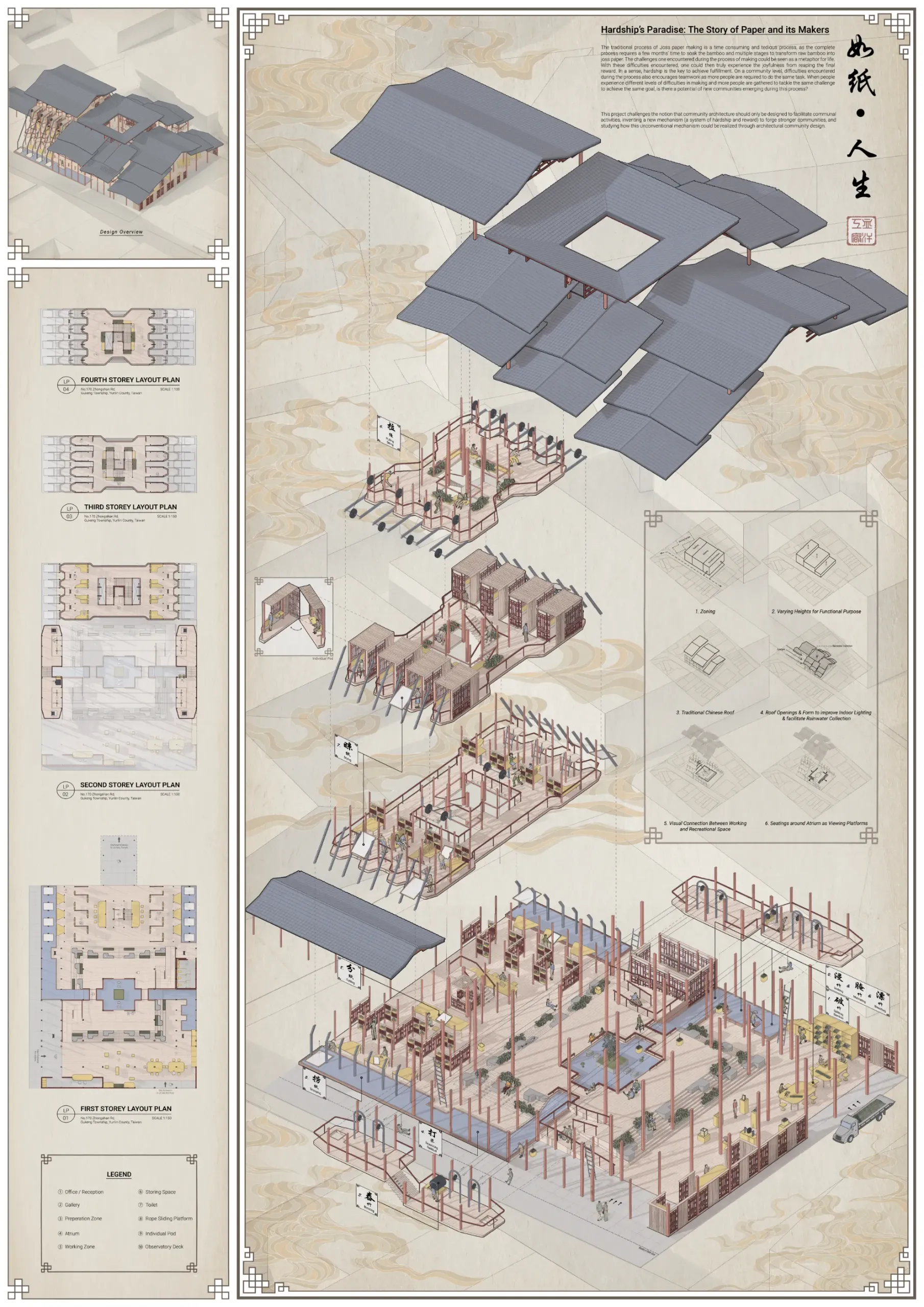
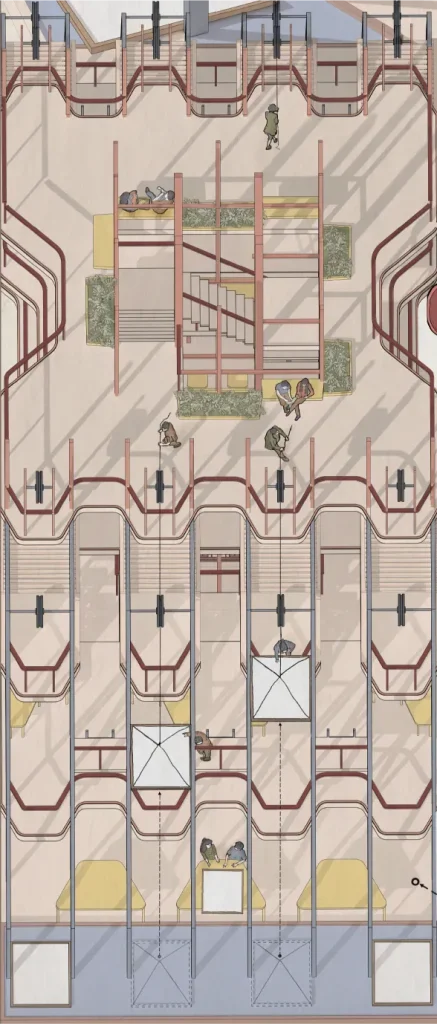
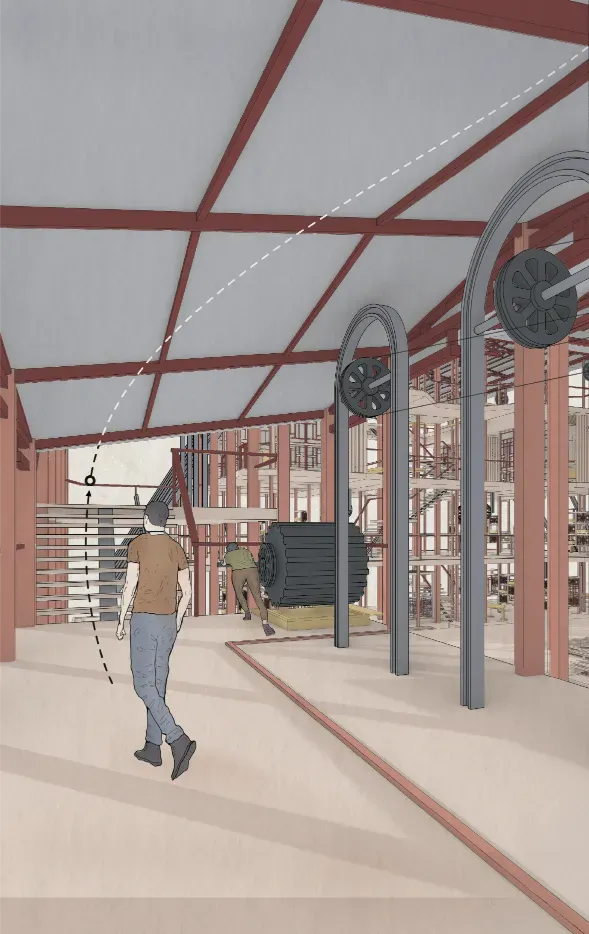
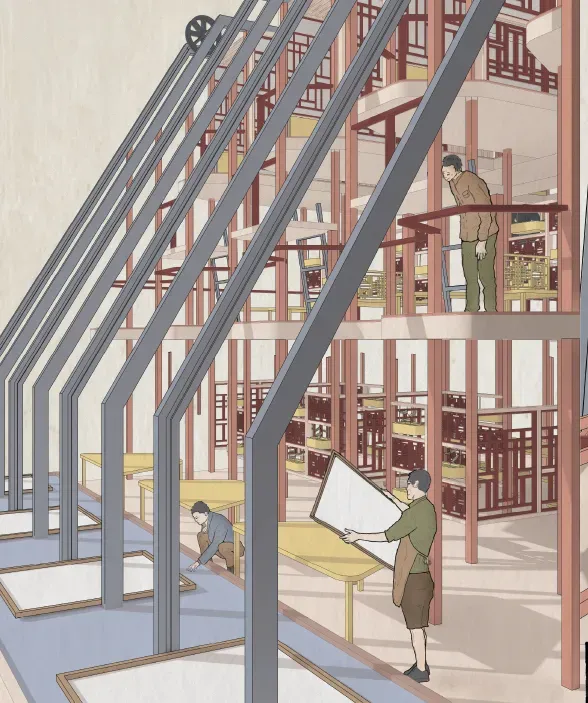
In this project, functional spaces such as papermaking workshops, communal drying yards, and ritual spaces are linked to the nearby temple. The project aims to embed tradition into everyday life. Visitors will not only encounter joss paper as a final craft product, but also immerse themselves in the living cultural practice through learning, making, and bonding as a community.
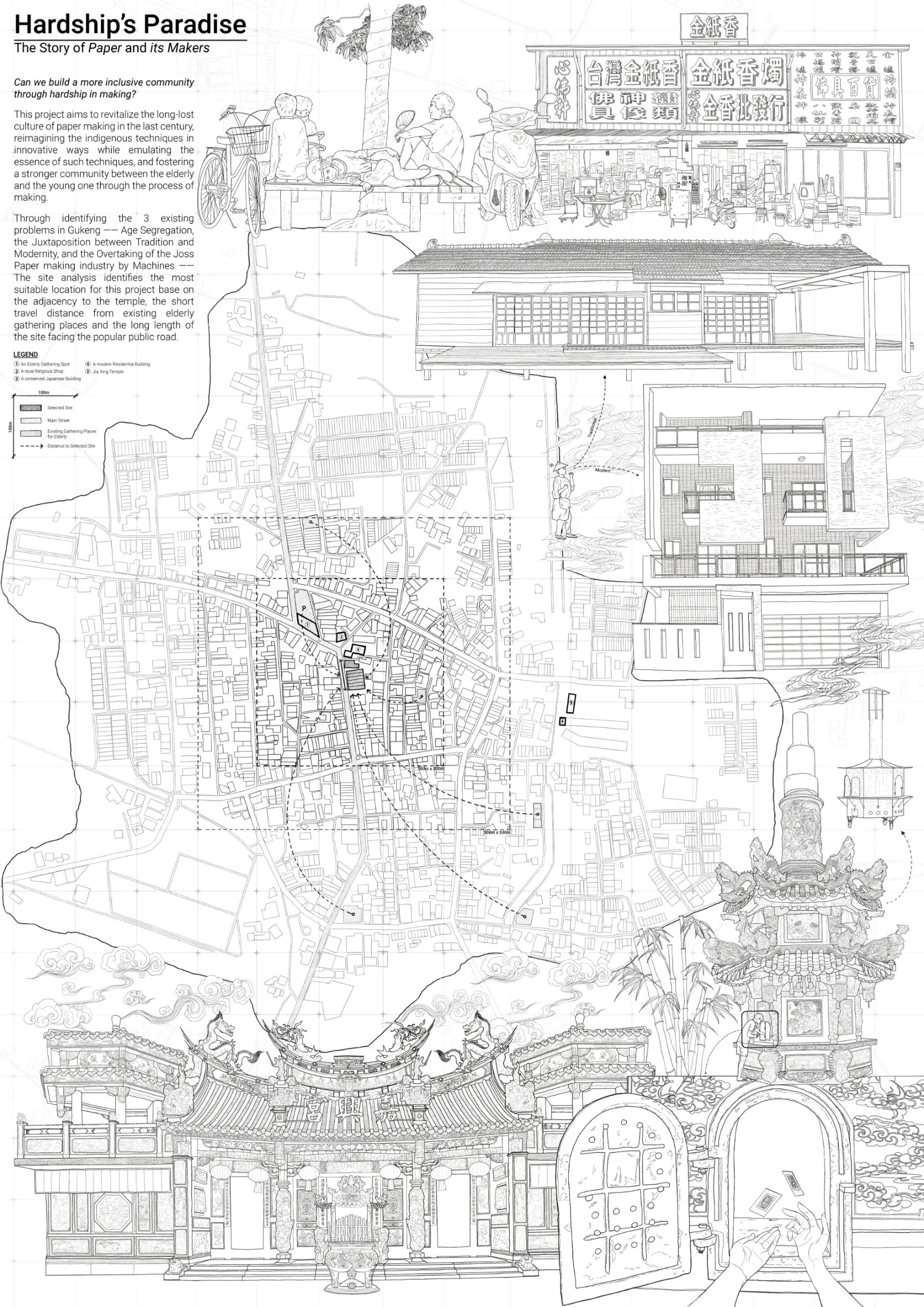
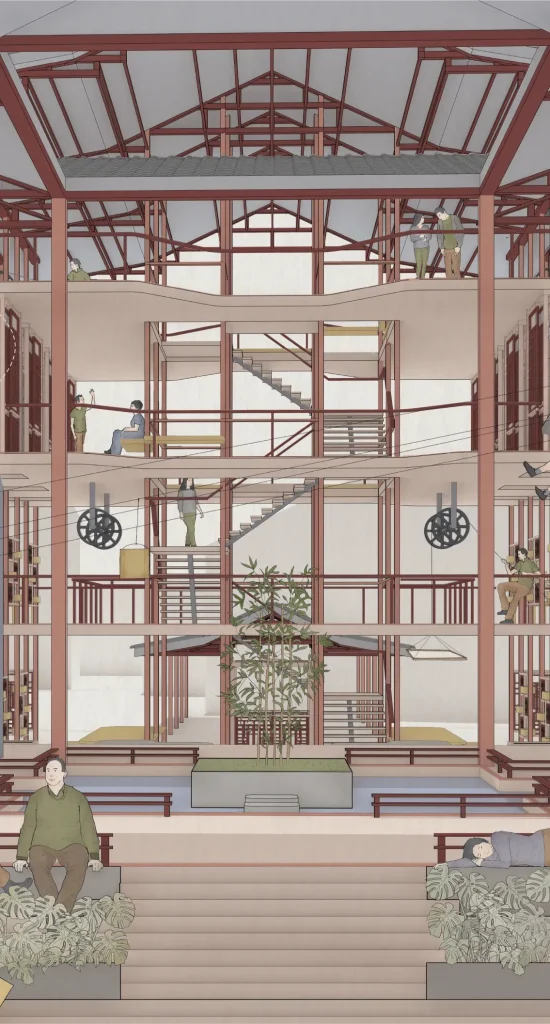
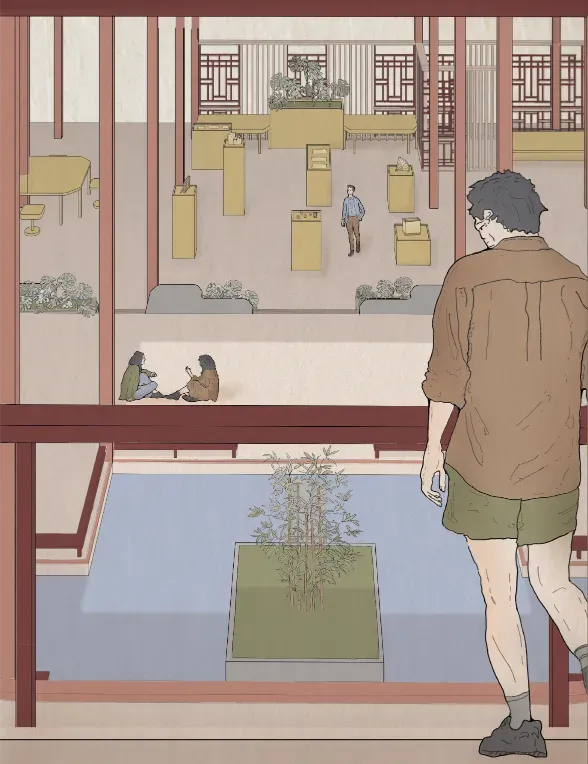
The elongated site along a public road and the porous façade invites transparency. The process of making becomes a performance for the passerby and an invitation for visitors to enter. Proximity to the temple and nearby elderly gathering places anchors the project in spiritual and social life. Here, design dissolves boundaries between workshop and street, between sacred ritual and secular making.
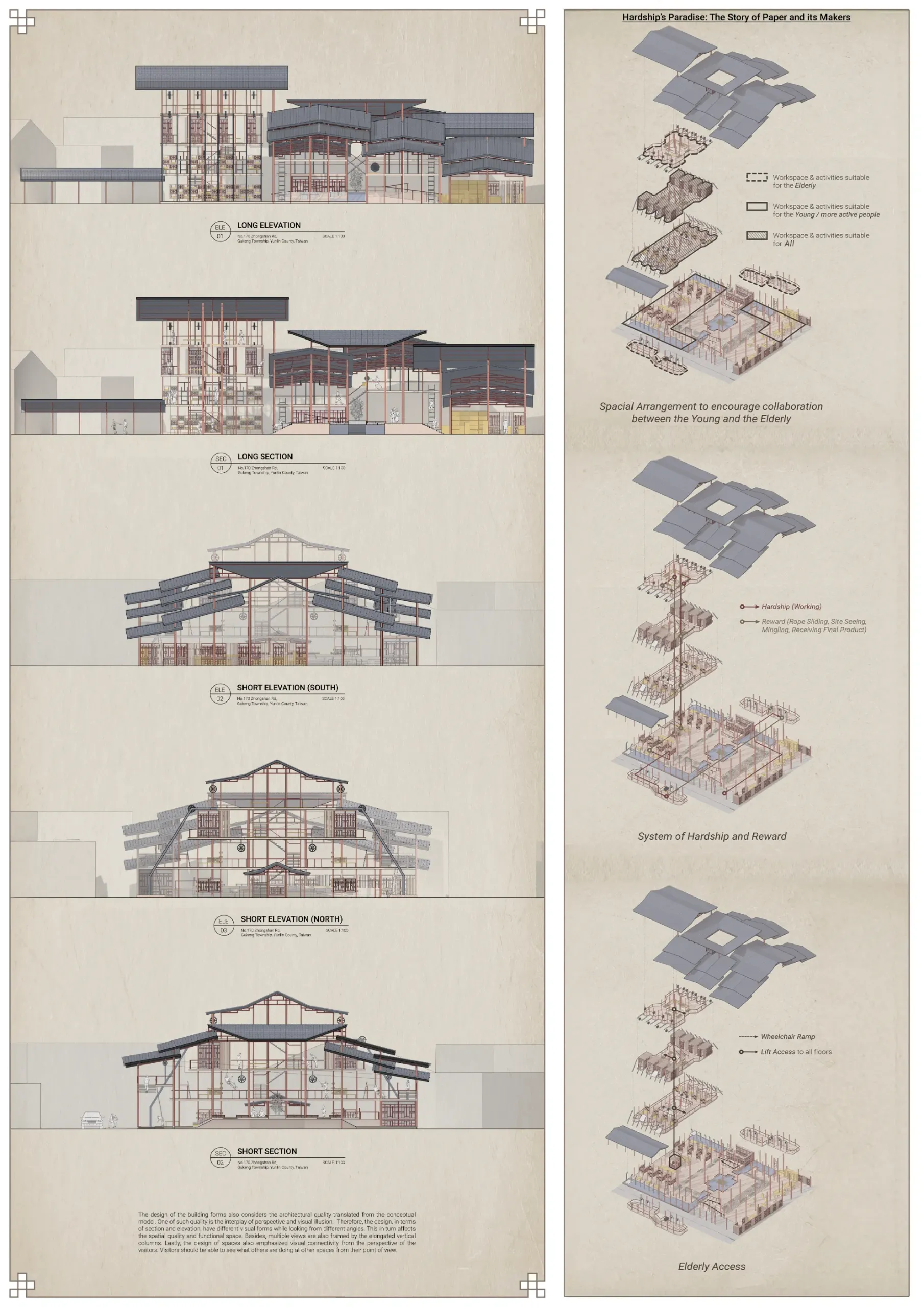
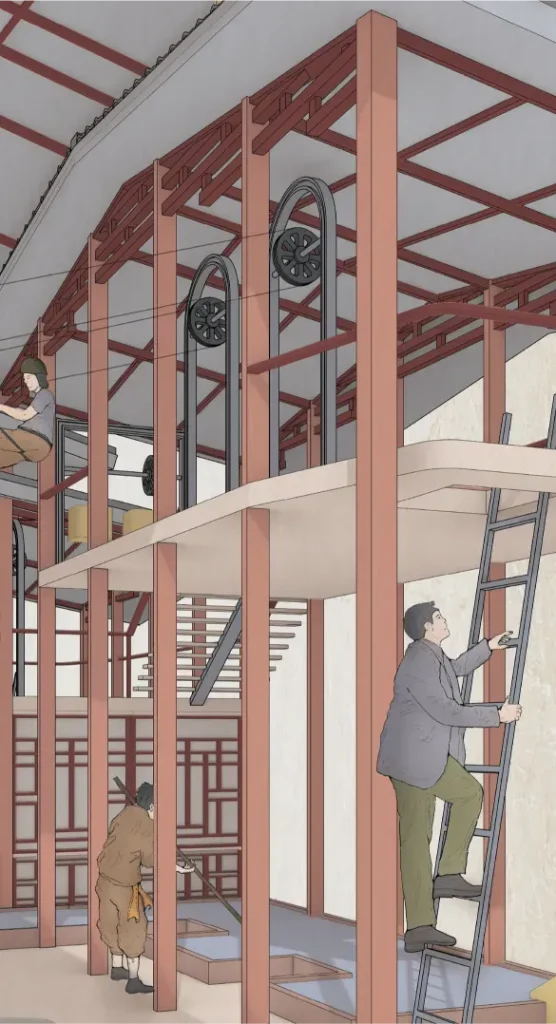
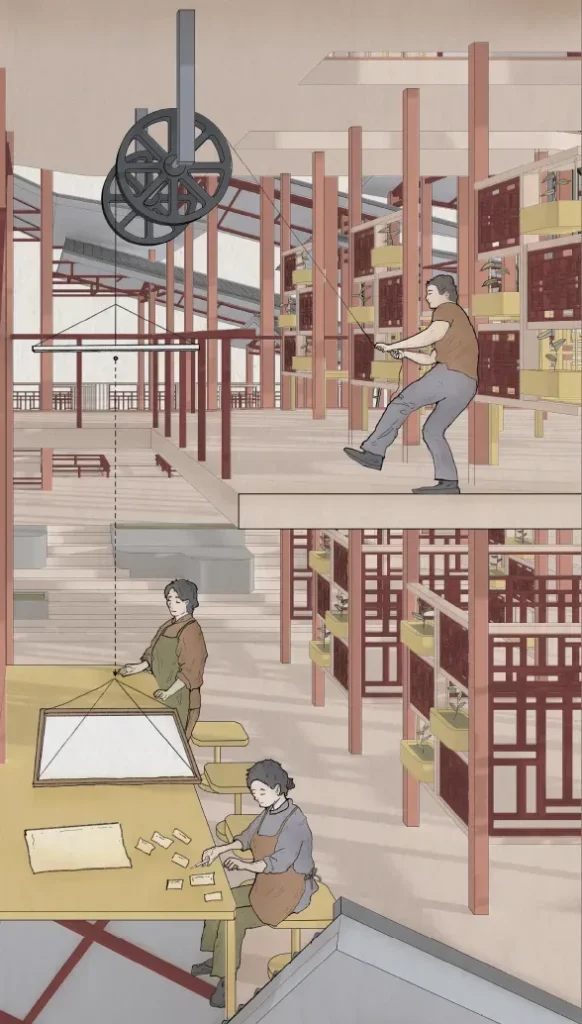
Intergenerational interaction lies at the heart of the scheme. Elderly artisans bring memory and expertise, while the younger generation contributes strength and curiosity. Each repetitive task of paper making, such as processing raw bamboo, blending processed bamboo and lifting pulp, requires multiple hands, creating opportunities for conversation, storytelling, and mutual learning.
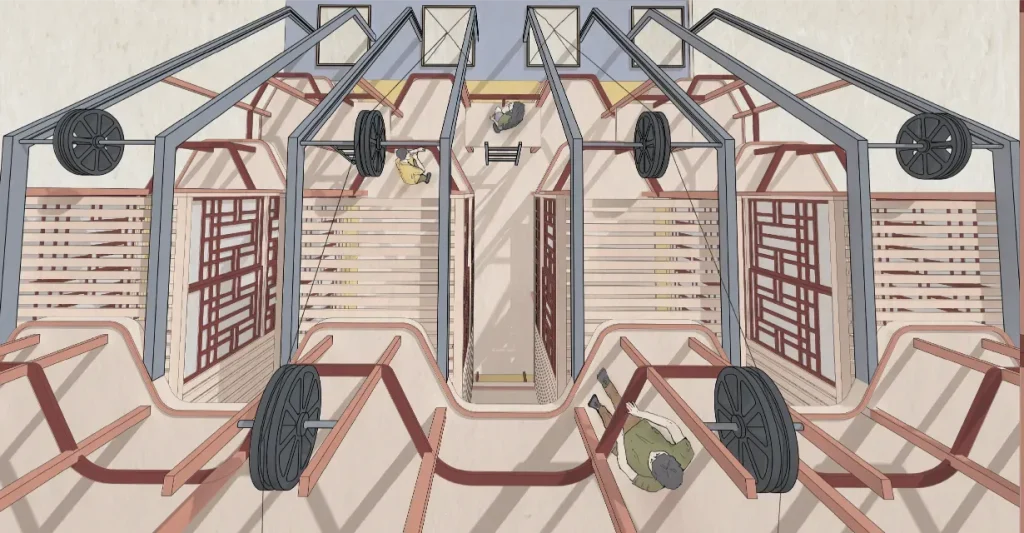
The project deliberately frames hardship as paradise which frame labor as shared joy. The architecture also translates papermaking qualities like layering and porosity into design techniques. For example, view at each point of perspective is intentionally framed to see through multiple layers of happening events and porous columns placement. Drying courtyards extend as social plaza, hanging silkscreen racks for drying paper pulp double as a light filter and the covered walkway between the architecture and temple suggest where the final destination is for the joss paper. The act of making thus becomes both symbolic and functional, embodying community resilience and beauty of heritage crafts.
In terms of research and process, this project was developed based on my fieldwork in Gu Keng through interviewing the elderly residents, visiting local joss paper shops and temples, and mapping important landmarks and community gathering spots. The key challenges identified are age segregation, tension between tradition and modernity, and the displacement of manual craft by machines. This project was developed to address these issues, and the site-specific analysis of circulation, climate, and cultural adjacency informed the final architectural design.
By re-centering craft, the project nurtures a cultural legacy that is active, no longer just a memorial archival. The younger generation inherit more than a skill --- they inherit patience, community resilience, and an understanding of continuity of heritage. The elderly are not sidelined but valued as transmitters of endangered knowledge. The community gains a shared identity rooted in cultural pride.
This project also aims to anchor on its sustainable features: rainwater collection system at the central courtyard used as soaking treatment pool for the bamboos, hanging drying joss paper as sun shading devices and using wood as the main construction material in indigenous way to build a temple-like structure. By marrying indigenous craft with contemporary architectural techniques, the project produces a space that is at once familiar and forward-looking.
On a greater urban scale, the design combats elderly isolation by creating spaces for community building and togetherness. It also potentially opens avenues for workshops, festivals, and cultural tourism that sustain local livelihoods economically. Ultimately, this project aspires to embody a new paradigm where hardship is celebrated as a source of unity, where design is not only about buildings but about legacies—spaces that inspire, connect, and endure.
Showcase your design to an international audience
SUBMIT NOW
Image: Agrapolis Urban Permaculture Farm by David Johanes Palar
Top
Design Concept Statement – Hardship’s Paradise: The Story of Paper and its Makers In an era where automatization accelerates efficiency but erodes intimacy, what would it mean to embrace hardship as the foundation of community? Hardship Paradise reimagines traditional joss paper making in Gu Keng, Yunlin, Taiwan, as an intergenerational catalyst for cultural revival and social connection. Can we build a more inclusive community through hardships in the process of making? Traditional Joss paper making, once integral to Taiwanese spiritual life, has been overtaken by machines. Yet its essence ---- labor, repetition and patience ---- embodies values of resilience and respect for the century-old heritage. Reviving this craft is not just nostalgia, but an act of cultural continuity: keeping alive a tactile, embodied tradition that unites generations and grounds a community’s identity. In this project, functional spaces such as papermaking workshops, communal drying yards, and ritual spaces are linked to the nearby temple. The project aims to embed tradition into everyday life. Visitors will not only encounter joss paper as a final craft product, but also immerse themselves in the living cultural practice through learning, making, and bonding as a community. The elongated site along a public road and the porous façade invites transparency. The process of making becomes a performance for the passerby and an invitation for visitors to enter. Proximity to the temple and nearby elderly gathering places anchors the project in spiritual and social life. Here, design dissolves boundaries between workshop and street, between sacred ritual and secular making. Intergenerational interaction lies at the heart of the scheme. Elderly artisans bring memory and expertise, while the younger generation contributes strength and curiosity. Each repetitive task of paper making, such as processing raw bamboo, blending processed bamboo and lifting pulp, requires multiple hands, creating opportunities for conversation, storytelling, and mutual learning. The project deliberately frames hardship as paradise which frame labor as shared joy. The architecture also translates papermaking qualities like layering and porosity into design techniques. For example, view at each point of perspective is intentionally framed to see through multiple layers of happening events and porous columns placement. Drying courtyards extend as social plaza, hanging silkscreen racks for drying paper pulp double as a light filter and the covered walkway between the architecture and temple suggest where the final destination is for the joss paper. The act of making thus becomes both symbolic and functional, embodying community resilience and beauty of heritage crafts. In terms of research and process, this project was developed based on my fieldwork in Gu Keng through interviewing the elderly residents, visiting local joss paper shops and temples, and mapping important landmarks and community gathering spots. The key challenges identified are age segregation, tension between tradition and modernity, and the displacement of manual craft by machines. This project was developed to address these issues, and the site-specific analysis of circulation, climate, and cultural adjacency informed the final architectural design. By re-centering craft, the project nurtures a cultural legacy that is active, no longer just a memorial archival. The younger generation inherit more than a skill --- they inherit patience, community resilience, and an understanding of continuity of heritage. The elderly are not sidelined but valued as transmitters of endangered knowledge. The community gains a shared identity rooted in cultural pride. This project also aims to anchor on its sustainable features: rainwater collection system at the central courtyard used as soaking treatment pool for the bamboos, hanging drying joss paper as sun shading devices and using wood as the main construction material in indigenous way to build a temple-like structure. By marrying indigenous craft with contemporary architectural techniques, the project produces a space that is at once familiar and forward-looking. On a greater urban scale, the design combats elderly isolation by creating spaces for community building and togetherness. It also potentially opens avenues for workshops, festivals, and cultural tourism that sustain local livelihoods economically. Ultimately, this project aspires to embody a new paradigm where hardship is celebrated as a source of unity, where design is not only about buildings but about legacies—spaces that inspire, connect, and endure.

The AYDA Awards is part of Colouring Lives, Nippon Paint’s Corporate Social Responsibility (CSR) programme, which is dedicated to nurturing the next generation of Architectural and Interior Design talents. Through cross-learning and industry exposure, AYDA provides a platform for students to develop their skills and grow as designers. Discover more of Nippon Paint’s CSR initiatives under Colouring Lives.