BACK TO finale_winnerS
AYDA DESIGNER OF THE YEAR
BANUAS LAWOD
BANAUS LAWOD Transforming Informal Settlements into a Resilient Metabolic Aquaculture Community The Sama-Bajau rose with the tide. Their homes drifted gently, their children read the currents before they read words, and the ocean was not a resource but family. The sea offered food, identity, and meaning. In return, it was cherished, known, and fiercely protected. […]
BANAUS LAWOD
Transforming Informal Settlements into a Resilient Metabolic Aquaculture Community
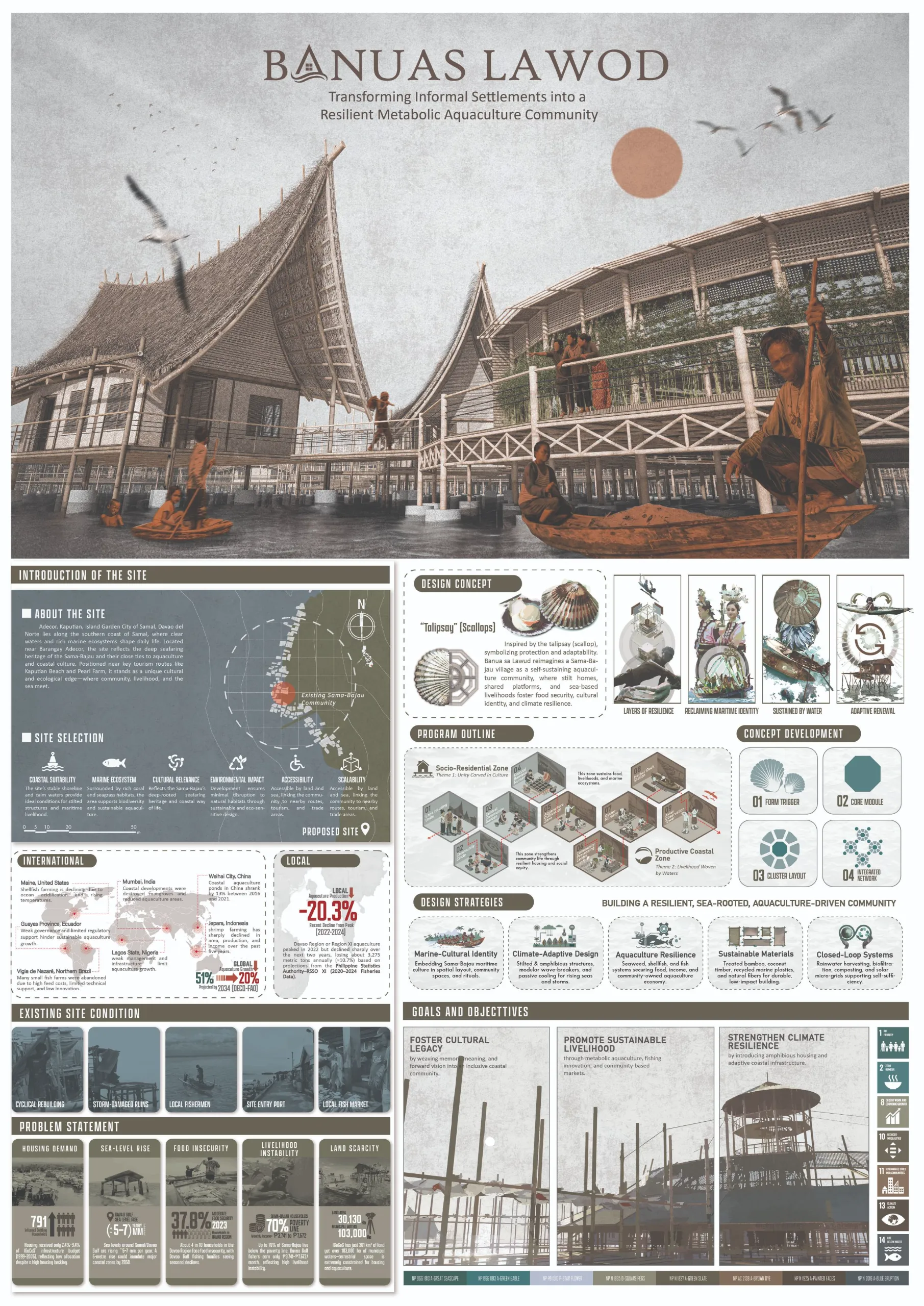
The Sama-Bajau rose with the tide. Their homes drifted gently, their children read the currents before they read words, and the ocean was not a resource but family. The sea offered food, identity, and meaning. In return, it was cherished, known, and fiercely protected. Today, that reciprocity is eroding. The sea is under severe strain. Overfishing, coral destruction, and industrial activity have pushed marine ecosystems to their limits. In the Davao Gulf, a three-month closed fishing season has been implemented to support stock recovery and sustainability (Atienza, 2025).” This seasonal ban, enforced from June 1 to August 31, aims to protect small pelagic species and help fisheries regenerate after prolonged pressure. Aquaculture, once considered a solution, has slowed globally, and local production continues to decline. Simultaneously, sea-level rise, land scarcity, food insecurity, and unstable livelihoods converge. Global aquaculture growth decreased from 51% to 20% over the past two decades. Locally, production has declined by 20.3% since 2022 (Philippine Statistics Authority - RSSO XI (2020-2024 Fisheries data)).
Recent data from the Philippine Statistics Authority indicate a continued decline in national aquaculture production, highlighting increased pressure on marine resources and coastal livelihoods. In response, Banuas Lawod shifts from extractive practices to a regenerative, metabolic aquaculture model. By integrating livelihood, environment, and culture through architecture, the project aims to create a resilient coastal community that restores balance between people and the sea (Philippine Statistics Authority, 2024).
The Sama-Bajau, once sea nomads and stewards, have been forced inland by rapid urbanization. Their boats have been replaced by informal shelters, their maritime knowledge has been overlooked, and their communities have been fragmented. In cities, many are displaced, marginalized, and forgotten, caught between land they do not own and a sea they can no longer access.
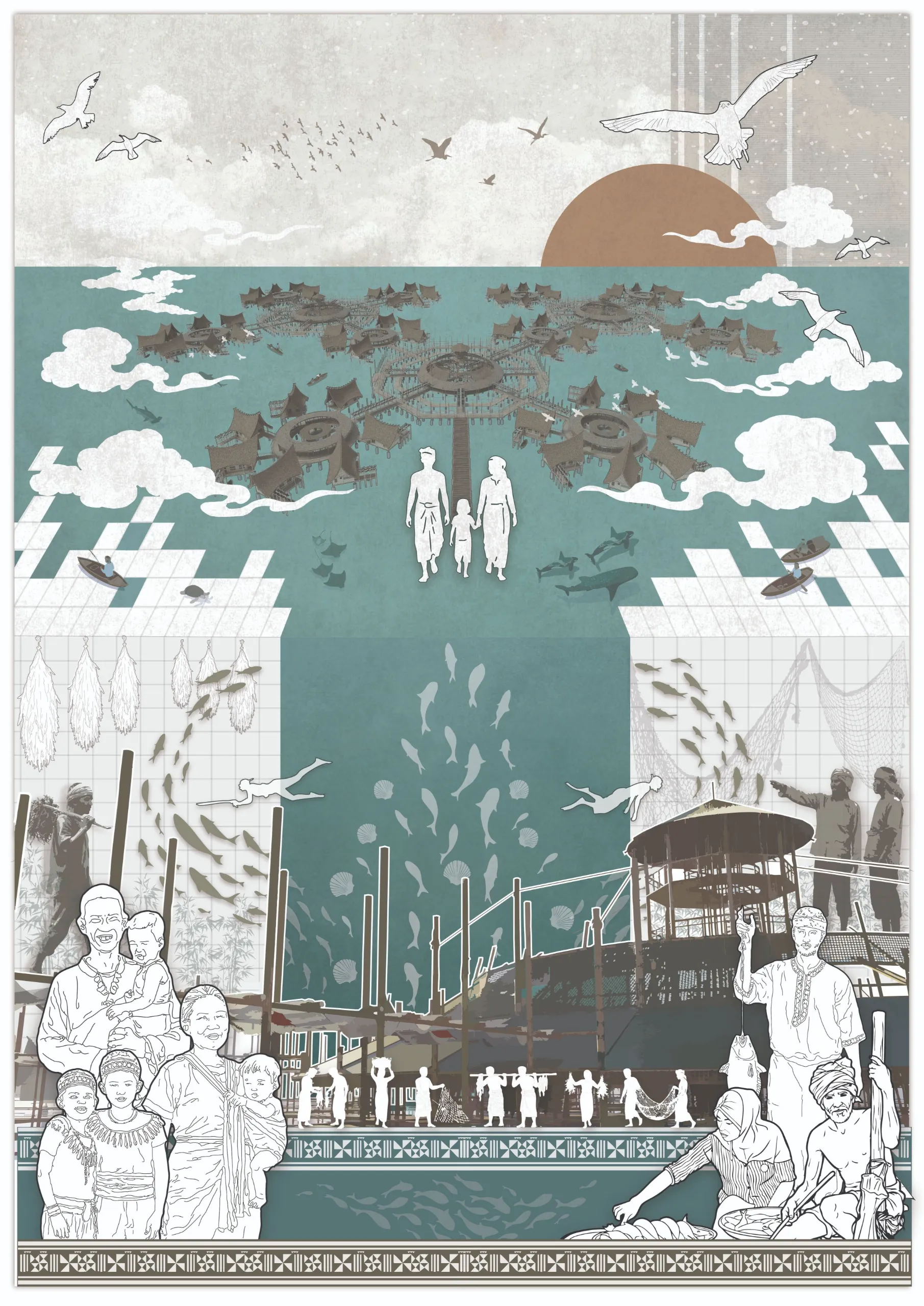
Banuas Lawod addresses the loss of reciprocal ties between people and the sea. Located in Adecor, Kaputian, Island Garden City of Samal, Philippines, the project is more than housing or aquaculture. It is a spatial response to loss and a proposal for integrated renewal. At its core is the belief that restoring marine and human well-being requires survival, culture, and ecology to sustain one another. The project’s concept is inspired by talipsay scallops, which survive through protective layers, filter water, and adapt to tides. “Banua sa Lawud” applies this logic, creating ecological, social, and cultural layers that reinforce one another.
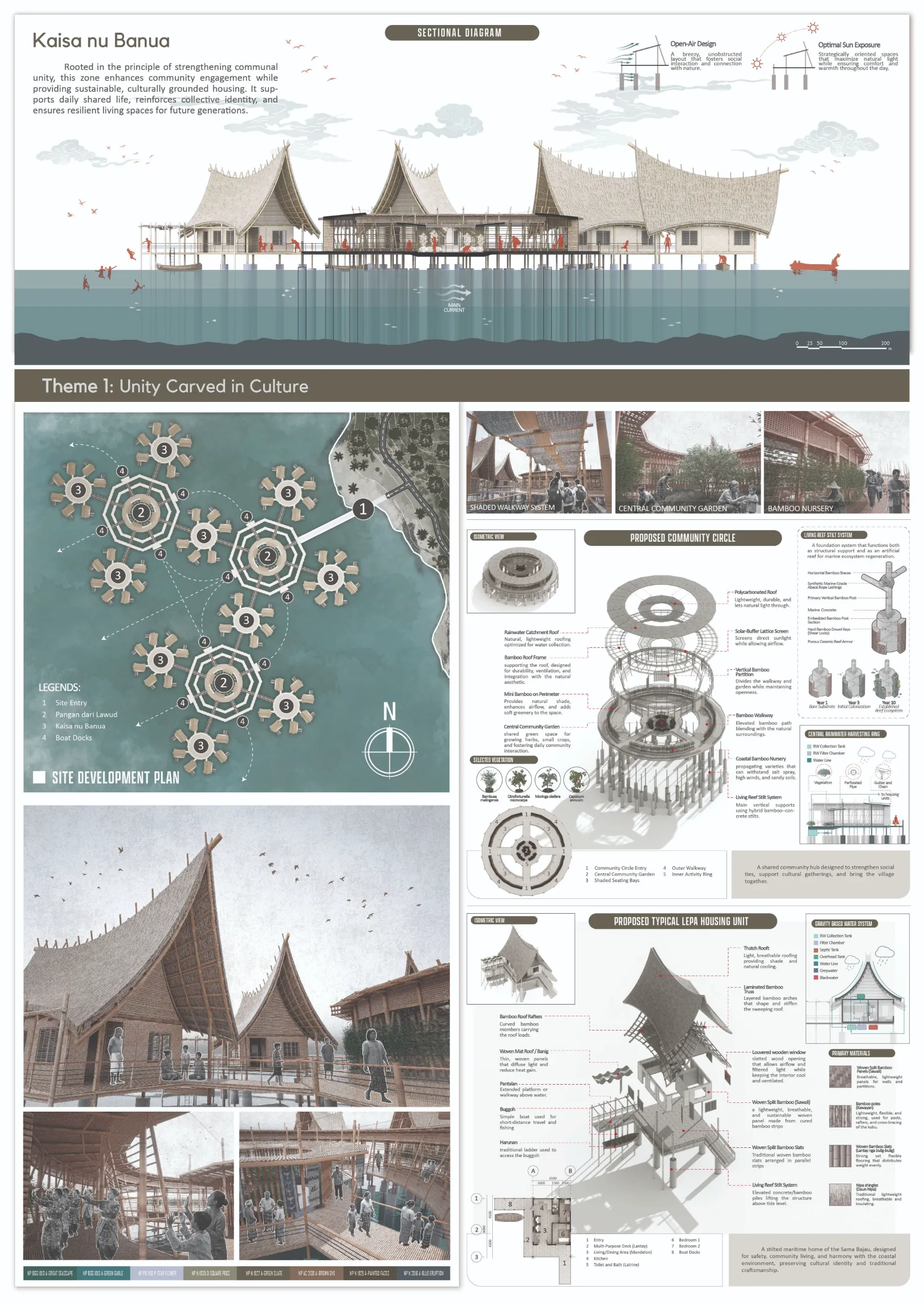
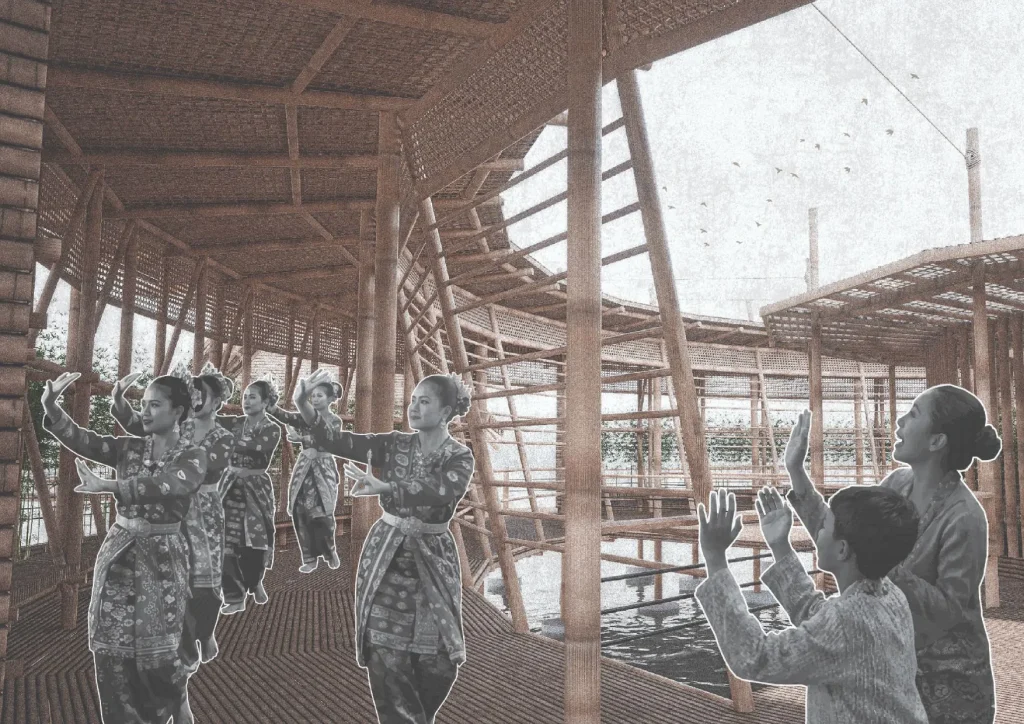
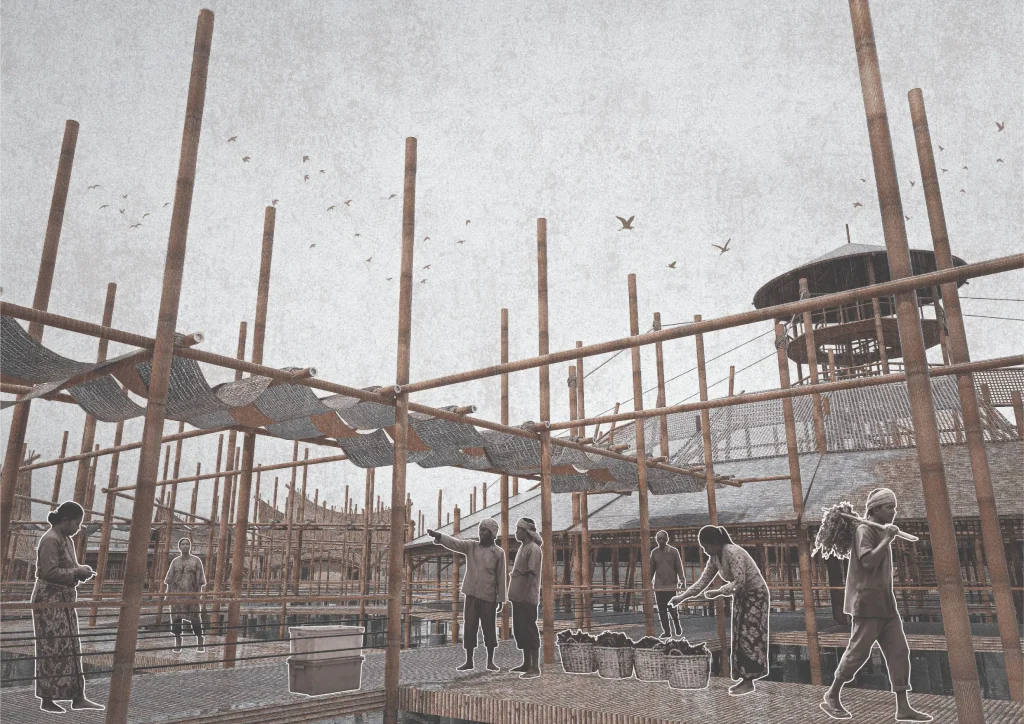
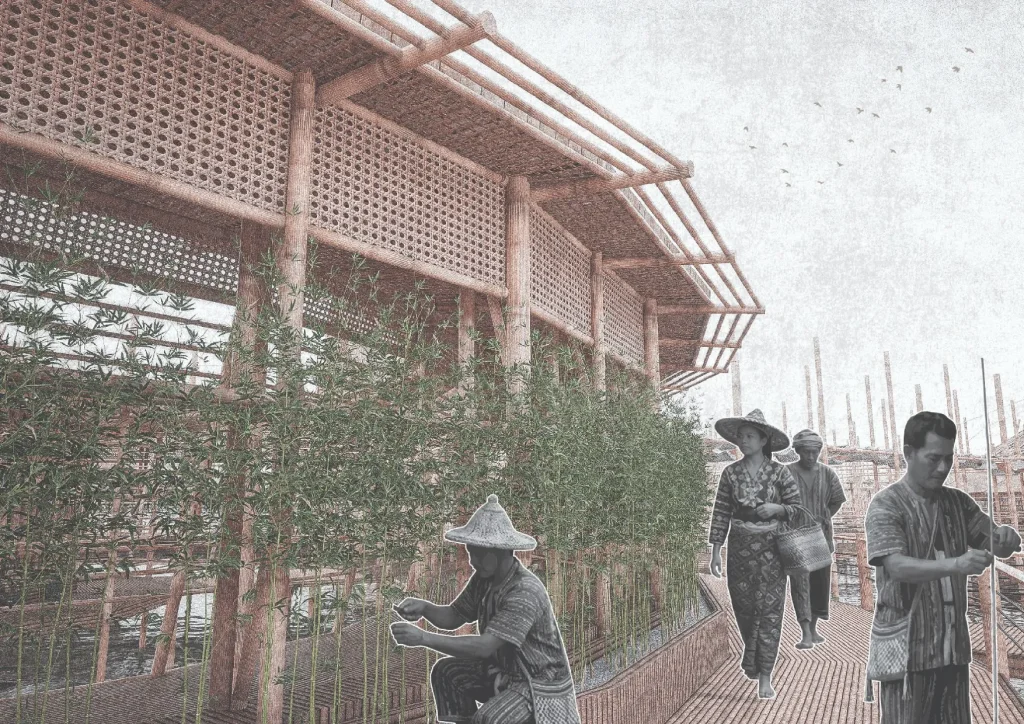
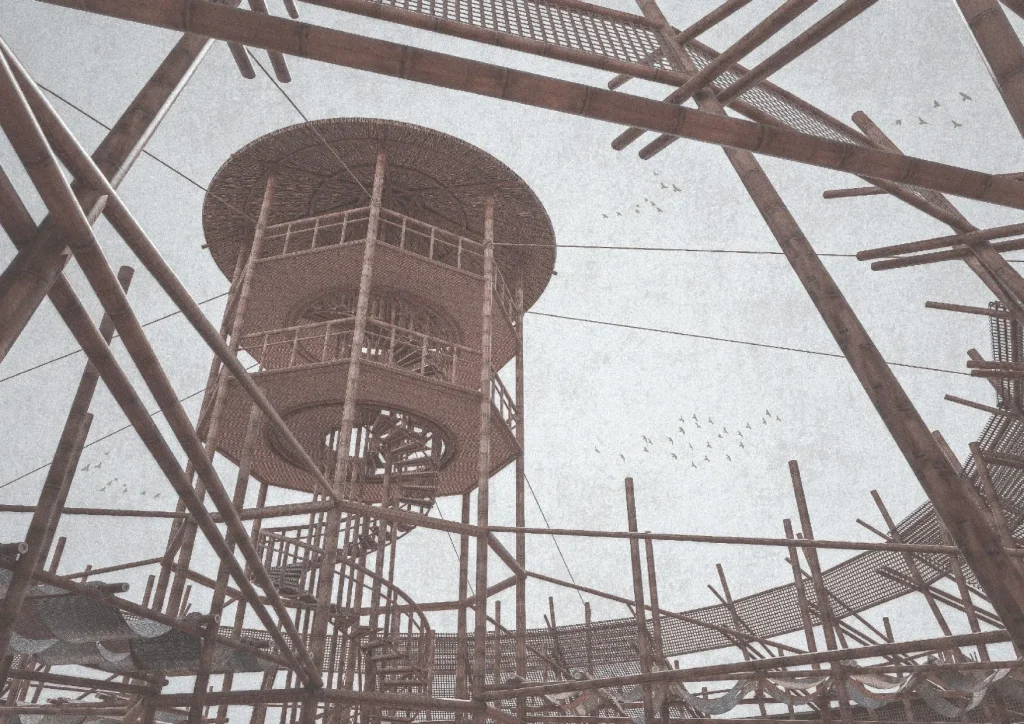
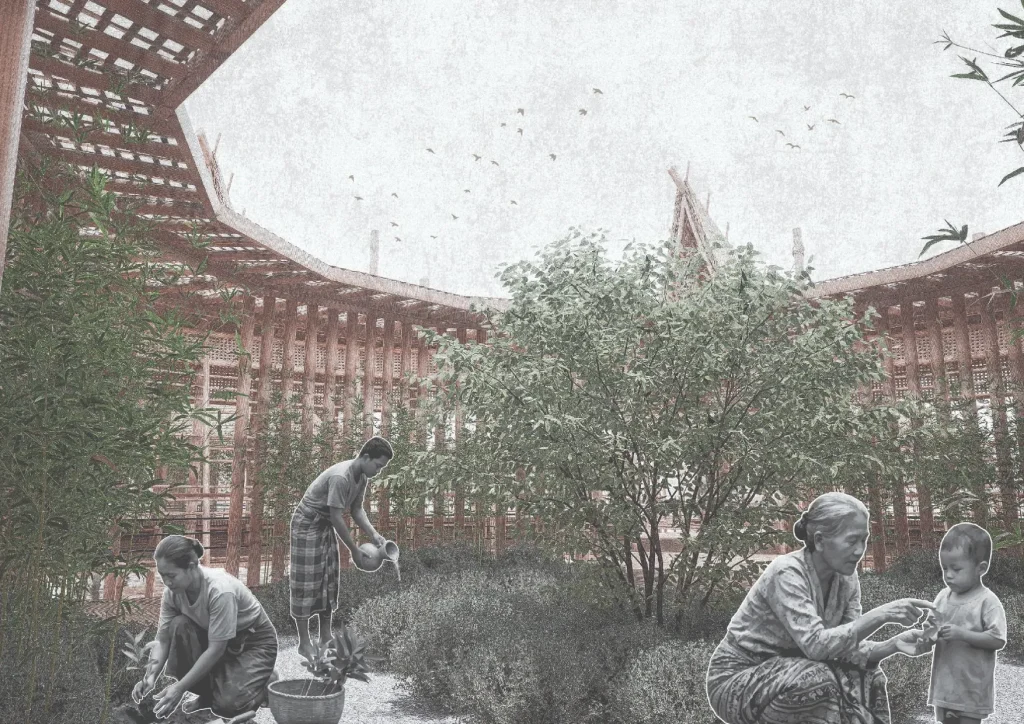
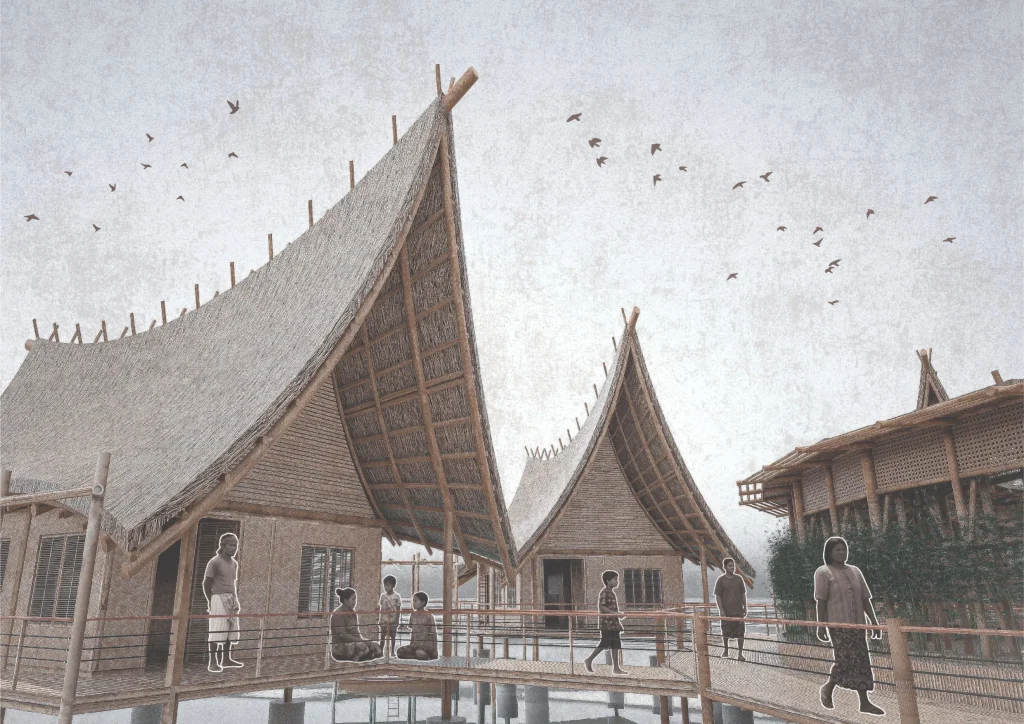
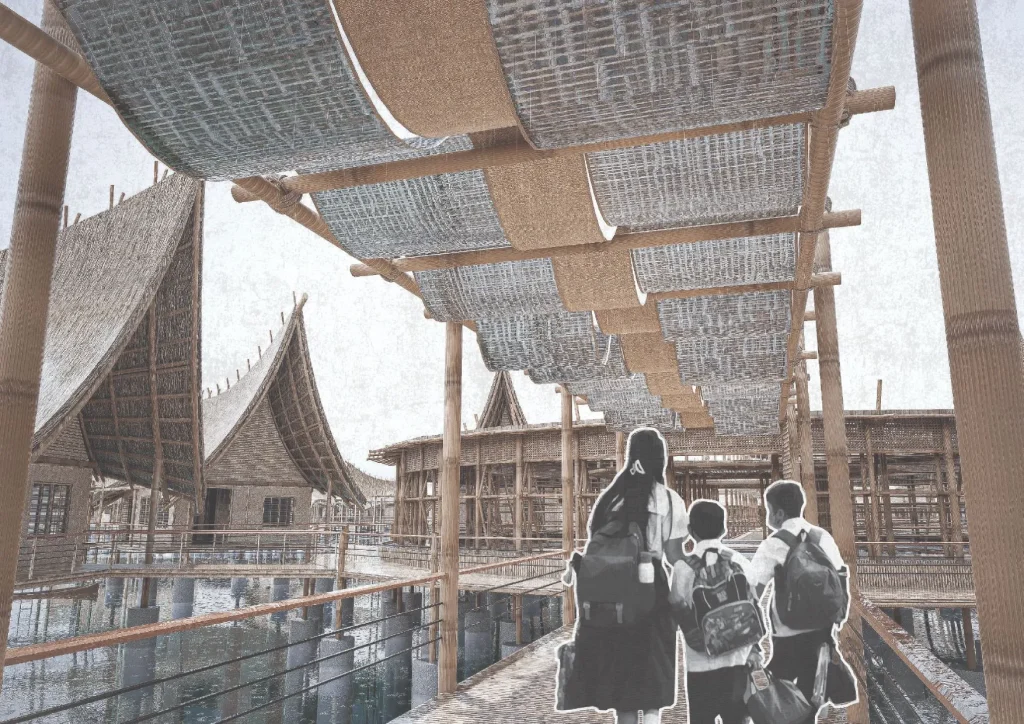
Lepa-inspired housing units, reinterpreting the traditional Sama-Bajau boat, form a protective ring around a communal space. Elevated and adaptable, these dwellings respond to tides and climate uncertainty while preserving spatial memory. They are not nostalgic replicas but architectural continuations of a maritime way of life. It is a place where elders pass on knowledge, children play, and rituals are revived. Here, architecture serves as a framework for continuity rather than a static object.
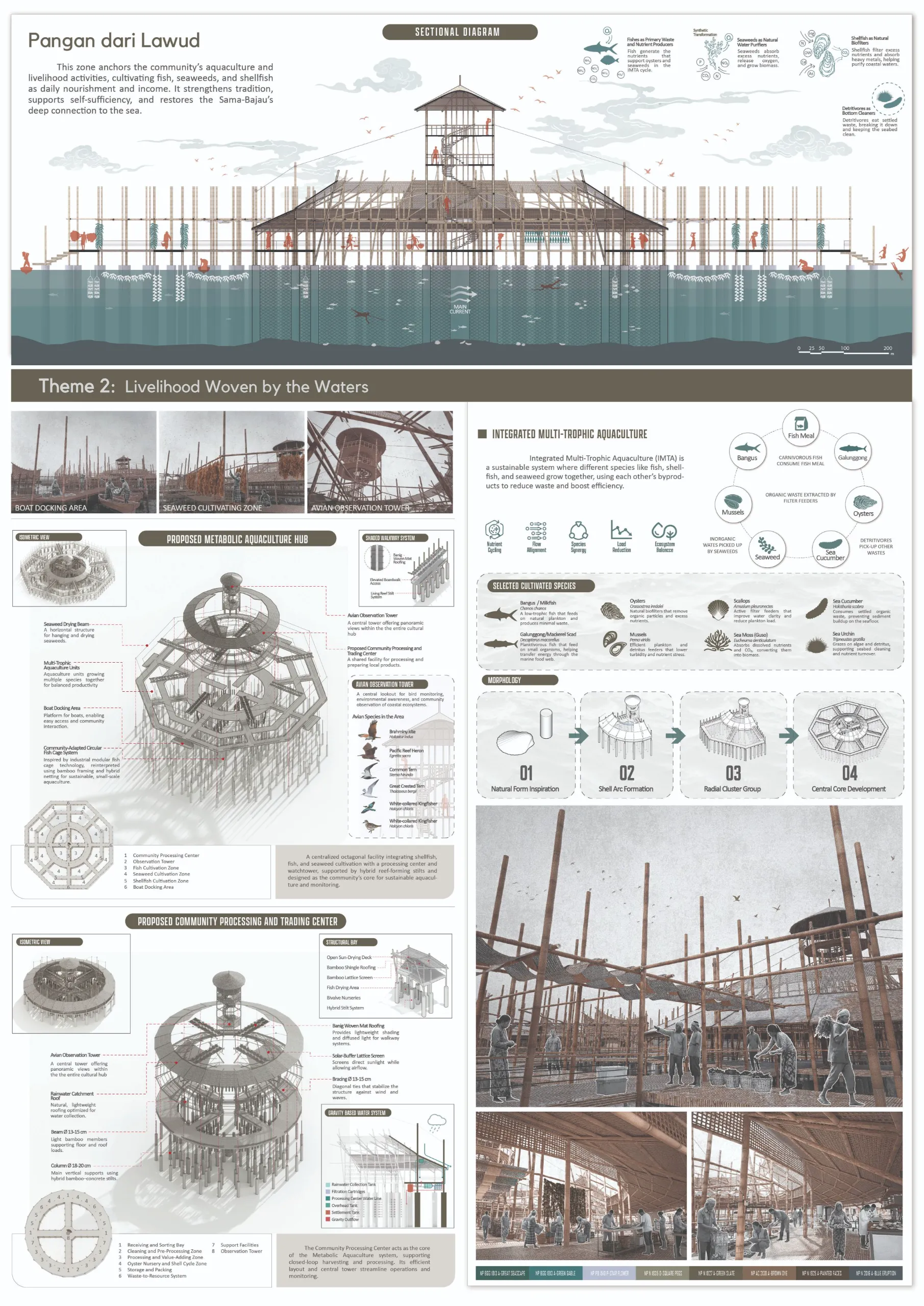
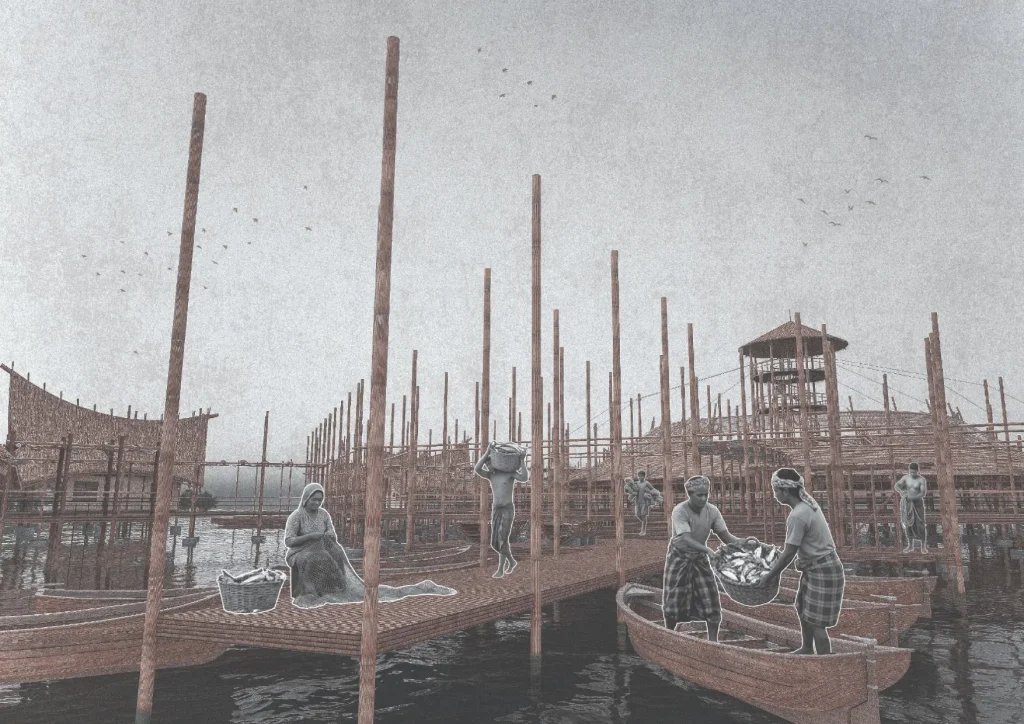
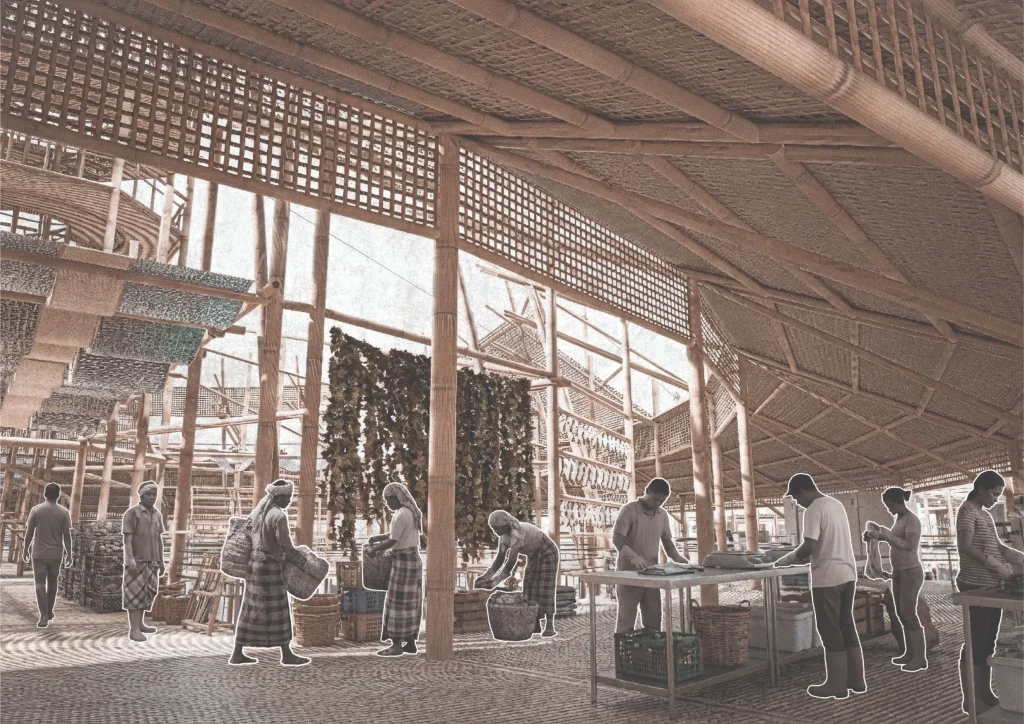
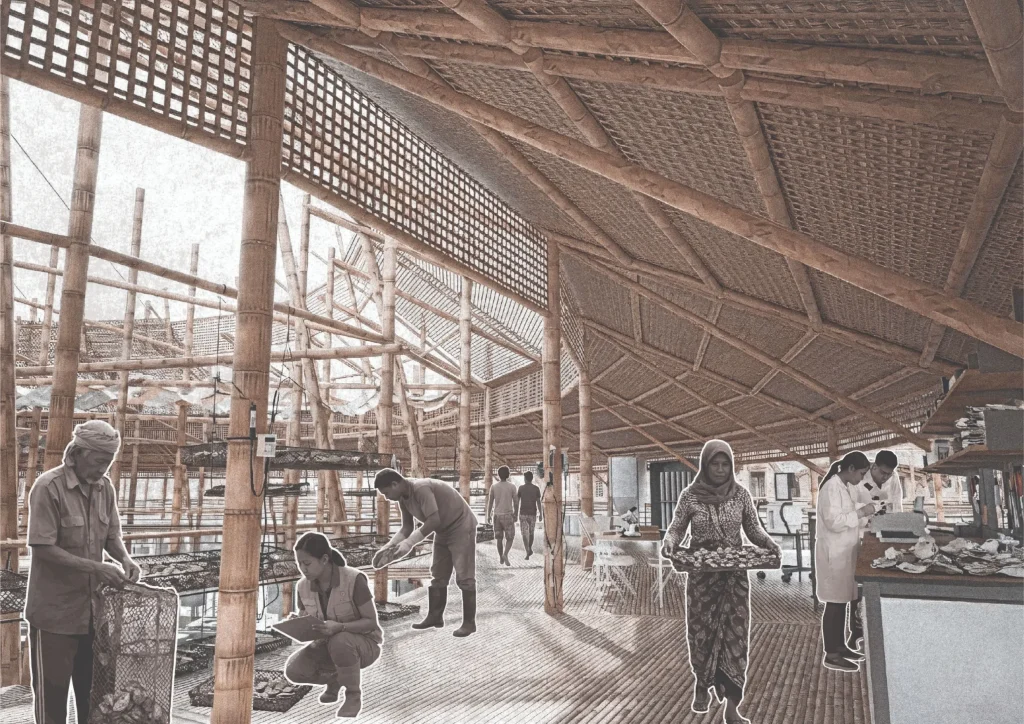
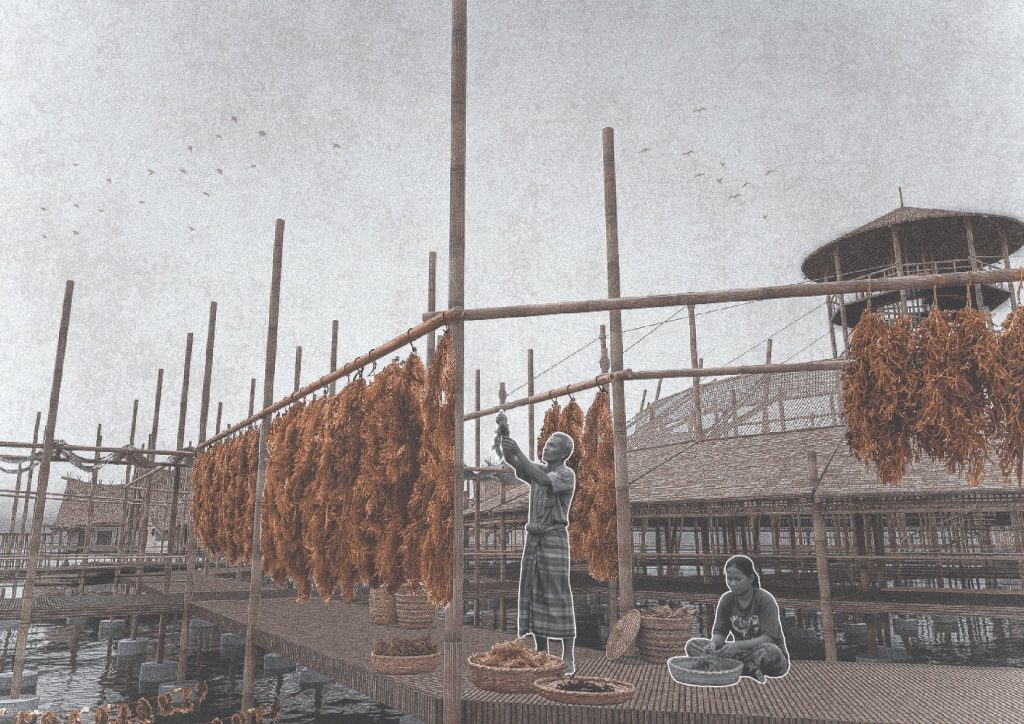
At its core is a metabolic aquaculture hub that anchors both livelihoods and the landscape. Fish, shellfish, and seaweeds coexist in a closed-loop system where waste becomes nutrients and balance replaces extraction. This approach fosters a metabolic partnership with the sea, rather than imposing industrial aquaculture. It represents a shift from exploitation to stewardship, and from consumption to care. The community’s social heart surrounds this economic core.
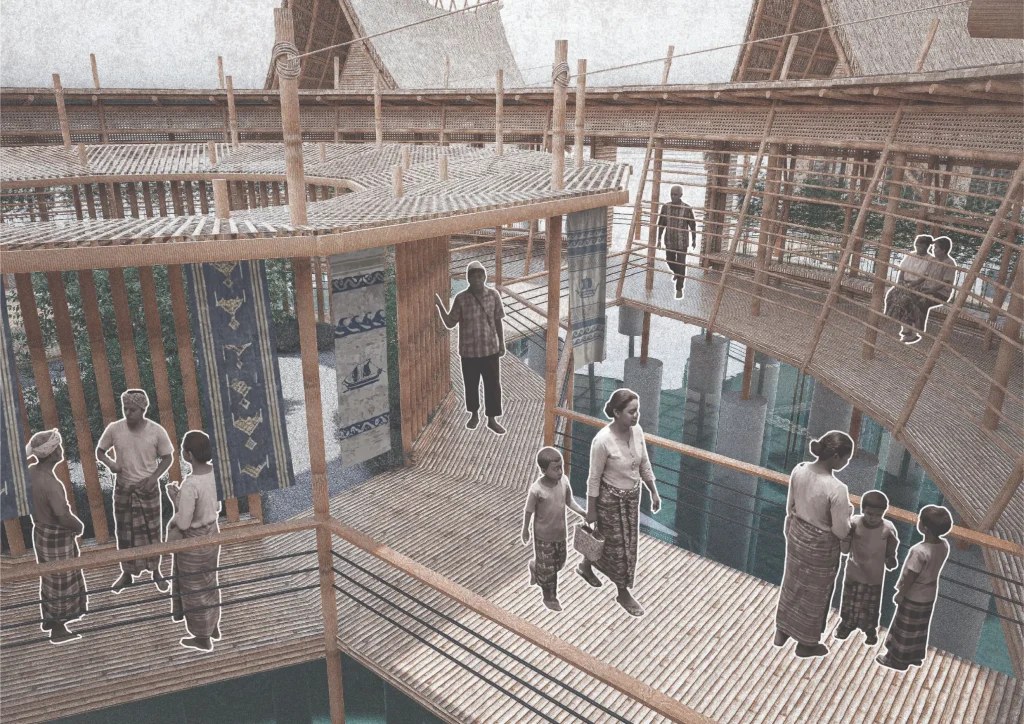
It is a concept of a living system building an aquacultural community. Housing supports livelihoods, which in turn help restore the sea. A healthy sea sustains the community. Culture is not preserved in museums but is embedded in daily practice, movement, materials, and orientation. This community is designed to adapt with dignity rather than resist change. More than a settlement, Banaus Lawod is a reclamation of identity. It affirms that the knowledge of the Sama-Bajau, once dismissed as informal or obsolete, is essential for the future. In an era of climate instability, their relationship with water serves as a blueprint rather than a weakness.
Through this project, children who once wandered the streets return to a purposeful home. Fisherfolk become stewards once more. The sea is no longer something to escape, but something to belong to. When people are anchored to culture, livelihood, and place, their futures gain stability. Banaus Lawod is not just architecture by the sea, it is architecture with the sea.
Showcase your design to an international audience
SUBMIT NOW
Image: Agrapolis Urban Permaculture Farm by David Johanes Palar
Top
BANAUS LAWOD Transforming Informal Settlements into a Resilient Metabolic Aquaculture Community The Sama-Bajau rose with the tide. Their homes drifted gently, their children read the currents before they read words, and the ocean was not a resource but family. The sea offered food, identity, and meaning. In return, it was cherished, known, and fiercely protected. Today, that reciprocity is eroding. The sea is under severe strain. Overfishing, coral destruction, and industrial activity have pushed marine ecosystems to their limits. In the Davao Gulf, a three-month closed fishing season has been implemented to support stock recovery and sustainability (Atienza, 2025).” This seasonal ban, enforced from June 1 to August 31, aims to protect small pelagic species and help fisheries regenerate after prolonged pressure. Aquaculture, once considered a solution, has slowed globally, and local production continues to decline. Simultaneously, sea-level rise, land scarcity, food insecurity, and unstable livelihoods converge. Global aquaculture growth decreased from 51% to 20% over the past two decades. Locally, production has declined by 20.3% since 2022 (Philippine Statistics Authority - RSSO XI (2020-2024 Fisheries data)). Recent data from the Philippine Statistics Authority indicate a continued decline in national aquaculture production, highlighting increased pressure on marine resources and coastal livelihoods. In response, Banuas Lawod shifts from extractive practices to a regenerative, metabolic aquaculture model. By integrating livelihood, environment, and culture through architecture, the project aims to create a resilient coastal community that restores balance between people and the sea (Philippine Statistics Authority, 2024). The Sama-Bajau, once sea nomads and stewards, have been forced inland by rapid urbanization. Their boats have been replaced by informal shelters, their maritime knowledge has been overlooked, and their communities have been fragmented. In cities, many are displaced, marginalized, and forgotten, caught between land they do not own and a sea they can no longer access. Banuas Lawod addresses the loss of reciprocal ties between people and the sea. Located in Adecor, Kaputian, Island Garden City of Samal, Philippines, the project is more than housing or aquaculture. It is a spatial response to loss and a proposal for integrated renewal. At its core is the belief that restoring marine and human well-being requires survival, culture, and ecology to sustain one another. The project’s concept is inspired by talipsay scallops, which survive through protective layers, filter water, and adapt to tides. “Banua sa Lawud” applies this logic, creating ecological, social, and cultural layers that reinforce one another. Lepa-inspired housing units, reinterpreting the traditional Sama-Bajau boat, form a protective ring around a communal space. Elevated and adaptable, these dwellings respond to tides and climate uncertainty while preserving spatial memory. They are not nostalgic replicas but architectural continuations of a maritime way of life. It is a place where elders pass on knowledge, children play, and rituals are revived. Here, architecture serves as a framework for continuity rather than a static object. At its core is a metabolic aquaculture hub that anchors both livelihoods and the landscape. Fish, shellfish, and seaweeds coexist in a closed-loop system where waste becomes nutrients and balance replaces extraction. This approach fosters a metabolic partnership with the sea, rather than imposing industrial aquaculture. It represents a shift from exploitation to stewardship, and from consumption to care. The community’s social heart surrounds this economic core. It is a concept of a living system building an aquacultural community. Housing supports livelihoods, which in turn help restore the sea. A healthy sea sustains the community. Culture is not preserved in museums but is embedded in daily practice, movement, materials, and orientation. This community is designed to adapt with dignity rather than resist change. More than a settlement, Banaus Lawod is a reclamation of identity. It affirms that the knowledge of the Sama-Bajau, once dismissed as informal or obsolete, is essential for the future. In an era of climate instability, their relationship with water serves as a blueprint rather than a weakness. Through this project, children who once wandered the streets return to a purposeful home. Fisherfolk become stewards once more. The sea is no longer something to escape, but something to belong to. When people are anchored to culture, livelihood, and place, their futures gain stability. Banaus Lawod is not just architecture by the sea, it is architecture with the sea.

The AYDA Awards is part of Colouring Lives, Nippon Paint’s Corporate Social Responsibility (CSR) programme, which is dedicated to nurturing the next generation of Architectural and Interior Design talents. Through cross-learning and industry exposure, AYDA provides a platform for students to develop their skills and grow as designers. Discover more of Nippon Paint’s CSR initiatives under Colouring Lives.