BACK TO finale_winnerS
JUDGES’ CHOICE
TRACK-INK
PROJECT NAME: Track-INK Calligraphy Culture Community Center LOCATION : Tianxin Historical Culture Industry Park in Luoyang City, Henan Province, China PROJECT TYPE : Community Cultural Activity Center Description:This project addresses the urgent question of how cultural legacy can remain active and relevant within contemporary communities. Rooted in Luoyang — widely recognized as a source of […]
PROJECT NAME: Track-INK Calligraphy Culture Community Center
LOCATION : Tianxin Historical Culture Industry Park in Luoyang City, Henan Province, China
PROJECT TYPE : Community Cultural Activity Center
Description:
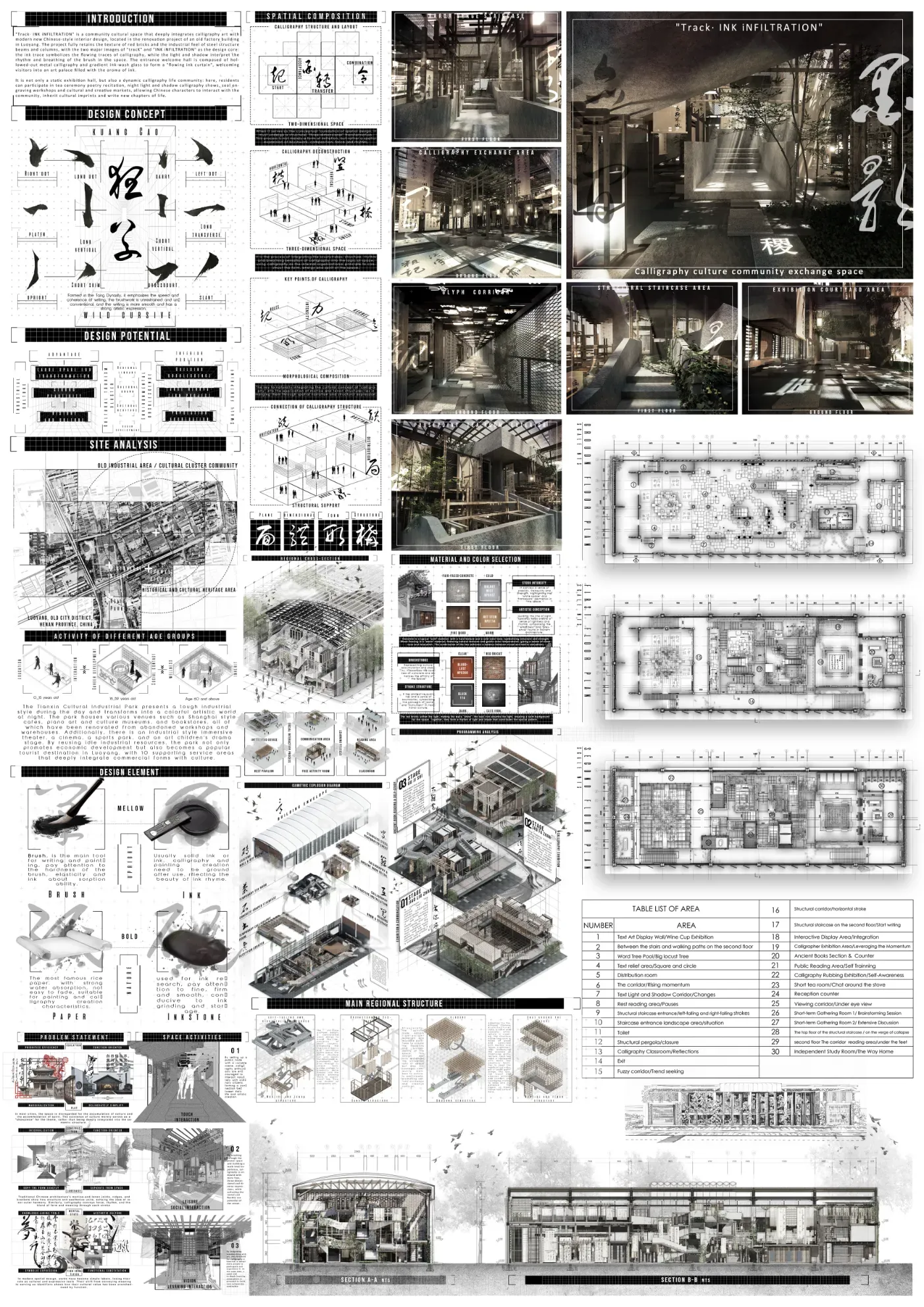
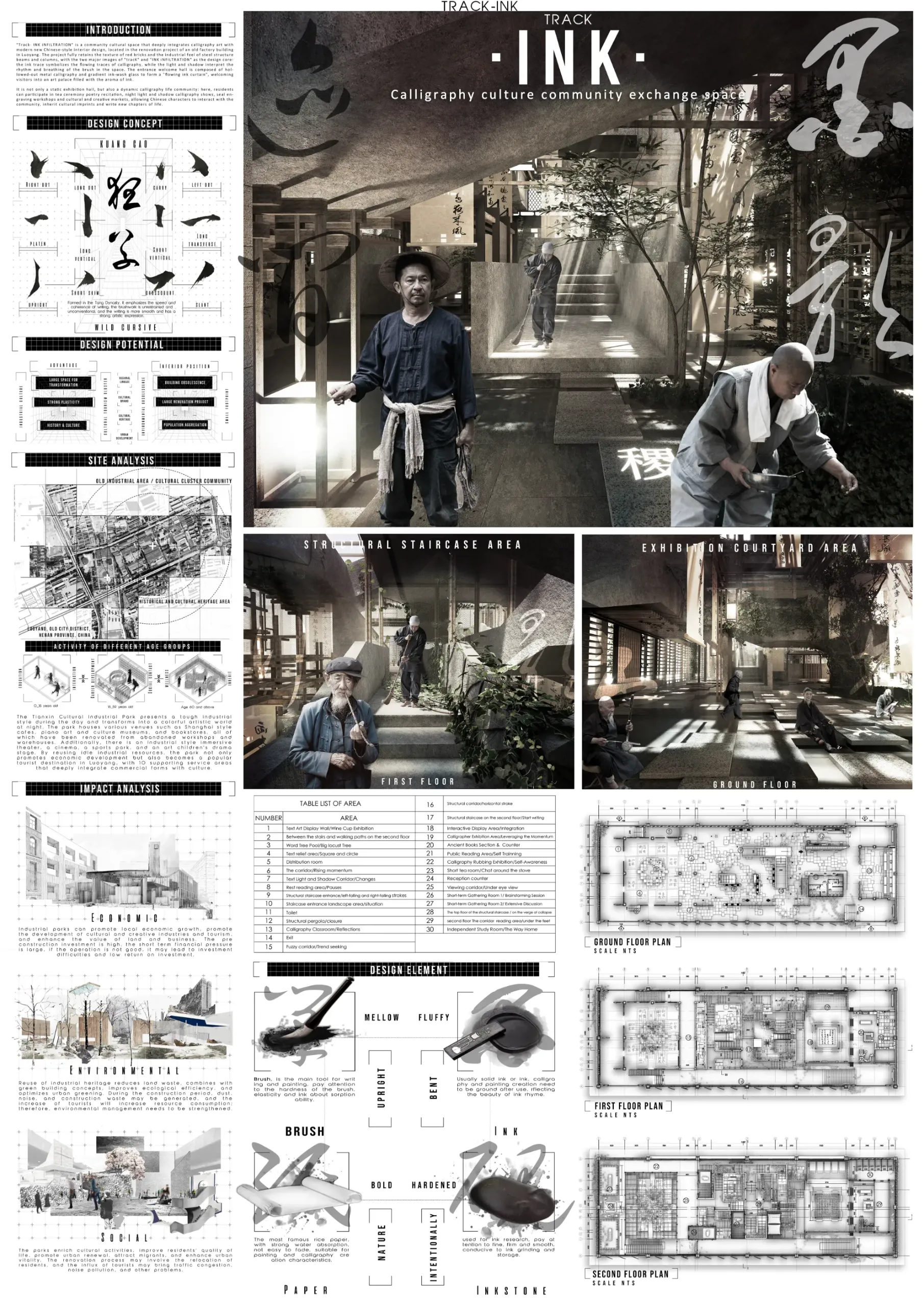
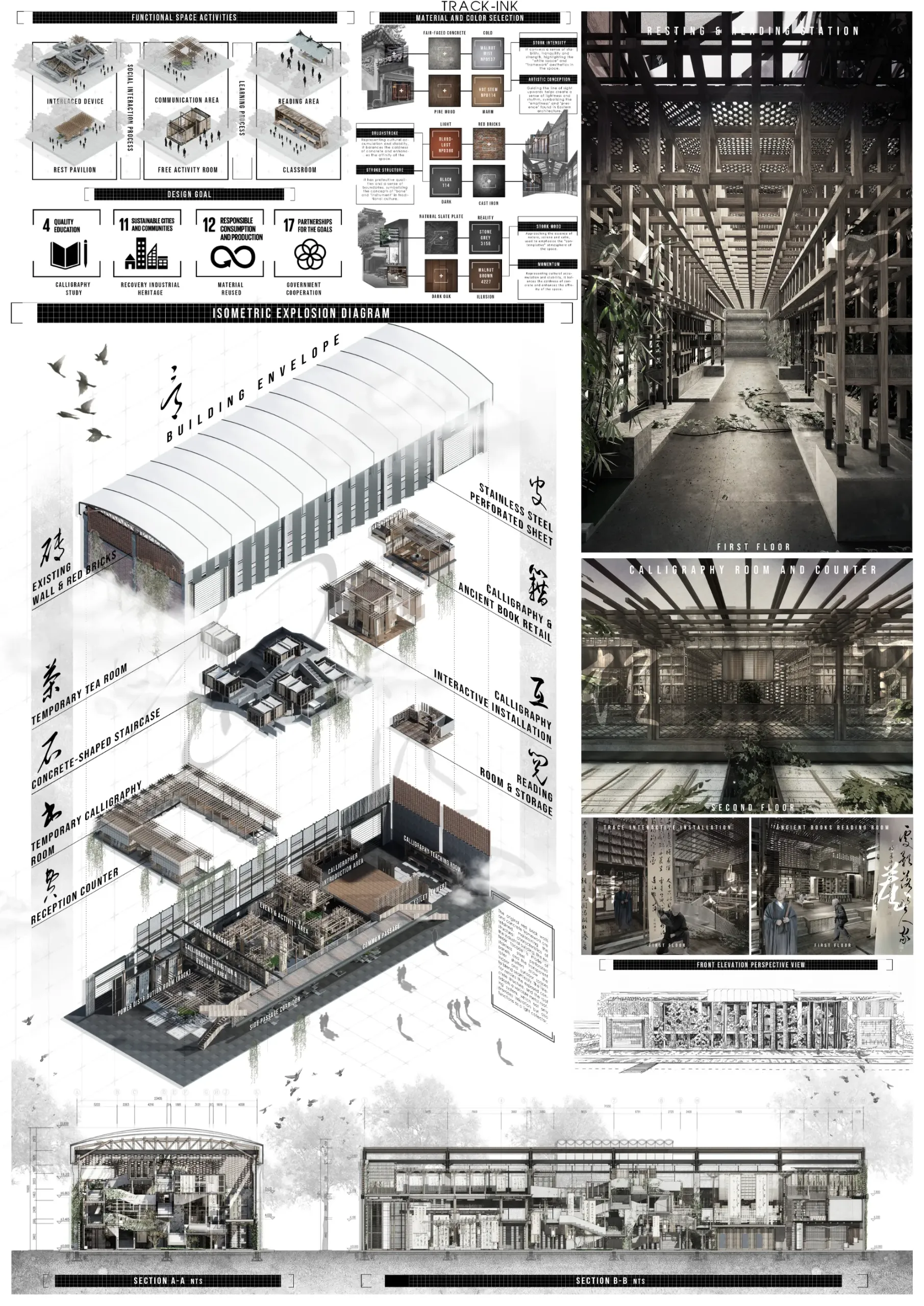
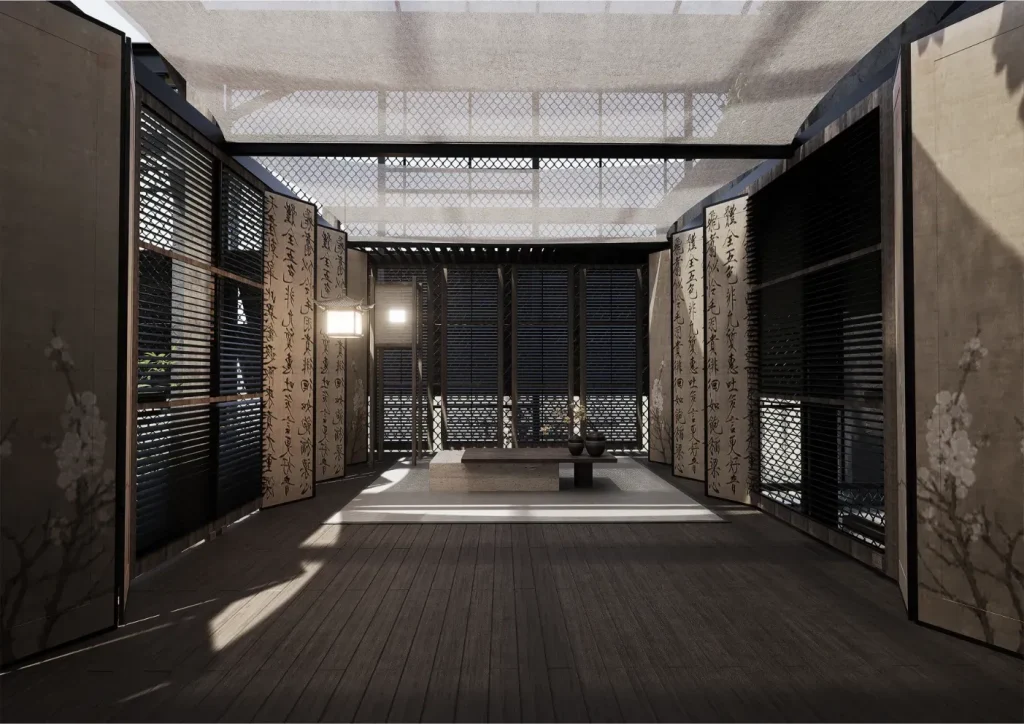
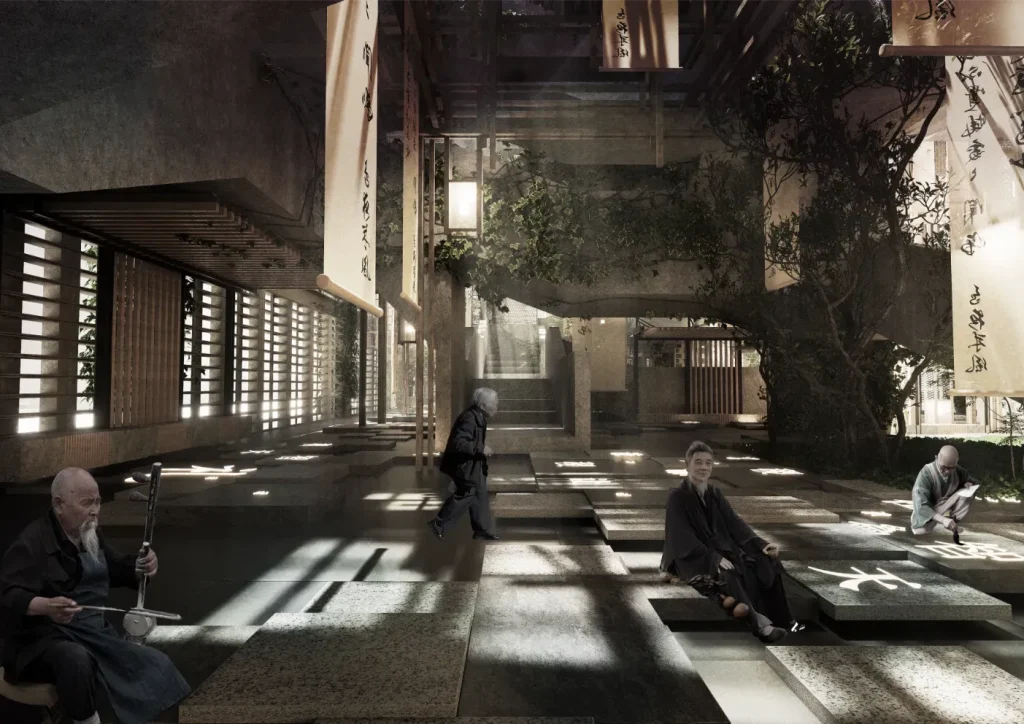
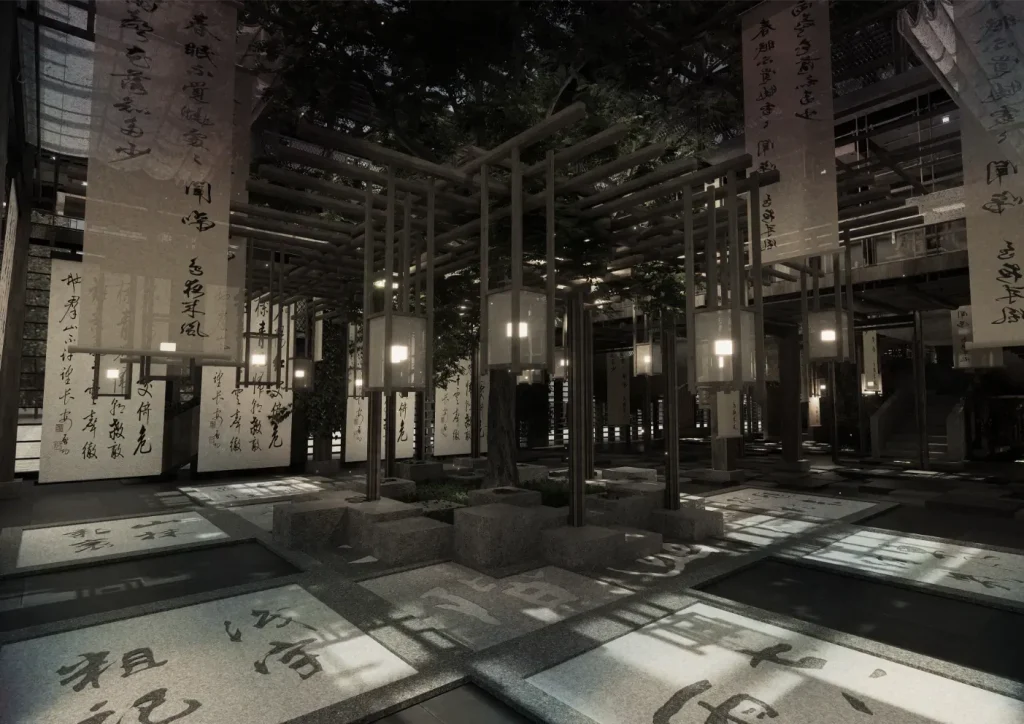
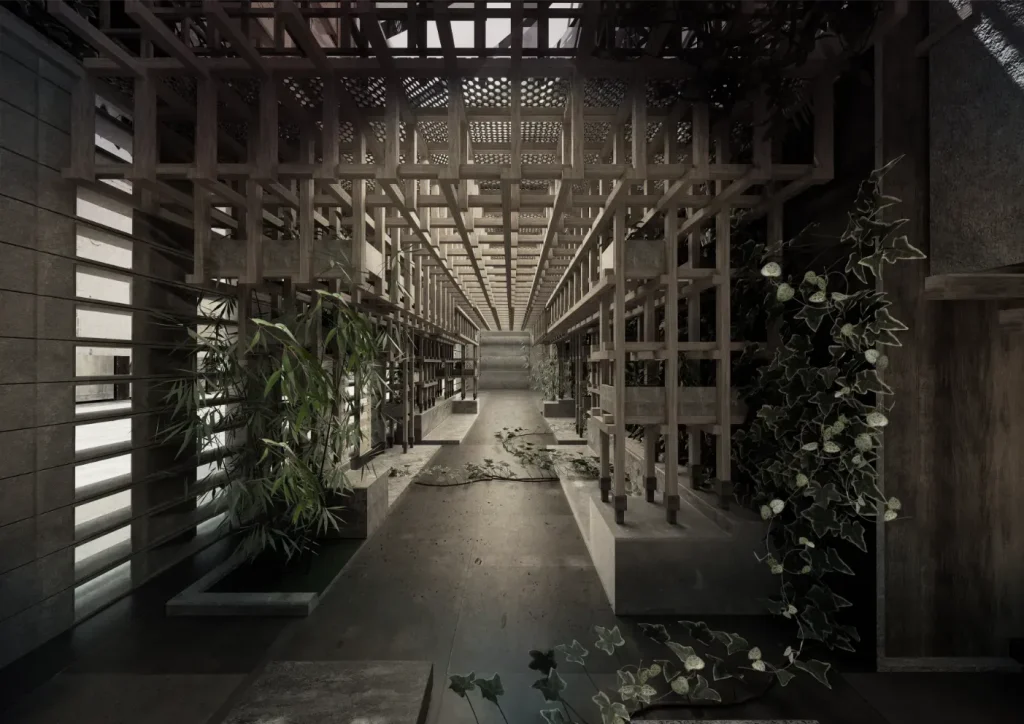
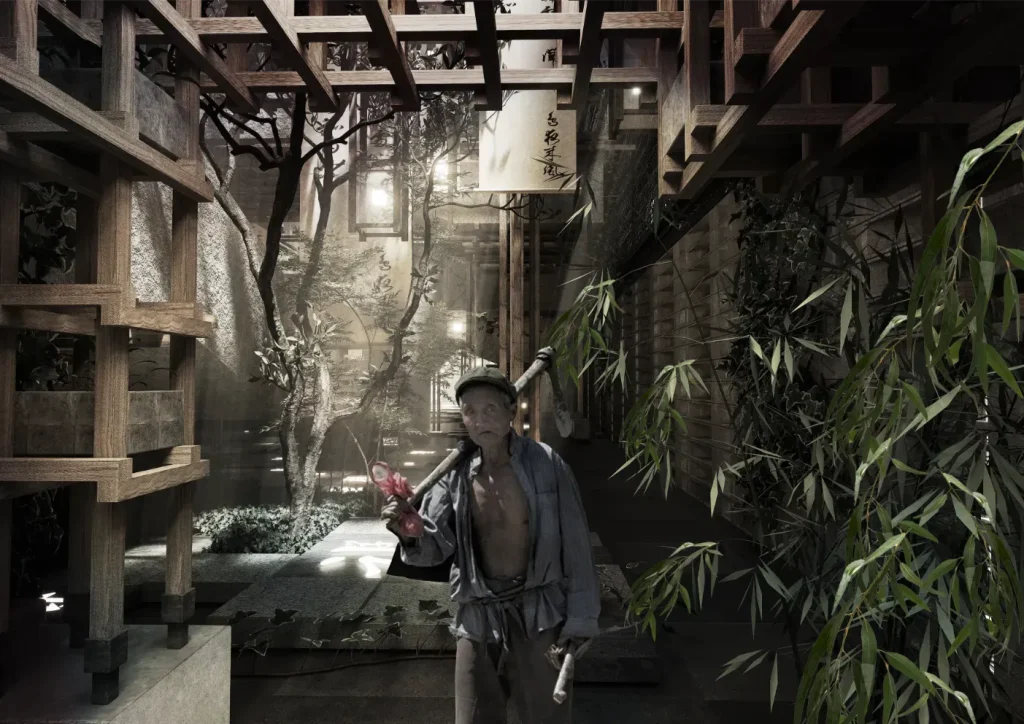
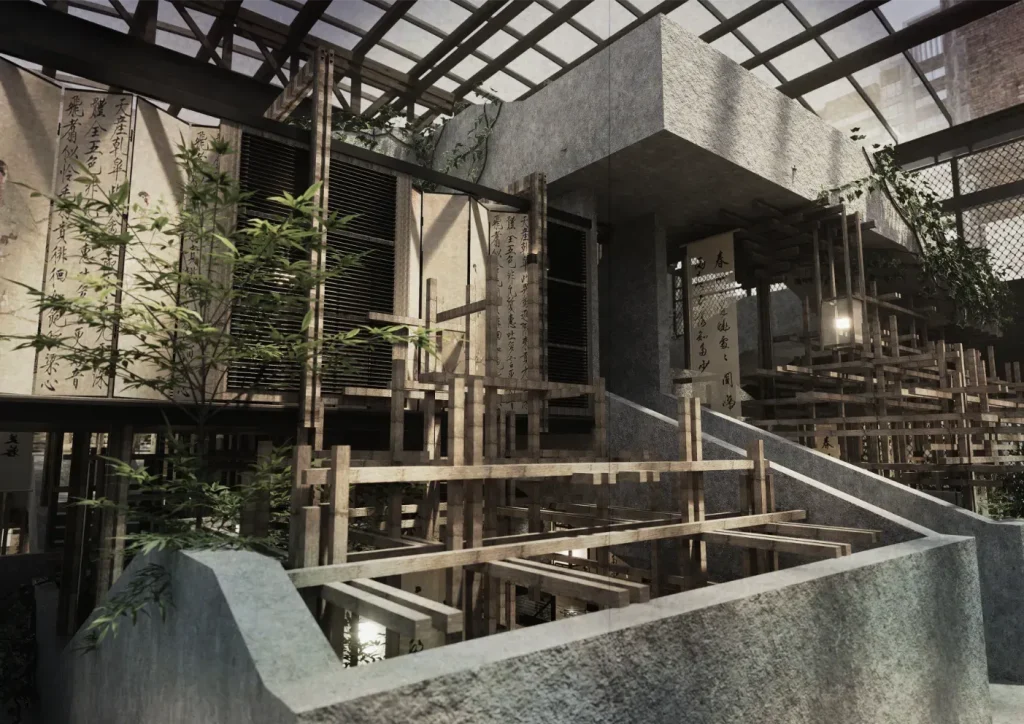
This project addresses the urgent question of how cultural legacy can remain active and relevant within contemporary communities. Rooted in Luoyang — widely recognized as a source of Chinese calligraphic tradition — it responds to the visible decline of everyday calligraphy practices once embedded in public life. In neighborhood squares, calligraphy was not an institutionally preserved art, but a shared, lived activity. Today, this cultural connection is weakening due to digital substitution and reduced physical participation. Track · INK proposes a spatial strategy that transforms cultural legacy from a static artifact into an ongoing, collective process.
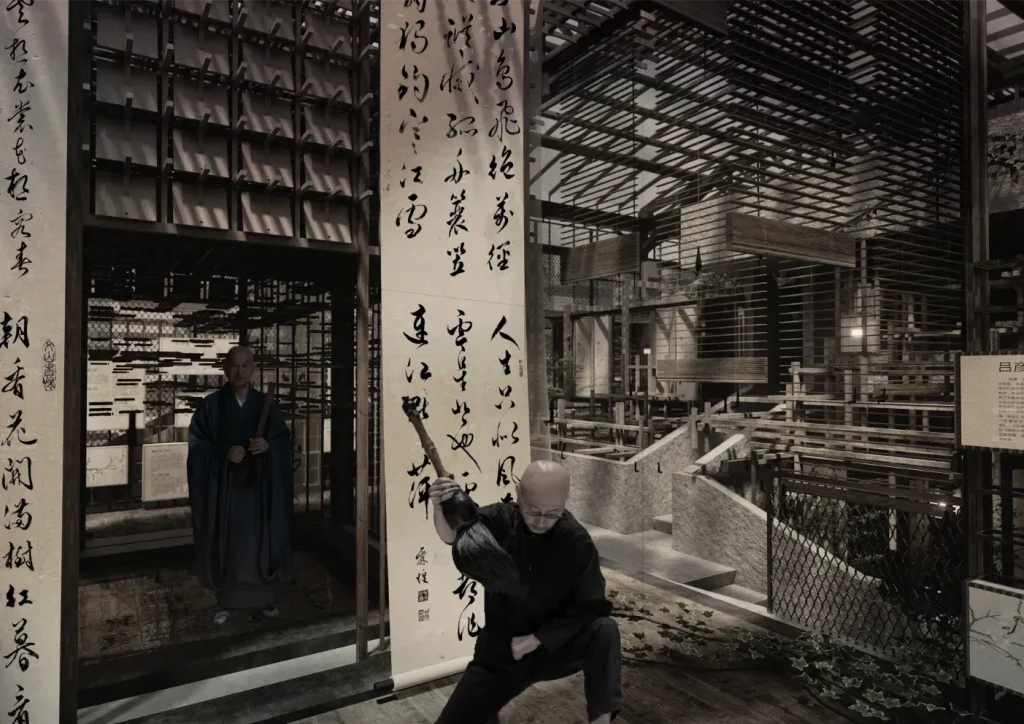
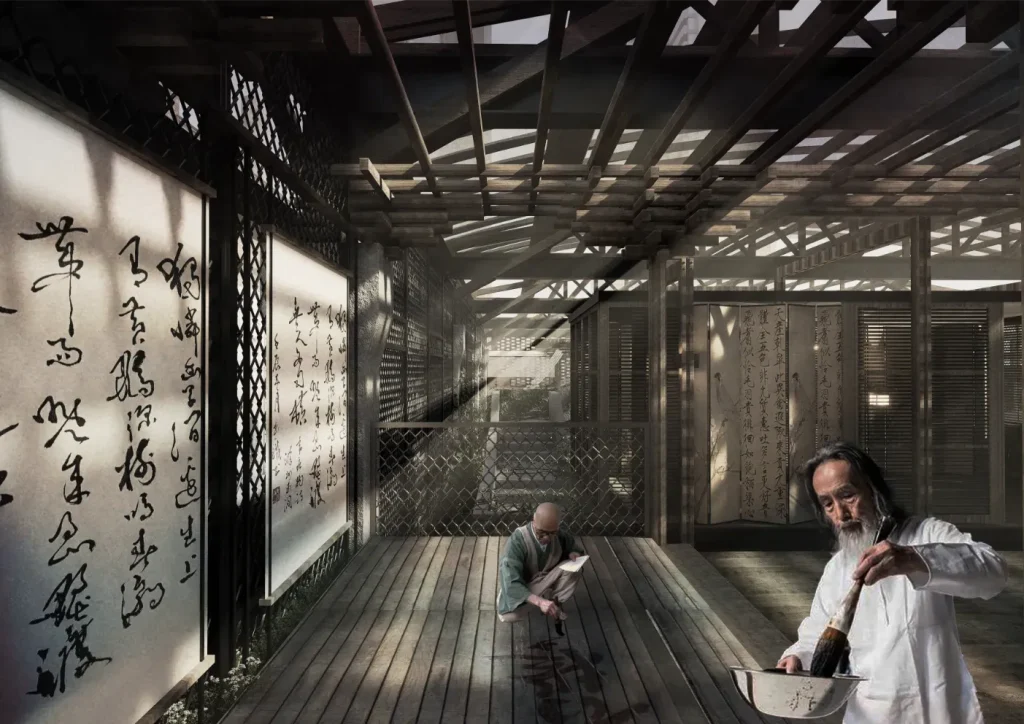
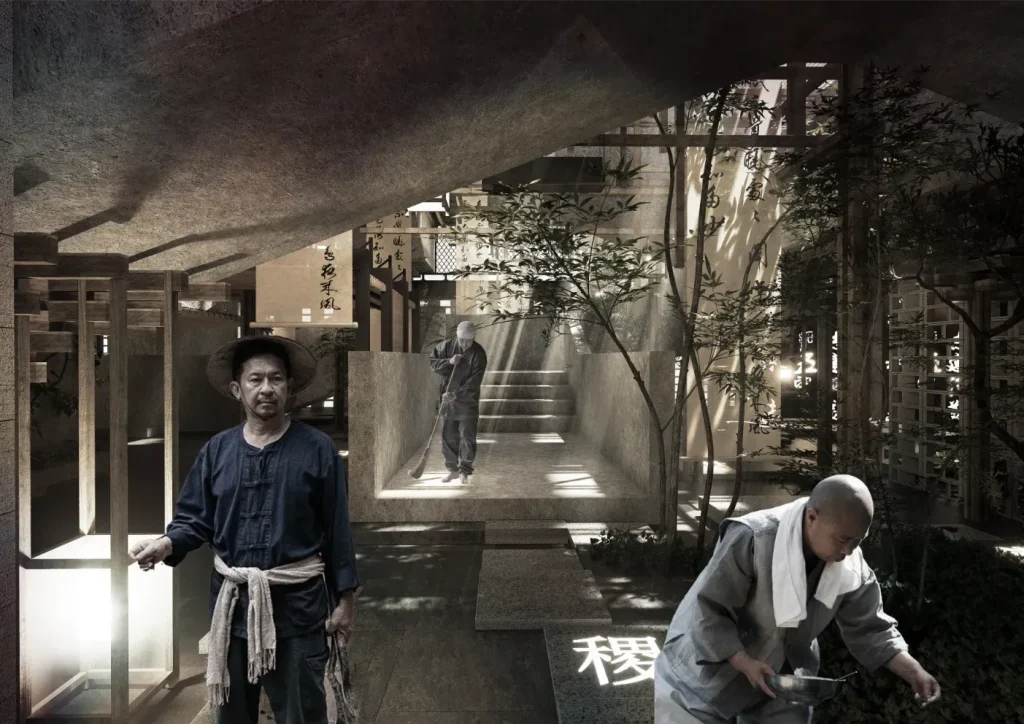
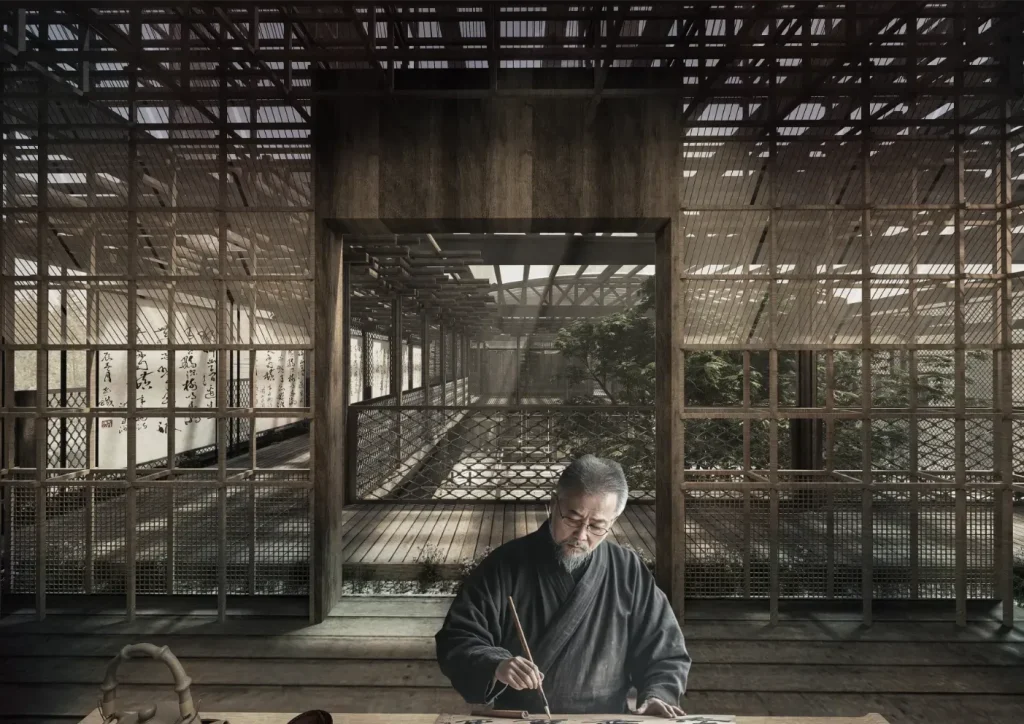
Rather than preserving calligraphy as a symbol or exhibition, the project reframes it as cultural action. The design does not attempt to recreate tradition artificially, but instead builds conditions for its continuation. By reintroducing calligraphy into daily routines, the project restores its role as a medium of communication, memory, and learning. Cultural legacy is therefore understood not as something to be stored, but something to be practiced, shared, and continuously rewritten by the community.
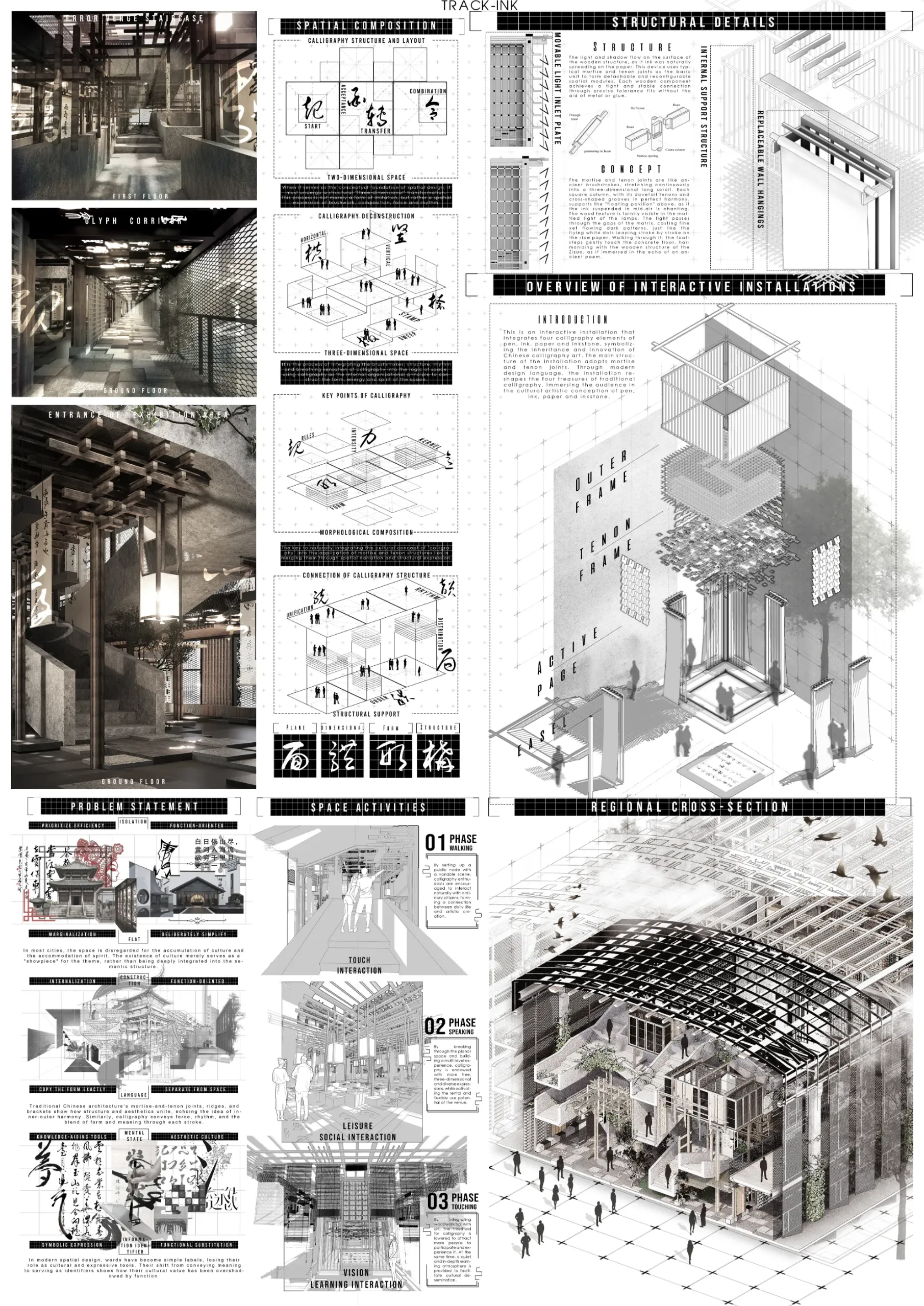
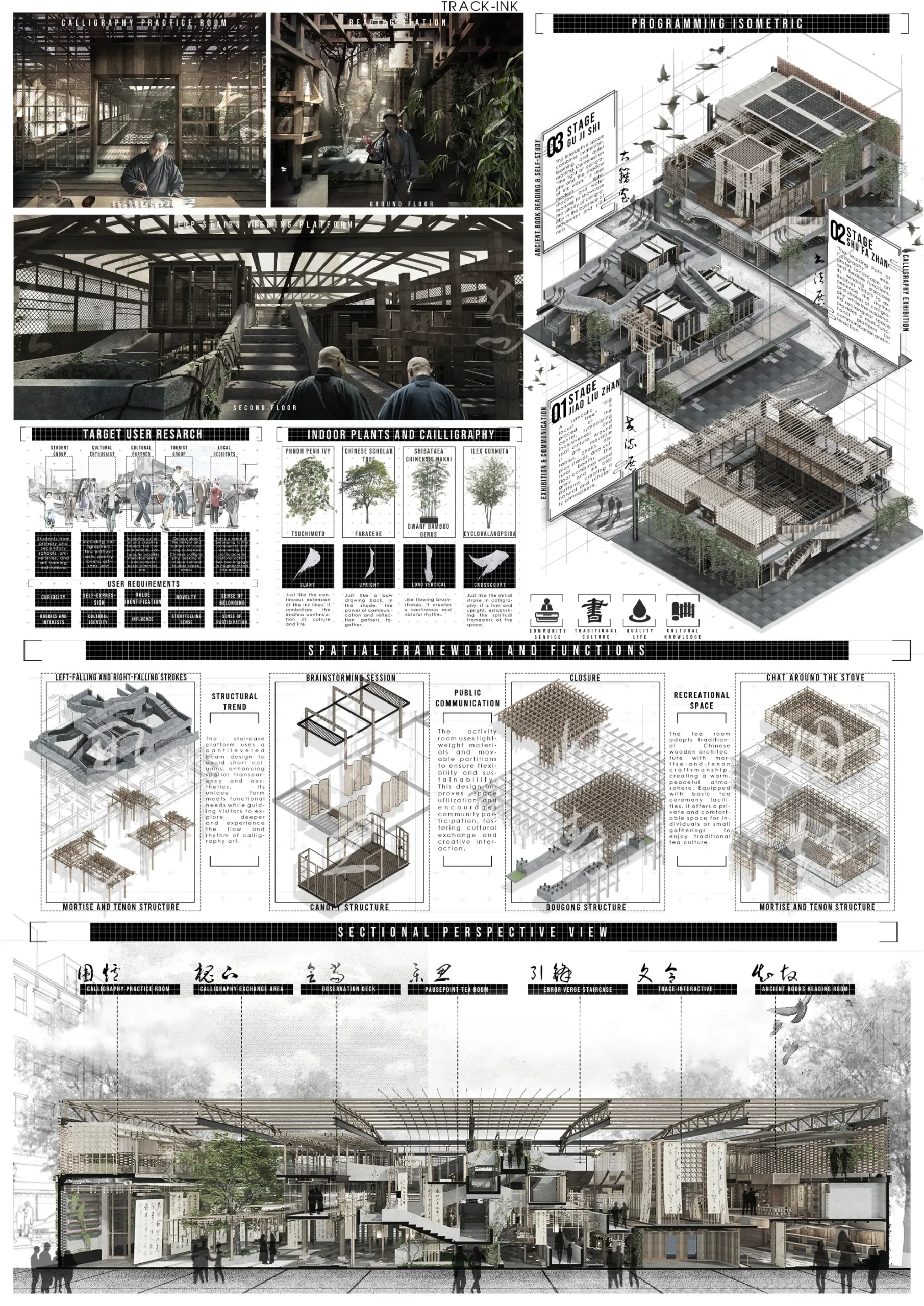
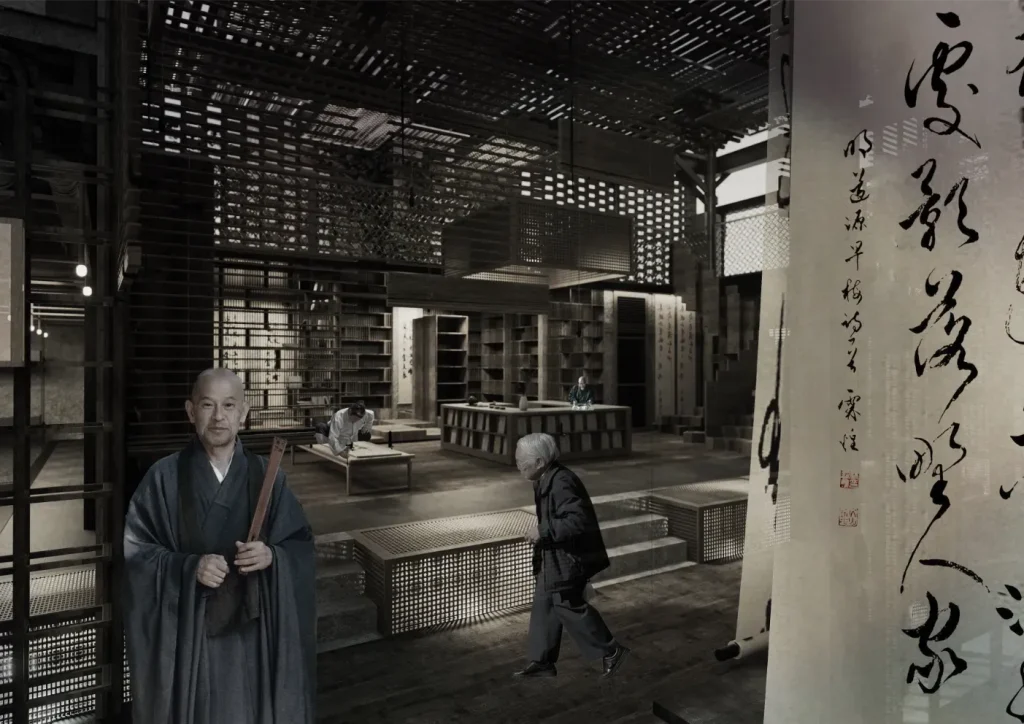
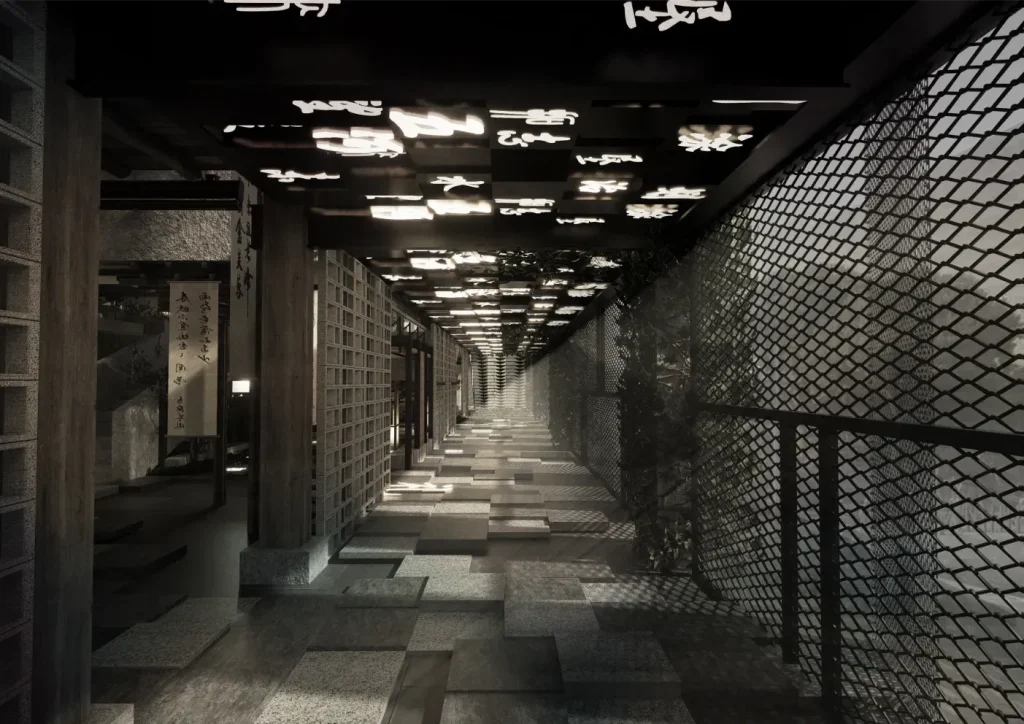
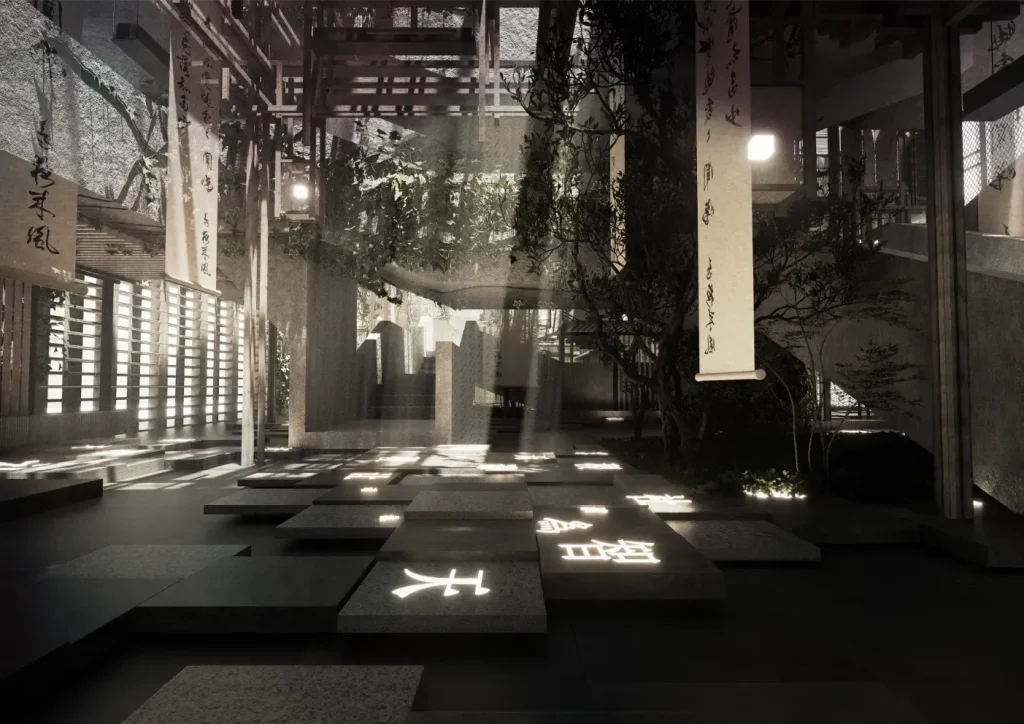
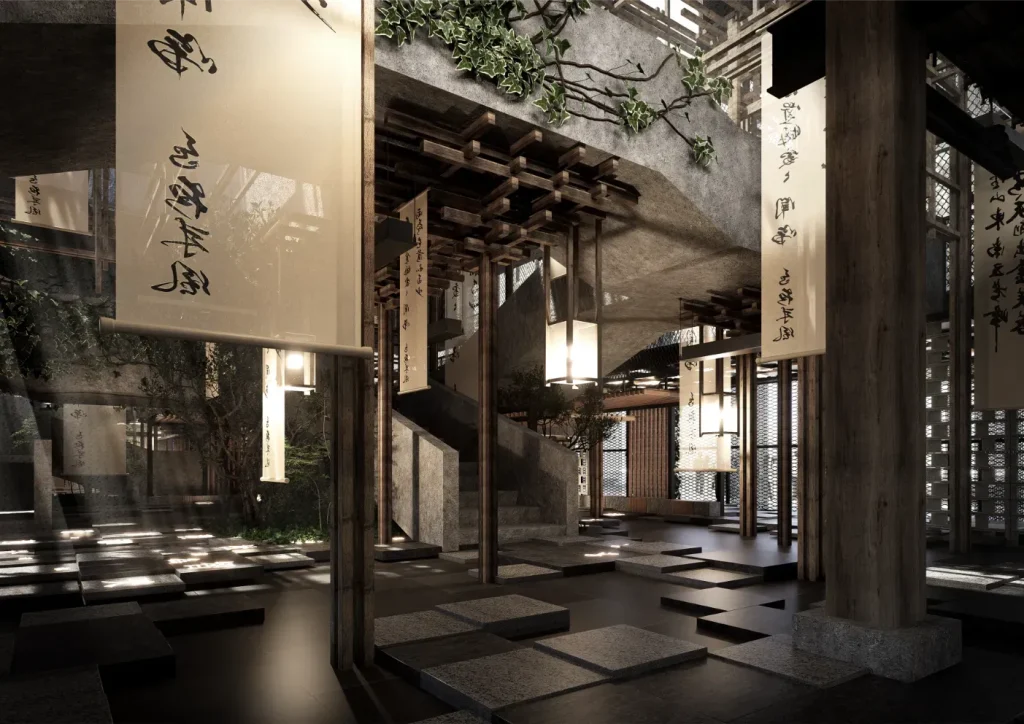
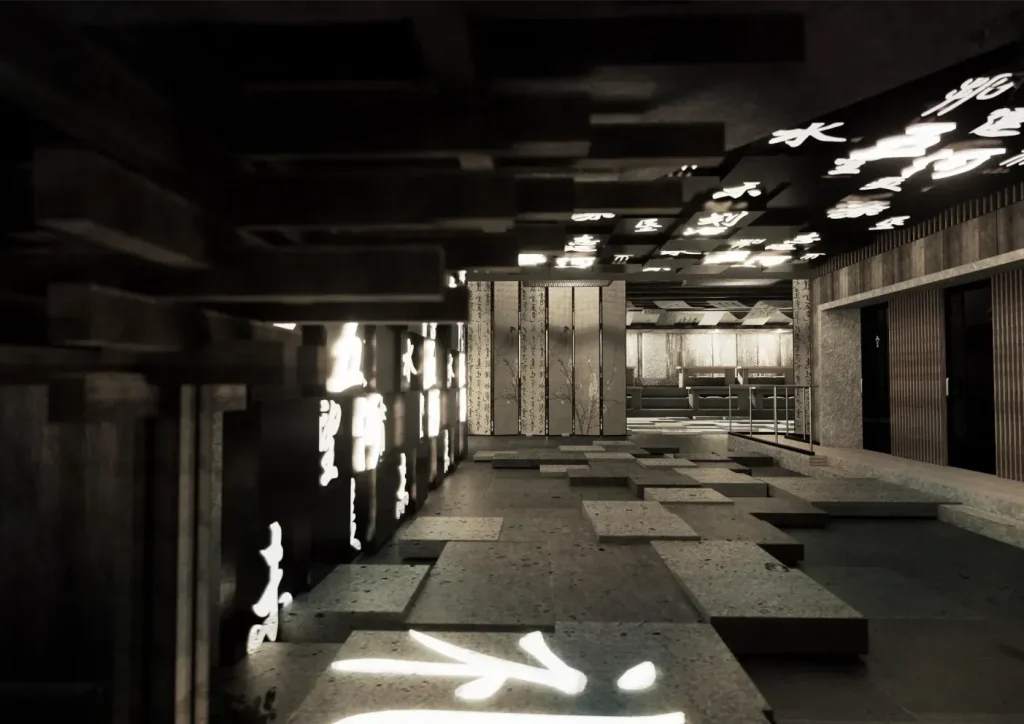
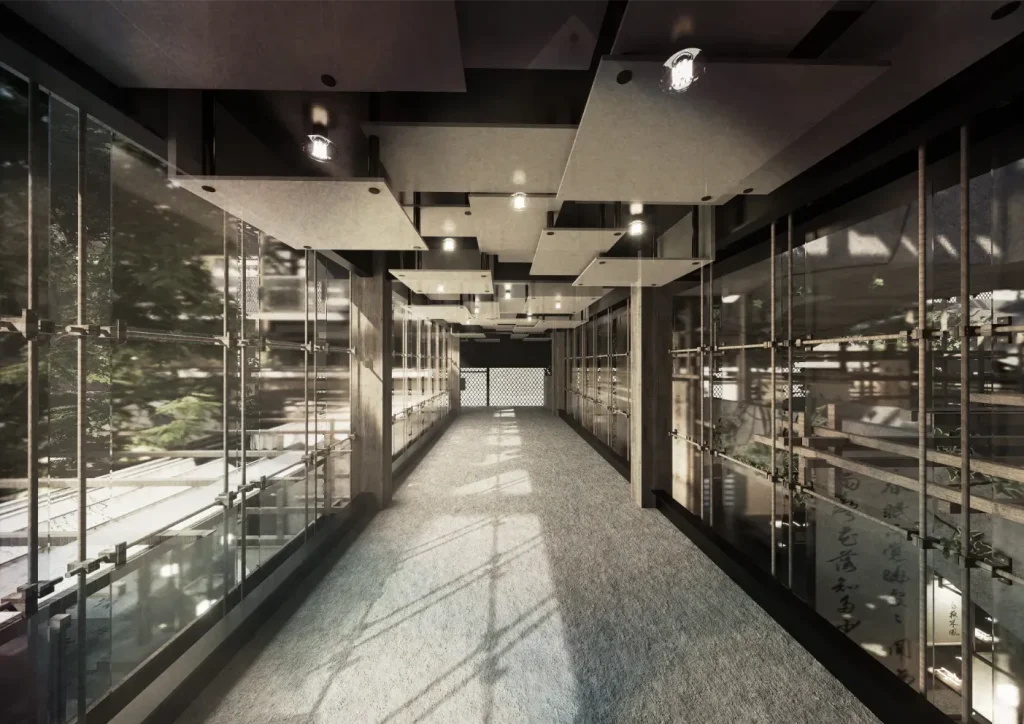
The conceptual framework derives directly from the internal logic of calligraphy. Inspired by the expressive yet structured nature of Tang Dynasty wild cursive script, the design translates its fundamental stroke system into spatial organization. The four stages of writing — Qi (BEGINNING), Cheng (CONNECTION), Zhuan (TRANSFORMATION), and He (COMBINATION) — become four interconnected spatial conditions. “Qi” establishes a hybrid cultural platform for gathering, interaction, and informal exchange. “ Cheng ” forms a transitional network that emphasizes movement, accessibility, and spatial continuity. “ Zhuan ” introduces variation and intensity through experiential spaces that merge exhibition, participation, and temporary programs. “He” consolidates knowledge through learning environments and interactive installations, enabling reflection and reinterpretation. Together, these spaces construct a narrative sequence where users do not simply occupy space, but move through a process analogous to writing itself.
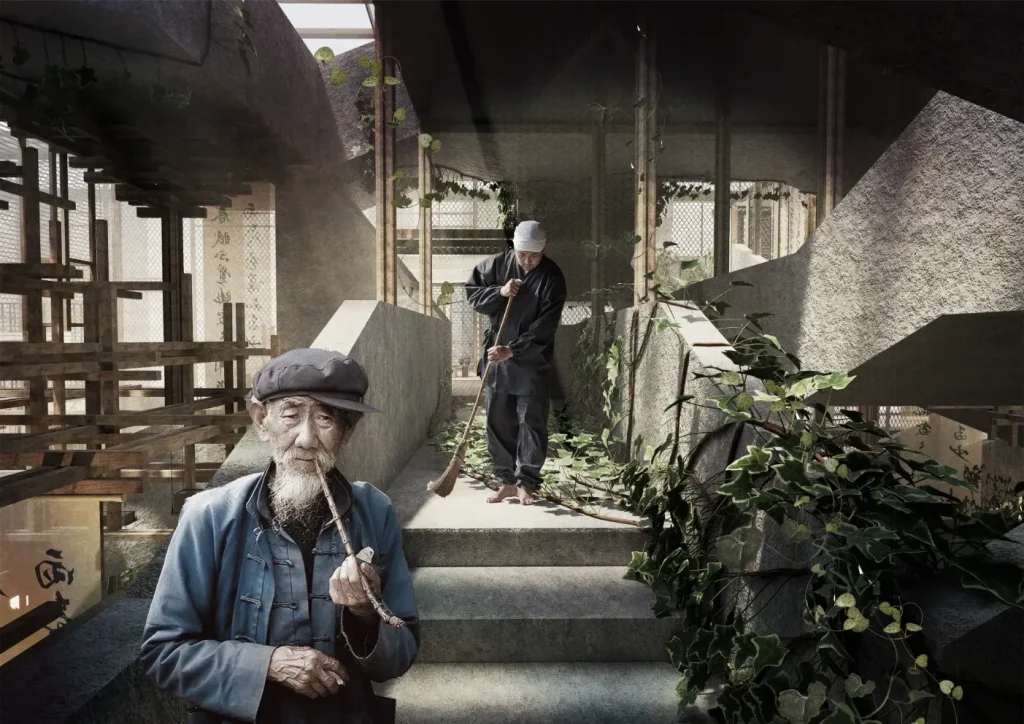
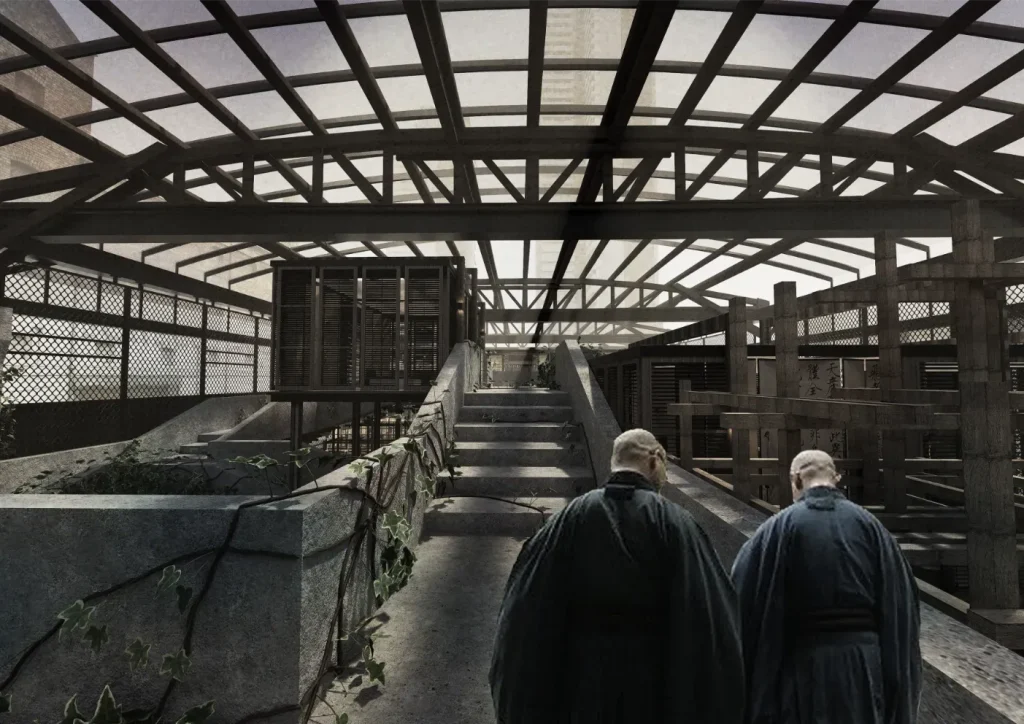
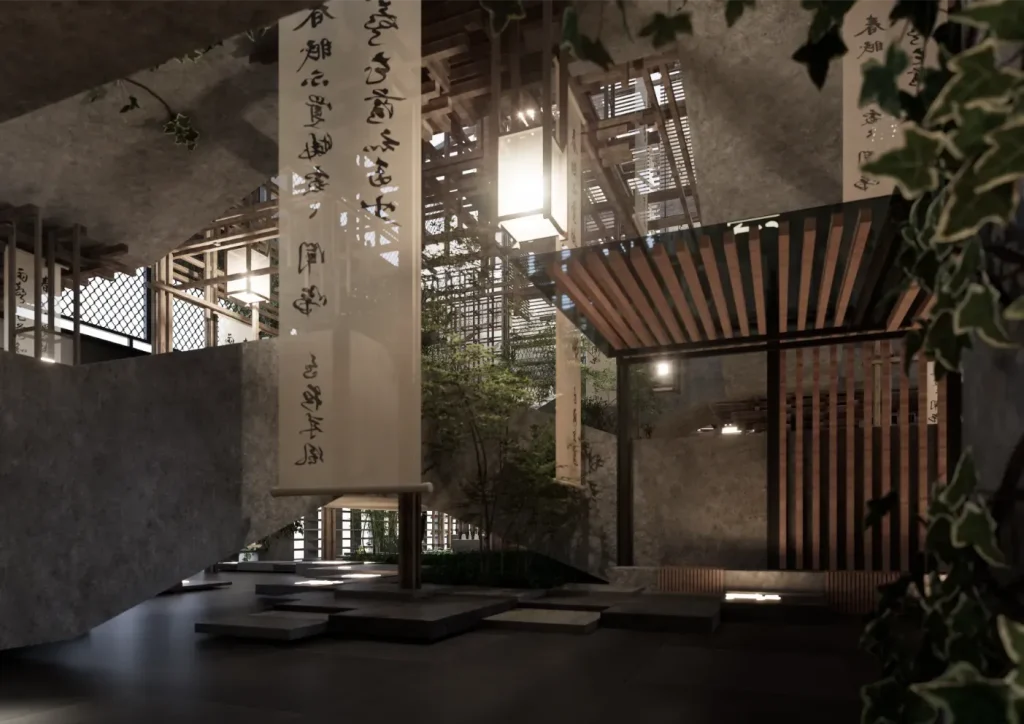
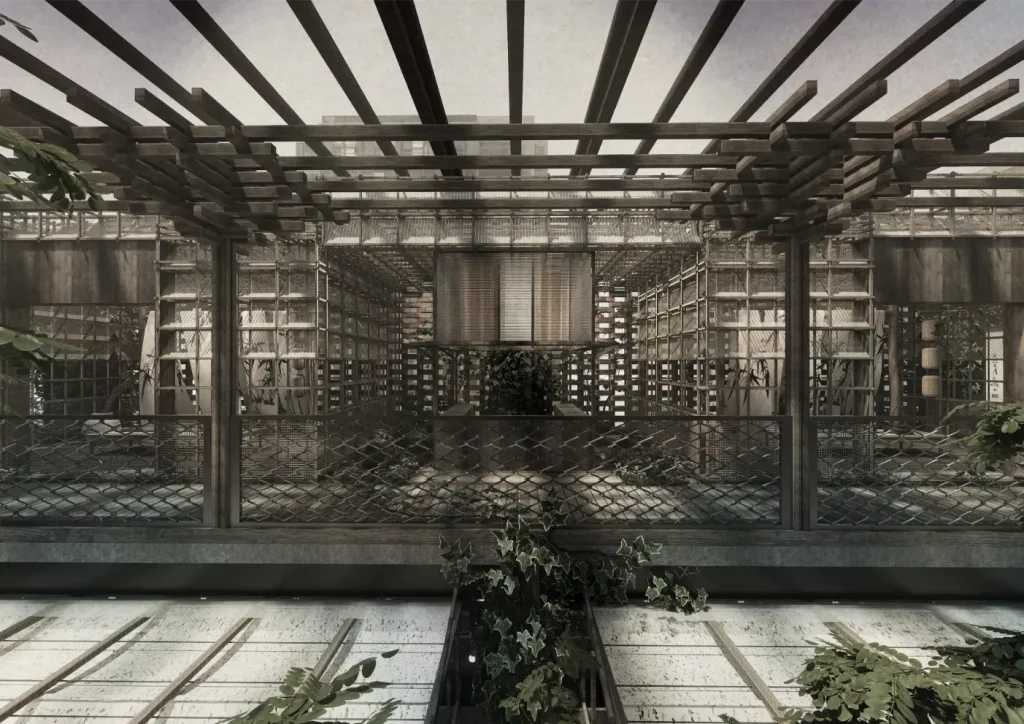
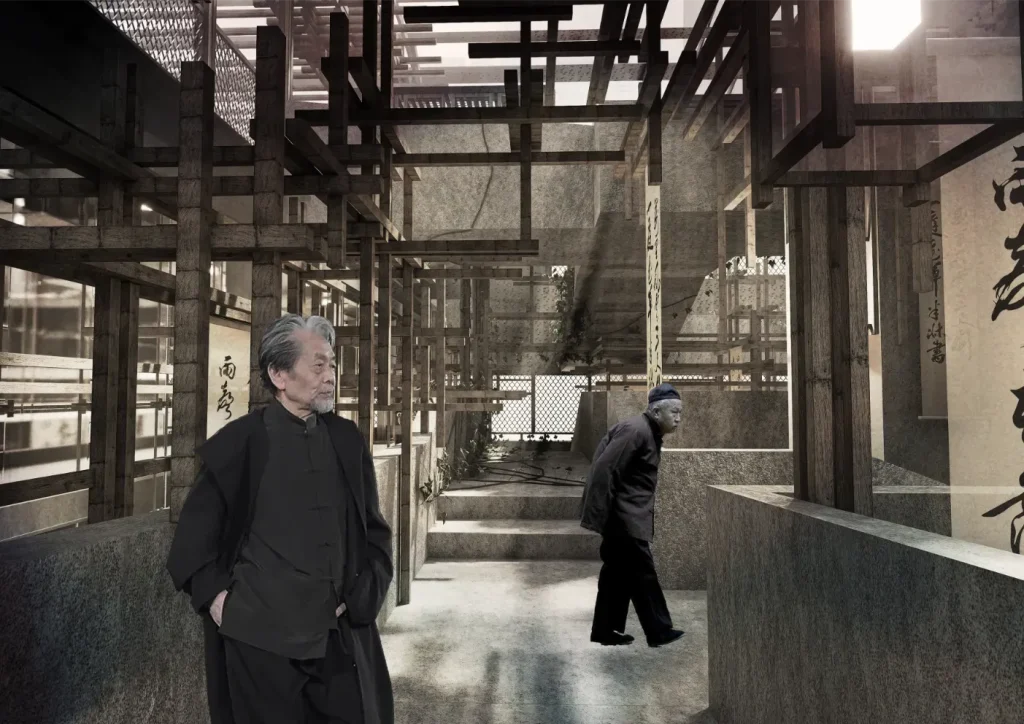
The project is situated within the Luoyang Tianxin Cultural Industrial Park, a former industrial site carrying significant historical memory. While redevelopment has introduced commercial vitality, it has also diluted opportunities for genuine public cultural engagement. This condition is treated not as a limitation but as an opportunity to reinsert meaningful cultural infrastructure. By retaining the industrial framework and integrating adaptable elements such as modular units and recycled materials, the design establishes a dialogue between heritage and contemporary use. The coexistence of old structures and new interventions reflects the continuity of legacy through transformation rather than preservation alone.
Spatially, circulation and form are conceived as extensions of calligraphic movement. Paths, thresholds, and vertical connections simulate the rhythm of strokes, allowing users ’ movement — pausing, turning, gathering — to become a form of embodied writing. Flexible programmatic elements ensure that spaces can shift between everyday use and cultural events, maintaining constant activation. Environmental strategies, including natural ventilation, daylighting, and rainwater integration, reinforce sustainability as part of cultural responsibility, linking ecological awareness with long-term legacy.
Ultimately, Track · INK redefines cultural legacy as a living system sustained through participation. It transforms space into a platform where culture is not displayed but enacted, not preserved as a fixed past but generated in the present. By enabling continuous engagement, the project ensures that calligraphy remains embedded in community life—accessible, evolving, and collectively authored.
Showcase your design to an international audience
SUBMIT NOW
Image: Agrapolis Urban Permaculture Farm by David Johanes Palar
Top
PROJECT NAME: Track-INK Calligraphy Culture Community Center Description:
LOCATION : Tianxin Historical Culture Industry Park in Luoyang City, Henan Province, China
PROJECT TYPE : Community Cultural Activity Center
This project addresses the urgent question of how cultural legacy can remain active and relevant within contemporary communities. Rooted in Luoyang — widely recognized as a source of Chinese calligraphic tradition — it responds to the visible decline of everyday calligraphy practices once embedded in public life. In neighborhood squares, calligraphy was not an institutionally preserved art, but a shared, lived activity. Today, this cultural connection is weakening due to digital substitution and reduced physical participation. Track · INK proposes a spatial strategy that transforms cultural legacy from a static artifact into an ongoing, collective process.
Rather than preserving calligraphy as a symbol or exhibition, the project reframes it as cultural action. The design does not attempt to recreate tradition artificially, but instead builds conditions for its continuation. By reintroducing calligraphy into daily routines, the project restores its role as a medium of communication, memory, and learning. Cultural legacy is therefore understood not as something to be stored, but something to be practiced, shared, and continuously rewritten by the community.
The conceptual framework derives directly from the internal logic of calligraphy. Inspired by the expressive yet structured nature of Tang Dynasty wild cursive script, the design translates its fundamental stroke system into spatial organization. The four stages of writing — Qi (BEGINNING), Cheng (CONNECTION), Zhuan (TRANSFORMATION), and He (COMBINATION) — become four interconnected spatial conditions. “Qi” establishes a hybrid cultural platform for gathering, interaction, and informal exchange. “ Cheng ” forms a transitional network that emphasizes movement, accessibility, and spatial continuity. “ Zhuan ” introduces variation and intensity through experiential spaces that merge exhibition, participation, and temporary programs. “He” consolidates knowledge through learning environments and interactive installations, enabling reflection and reinterpretation. Together, these spaces construct a narrative sequence where users do not simply occupy space, but move through a process analogous to writing itself.
The project is situated within the Luoyang Tianxin Cultural Industrial Park, a former industrial site carrying significant historical memory. While redevelopment has introduced commercial vitality, it has also diluted opportunities for genuine public cultural engagement. This condition is treated not as a limitation but as an opportunity to reinsert meaningful cultural infrastructure. By retaining the industrial framework and integrating adaptable elements such as modular units and recycled materials, the design establishes a dialogue between heritage and contemporary use. The coexistence of old structures and new interventions reflects the continuity of legacy through transformation rather than preservation alone.
Spatially, circulation and form are conceived as extensions of calligraphic movement. Paths, thresholds, and vertical connections simulate the rhythm of strokes, allowing users ’ movement — pausing, turning, gathering — to become a form of embodied writing. Flexible programmatic elements ensure that spaces can shift between everyday use and cultural events, maintaining constant activation. Environmental strategies, including natural ventilation, daylighting, and rainwater integration, reinforce sustainability as part of cultural responsibility, linking ecological awareness with long-term legacy.
Ultimately, Track · INK redefines cultural legacy as a living system sustained through participation. It transforms space into a platform where culture is not displayed but enacted, not preserved as a fixed past but generated in the present. By enabling continuous engagement, the project ensures that calligraphy remains embedded in community life—accessible, evolving, and collectively authored.
The AYDA Awards is part of Colouring Lives, Nippon Paint’s Corporate Social Responsibility (CSR) programme, which is dedicated to nurturing the next generation of Architectural and Interior Design talents. Through cross-learning and industry exposure, AYDA provides a platform for students to develop their skills and grow as designers. Discover more of Nippon Paint’s CSR initiatives under Colouring Lives.