BACK TO finale_winnerS
BEST DESIGN IMPACT: INTERIOR DESIGN CATEGORY
CONTINUUM OF KNOWLEDGE
Continuum of KnowledgeConcept Statement Continuum of Knowledge is a proposal that reimagines architecture as an instrument of healing, memory and collective progress. It responds to a global condition where monuments once built as vessels of knowledge, culture and shared identity have been reduced to symbols of division. In wars and conflicts, cultural landmarks are often […]
Continuum of Knowledge
Concept Statement
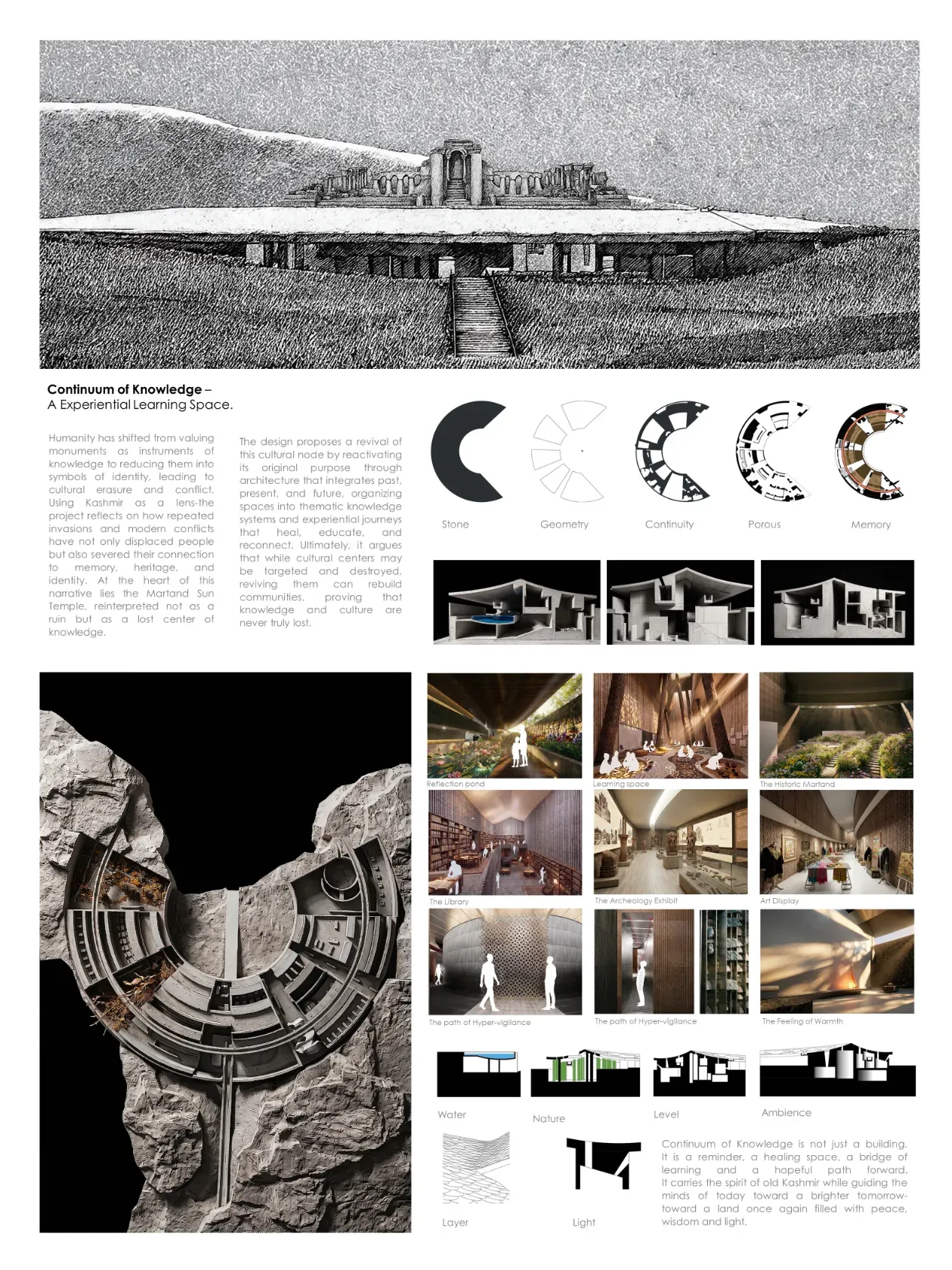
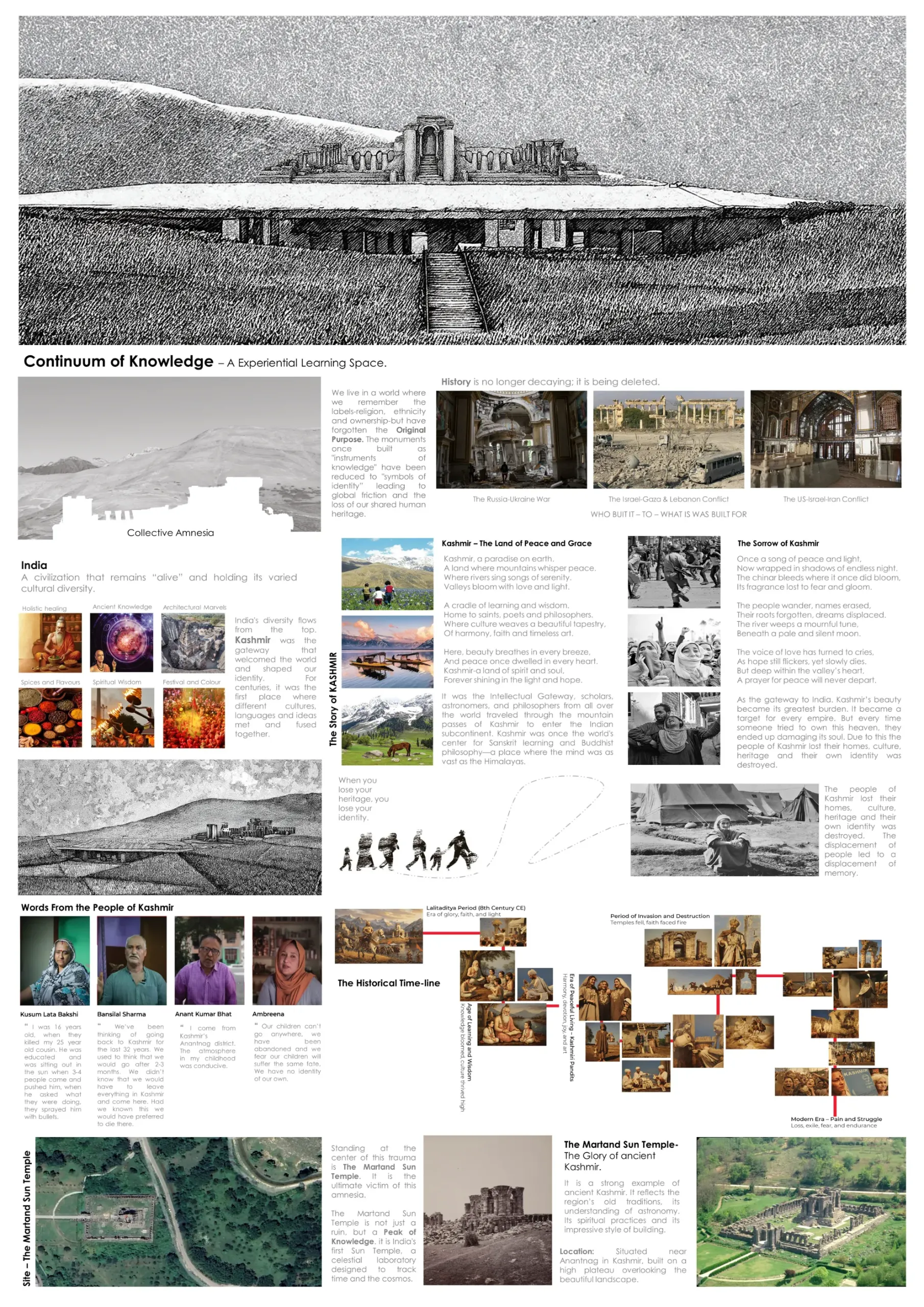
Continuum of Knowledge is a proposal that reimagines architecture as an instrument of healing, memory and collective progress. It responds to a global condition where monuments once built as vessels of knowledge, culture and shared identity have been reduced to symbols of division. In wars and conflicts, cultural landmarks are often targeted because destroying heritage erases the community itself. When civilizations lose these anchors, they lose not only buildings but their own identity.
Within this context, the project turns to India, a civilization known for its diversity, spiritual depth, scientific wisdom and living traditions. At its northern threshold lies Kashmir, historically the gateway through which scholars, travellers and philosophers entered the subcontinent. For centuries, it was a centre of Sanskrit learning, Buddhist philosophy, Hinduism and cultural exchange where nature, beauty and intellect coexisted. Yet Kashmir’s beauty also made it vulnerable. Desired by empires and shaped by conflict, the region suffered displacement, fractured memories and disconnected heritage. Today, its deeper identity of harmony and learning is often overshadowed by narratives of unrest. This project seeks to restore that forgotten essence.
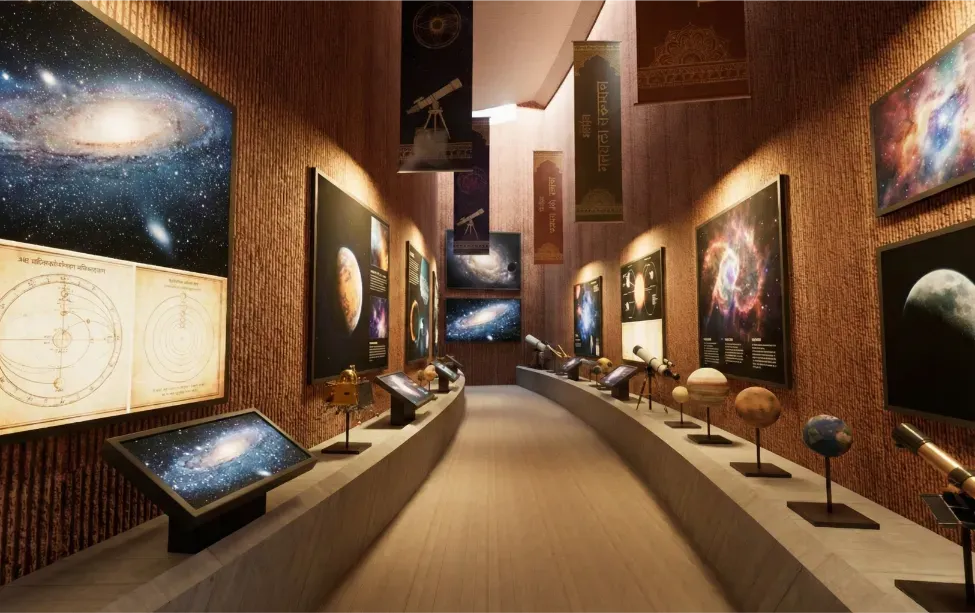
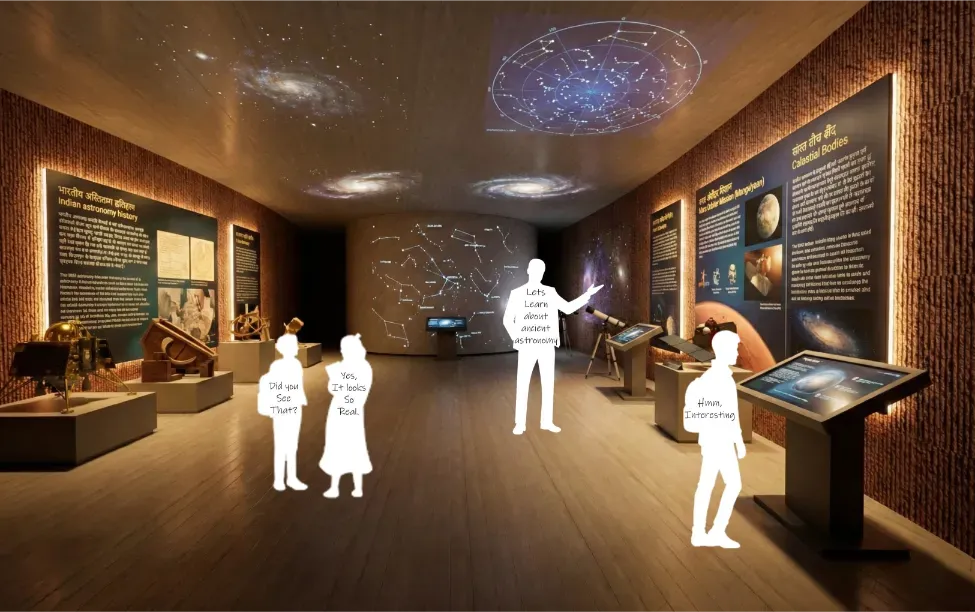
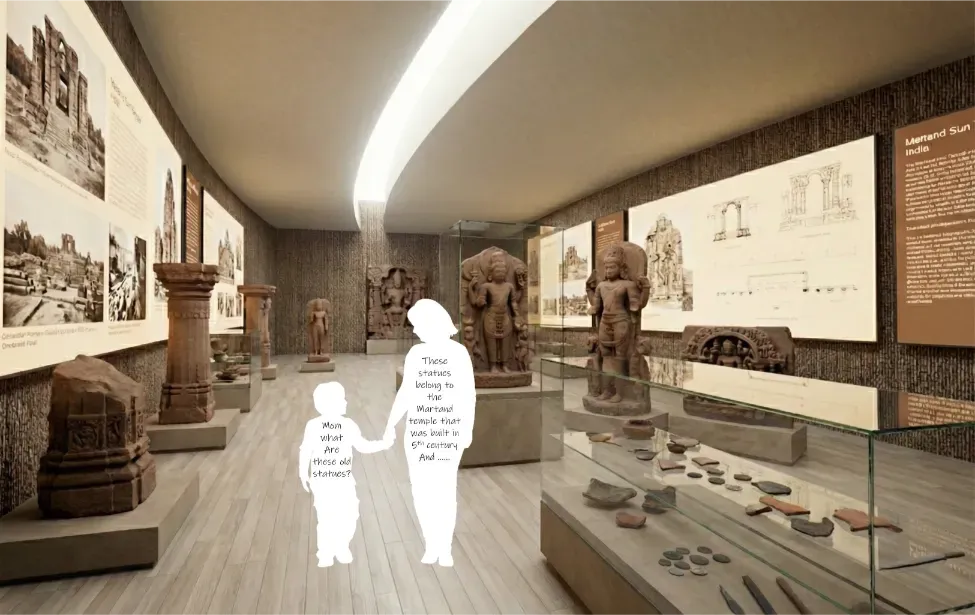
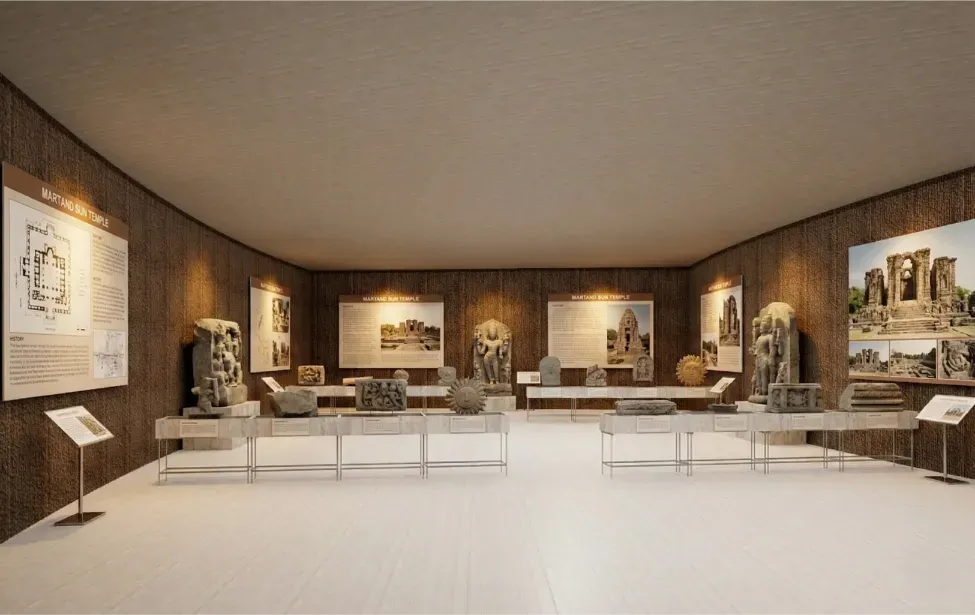
At the centre of this narrative stands the Martand Sun Temple, one of Kashmir’s most significant landmarks. More than a ruin, it was once a sophisticated node of public intellect-an architectural observatory aligned with celestial movement, reflecting ancient understandings of astronomy, geometry and spirituality. Its destruction marked not only the loss of a monument, but of a mindset rooted in it.
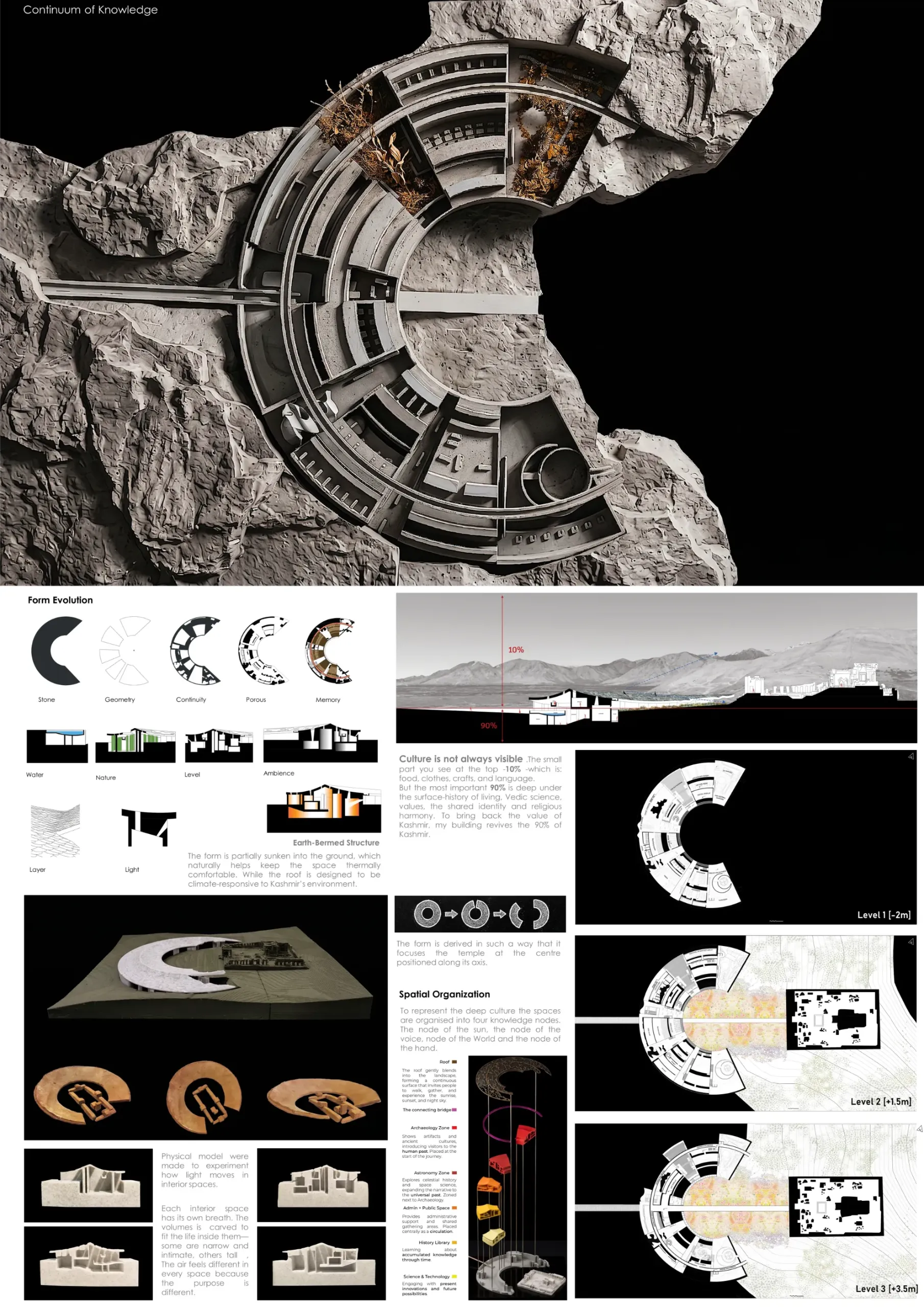
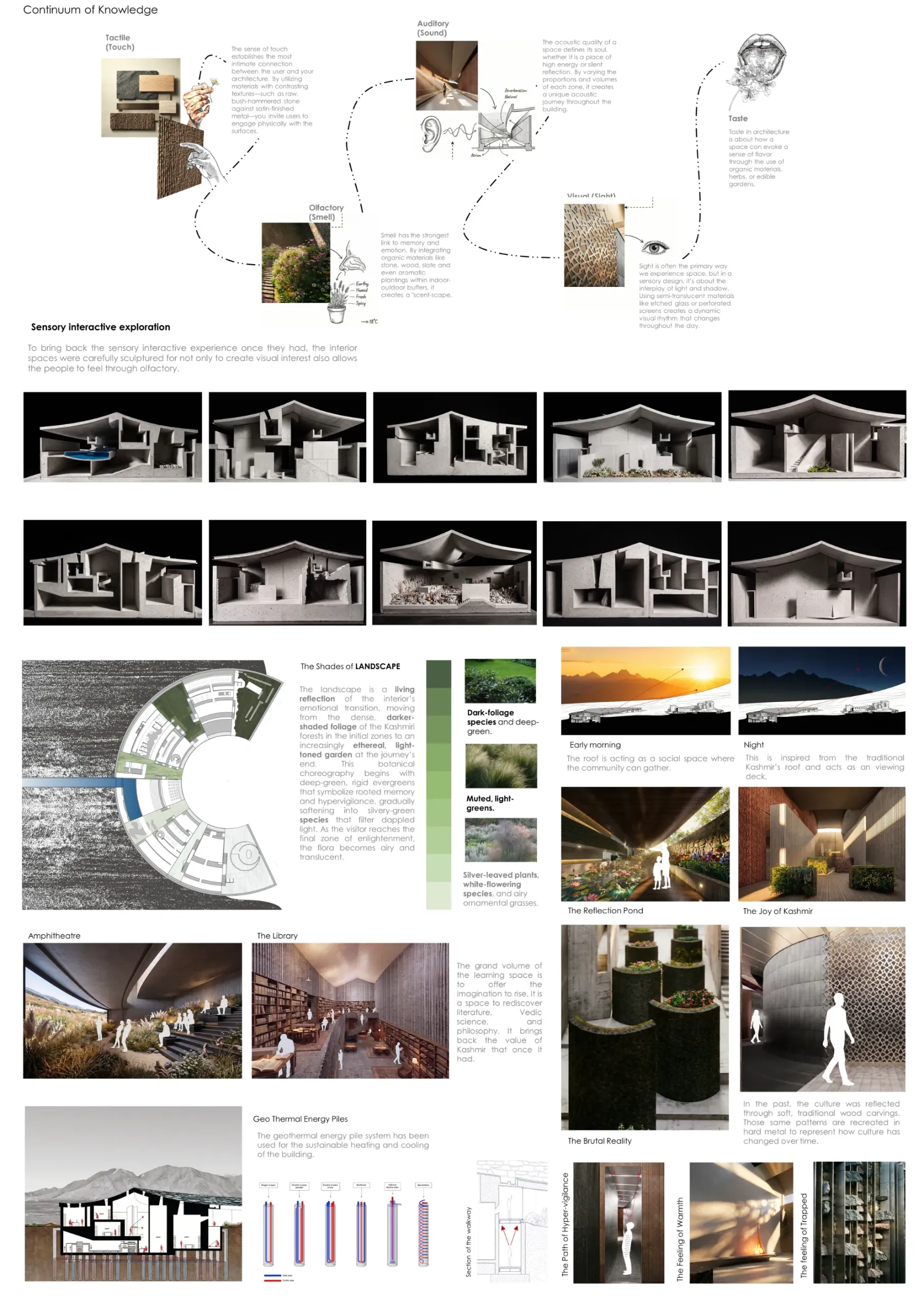
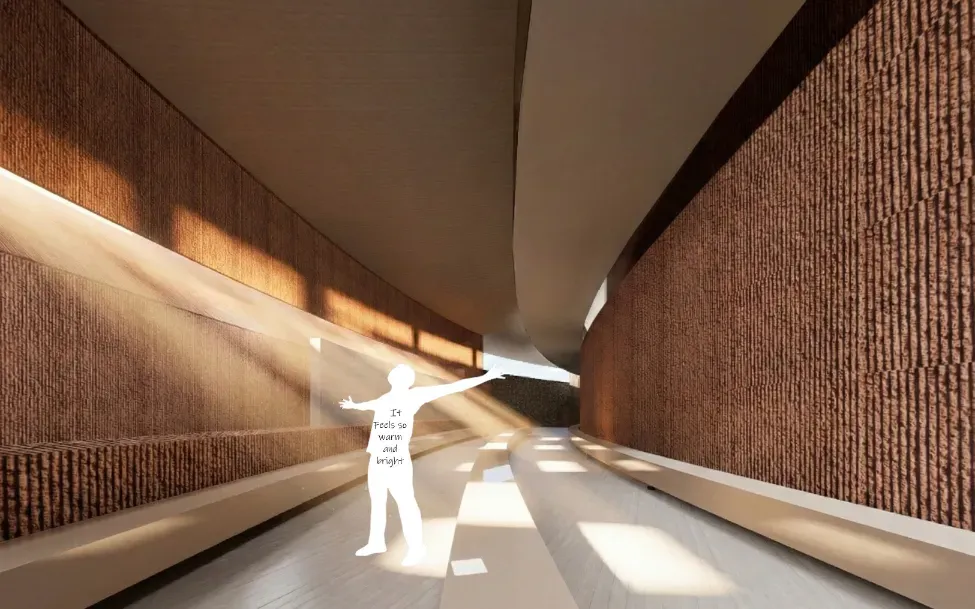
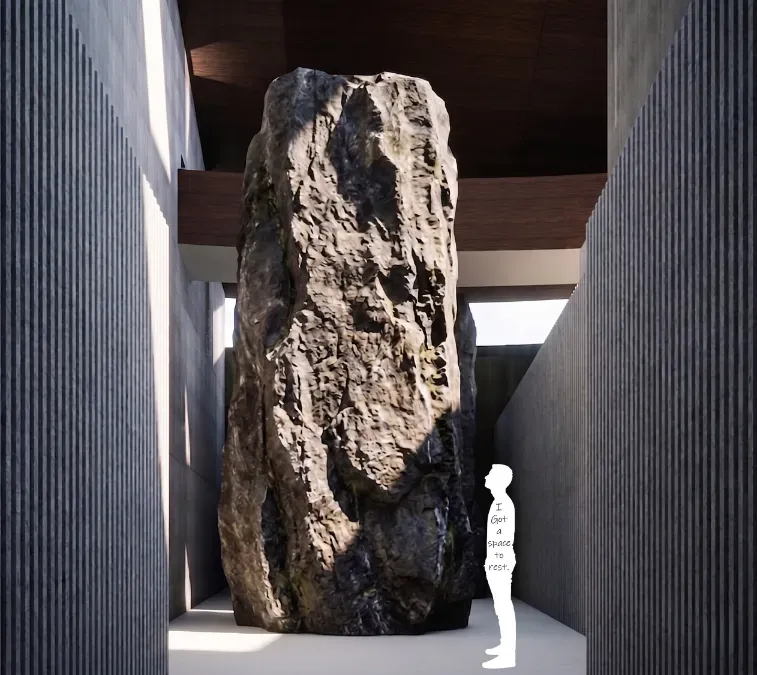
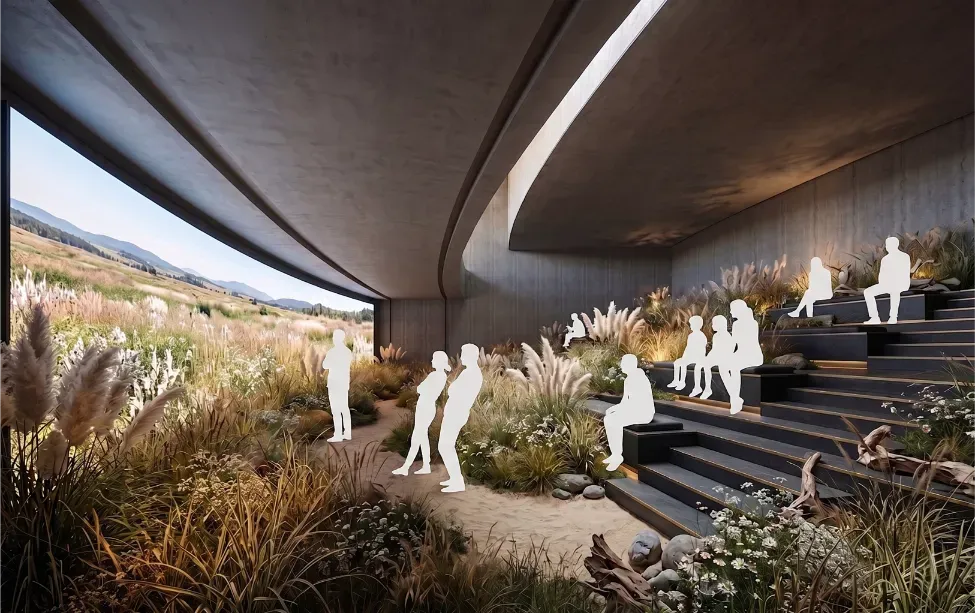
The proposal revives the original purpose of Martand—not as a replica, but as a continuation – a Journey of Experiential Learning space. Positioned along the temple’s axis, the building keeps the historic ruin as the spiritual and visual centre of the experience. The form emerges as a monolithic mass that is carved, split and made porous. Solid volumes provide permanence, openings invite light and air and a connective bridge stitch the spaces into one continuous narrative.
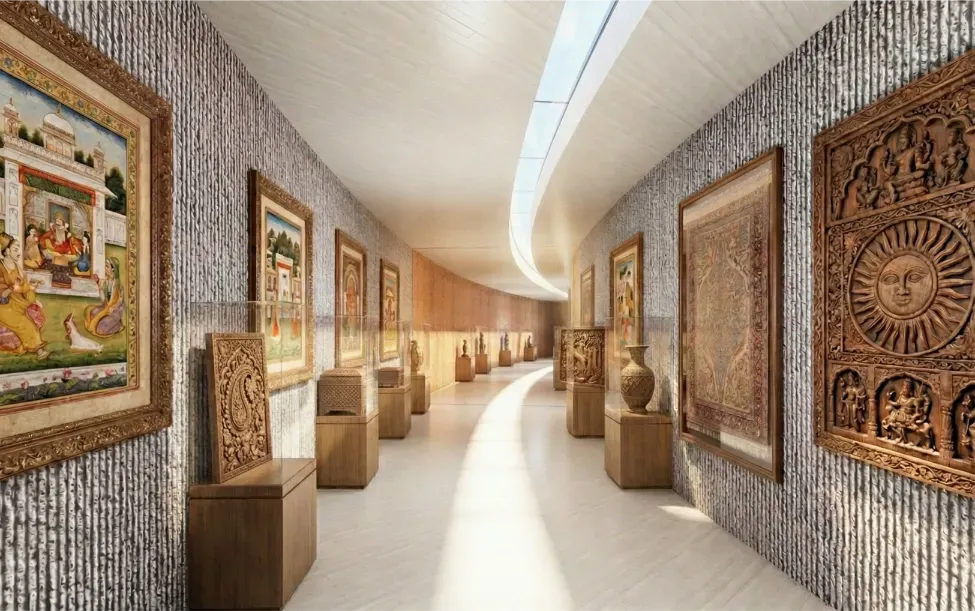
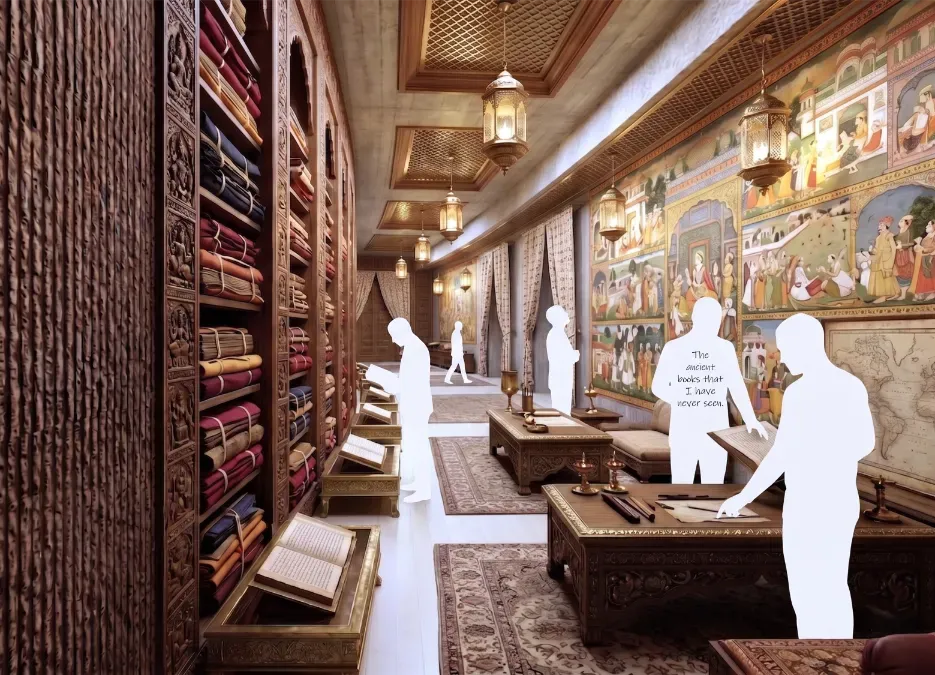
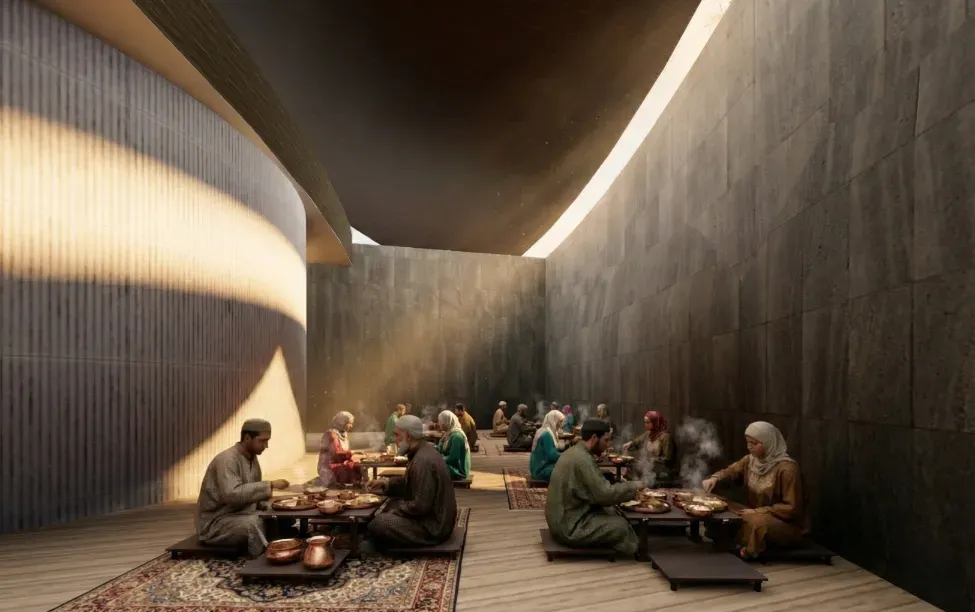
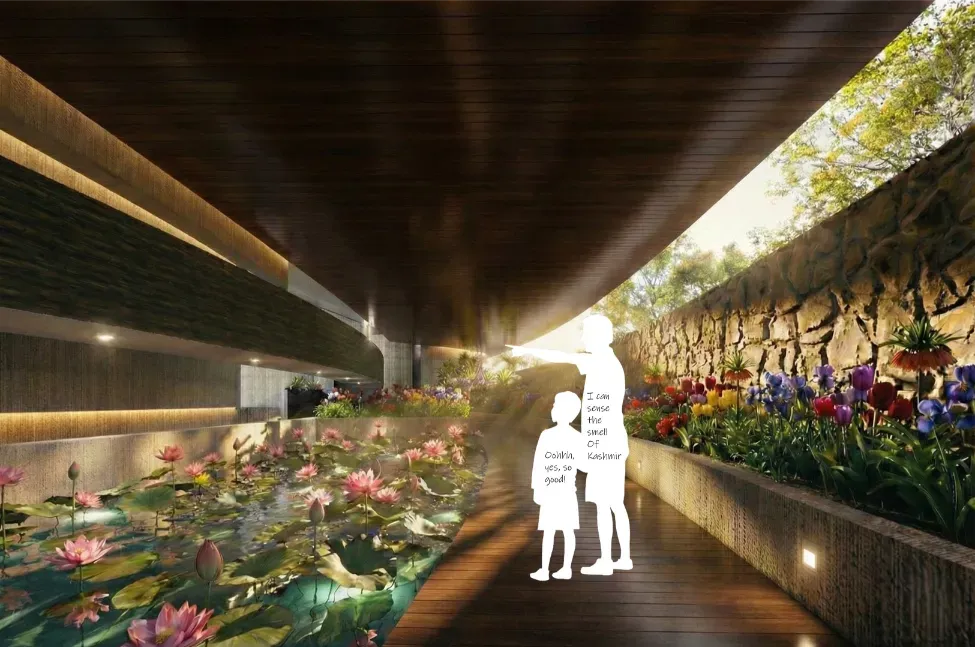
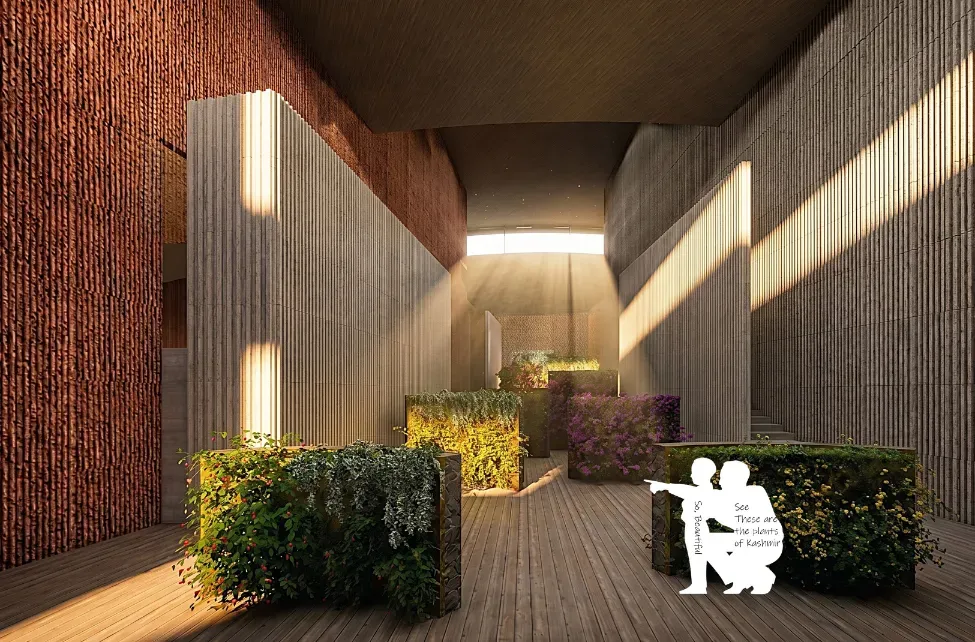
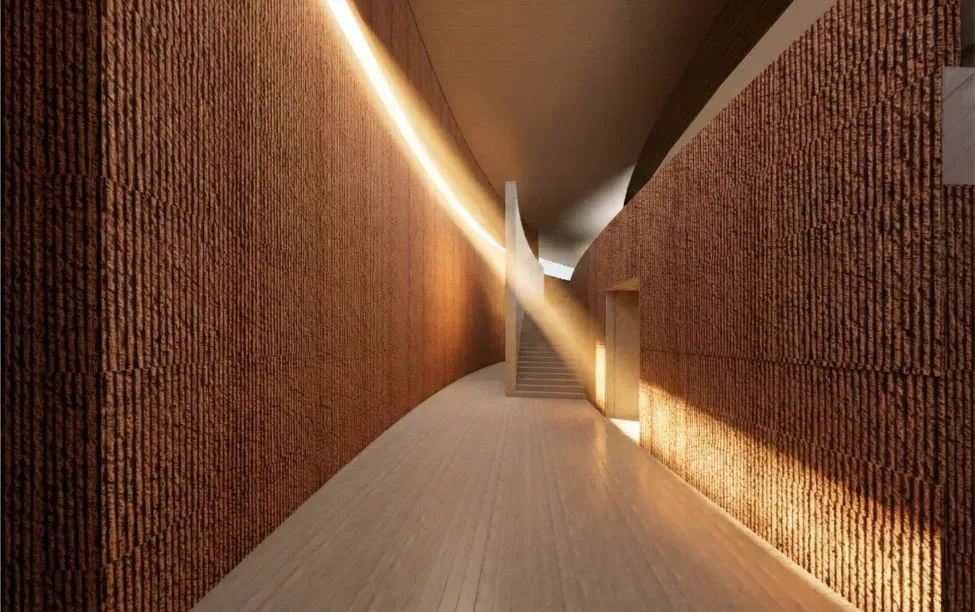
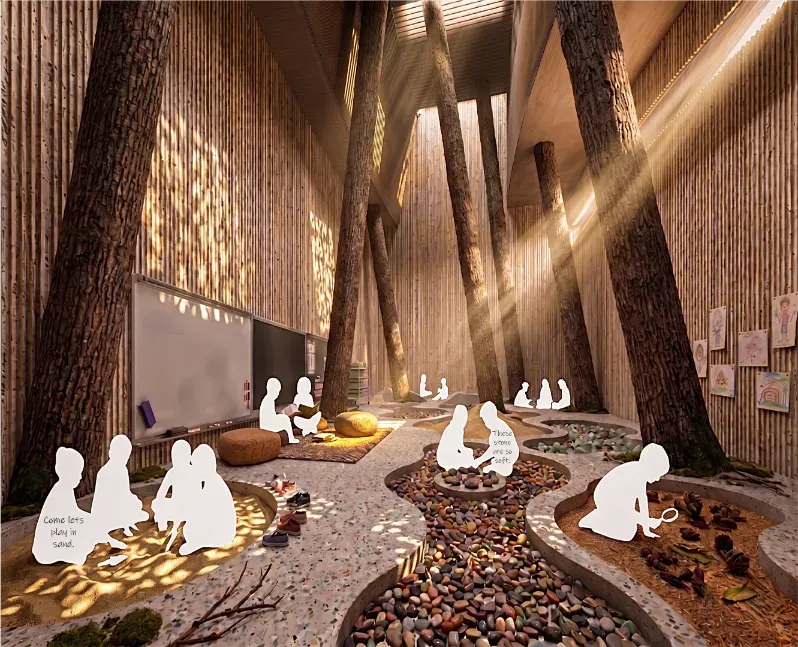
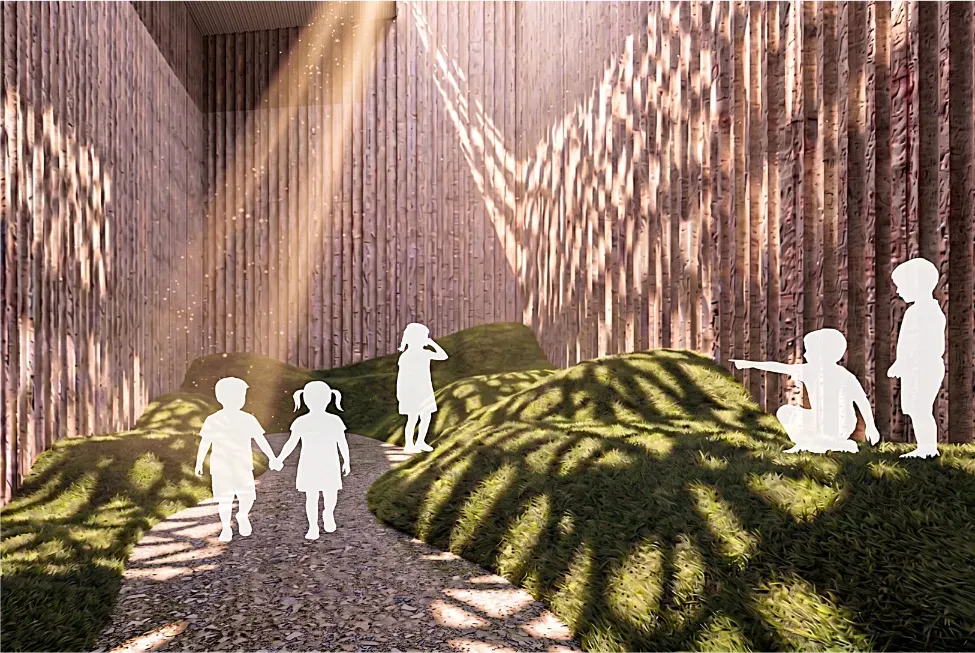
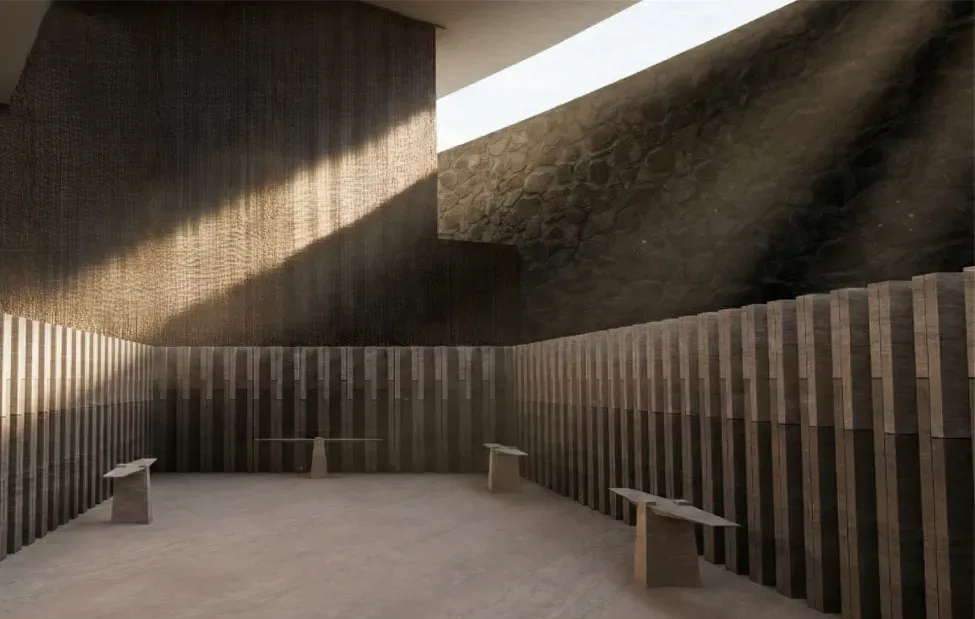
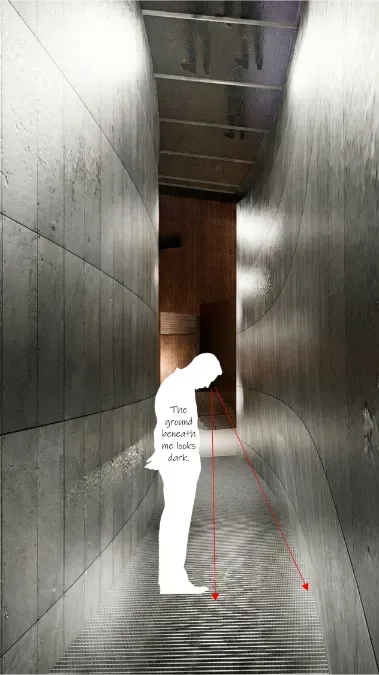
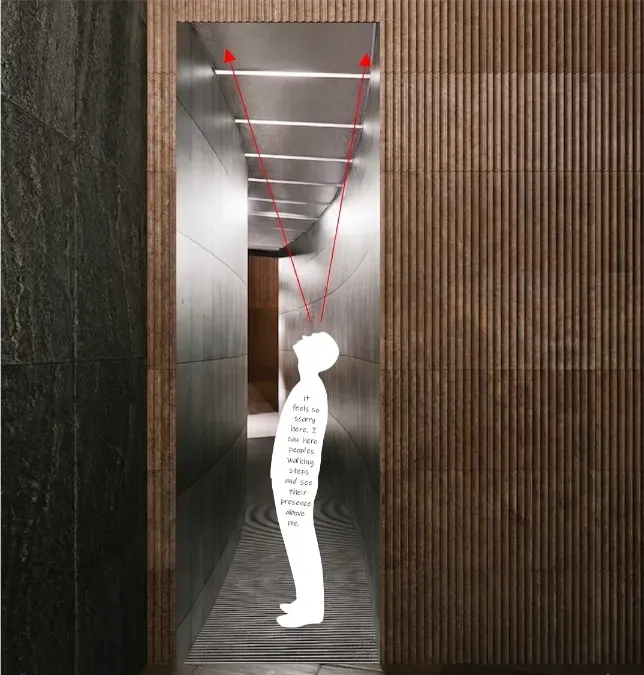
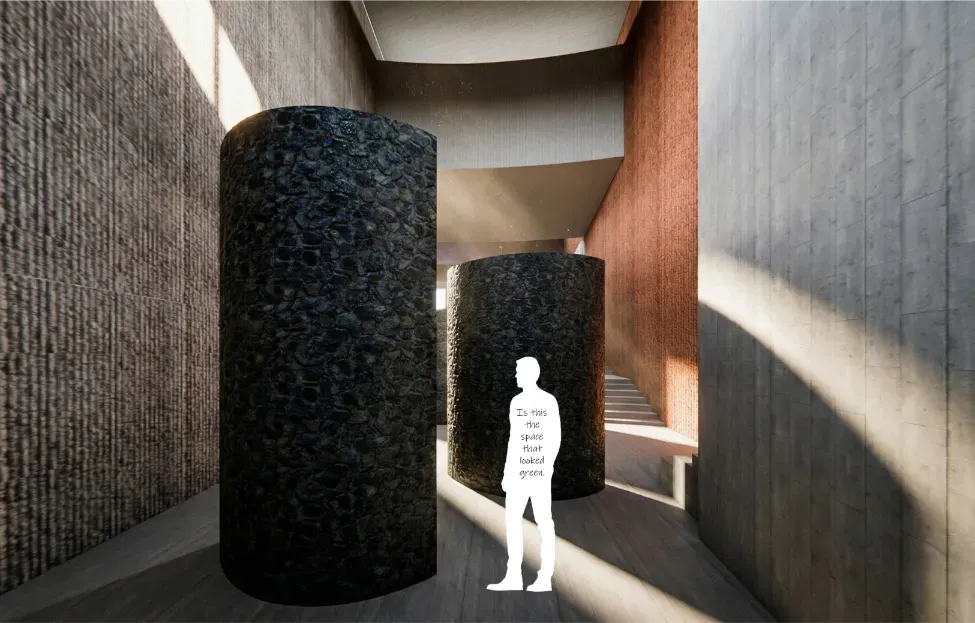
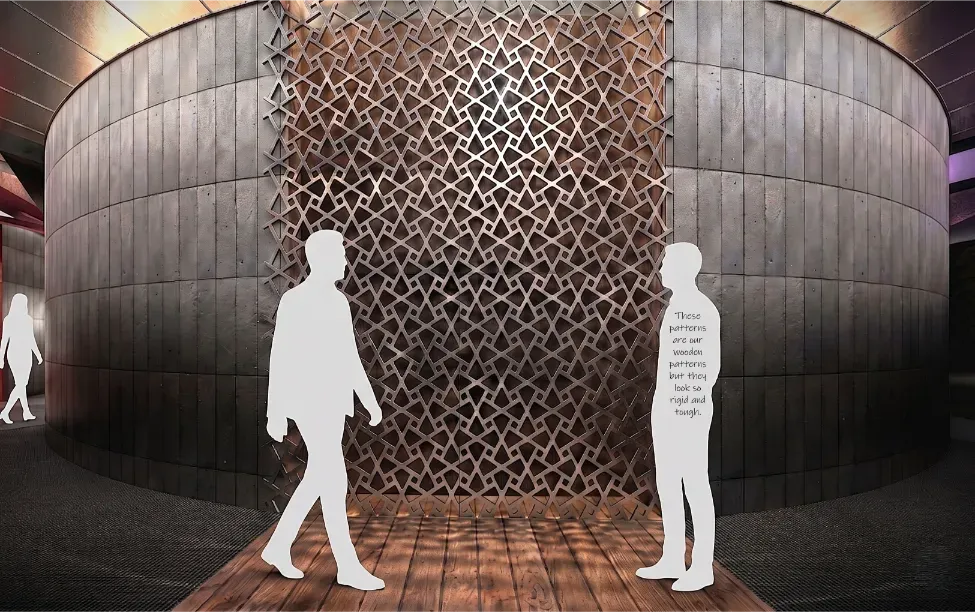
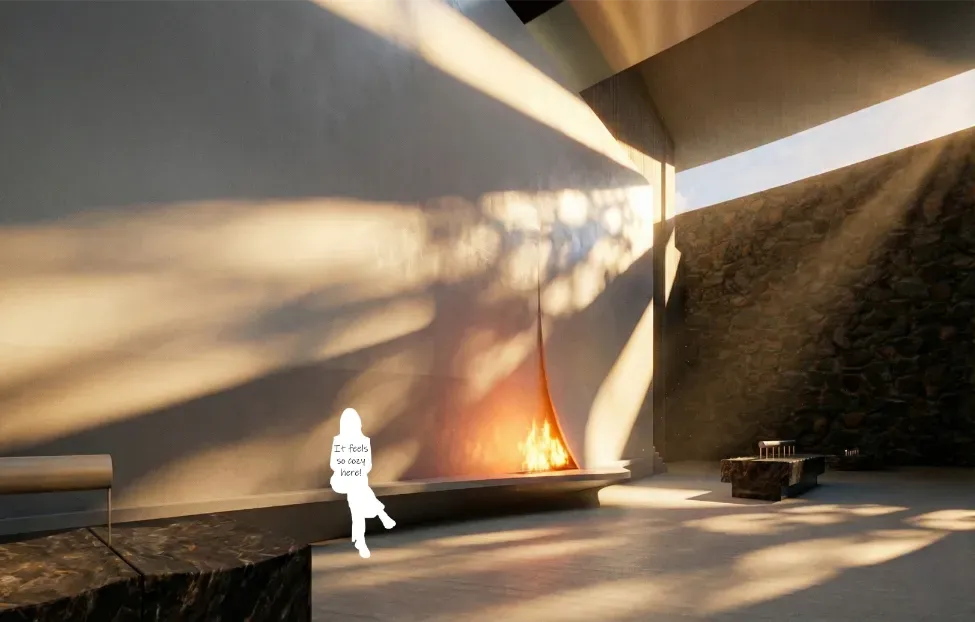
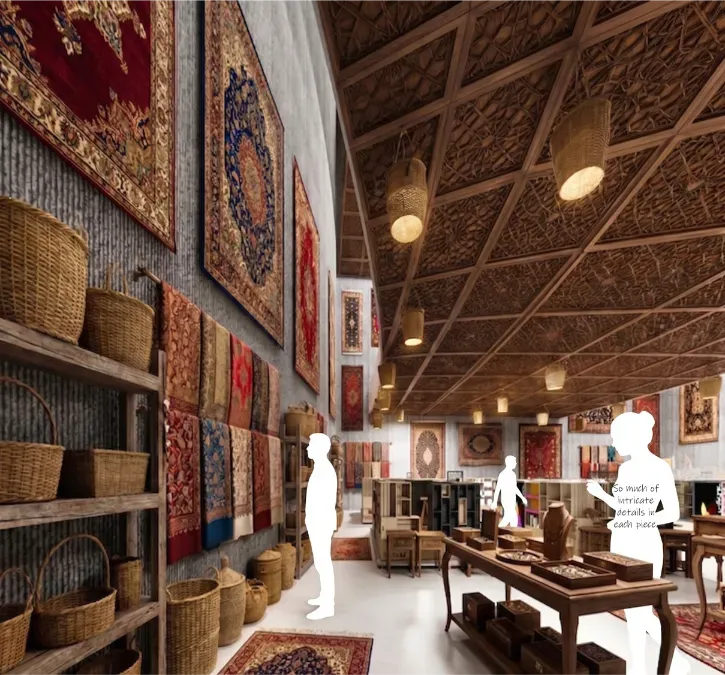
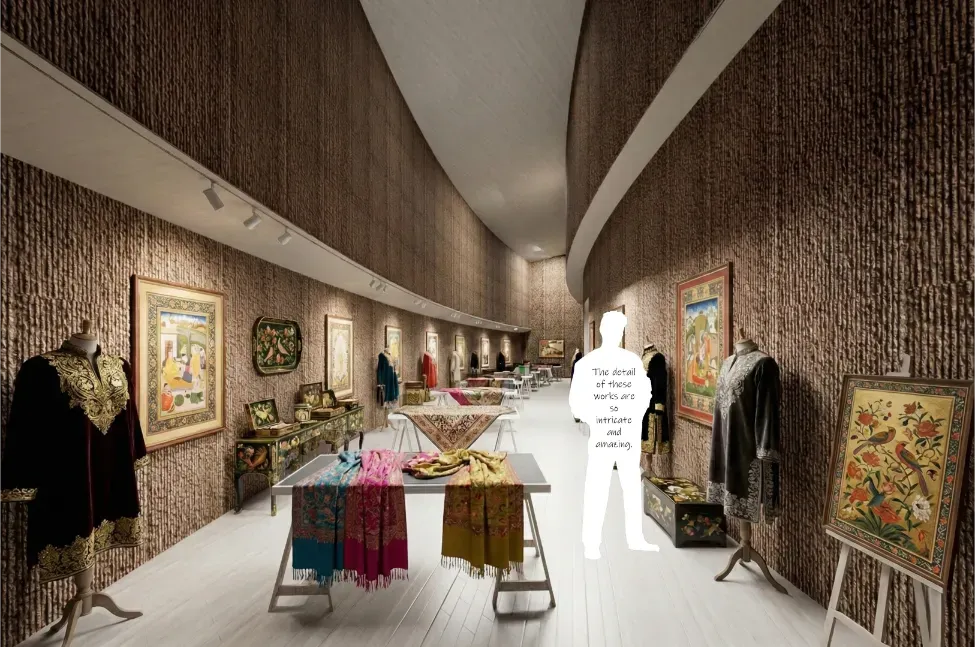
The interior spaces are organized through four knowledge nodes: The Node of the Sun, The Node of the Voice, The Node of the World, and The Node of the Hand, representing science, expression, global understanding and craft. Spatially, the journey unfolds through past, present and future. Movement becomes emotional transformation, guiding visitors from darkness to light, from uncertainty to clarity and from memory to hope. Water welcomes visitors at the entrance as a symbol of purification, air fills every volume with each having its own breath, earth provides grounded tactile spaces of stability and fire concludes the sequence as a symbol of transformation and illumination.
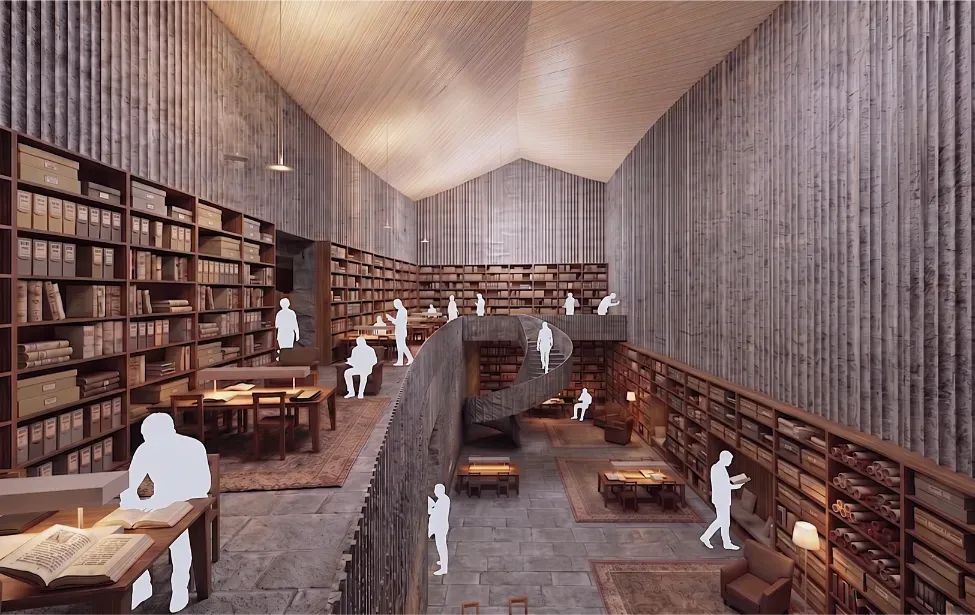
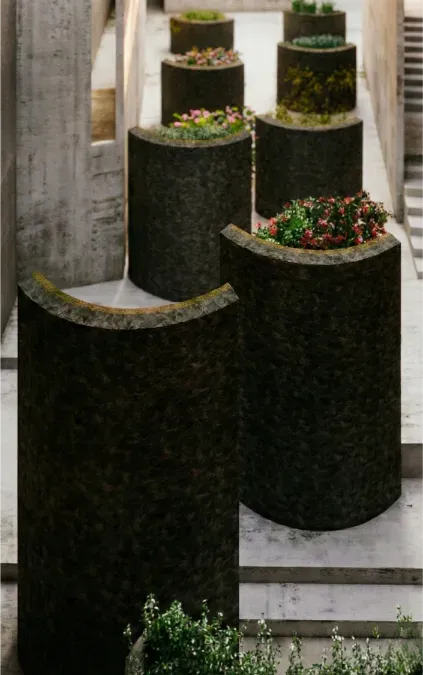
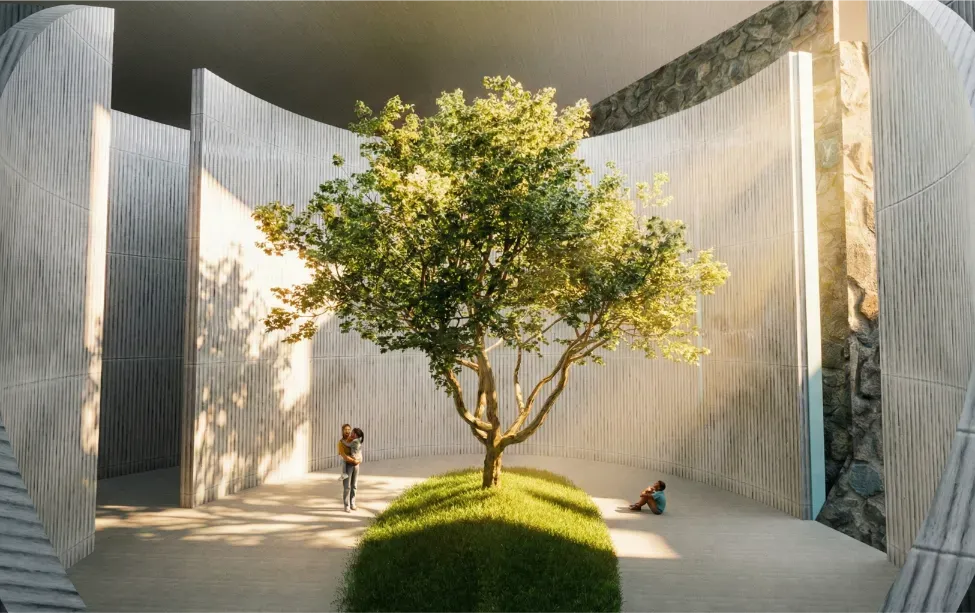
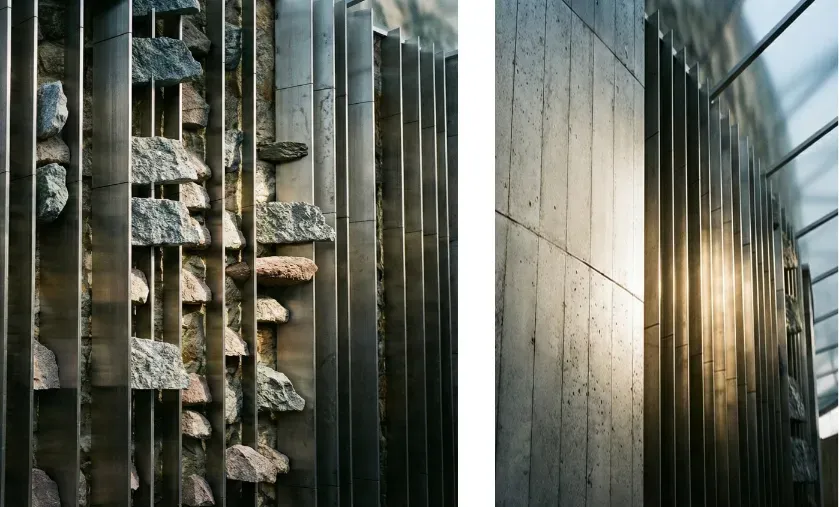
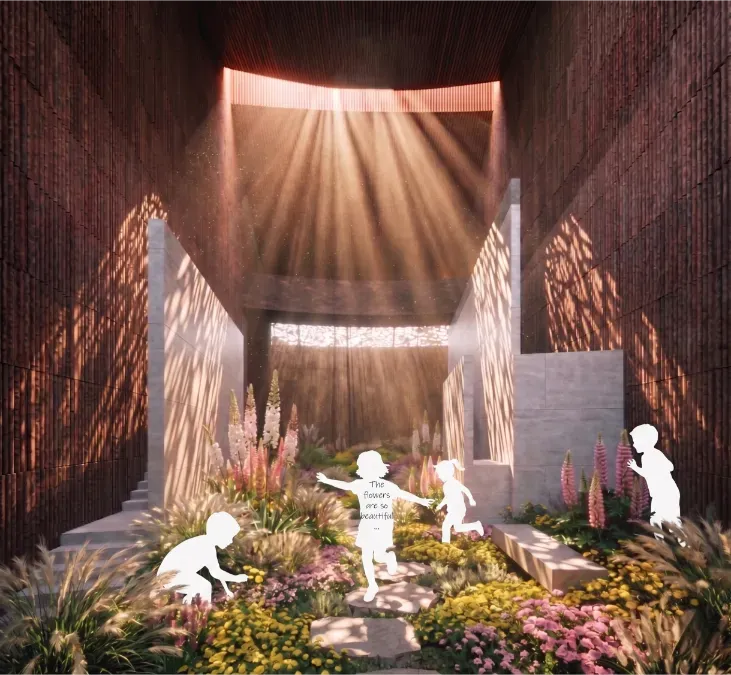
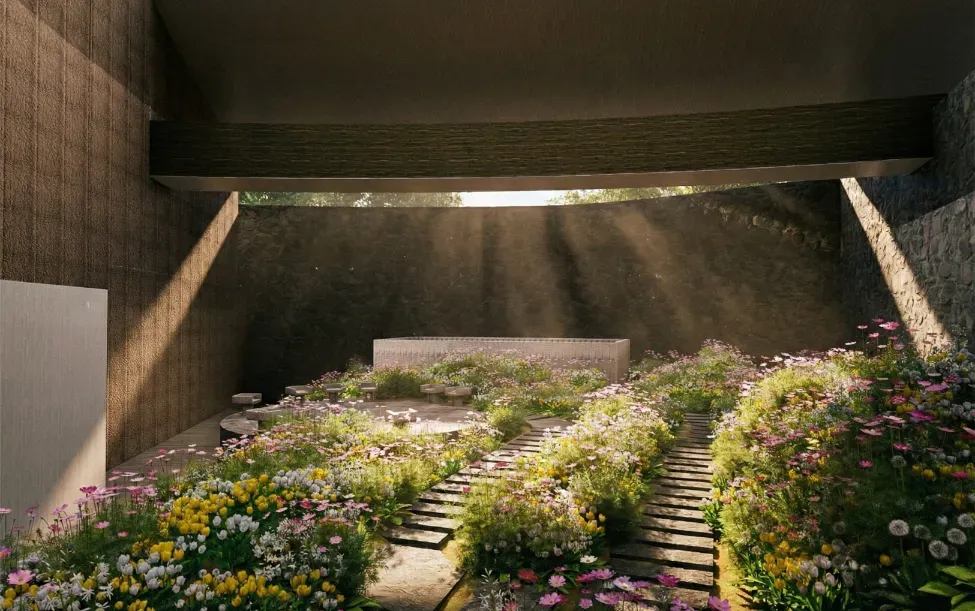
Climate-responsive strategies shape the architecture of the form: The building is half-submerged for thermal comfort, while material is carefully chosen from the local context. Material along with the landscape transitions from darker to lighter tones, reinforcing the narrative of healing. Contemplative spaces inspired by Kashmir reconnect visitors with silence, light and nature, creating a healing environment that allows them to restore themselves and move forward toward a brighter future. Immersive learning spaces nurture curiosity and a grand library becomes the intellectual heart of the project. Workshops and markets create spaces for cultural exchange.
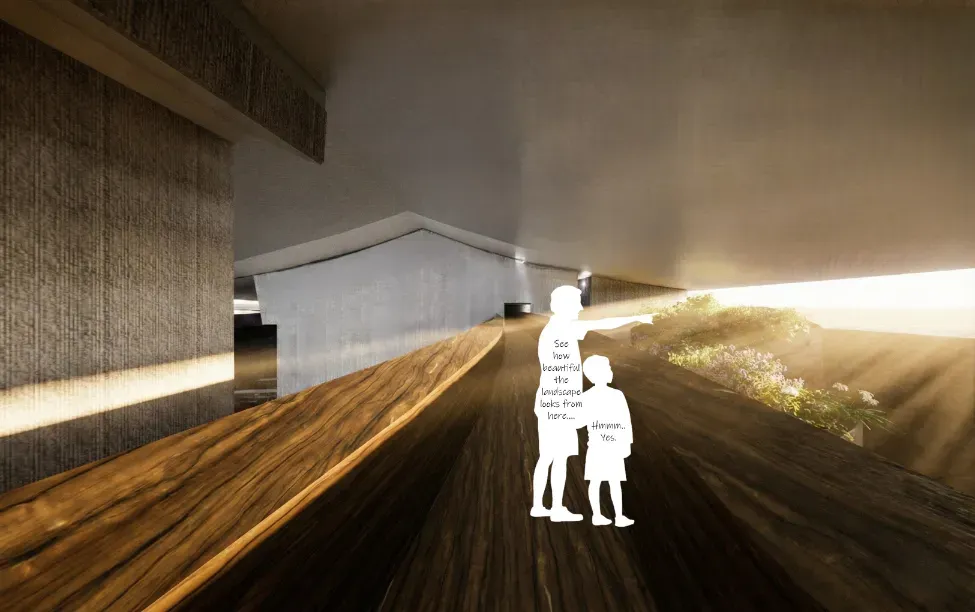
A bridge and accessible roofscape reconnect people visually and emotionally to the Martand Sun Temple through framed views, gathering spaces, sunrise, sunset and stargazing. Inspired by traditional Kashmiri rooftops, the roof becomes a civic terrace where community life can begin again.
Continuum of Knowledge demonstrates that while monuments may be damaged, the ideas they embody cannot be destroyed. Knowledge, culture and memory may be interrupted but they can always be reborn. By reviving a lost cultural node, the project proposes that communities too can heal, reconnect and rise again.
Showcase your design to an international audience
SUBMIT NOW
Image: Agrapolis Urban Permaculture Farm by David Johanes Palar
Top
Continuum of Knowledge Continuum of Knowledge is a proposal that reimagines architecture as an instrument of healing, memory and collective progress. It responds to a global condition where monuments once built as vessels of knowledge, culture and shared identity have been reduced to symbols of division. In wars and conflicts, cultural landmarks are often targeted because destroying heritage erases the community itself. When civilizations lose these anchors, they lose not only buildings but their own identity. Within this context, the project turns to India, a civilization known for its diversity, spiritual depth, scientific wisdom and living traditions. At its northern threshold lies Kashmir, historically the gateway through which scholars, travellers and philosophers entered the subcontinent. For centuries, it was a centre of Sanskrit learning, Buddhist philosophy, Hinduism and cultural exchange where nature, beauty and intellect coexisted. Yet Kashmir’s beauty also made it vulnerable. Desired by empires and shaped by conflict, the region suffered displacement, fractured memories and disconnected heritage. Today, its deeper identity of harmony and learning is often overshadowed by narratives of unrest. This project seeks to restore that forgotten essence. At the centre of this narrative stands the Martand Sun Temple, one of Kashmir’s most significant landmarks. More than a ruin, it was once a sophisticated node of public intellect-an architectural observatory aligned with celestial movement, reflecting ancient understandings of astronomy, geometry and spirituality. Its destruction marked not only the loss of a monument, but of a mindset rooted in it. The proposal revives the original purpose of Martand—not as a replica, but as a continuation – a Journey of Experiential Learning space. Positioned along the temple’s axis, the building keeps the historic ruin as the spiritual and visual centre of the experience. The form emerges as a monolithic mass that is carved, split and made porous. Solid volumes provide permanence, openings invite light and air and a connective bridge stitch the spaces into one continuous narrative. The interior spaces are organized through four knowledge nodes: The Node of the Sun, The Node of the Voice, The Node of the World, and The Node of the Hand, representing science, expression, global understanding and craft. Spatially, the journey unfolds through past, present and future. Movement becomes emotional transformation, guiding visitors from darkness to light, from uncertainty to clarity and from memory to hope. Water welcomes visitors at the entrance as a symbol of purification, air fills every volume with each having its own breath, earth provides grounded tactile spaces of stability and fire concludes the sequence as a symbol of transformation and illumination. Climate-responsive strategies shape the architecture of the form: The building is half-submerged for thermal comfort, while material is carefully chosen from the local context. Material along with the landscape transitions from darker to lighter tones, reinforcing the narrative of healing. Contemplative spaces inspired by Kashmir reconnect visitors with silence, light and nature, creating a healing environment that allows them to restore themselves and move forward toward a brighter future. Immersive learning spaces nurture curiosity and a grand library becomes the intellectual heart of the project. Workshops and markets create spaces for cultural exchange. A bridge and accessible roofscape reconnect people visually and emotionally to the Martand Sun Temple through framed views, gathering spaces, sunrise, sunset and stargazing. Inspired by traditional Kashmiri rooftops, the roof becomes a civic terrace where community life can begin again. Continuum of Knowledge demonstrates that while monuments may be damaged, the ideas they embody cannot be destroyed. Knowledge, culture and memory may be interrupted but they can always be reborn. By reviving a lost cultural node, the project proposes that communities too can heal, reconnect and rise again.
Concept Statement

The AYDA Awards is part of Colouring Lives, Nippon Paint’s Corporate Social Responsibility (CSR) programme, which is dedicated to nurturing the next generation of Architectural and Interior Design talents. Through cross-learning and industry exposure, AYDA provides a platform for students to develop their skills and grow as designers. Discover more of Nippon Paint’s CSR initiatives under Colouring Lives.