BACK TO finale_winnerS
NIPPON PAINT COLOUR AWARD: INTERIOR DESIGN CATEGORY
KAMPIHAN
KAMPIHAN: A Community Space That Revives Culture and LegacyThrough Intergenerational Play In today’s digital age, where children grow up swiping screens instead of running through streets, the essence of genuine connection through play is fading. The legacy of Traditional games which were once the heartbeat of every community, are slowly being replaced by virtual interactions. […]

KAMPIHAN: A Community Space That Revives Culture and Legacy
Through Intergenerational Play
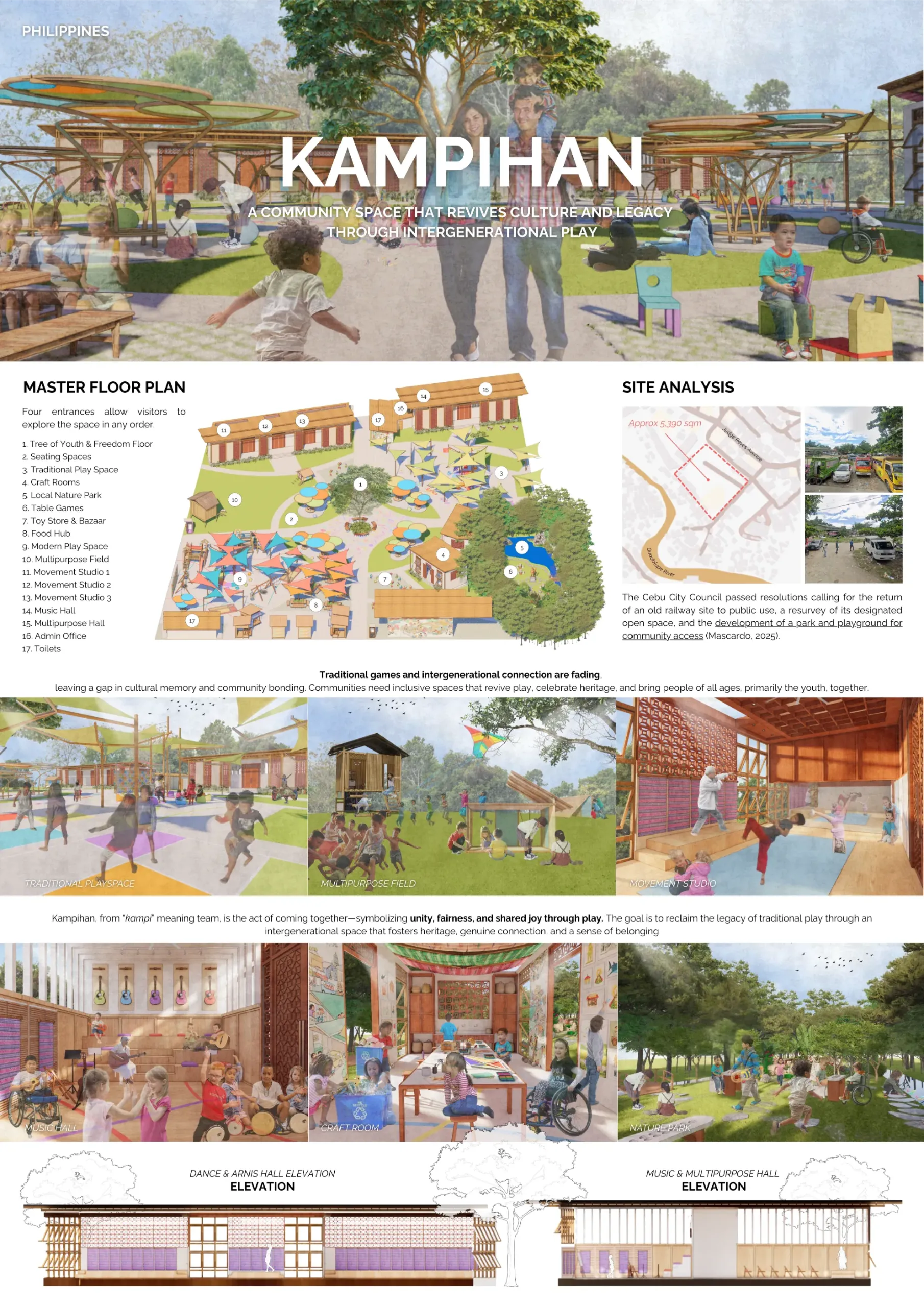
In today’s digital age, where children grow up swiping screens instead of running through streets, the essence of genuine connection through play is fading. The legacy of Traditional games which were once the heartbeat of every community, are slowly being replaced by virtual interactions. The fall of outdoor play reflects not only a shift in lifestyle but also a quiet loss of cultural memory, imagination, and unity.
With the rise of doom-scrolling and shortened attention spans, it becomes essential to bring back play as a form of grounding of humanity. Everyone, regardless of background, social status, or age, deserves a space to converge through play, culture, and belonging. Playing is foundational for every individual, developing critical thinking, problem-solving, social skills, and lifelong values.
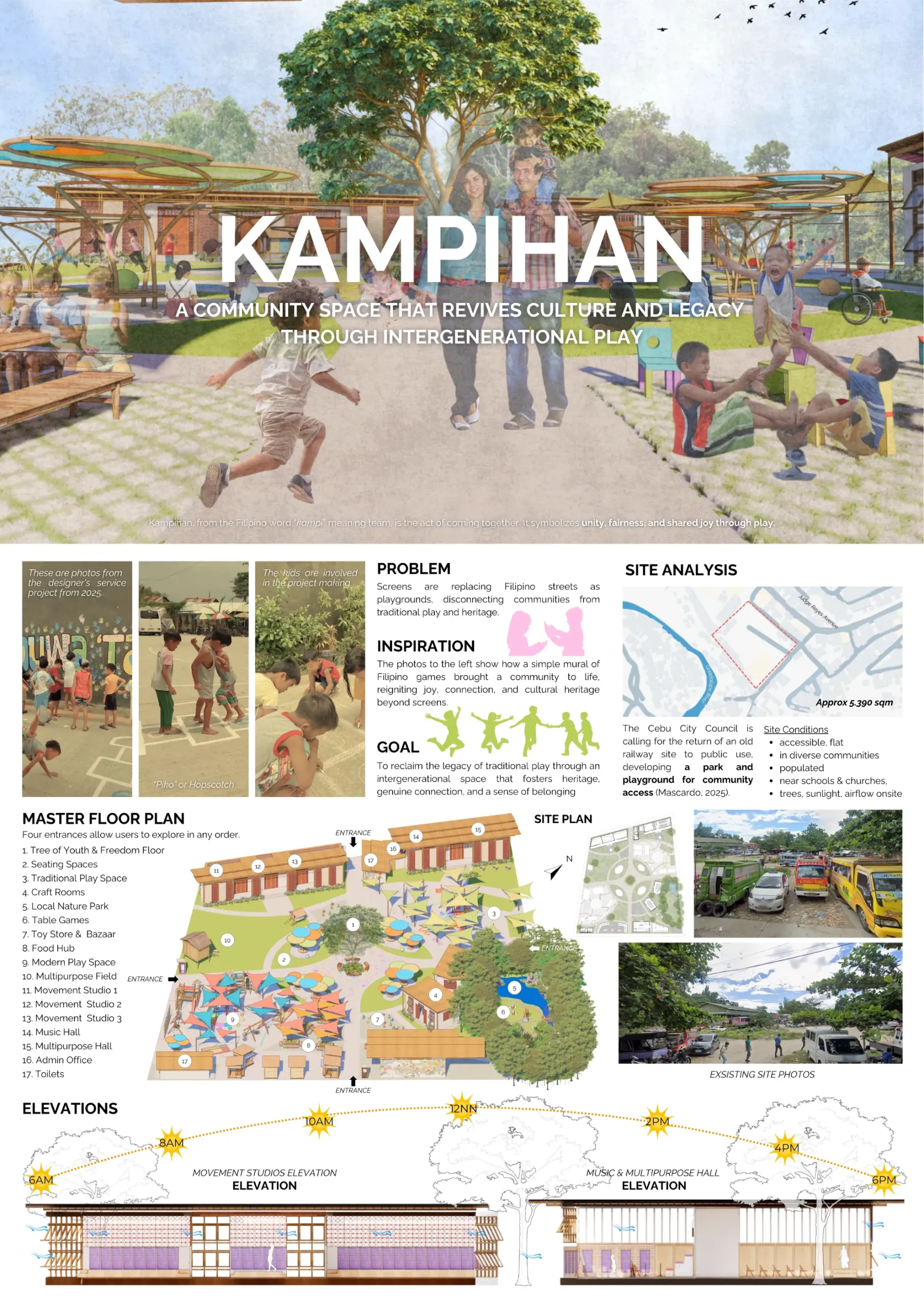
During an outreach project in a relocated community in Cebu, I witnessed firsthand how the absence of safe, engaging spaces has changed how children grow and connect. The community playground was broken, while groups of kids gathered around televisions and phones, their eyes fixed on borrowed digital worlds. Yet the moment we designed and implemented a simple interactive mural reintroducing Filipino traditional games, laughter and movement instantly returned. Children chased, parents taught traditional games, and for a brief moment, everyone remembered what it meant to play. That small act of design proved how physical, communal play still outshines digital connection and how people only need space and invitation to rediscover joy.
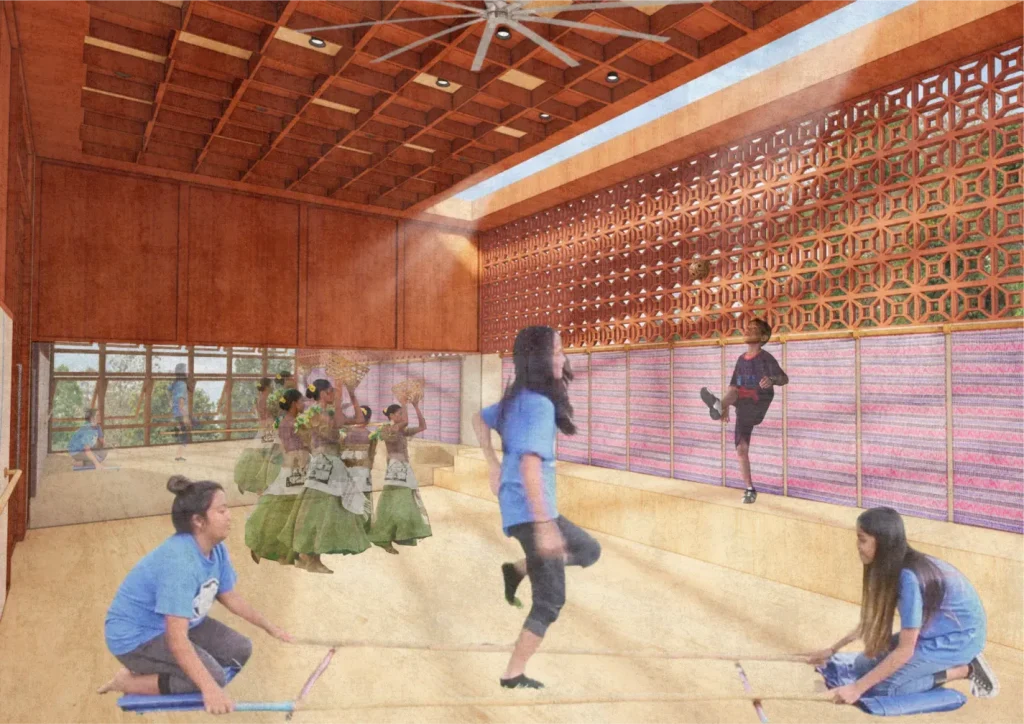
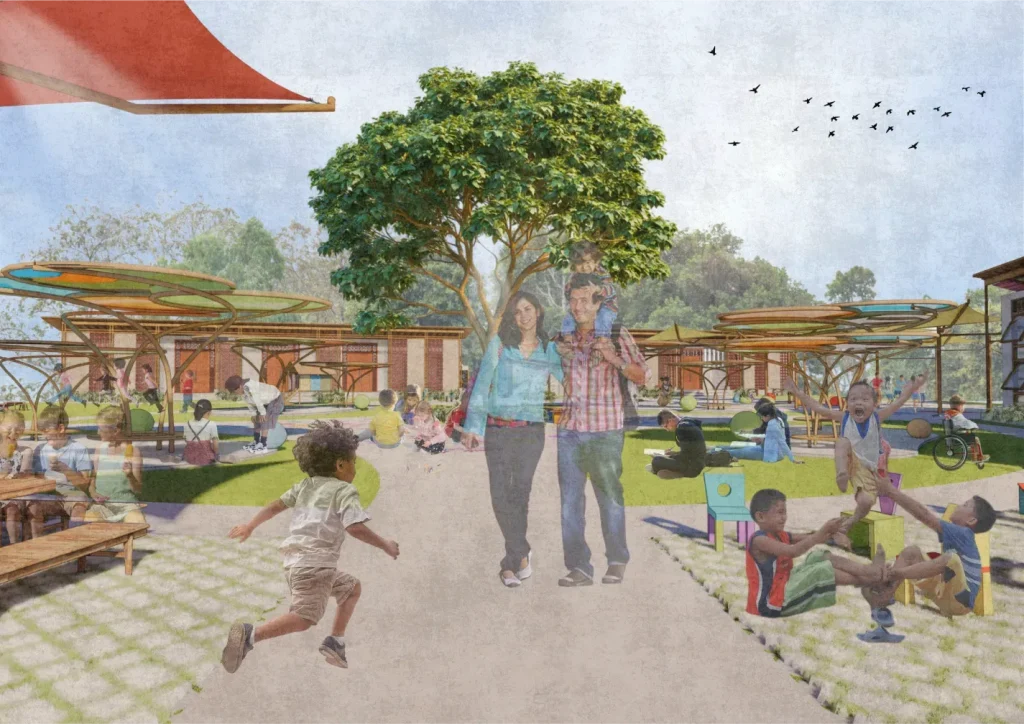
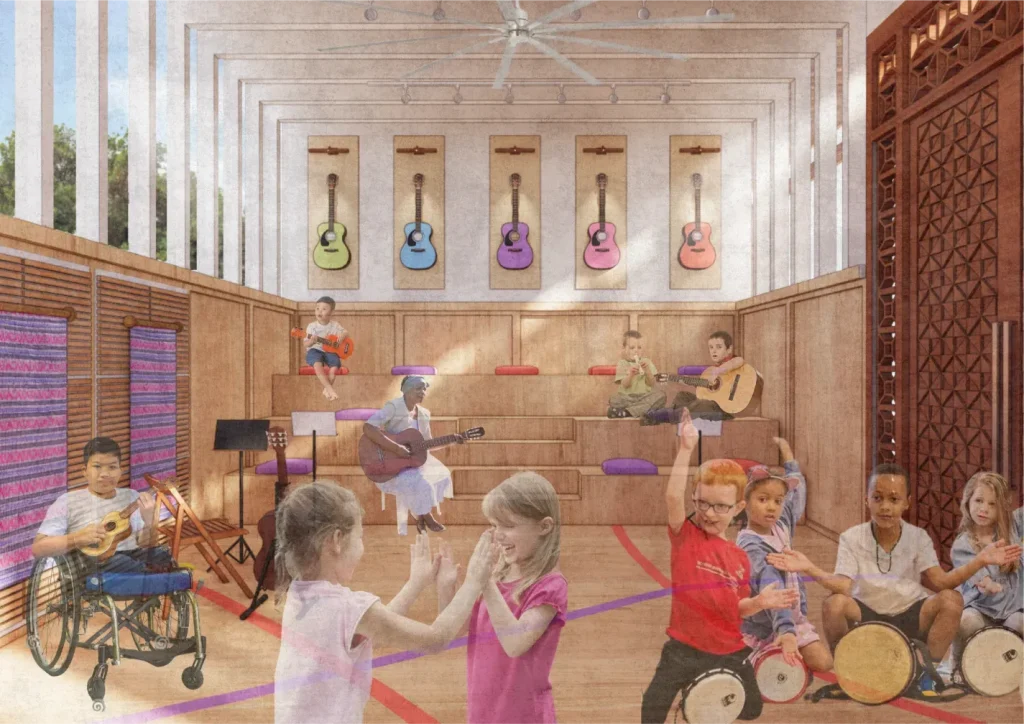
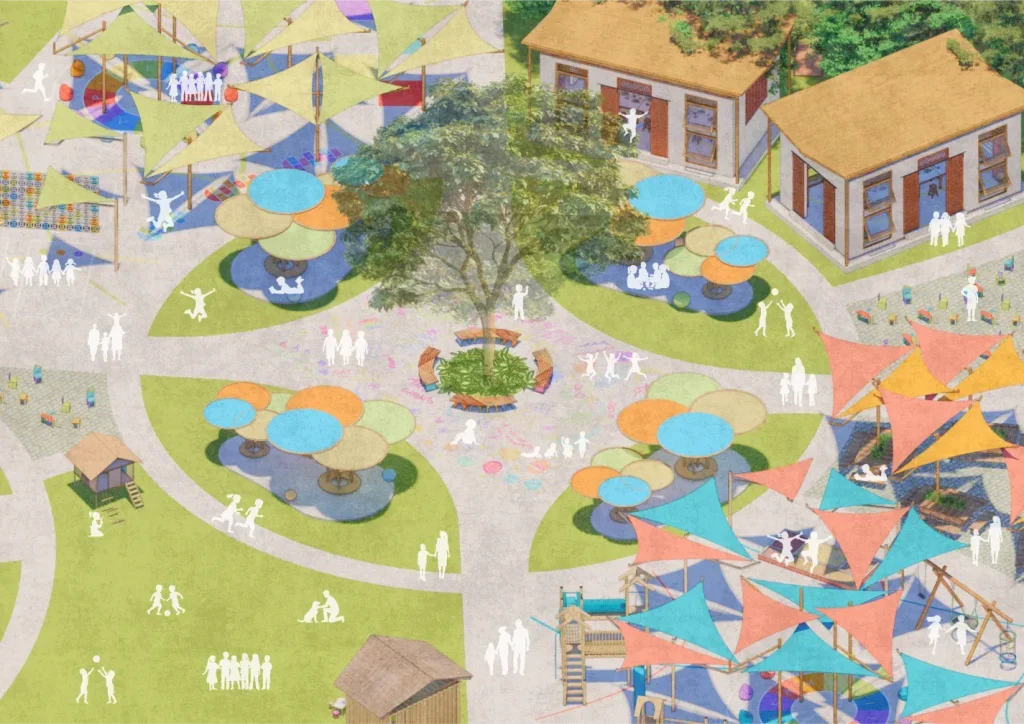
Taking this experience as inspiration, I ideated Kampihan, a community space that reimagines and reclaims play as a collective Filipino experience. It promotes intergenerational connection rooted in heritage wherein the young learn from the old, and the old remember through the young. Influenced by Filipino identity and the communal spirit found in Filipino traditional games, Kampihan aims to design not just a playground, but a medium to pass on the legacy of cultural fun while joy and belonging thrive side by side.
Rooted in the Tagalog word kampi, meaning “side” or “team,” Kampihan is the act of taking sides or forming groups. It is the moment before the game begins, when everyone gathers, hands reaching in, and a voice calls out, “Kampiiiihan!” In one motion, palms flip up or down, and teams are formed. But more than choosing sides, Kampihan symbolizes unity. It is the ritual of acknowledgment, of togetherness, and of readiness to begin. It is both a call and a covenant: a promise of fairness, connection, and shared joy.
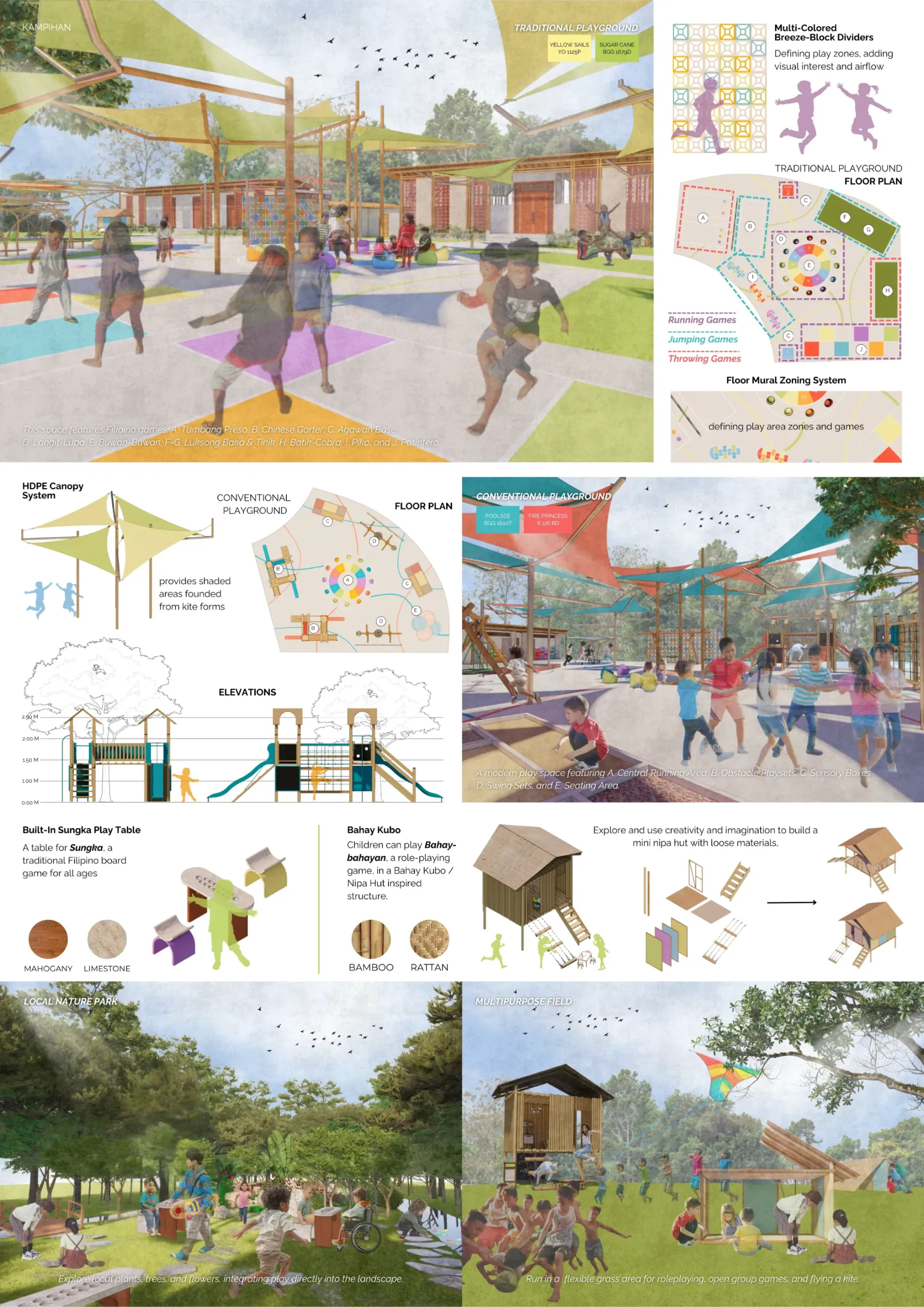
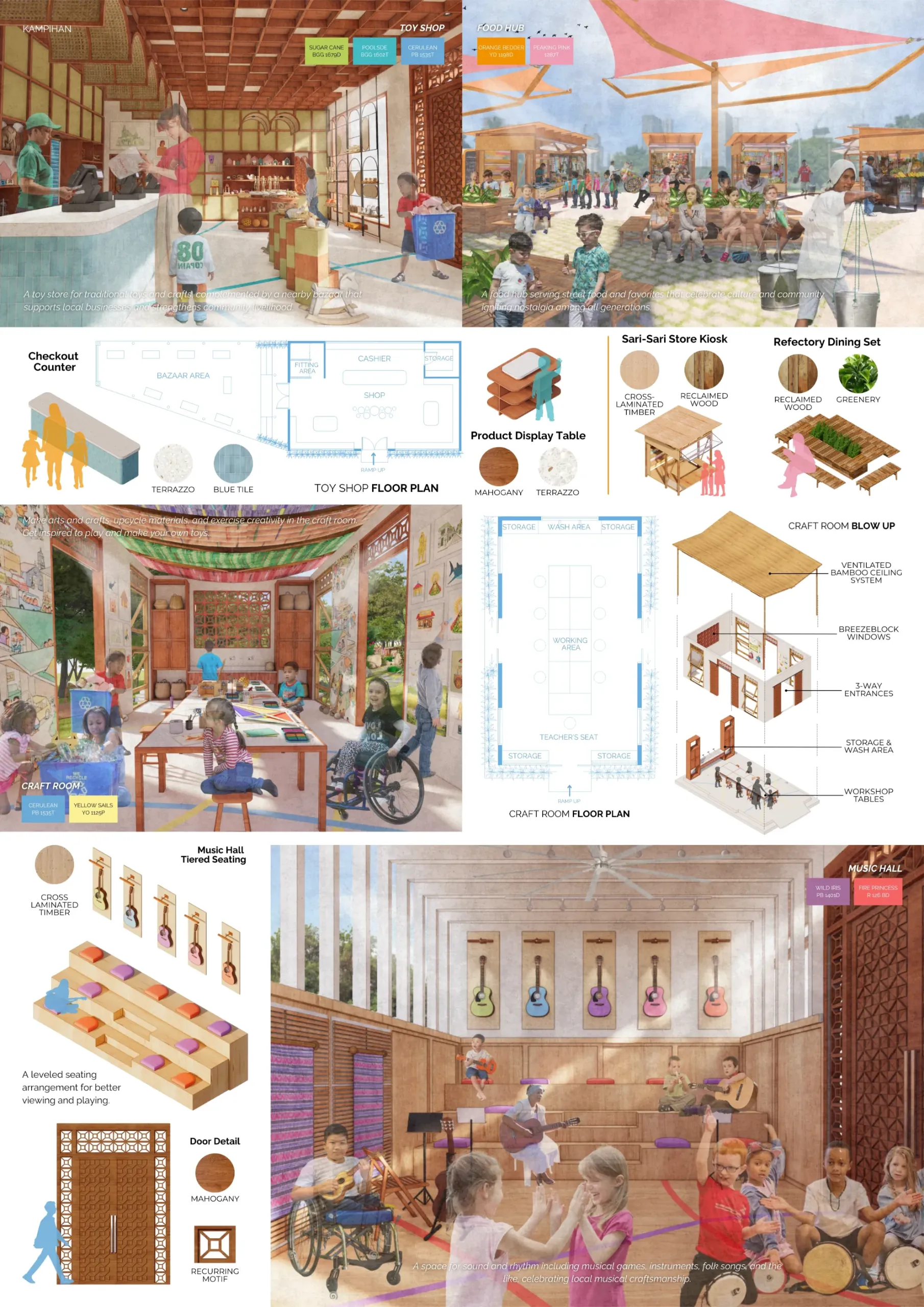
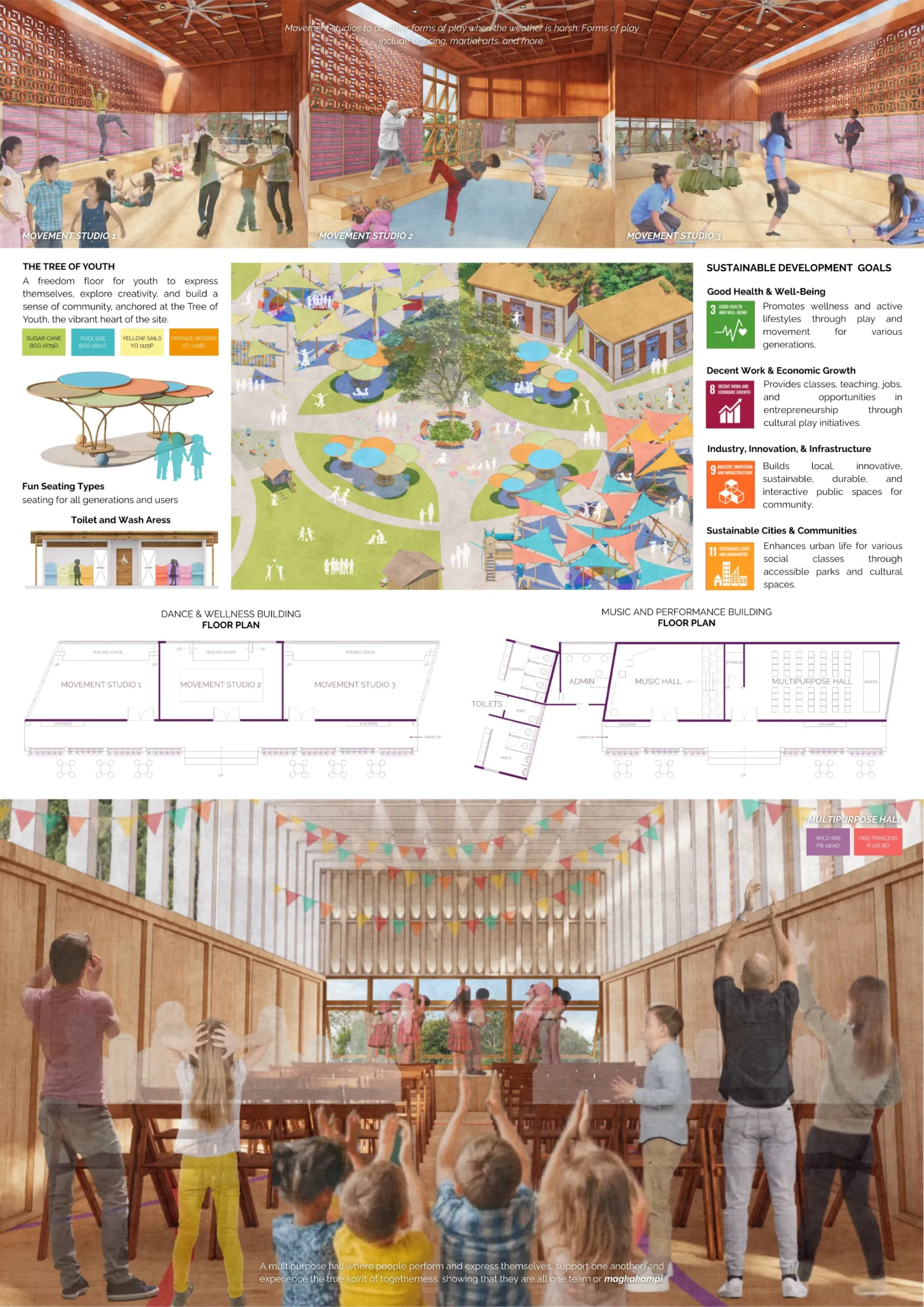
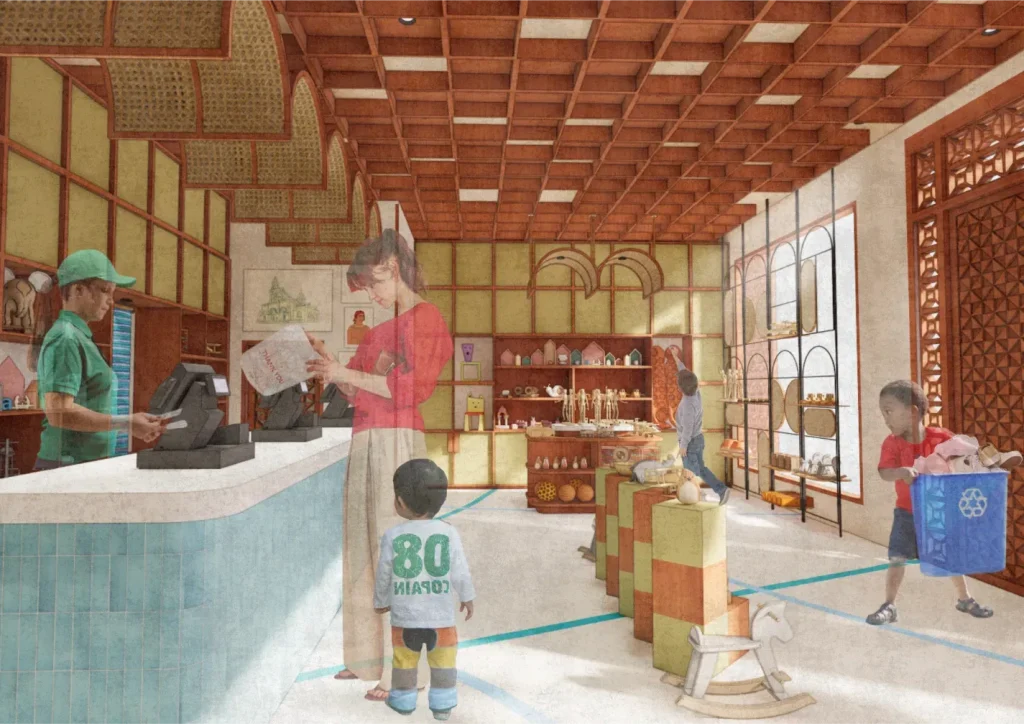
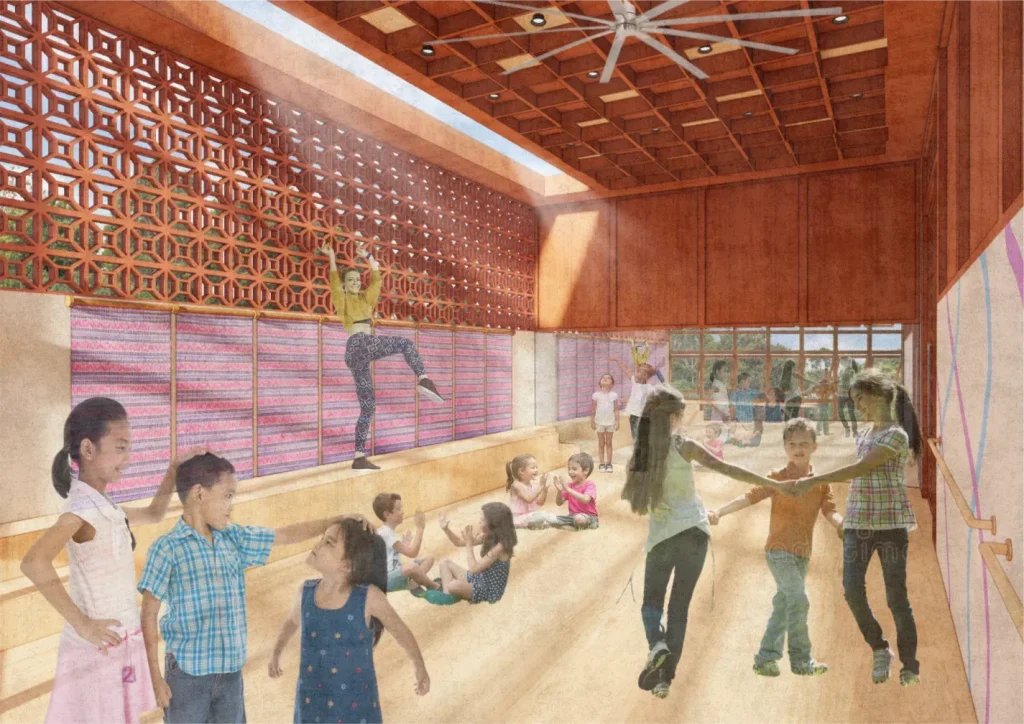
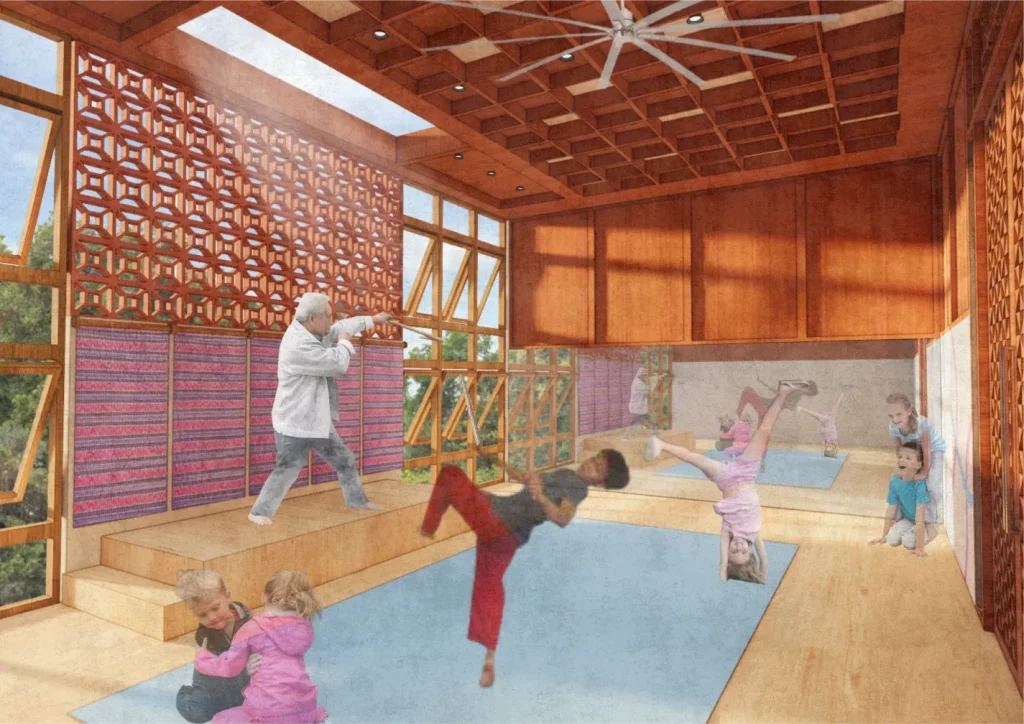
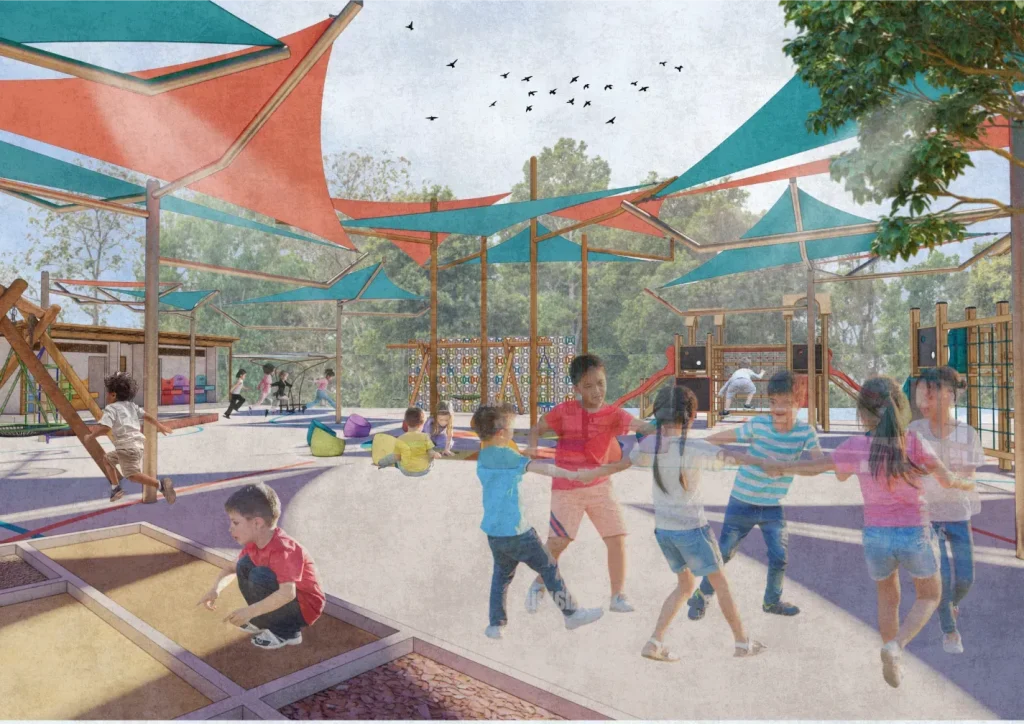
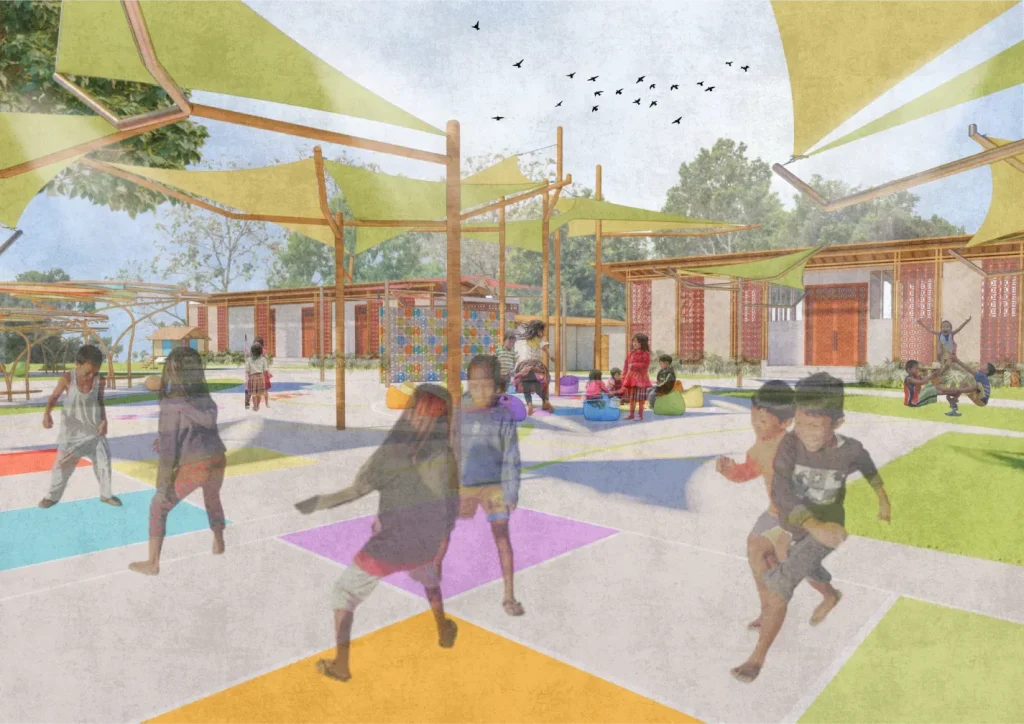
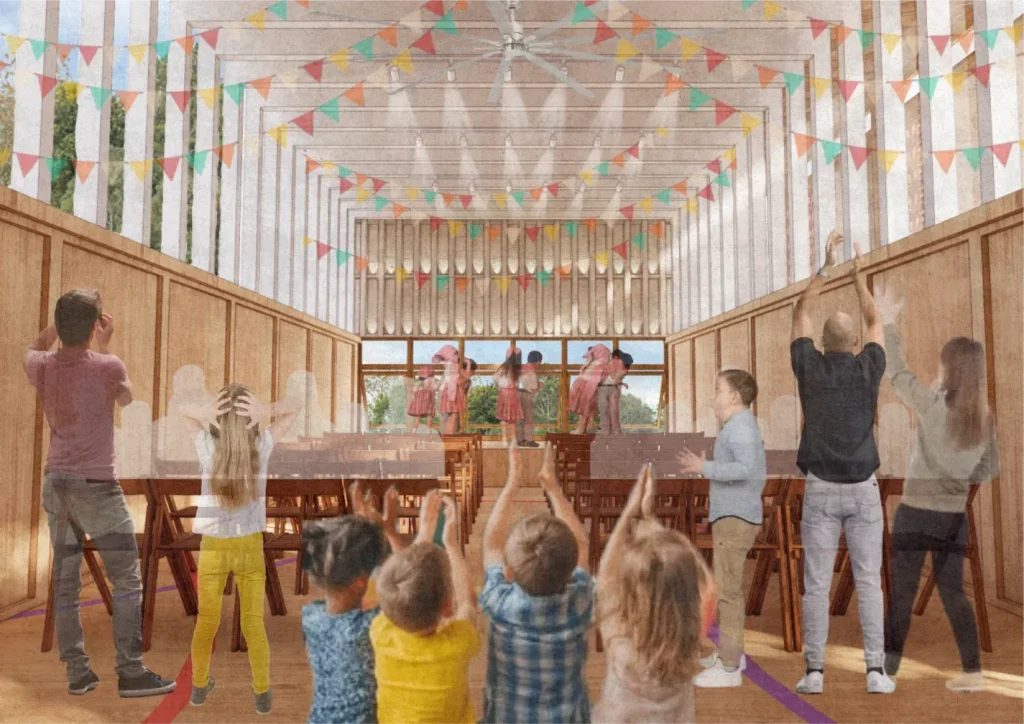
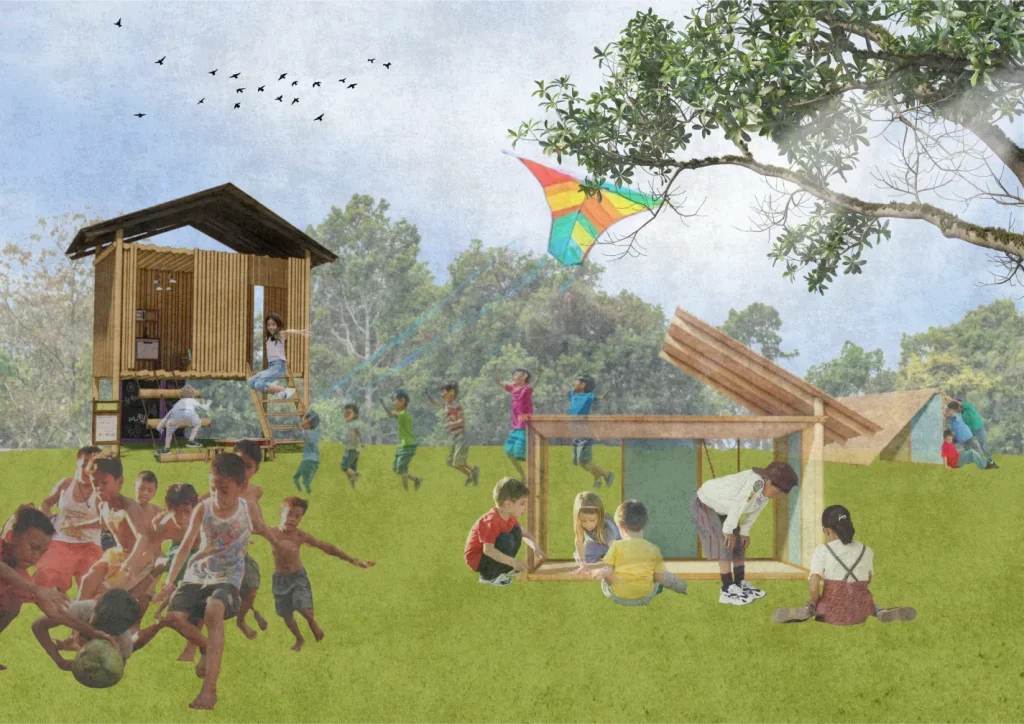
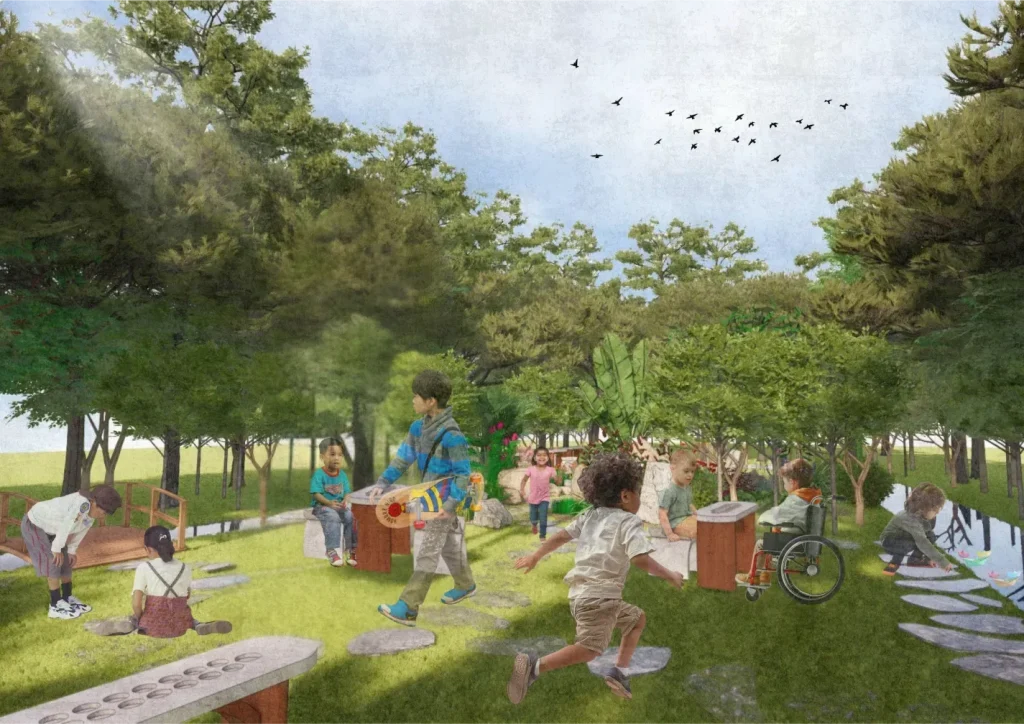
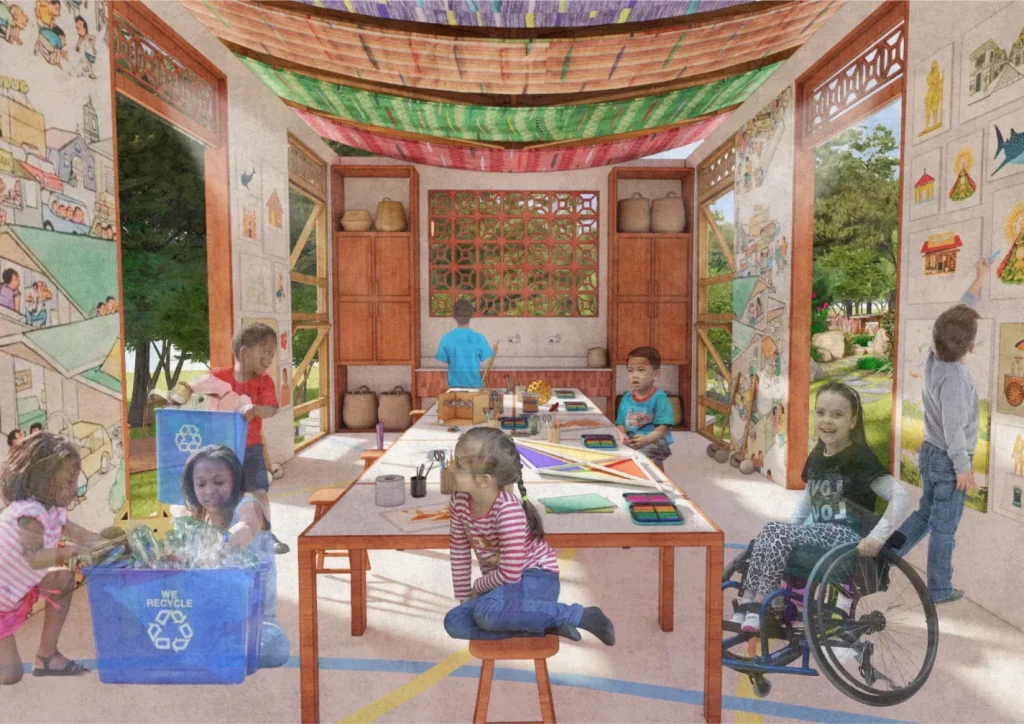
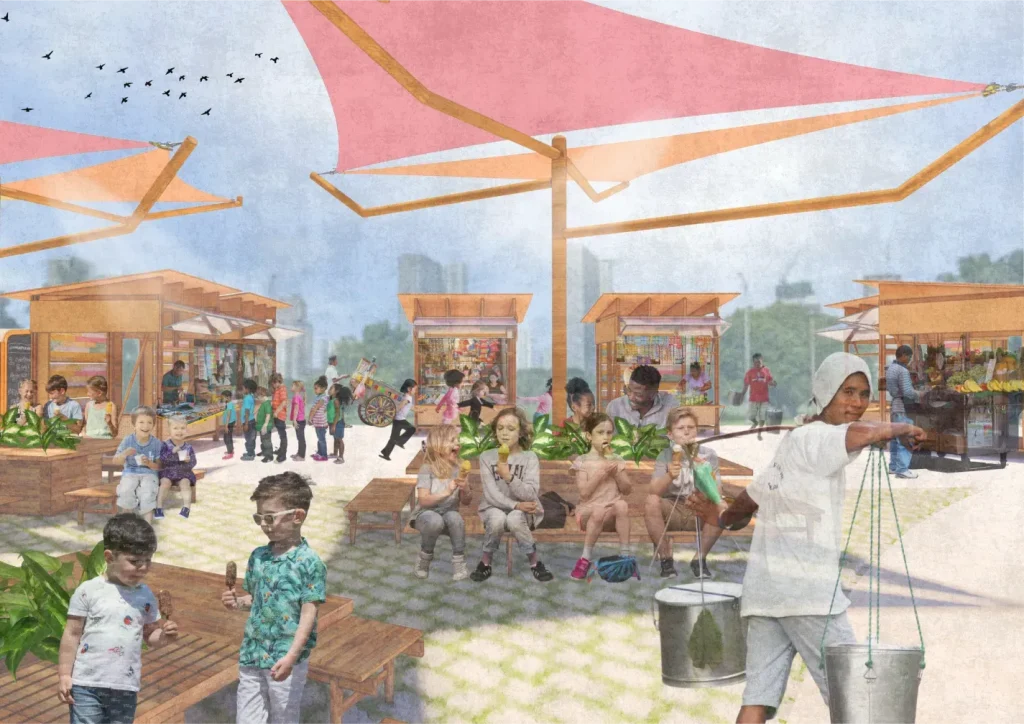
The Kampihan community space includes a variety of play areas such as a traditional play space, conventional play space, and table games. A local nature park offers additional outdoor play opportunities. Creativity and cultural expression extend through a craft room, music hall, movement studios, a multipurpose performance hall, and a central freedom floor for youth expression. Play and learning are further supported by a multipurpose field, toy store, and food hub.
The design’s environmental impact emphasizes simplicity and sustainability, using local materials, low-maintenance solutions that respect the natural cycle, and energy-efficient systems. Water and waste management follow a closed-loop approach: clean, mindful, and regenerative. Through prioritizing simplicity, the design remains humble, functional, and environmentally responsible.
This future-proof design envisions Kampihan as a space where ecological, sociological, and technological dimensions come together for human well-being. Ecologically, it integrates play into the natural landscape, allowing Filipino communities to share joy within an environment that nurtures life. Sociologically, it strengthens bonds by creating a shared space for all generations. Technologically, it reimagines traditional games through modern materials and design innovation, bridging nostalgia and progress without losing identity.
Future-proof design lies in timelessness, creating something that remains relevant across generations. Kampihan embodies this through timeless activities that transcend age, colors and forms that endure, and ideas that root themselves in the wisdom of the past. Filipino games are not gone; they are merely waiting to be made accessible again. The space is envisioned to be a place that people will always come back to.
Timeless Fun. Connection. Heritage. These are the foundations of Kampihan. Through play, community, and cultural expression, we converge to craft lasting legacies that celebrate our roots. By bringing people together once more, Kampihan revives not just play, but the legacy of who we are and where it all began.
Showcase your design to an international audience
SUBMIT NOW
Image: Agrapolis Urban Permaculture Farm by David Johanes Palar
Top
KAMPIHAN: A Community Space That Revives Culture and Legacy In today’s digital age, where children grow up swiping screens instead of running through streets, the essence of genuine connection through play is fading. The legacy of Traditional games which were once the heartbeat of every community, are slowly being replaced by virtual interactions. The fall of outdoor play reflects not only a shift in lifestyle but also a quiet loss of cultural memory, imagination, and unity. With the rise of doom-scrolling and shortened attention spans, it becomes essential to bring back play as a form of grounding of humanity. Everyone, regardless of background, social status, or age, deserves a space to converge through play, culture, and belonging. Playing is foundational for every individual, developing critical thinking, problem-solving, social skills, and lifelong values. During an outreach project in a relocated community in Cebu, I witnessed firsthand how the absence of safe, engaging spaces has changed how children grow and connect. The community playground was broken, while groups of kids gathered around televisions and phones, their eyes fixed on borrowed digital worlds. Yet the moment we designed and implemented a simple interactive mural reintroducing Filipino traditional games, laughter and movement instantly returned. Children chased, parents taught traditional games, and for a brief moment, everyone remembered what it meant to play. That small act of design proved how physical, communal play still outshines digital connection and how people only need space and invitation to rediscover joy. Taking this experience as inspiration, I ideated Kampihan, a community space that reimagines and reclaims play as a collective Filipino experience. It promotes intergenerational connection rooted in heritage wherein the young learn from the old, and the old remember through the young. Influenced by Filipino identity and the communal spirit found in Filipino traditional games, Kampihan aims to design not just a playground, but a medium to pass on the legacy of cultural fun while joy and belonging thrive side by side. Rooted in the Tagalog word kampi, meaning “side” or “team,” Kampihan is the act of taking sides or forming groups. It is the moment before the game begins, when everyone gathers, hands reaching in, and a voice calls out, “Kampiiiihan!” In one motion, palms flip up or down, and teams are formed. But more than choosing sides, Kampihan symbolizes unity. It is the ritual of acknowledgment, of togetherness, and of readiness to begin. It is both a call and a covenant: a promise of fairness, connection, and shared joy. The Kampihan community space includes a variety of play areas such as a traditional play space, conventional play space, and table games. A local nature park offers additional outdoor play opportunities. Creativity and cultural expression extend through a craft room, music hall, movement studios, a multipurpose performance hall, and a central freedom floor for youth expression. Play and learning are further supported by a multipurpose field, toy store, and food hub. The design’s environmental impact emphasizes simplicity and sustainability, using local materials, low-maintenance solutions that respect the natural cycle, and energy-efficient systems. Water and waste management follow a closed-loop approach: clean, mindful, and regenerative. Through prioritizing simplicity, the design remains humble, functional, and environmentally responsible. This future-proof design envisions Kampihan as a space where ecological, sociological, and technological dimensions come together for human well-being. Ecologically, it integrates play into the natural landscape, allowing Filipino communities to share joy within an environment that nurtures life. Sociologically, it strengthens bonds by creating a shared space for all generations. Technologically, it reimagines traditional games through modern materials and design innovation, bridging nostalgia and progress without losing identity. Future-proof design lies in timelessness, creating something that remains relevant across generations. Kampihan embodies this through timeless activities that transcend age, colors and forms that endure, and ideas that root themselves in the wisdom of the past. Filipino games are not gone; they are merely waiting to be made accessible again. The space is envisioned to be a place that people will always come back to. Timeless Fun. Connection. Heritage. These are the foundations of Kampihan. Through play, community, and cultural expression, we converge to craft lasting legacies that celebrate our roots. By bringing people together once more, Kampihan revives not just play, but the legacy of who we are and where it all began.
Through Intergenerational Play

The AYDA Awards is part of Colouring Lives, Nippon Paint’s Corporate Social Responsibility (CSR) programme, which is dedicated to nurturing the next generation of Architectural and Interior Design talents. Through cross-learning and industry exposure, AYDA provides a platform for students to develop their skills and grow as designers. Discover more of Nippon Paint’s CSR initiatives under Colouring Lives.