BACK TO finale_winnerS
AYDA DESIGNER OF THE YEAR
ECHOES OF XUAN PAPER
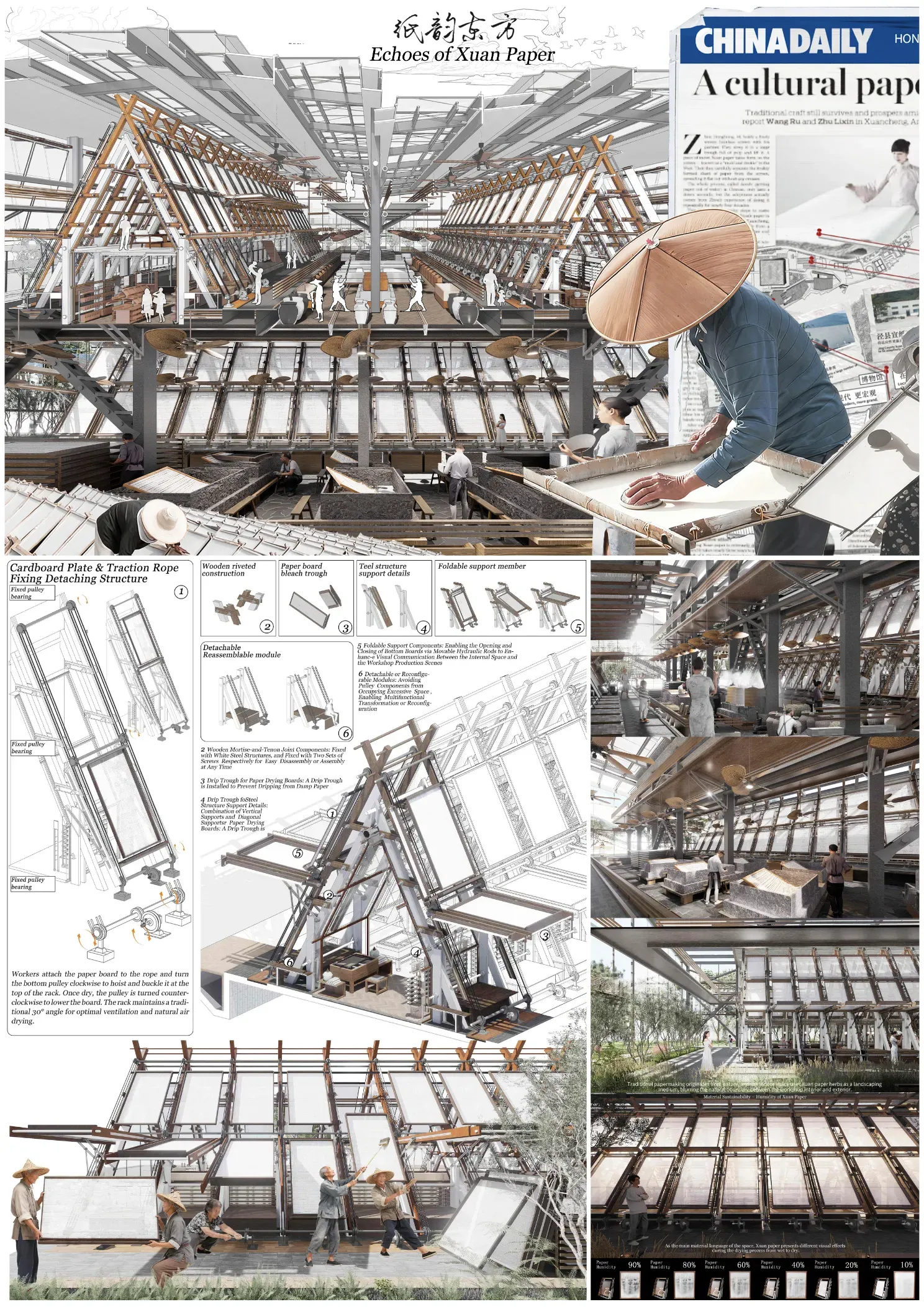
Xuan paper is indispensable for Chinese calligraphy and painting. As a major birthplace of the craft, Wuxi Village preserves its millennium-old Tang-dynasty heritage and carries generations of cultural wisdom. Since 2010, mechanized papermaking has severely impacted ancient methods. Large factories leveraged low costs and high output to dominate the industry. Consequently, many traditional workshops have been forced to close.

Echoes of Xuan Paper
1 Design Background
1.1 The Cultural Legacy
Xuan paper is indispensable for Chinese calligraphy and painting. As a major birthplace of the craft, Wuxi Village preserves its millennium-old Tang-dynasty heritage and carries generations of cultural wisdom.
1.2 The Industrial Impact
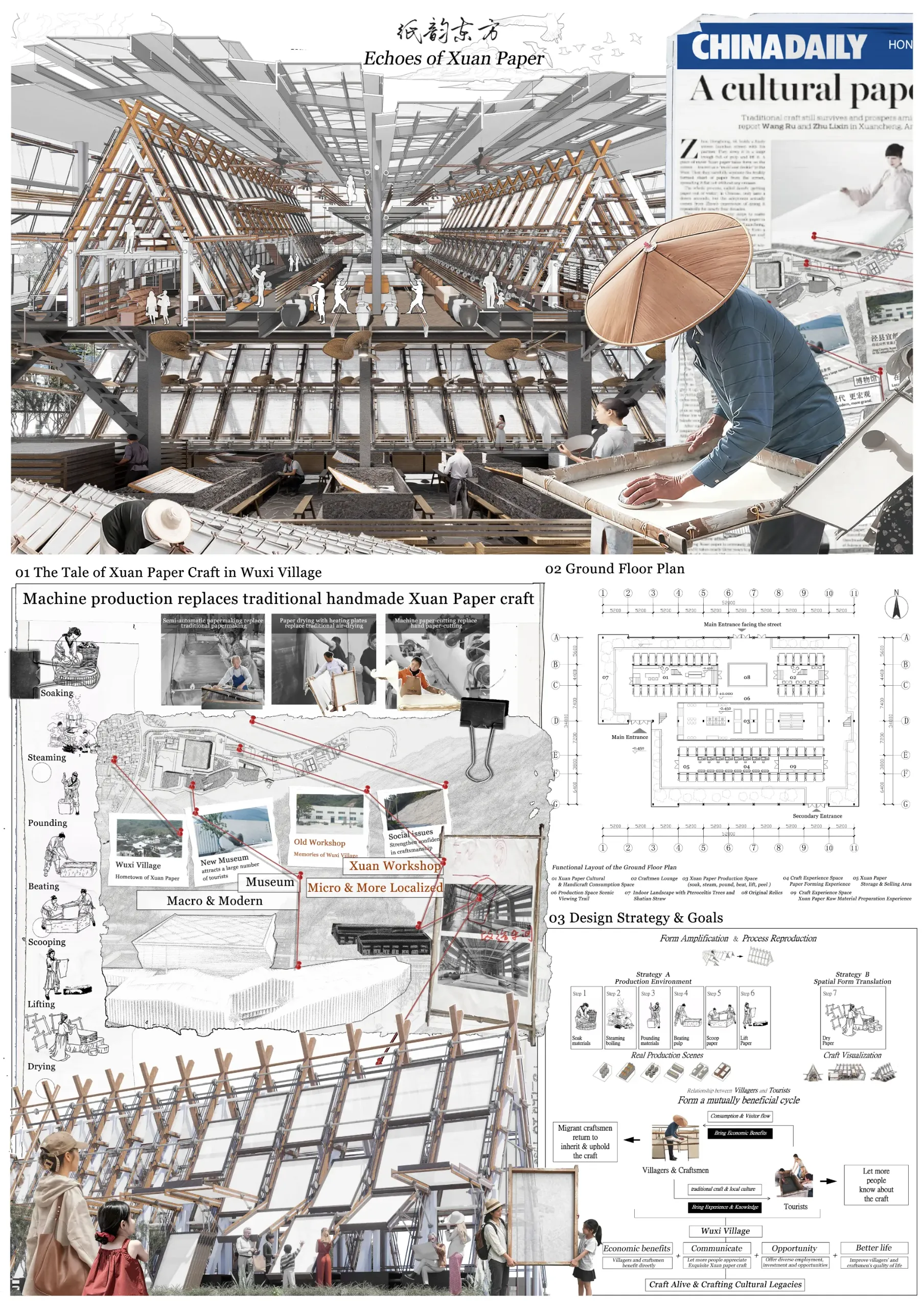
Since 2010, mechanized papermaking has severely impacted ancient methods. Large factories leveraged low costs and high output to dominate the industry. Consequently, many traditional workshops have been forced to close.
1.3 A Village in Crisis
The decline of handmade paper has triggered a severe social and economic crisis in Wuxi Village:
1.4 The Paradox of Quality
Handmade Xuan paper far outperforms machine-made versions, yet its fine traditional quality is little recognized by the public.
2 Opportunity and TransformationStarting
2.1 Society’s Attention
From 2024 onward, the government strengthened support for fading intangible cultural heritage. Completed in 2025, the Xuan History Museum turned Wuxi Village into a tourism and study hub, offering a key chance to revitalize traditional papermaking craft.
2.2 Workshop Renovation
Wu Tianming, who has practiced this craft for 40 years , owns a workshop that was once thriving but is now in great ruins. Through design, aim to bring new life to this place , ensuring the inheritance of his ancestors' skills.
2.3 Workshop Analysis
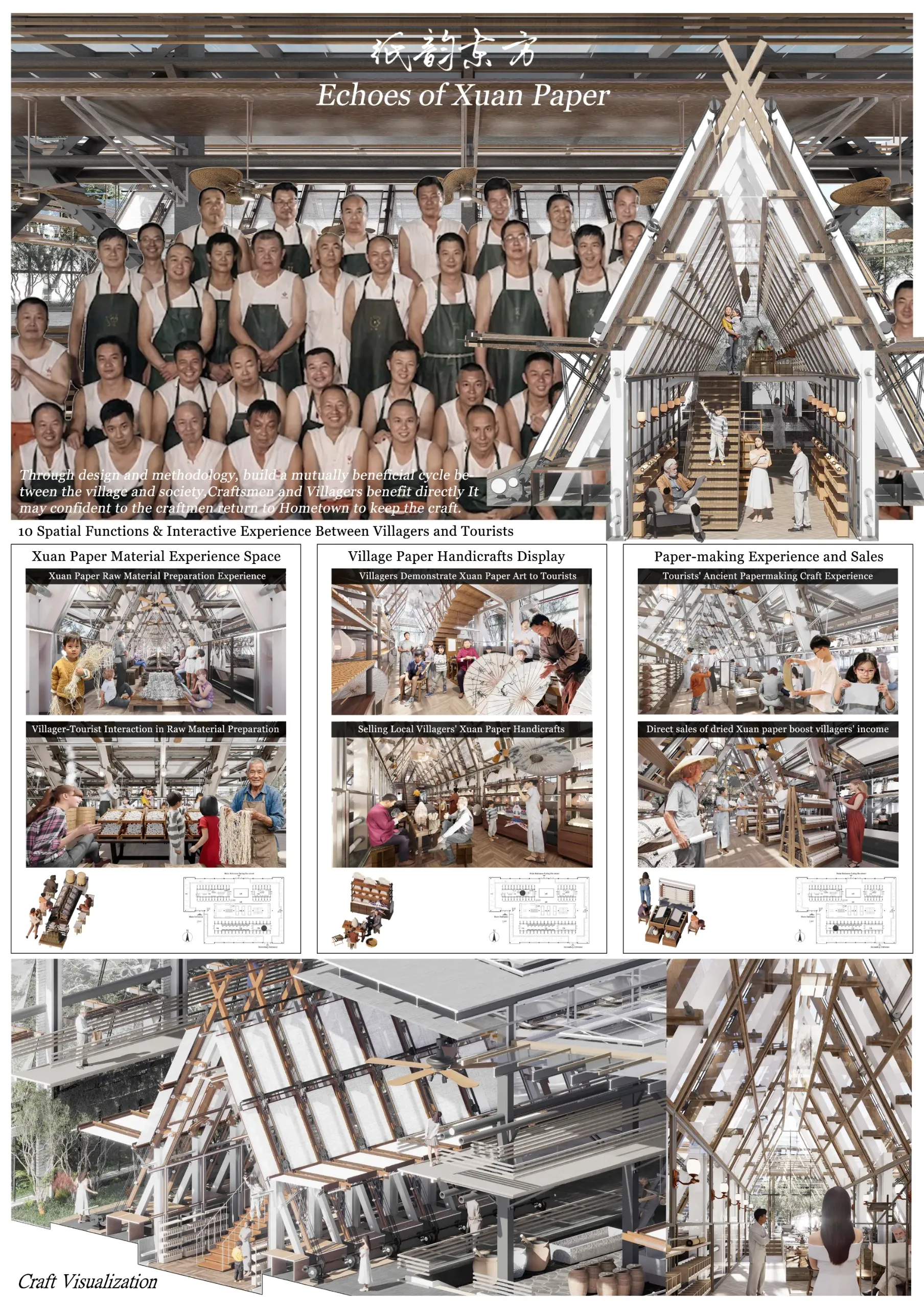
Adjacent to the museum, the workshop forms a striking contrast: the museum features a macroscopic modern narrative, while the workshop presents an intimate showcase of traditional papermaking techniques. A craft cooperative helps villagers improve their environment, boost efficiency, raise income and pass down the heritage.
2.4 Villagers and Tourists
The project creates a mutually beneficial cycle: local artisans inherit and display authentic culture, while tourists drive economic growth. This balance draws migrant craftsmen back to the village, keeping the thousand-year-old Xuan paper craftsmanship well preserved and passed down.
3 Spatial Translation of the Craft
3.1 Hardware & Software
Wu’s workshop features outdated hardware facilities. As existing hardware fails to meet spatial demands, the solution lies in its "software"—the millennium-old inherited Xuan paper craftsmanship.
3.2 Craft Translation
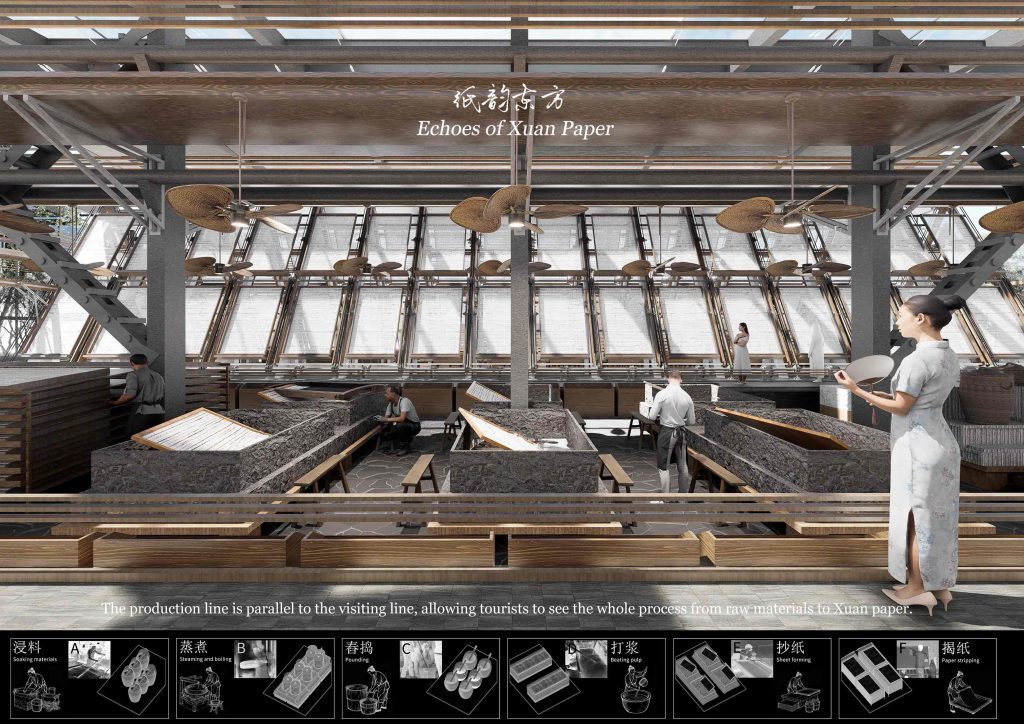
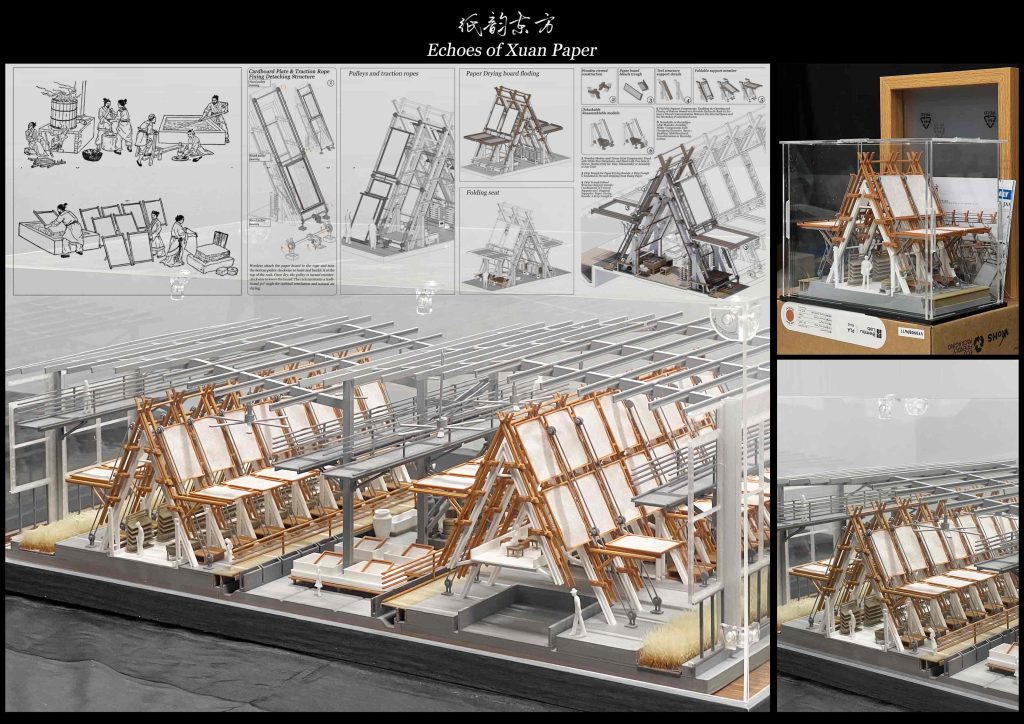
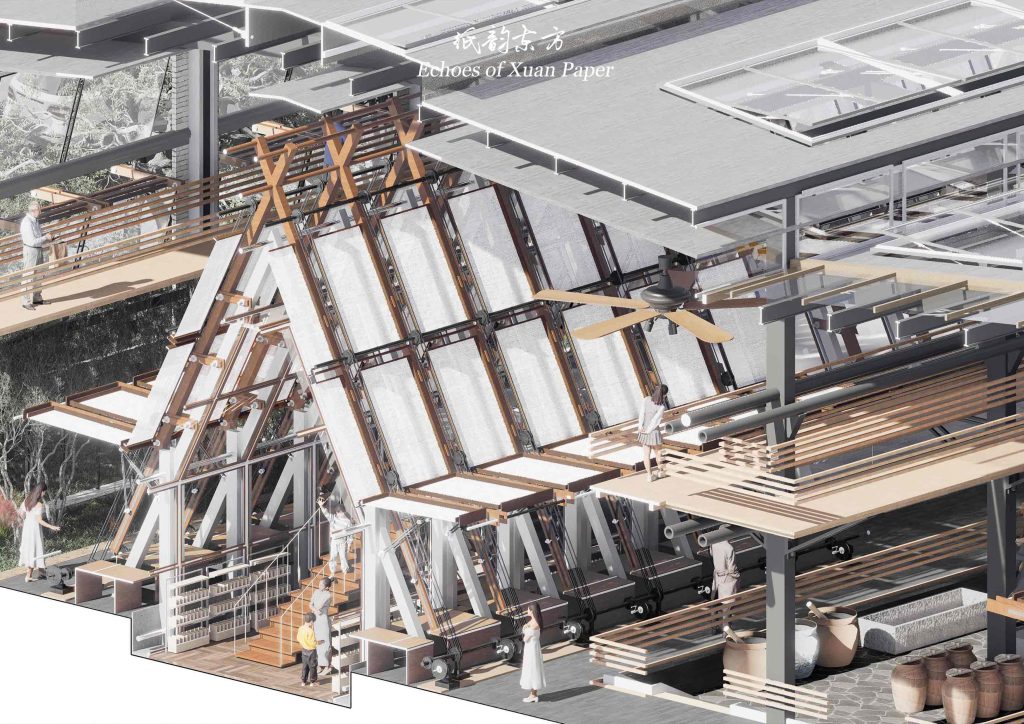
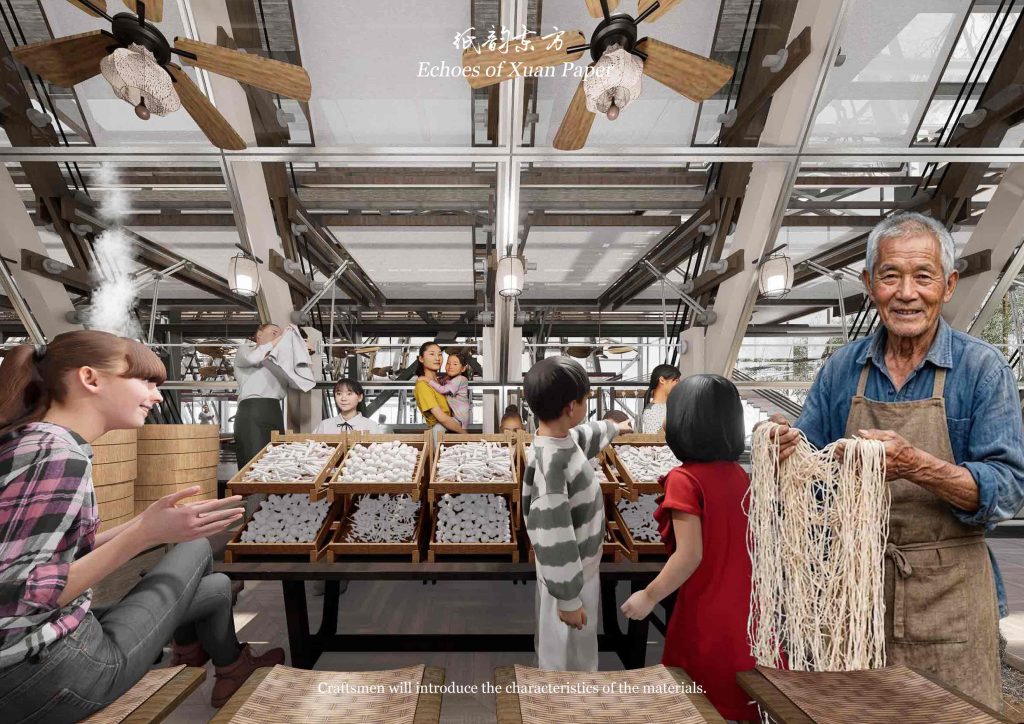
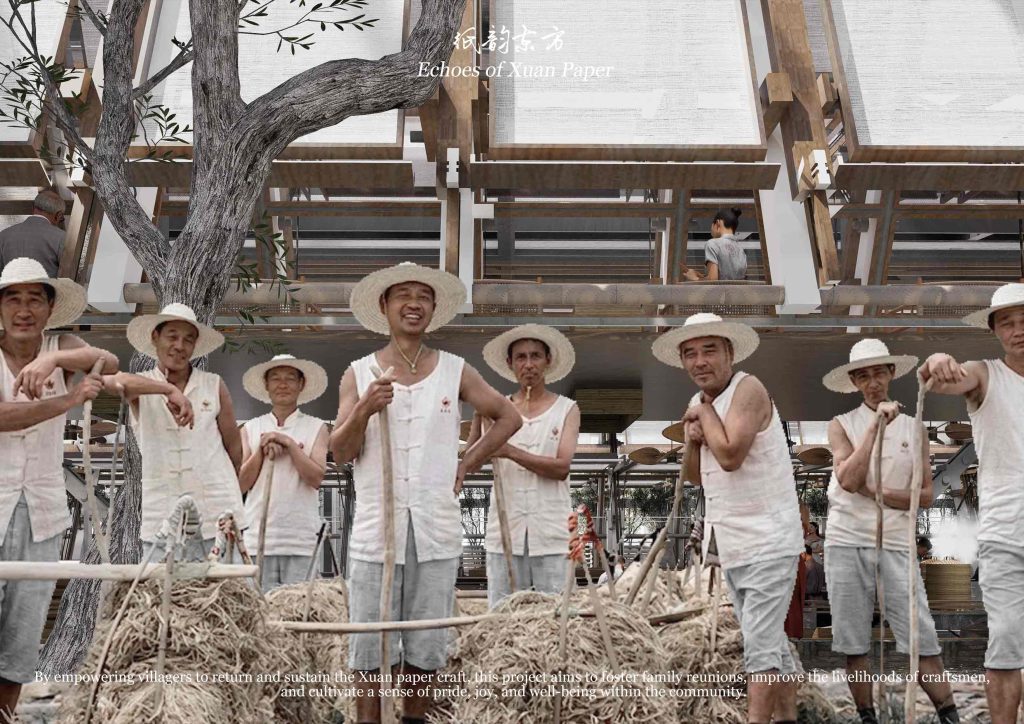
Xuan paper production comprises seven core procedures: soaking, steaming, pounding, beating, lifting, peeling and drying. These are displayed via two spatial arrangement paths according to visual effects:
1) Drying — Spatial Language
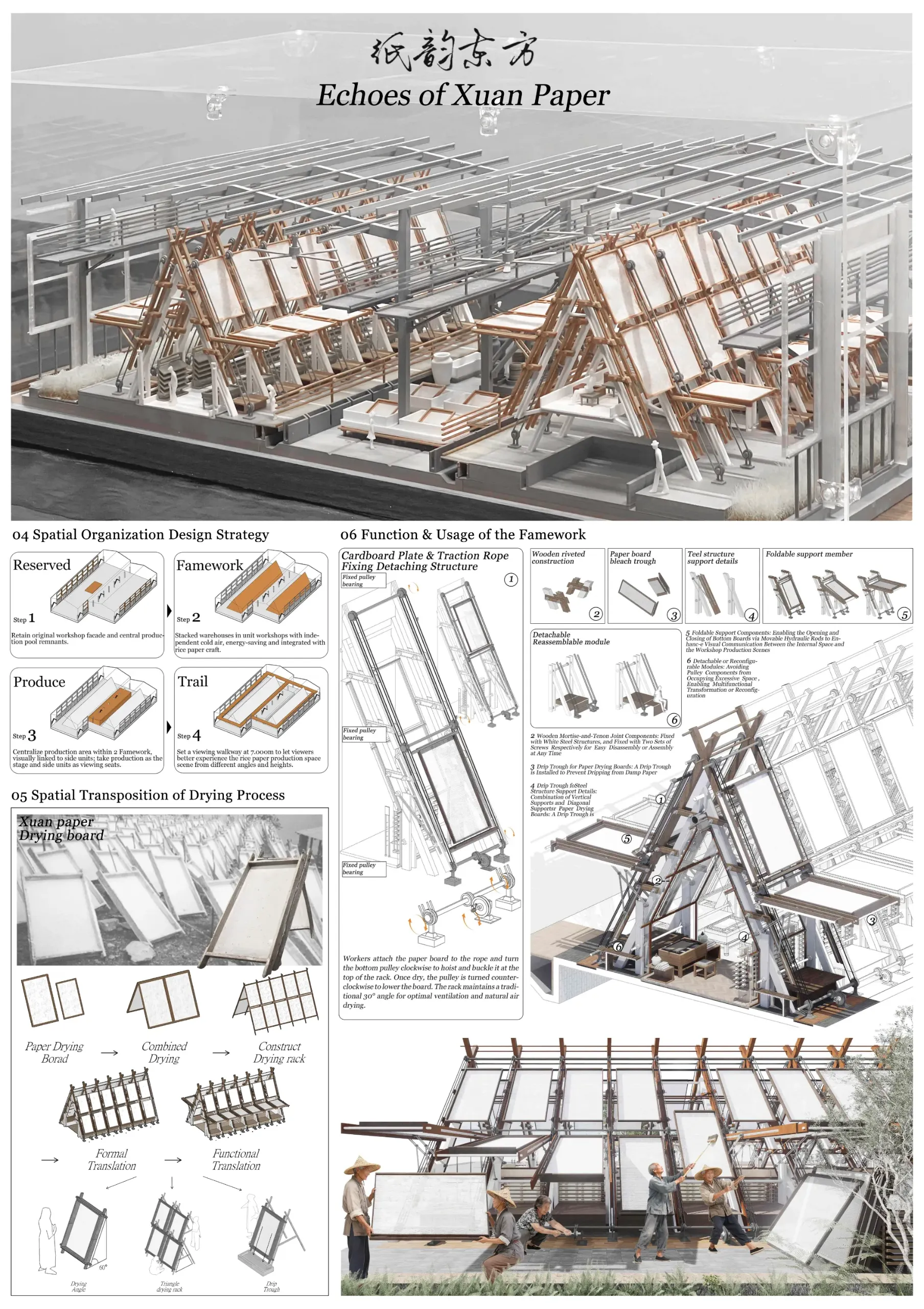
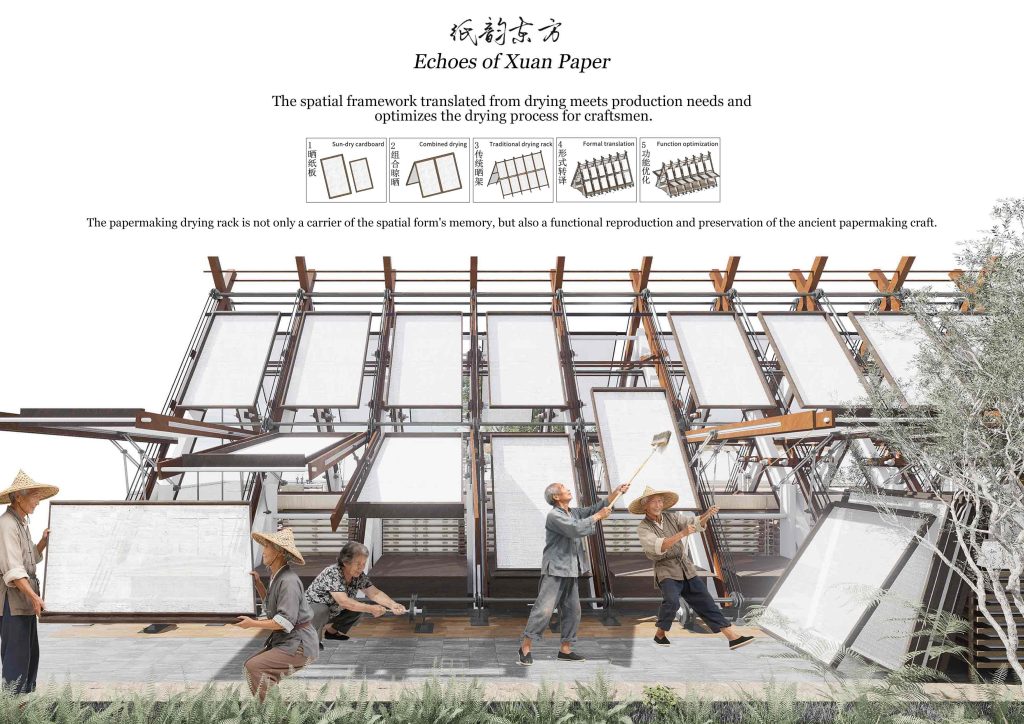
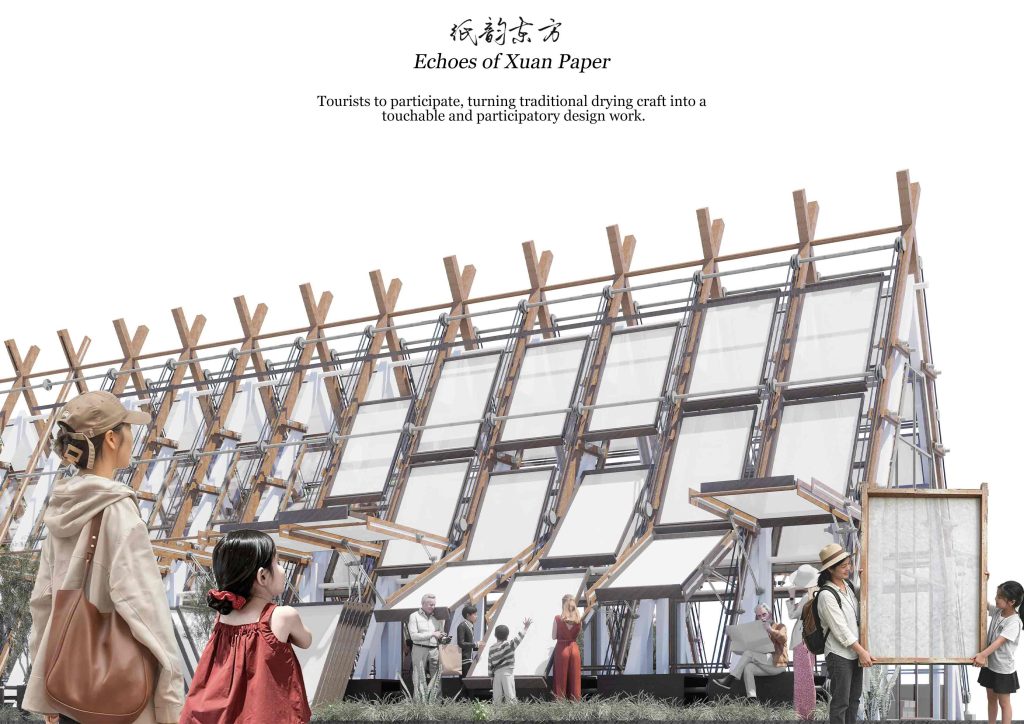
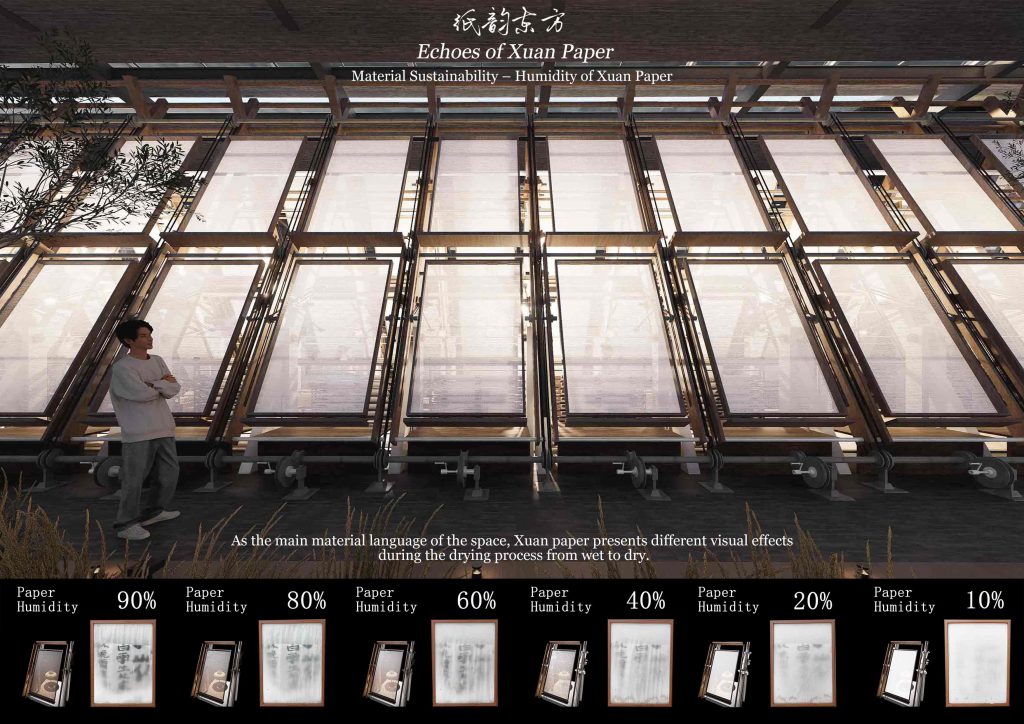
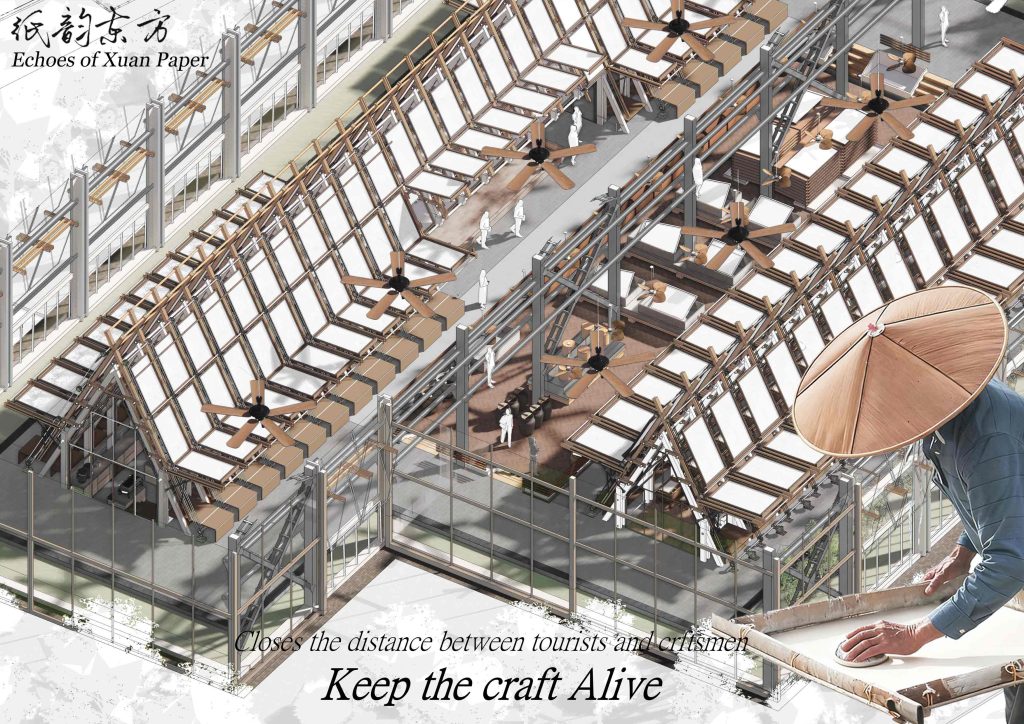
The paper-drying board serves as the smallest unit of the process. Using "handmade drying" as a clue, we translate this step into a new spatial framework. This framework achieves a dual translation of function and form, meeting daily production needs while enabling interactive experiences between tourists and craftsmen.
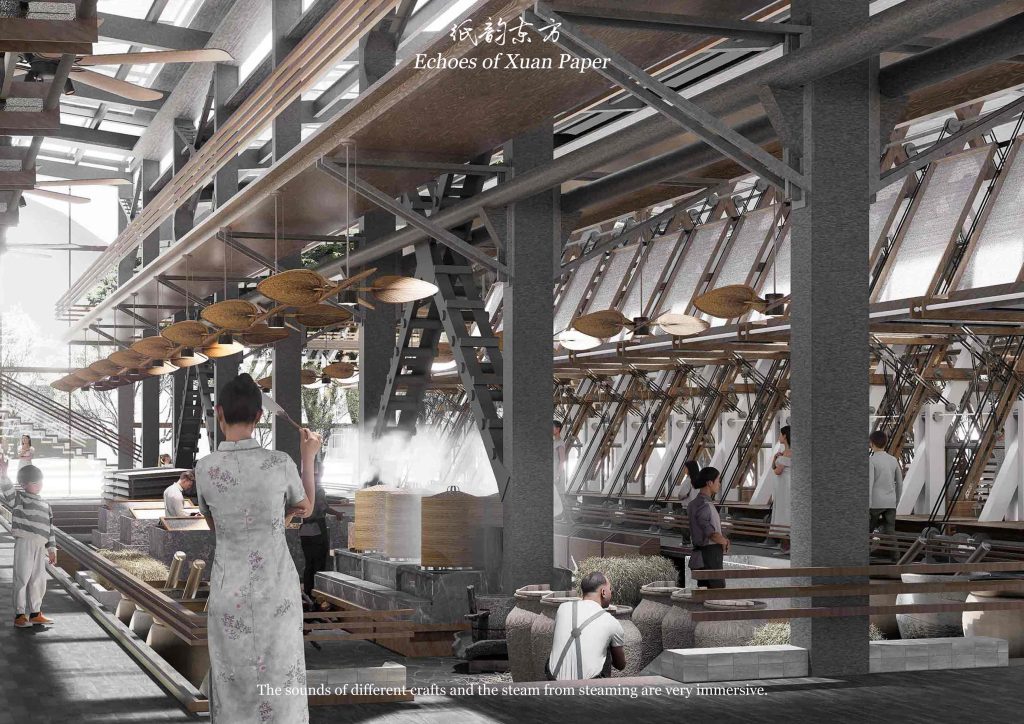
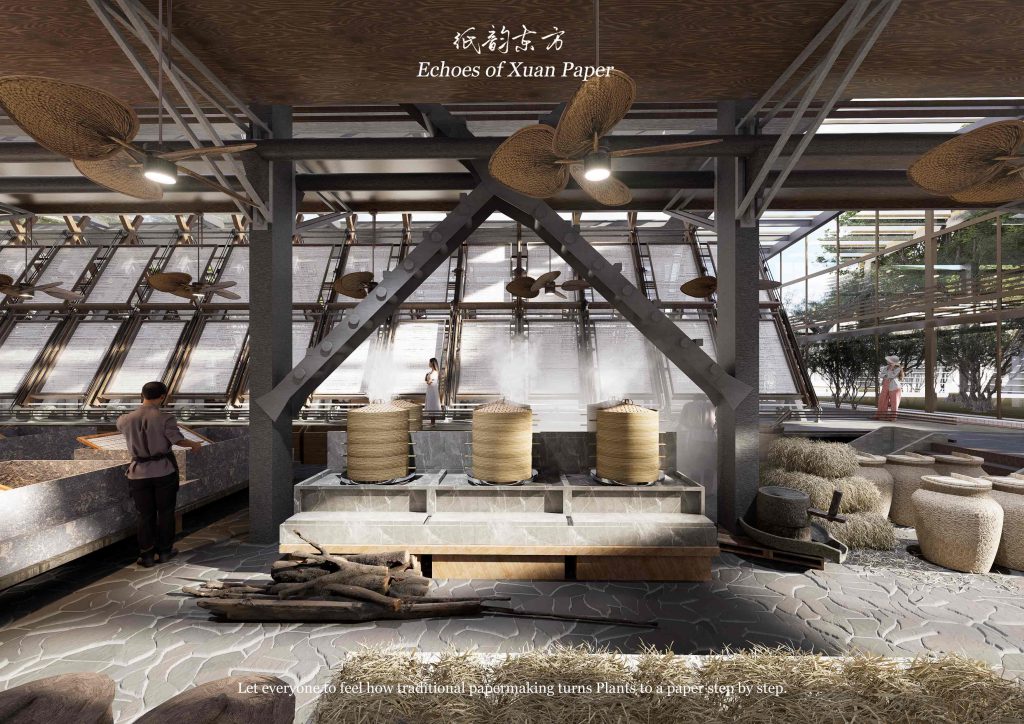
2) The Other Six Processes — Real Production Scenes
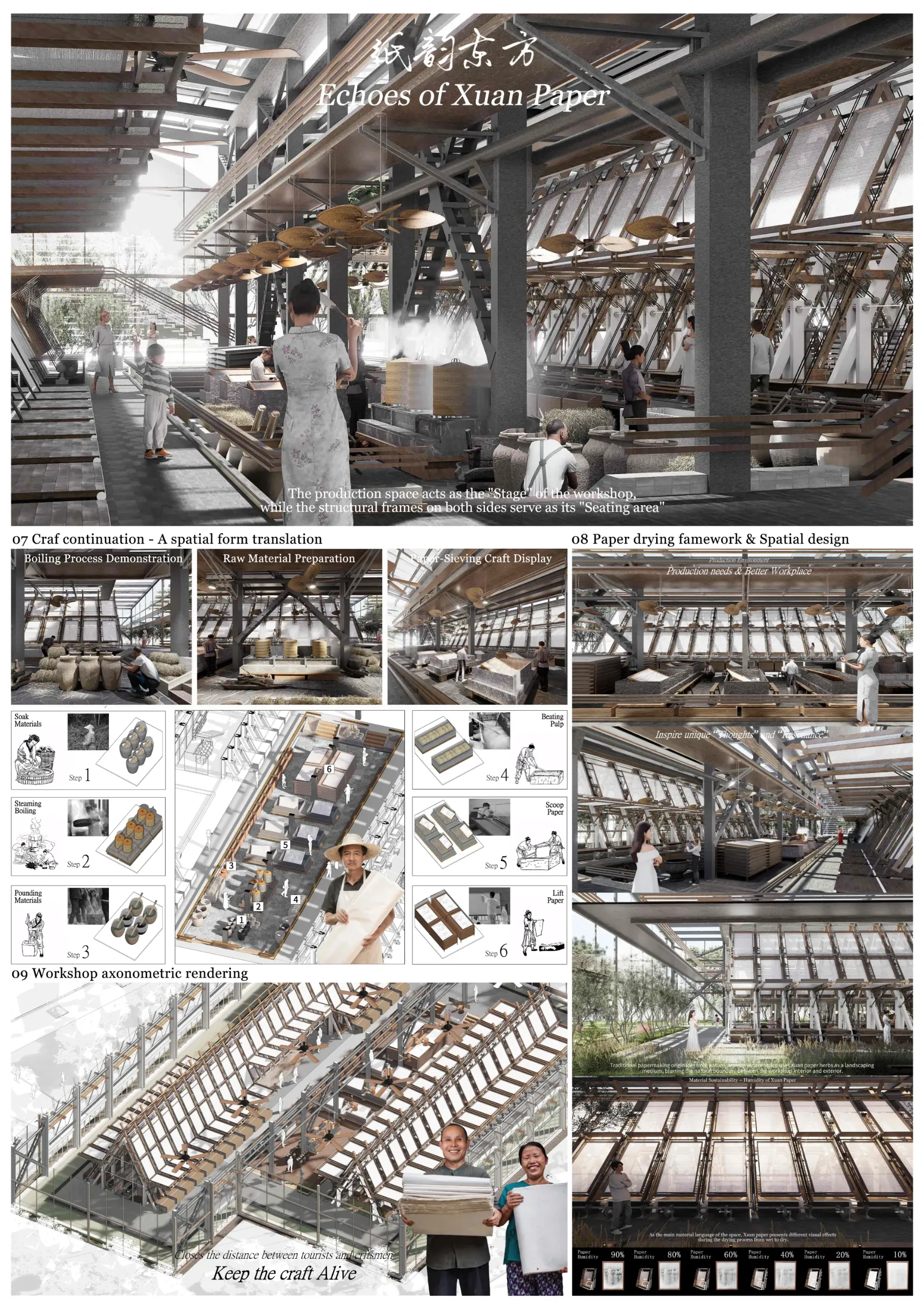
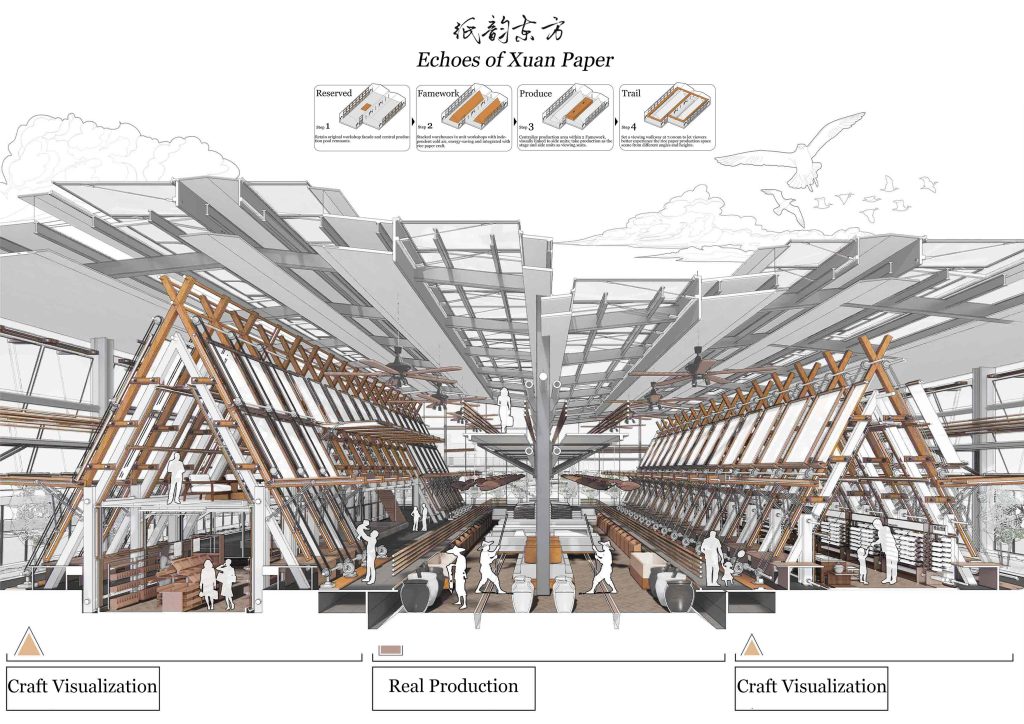
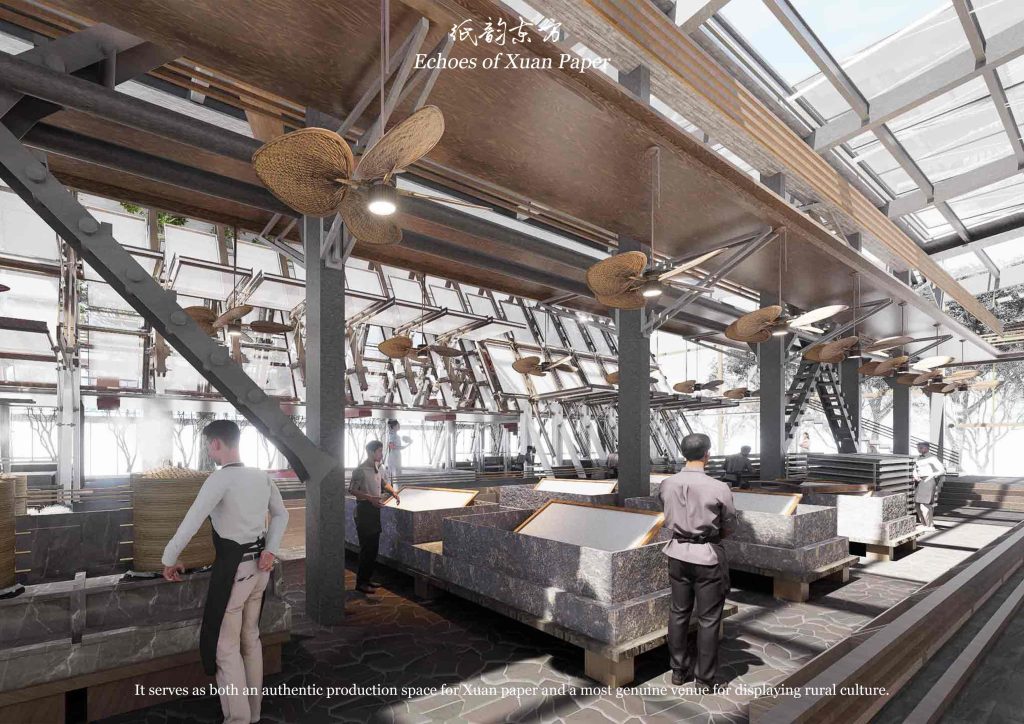
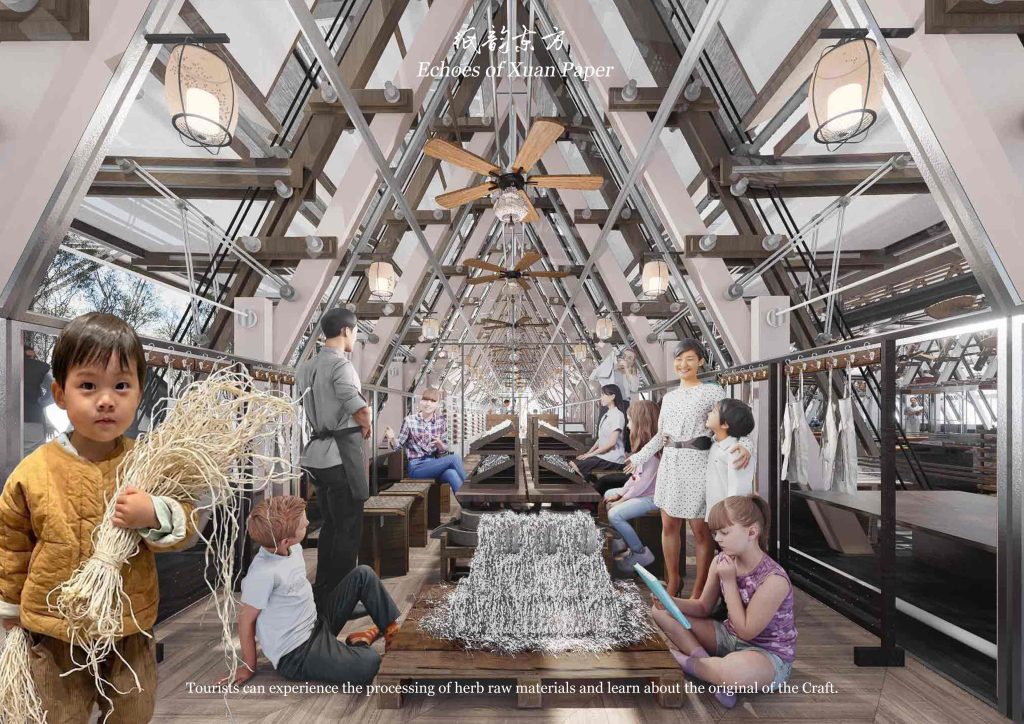
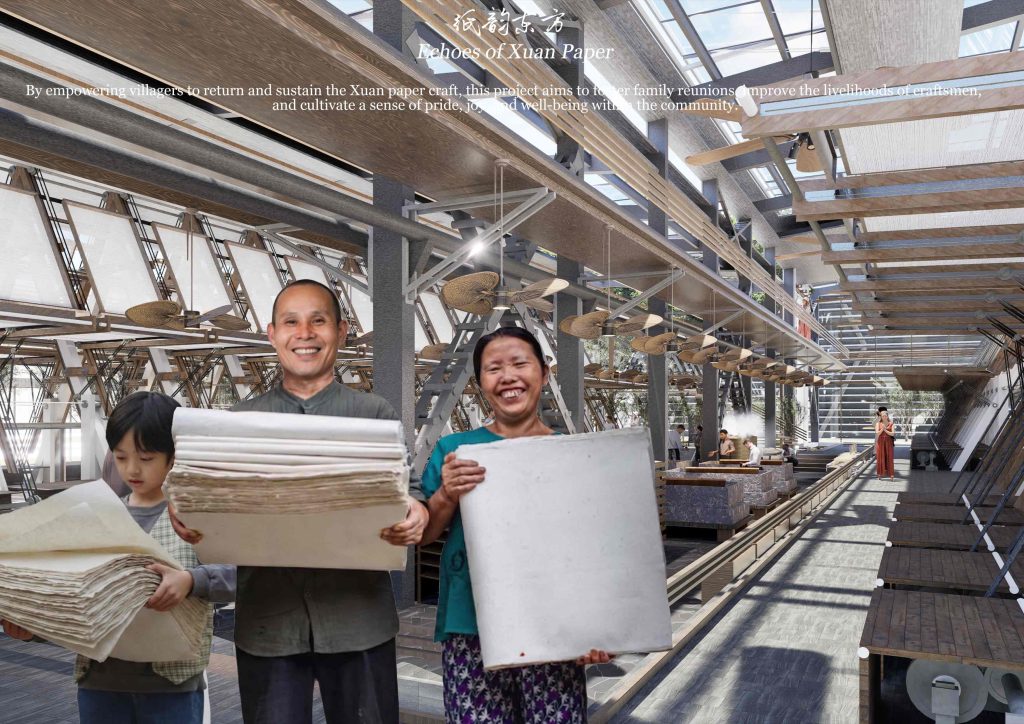
The remaining six processes are arranged in order to form the central production area. By aligning the production and visiting lines, the design juxtaposes work and experience. This allows visitors to walk through the entire step-by-step transformation of plants into paper.
3.3 Stage & Seats
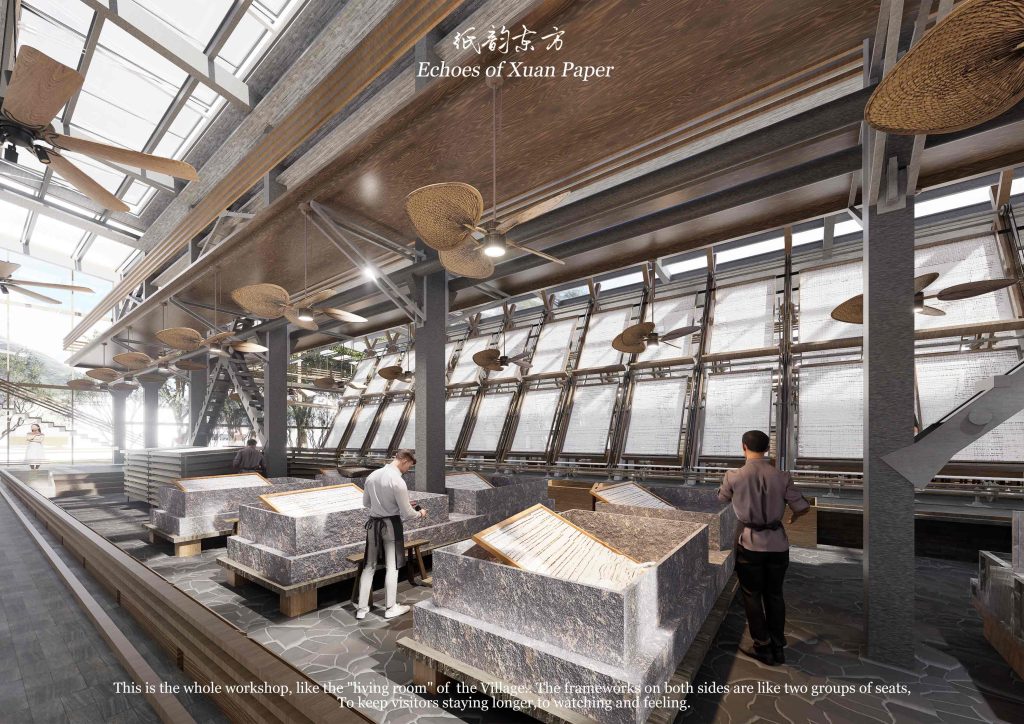
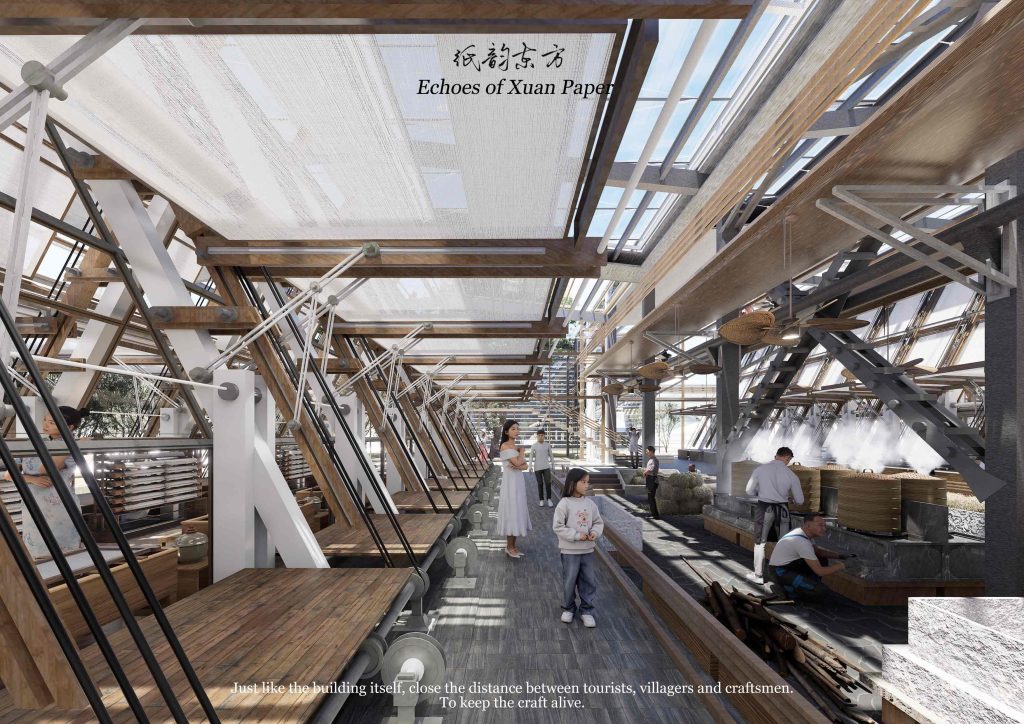
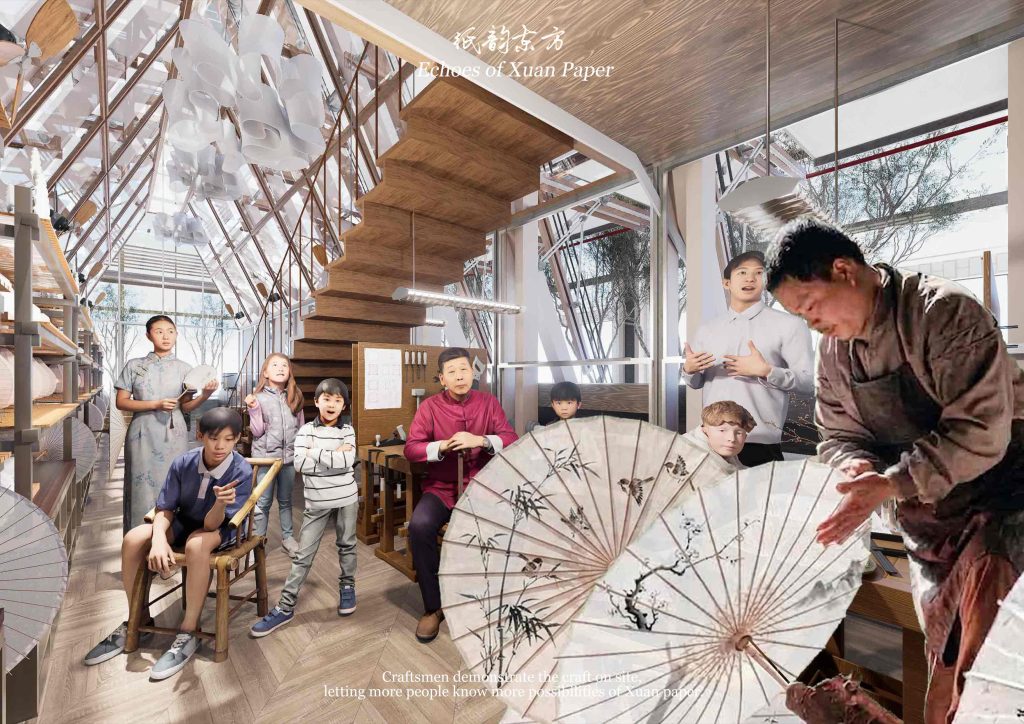
These two approaches provide villagers an efficient workplace and showcase papermaking to visitors. By retaining production and embedding participatory experiences, the design turns the workshop into a "stage" and the experience area into "seats". The integration of production and consumption revitalizes Xuan paper craftsmanship.
4. Spatial Function & Sustainability
4.1 Spatial Function
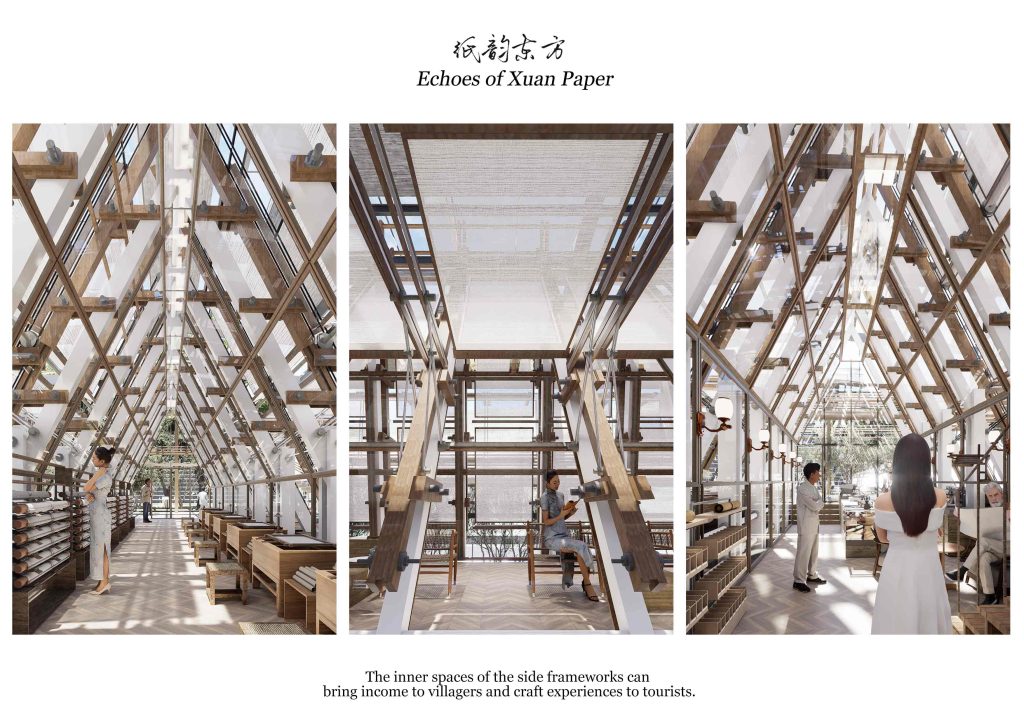
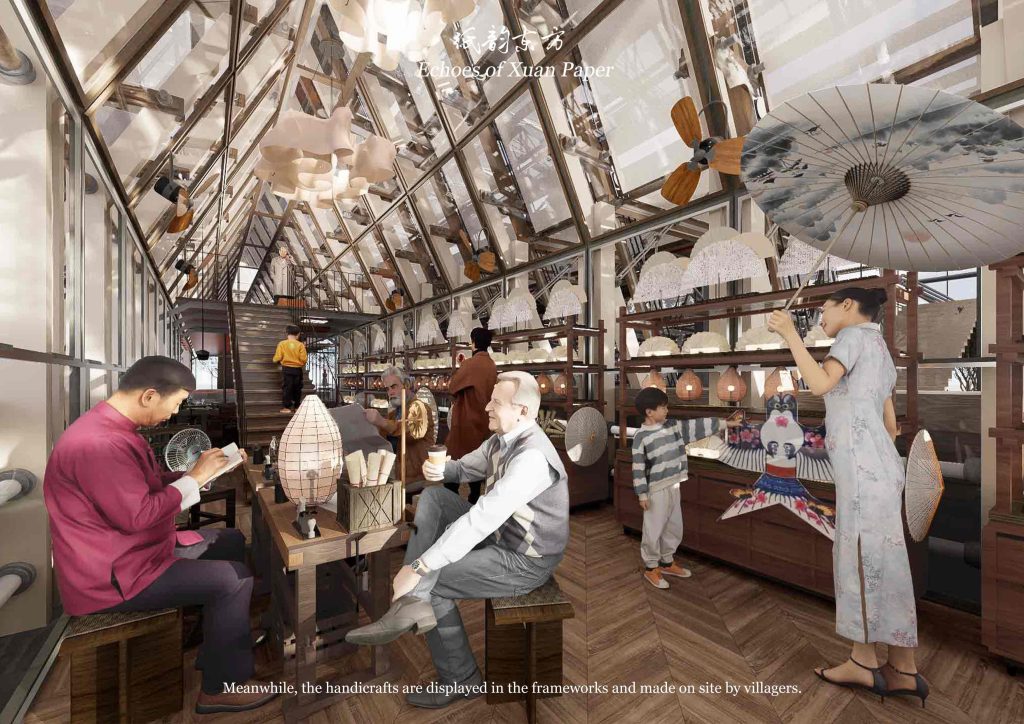
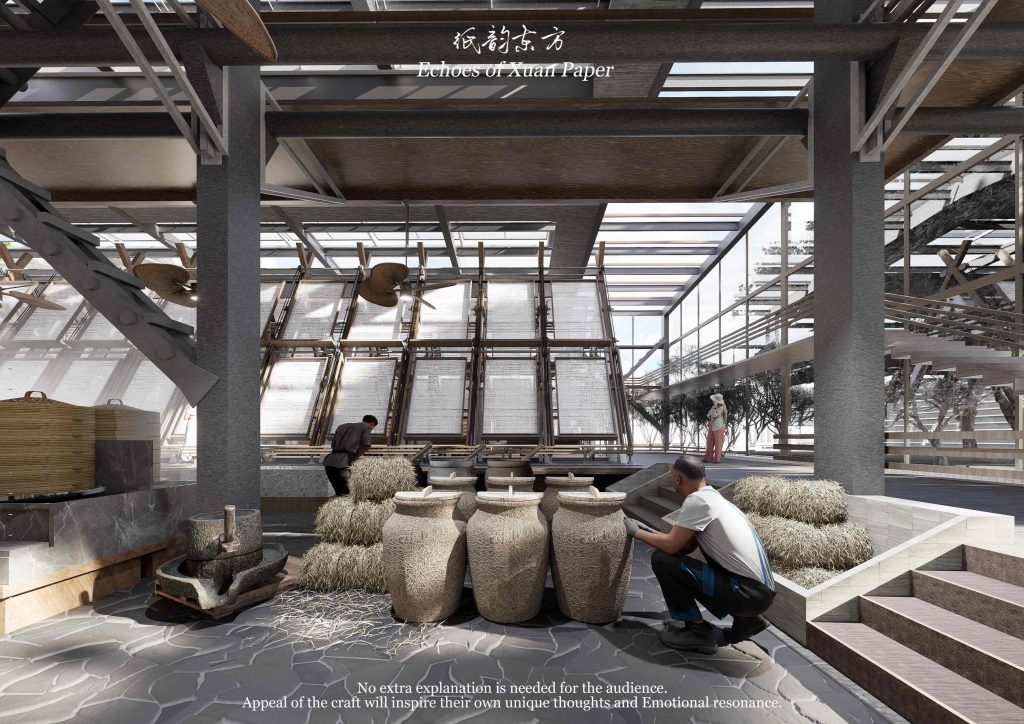
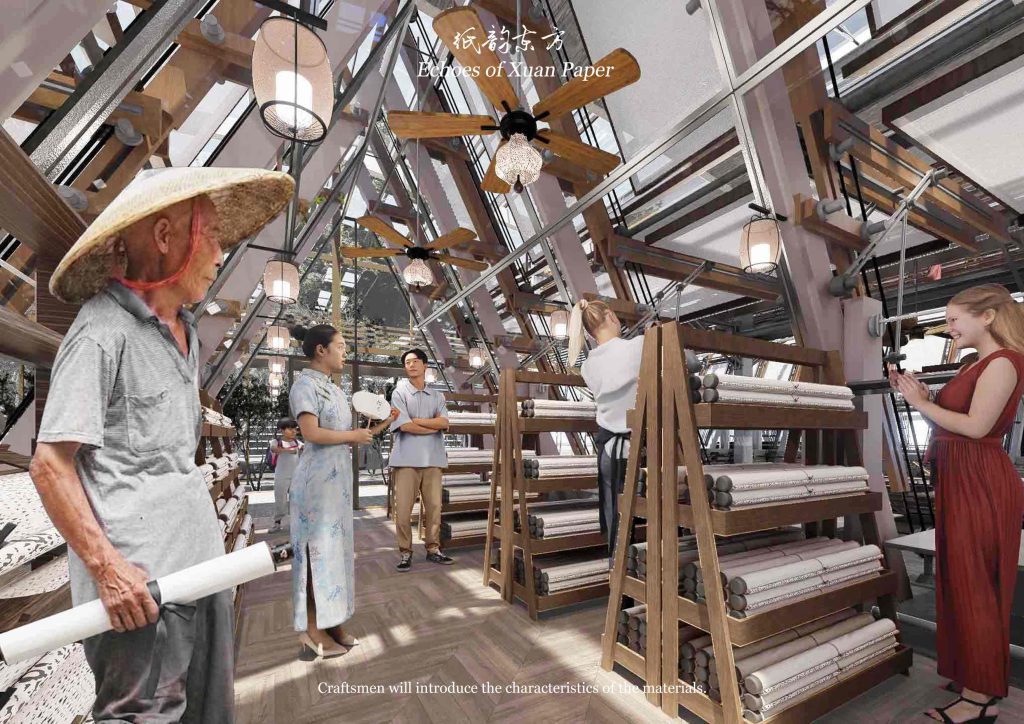
The interior retains traditional papermaking and offers immersive craft experiences. Inside the framework, artisans host papermaking workshops, with a zone for villagers to sell handmade Xuan paper crafts. Off production hours, the central space becomes a local market, raising villagers income and well-being, and narrowing the gap between locals and tourists.
4.2 Spatial Sustainability
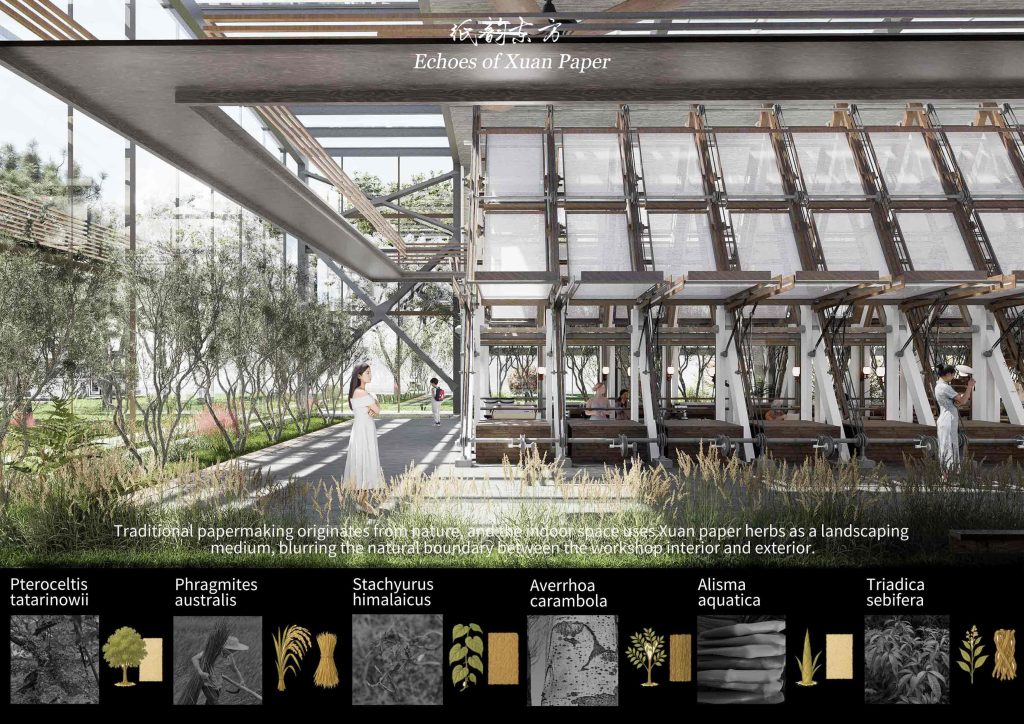
This design achieves spatial sustainability through three integrated layers: structures use green wingceltis wood, which can be recycled into paper for a circular material flow; various textured Xuan papers produce dynamic spatial effects during drying; and handmade paper acts as both material and medium, whose translucency and drying rhythm create shifting light, shadows and immersive paths.
5 Crafting Cultural Legacies
5.1 Villagers and Tourists
The design offers visitors immersive craft experiences and spreads the heritage to more people. It brings income and opportunities to the workshop and Wuxi Village, directly benefiting artisans and villagers.
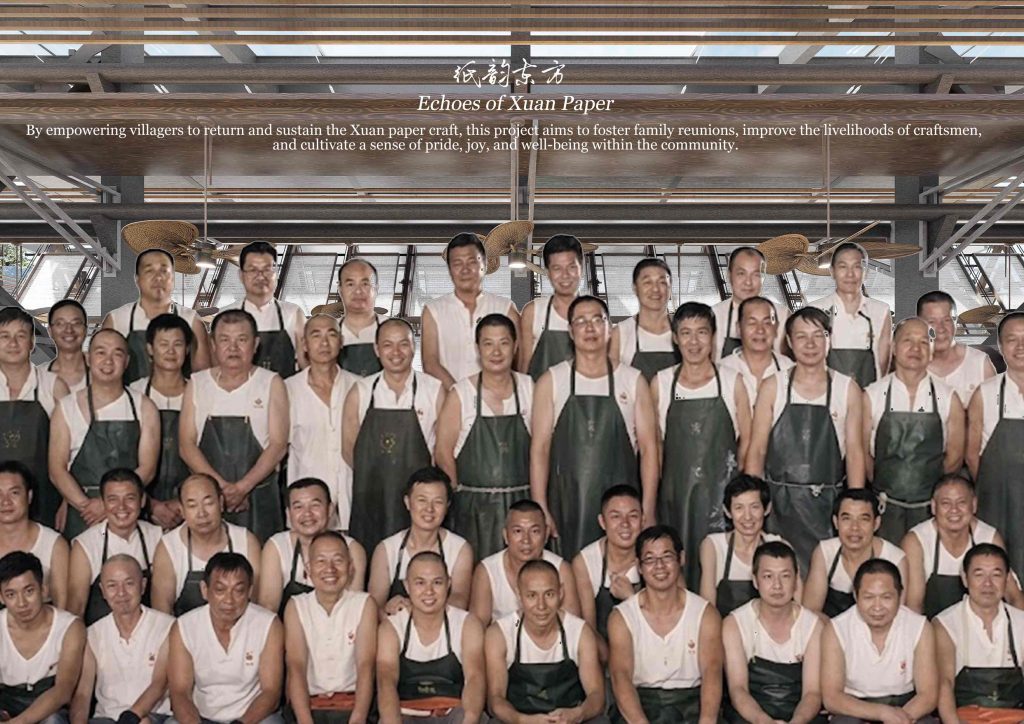
Craftsmen gain confidence in inheritance. Migrant artisans return home for a better life and family reunion, allowing the craft to be passed down to the next generation.
5.2 Craft Inheritance
The design does not replace machine production. Rooted in local context, it builds a mutually beneficial cycle between the village and society, sustaining craft inheritance and bringing a better, happier life to all.
Showcase your design to an international audience
SUBMIT NOW
Image: Agrapolis Urban Permaculture Farm by David Johanes Palar
Top
Echoes of Xuan Paper 1 Design Background 1.1 The Cultural Legacy Xuan paper is indispensable for Chinese calligraphy and painting. As a major birthplace of the craft, Wuxi Village preserves its millennium-old Tang-dynasty heritage and carries generations of cultural wisdom. 1.2 The Industrial Impact Since 2010, mechanized papermaking has severely impacted ancient methods. Large factories leveraged low costs and high output to dominate the industry. Consequently, many traditional workshops have been forced to close. 1.3 A Village in Crisis The decline of handmade paper has triggered a severe social and economic crisis in Wuxi Village: 1.4 The Paradox of Quality Handmade Xuan paper far outperforms machine-made versions, yet its fine traditional quality is little recognized by the public. 2 Opportunity and TransformationStarting 2.1 Society’s Attention From 2024 onward, the government strengthened support for fading intangible cultural heritage. Completed in 2025, the Xuan History Museum turned Wuxi Village into a tourism and study hub, offering a key chance to revitalize traditional papermaking craft. 2.2 Workshop Renovation Wu Tianming, who has practiced this craft for 40 years , owns a workshop that was once thriving but is now in great ruins. Through design, aim to bring new life to this place , ensuring the inheritance of his ancestors' skills. 2.3 Workshop Analysis Adjacent to the museum, the workshop forms a striking contrast: the museum features a macroscopic modern narrative, while the workshop presents an intimate showcase of traditional papermaking techniques. A craft cooperative helps villagers improve their environment, boost efficiency, raise income and pass down the heritage. 2.4 Villagers and Tourists The project creates a mutually beneficial cycle: local artisans inherit and display authentic culture, while tourists drive economic growth. This balance draws migrant craftsmen back to the village, keeping the thousand-year-old Xuan paper craftsmanship well preserved and passed down. 3 Spatial Translation of the Craft 3.1 Hardware & Software Wu’s workshop features outdated hardware facilities. As existing hardware fails to meet spatial demands, the solution lies in its "software"—the millennium-old inherited Xuan paper craftsmanship. 3.2 Craft Translation Xuan paper production comprises seven core procedures: soaking, steaming, pounding, beating, lifting, peeling and drying. These are displayed via two spatial arrangement paths according to visual effects: 1) Drying — Spatial Language 2) The Other Six Processes — Real Production Scenes 3.3 Stage & Seats These two approaches provide villagers an efficient workplace and showcase papermaking to visitors. By retaining production and embedding participatory experiences, the design turns the workshop into a "stage" and the experience area into "seats". The integration of production and consumption revitalizes Xuan paper craftsmanship. 4. Spatial Function & Sustainability 4.1 Spatial Function The interior retains traditional papermaking and offers immersive craft experiences. Inside the framework, artisans host papermaking workshops, with a zone for villagers to sell handmade Xuan paper crafts. Off production hours, the central space becomes a local market, raising villagers income and well-being, and narrowing the gap between locals and tourists. 4.2 Spatial Sustainability This design achieves spatial sustainability through three integrated layers: structures use green wingceltis wood, which can be recycled into paper for a circular material flow; various textured Xuan papers produce dynamic spatial effects during drying; and handmade paper acts as both material and medium, whose translucency and drying rhythm create shifting light, shadows and immersive paths. 5 Crafting Cultural Legacies 5.1 Villagers and Tourists The design offers visitors immersive craft experiences and spreads the heritage to more people. It brings income and opportunities to the workshop and Wuxi Village, directly benefiting artisans and villagers. Craftsmen gain confidence in inheritance. Migrant artisans return home for a better life and family reunion, allowing the craft to be passed down to the next generation. 5.2 Craft Inheritance The design does not replace machine production. Rooted in local context, it builds a mutually beneficial cycle between the village and society, sustaining craft inheritance and bringing a better, happier life to all.
The paper-drying board serves as the smallest unit of the process. Using "handmade drying" as a clue, we translate this step into a new spatial framework. This framework achieves a dual translation of function and form, meeting daily production needs while enabling interactive experiences between tourists and craftsmen.
The remaining six processes are arranged in order to form the central production area. By aligning the production and visiting lines, the design juxtaposes work and experience. This allows visitors to walk through the entire step-by-step transformation of plants into paper.

The AYDA Awards is part of Colouring Lives, Nippon Paint’s Corporate Social Responsibility (CSR) programme, which is dedicated to nurturing the next generation of Architectural and Interior Design talents. Through cross-learning and industry exposure, AYDA provides a platform for students to develop their skills and grow as designers. Discover more of Nippon Paint’s CSR initiatives under Colouring Lives.