BACK TO finalistS
Finalist: Architectural Category
THE NEXUS HUB
The Nexus Hub // Convergence of Community and Mobility - Vertical Restructuring of Flows The extreme effects of global urbanization, growing populations, and environmental degradation are continuously increasing in cities today, leading to a state of crisis. While cars are dominating roads, public life is shrinking and being pushed to the side. Environmental stress and […]

The Nexus Hub // Convergence of Community and Mobility - Vertical Restructuring of Flows
The extreme effects of global urbanization, growing populations, and environmental degradation are continuously increasing in cities today, leading to a state of crisis. While cars are dominating roads, public life is shrinking and being pushed to the side. Environmental stress and isolation are no longer theoretical, but experienced daily where streets serve vehicles instead of people. The Nexus Hub addresses these challenges as a multimodal transit facility that reclaims public space, bridges social divides, and envisions a resilient urban future based on local realities, yet shaped by global aspirations.
Cities are predicted to accommodate over five billion people by 2030, urging the need for creation of spaces that sustain the booming population without worsening already existing divides. The Blue Area of Islamabad is concerned with these emerging dilemmas, where expansive road surfaces separate communities, retain heat, and become obstacles for the underprivileged, requiring revision through a deep understanding of community needs.
Islamabad isn’t just a city that grew with time, but was drawn, imagined, and constructed as a modernist dynapolis. The lack of a traditional city center makes the commercial and business spine, the Blue Area, act as a convergence point. However, as the city evolved, the disparities also grew. The rigid functional zoning reinforced socio-economic divides, where the elite were housed in the planned residential quarters, and the workers who sustained the city’s daily life, such as the sanitation staff, street vendors, and domestic workers, were excluded from the formal plan, settling in informal colonies within the city’s gaps. Blue Area eventually began acting as a physical barrier between privilege and informality.
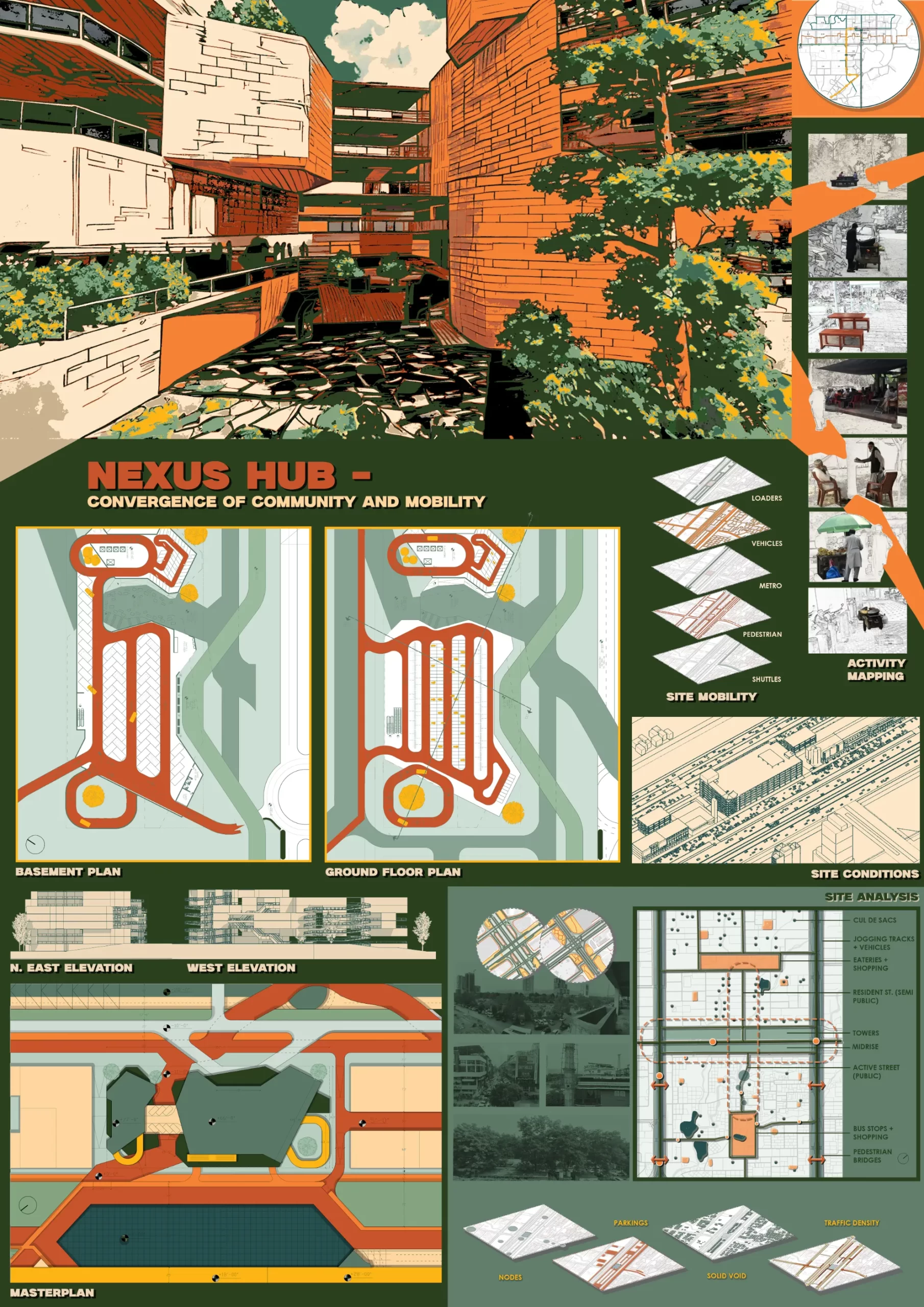
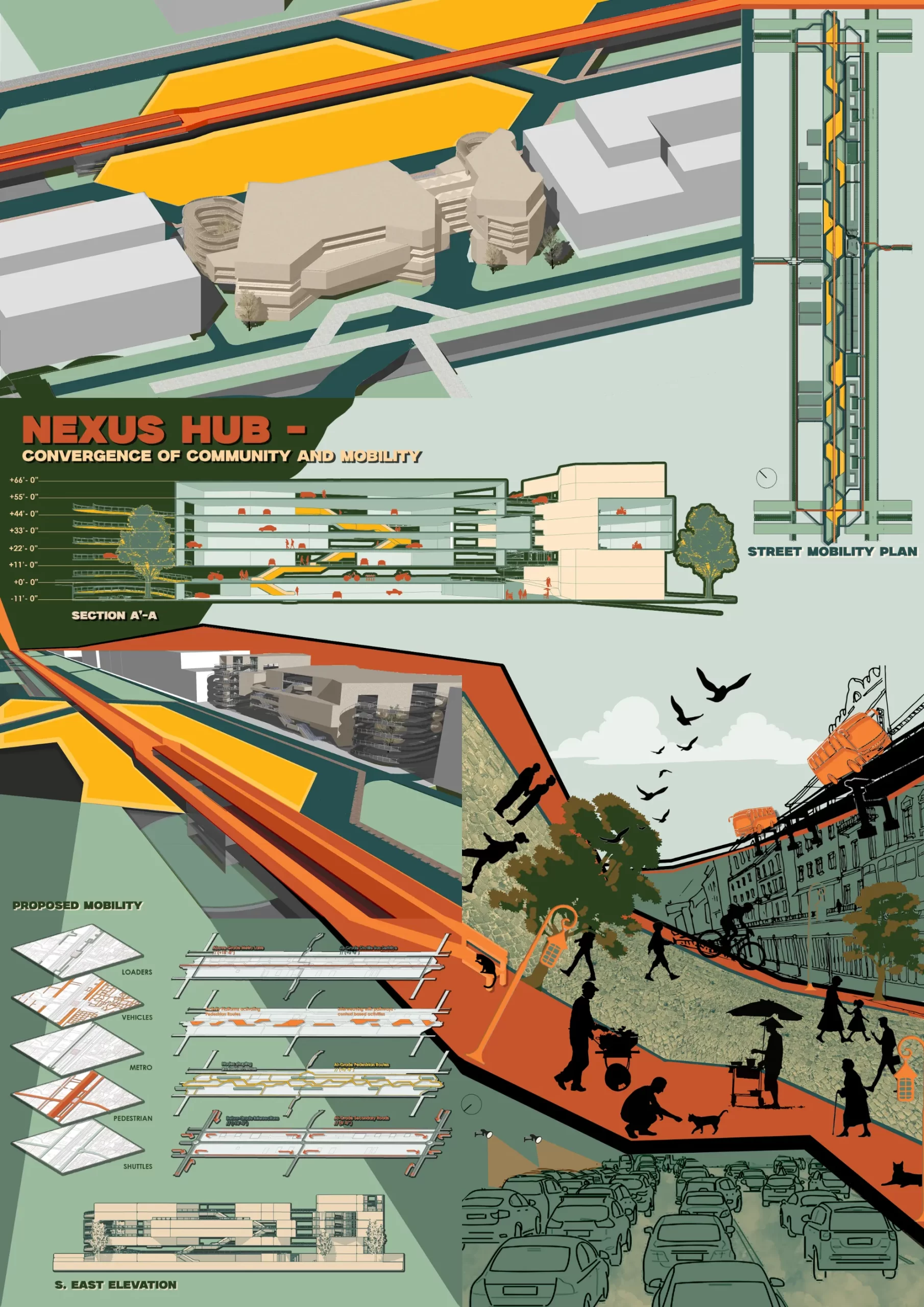
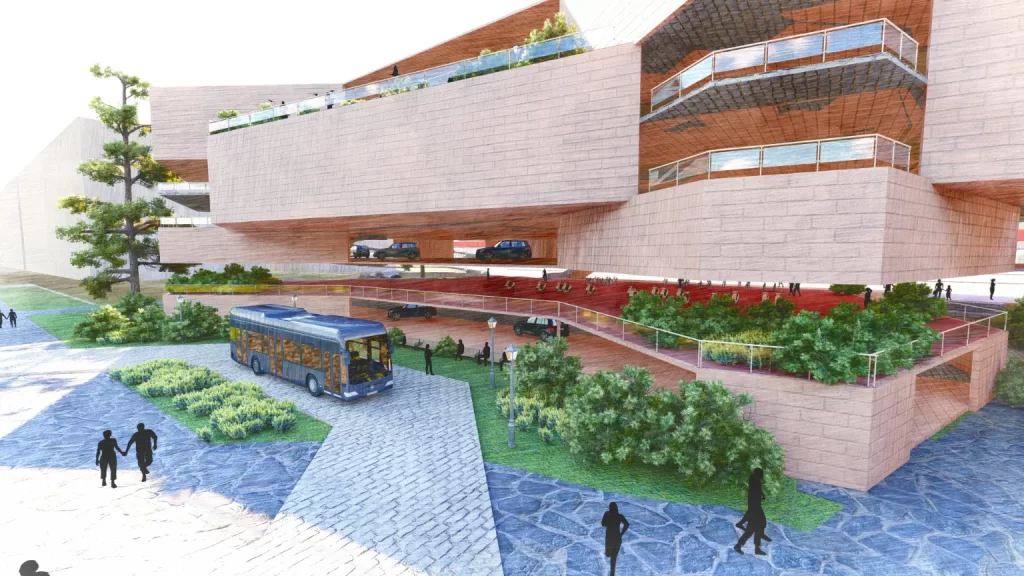
The Nexus Hub instead suggests a shift in narrative where the street is returned to pedestrians by pushing vehicles underground and elevating public transit above ground. This reconfigured mobility network reclaims valuable space, allowing people to interact and thrive.
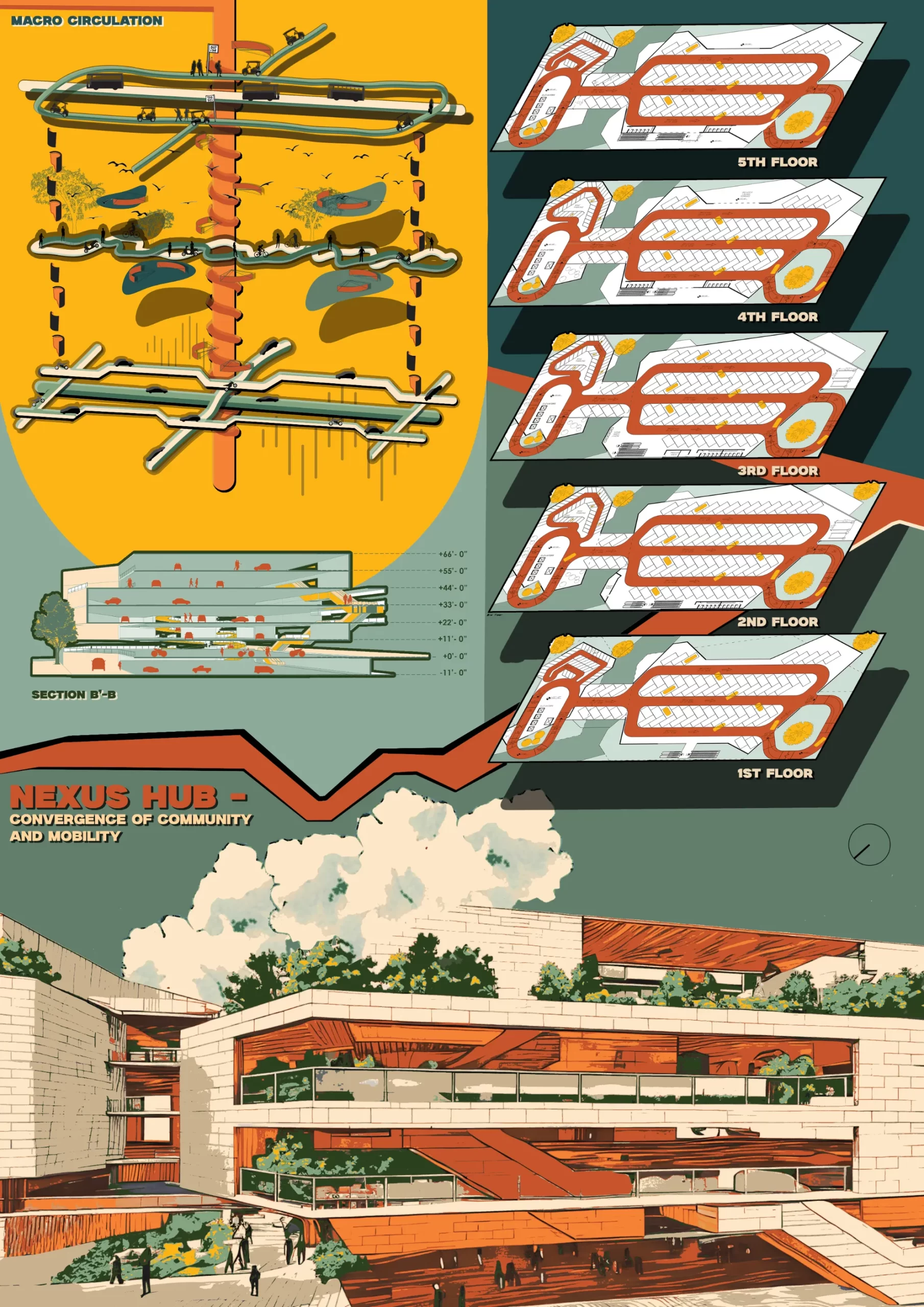
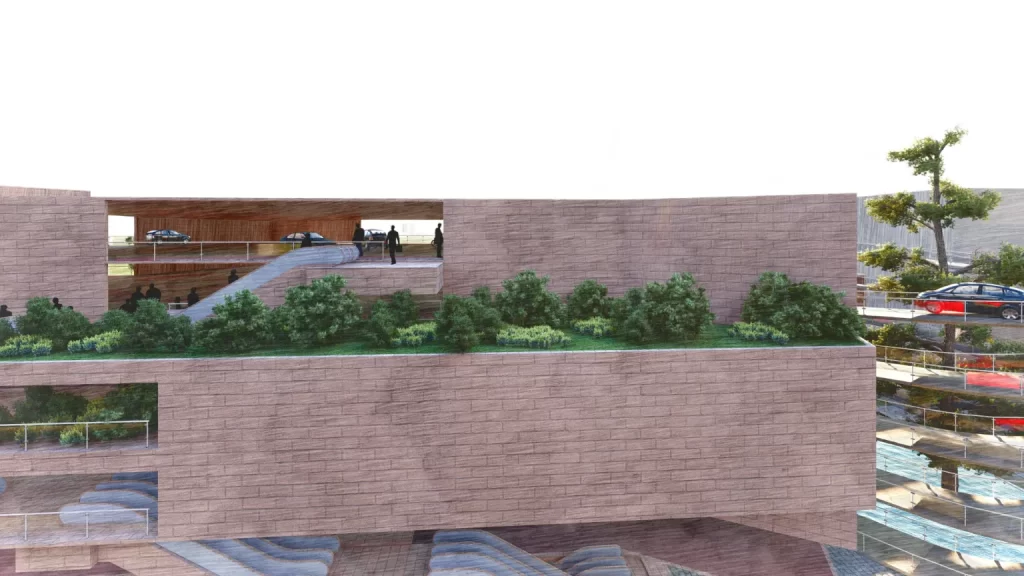
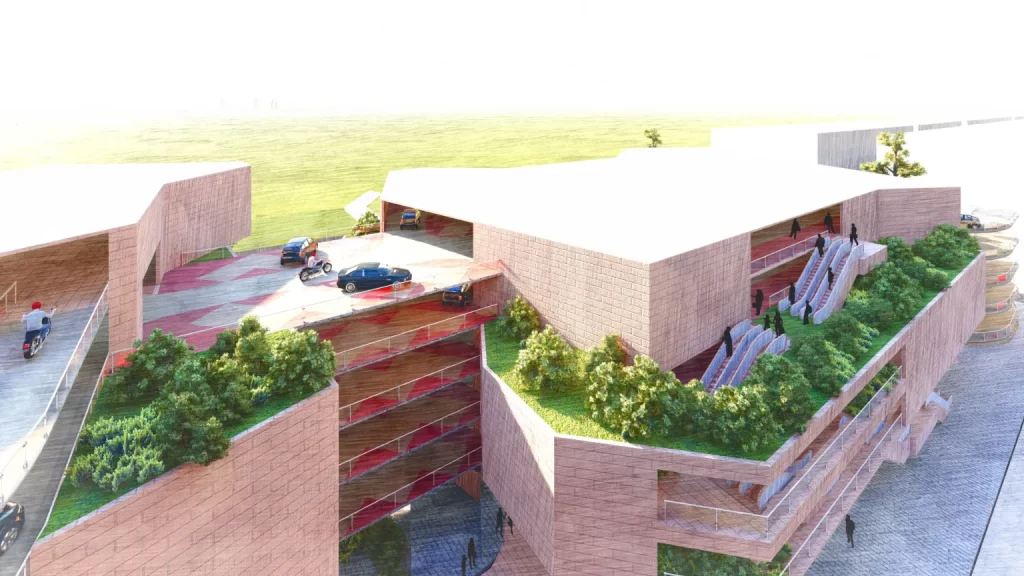
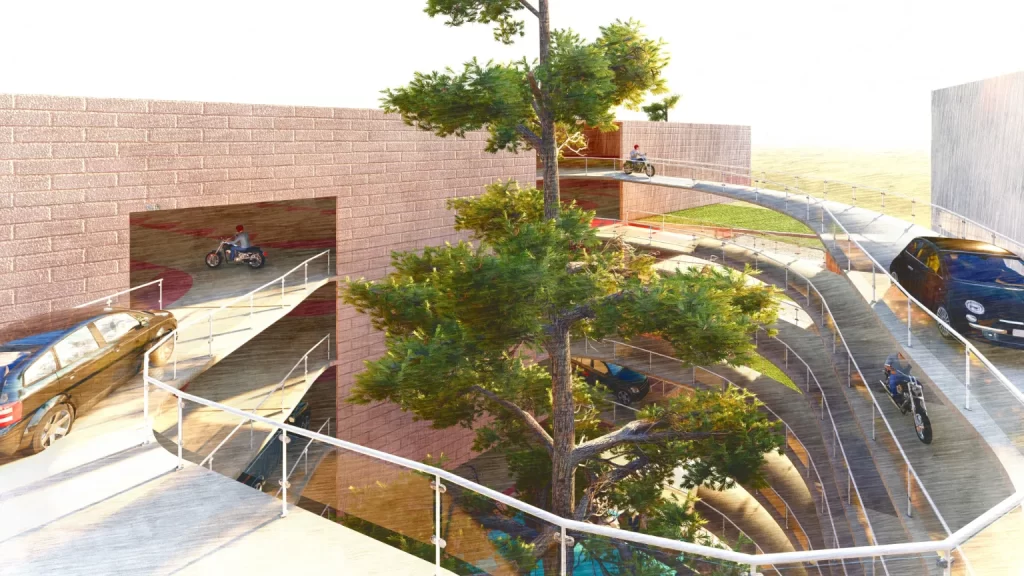
The macro-level intervention layers the current road infrastructure into a stacked mobility network. Uninterrupted traffic flow is established and surface-level congestion is reduced, allowing for a pedestrian corridor with designated activity platforms, based on contextual needs. Parking, often a dead zone, now acts as a major seam linking both sides of the site by limiting vehicles to a structured, smart, and time-based parking system. These interventions not only reduce the reliance on cars but also transform this infrastructure into a tool of inclusion and sustainability by integrating users' lifestyles into the urban environment.
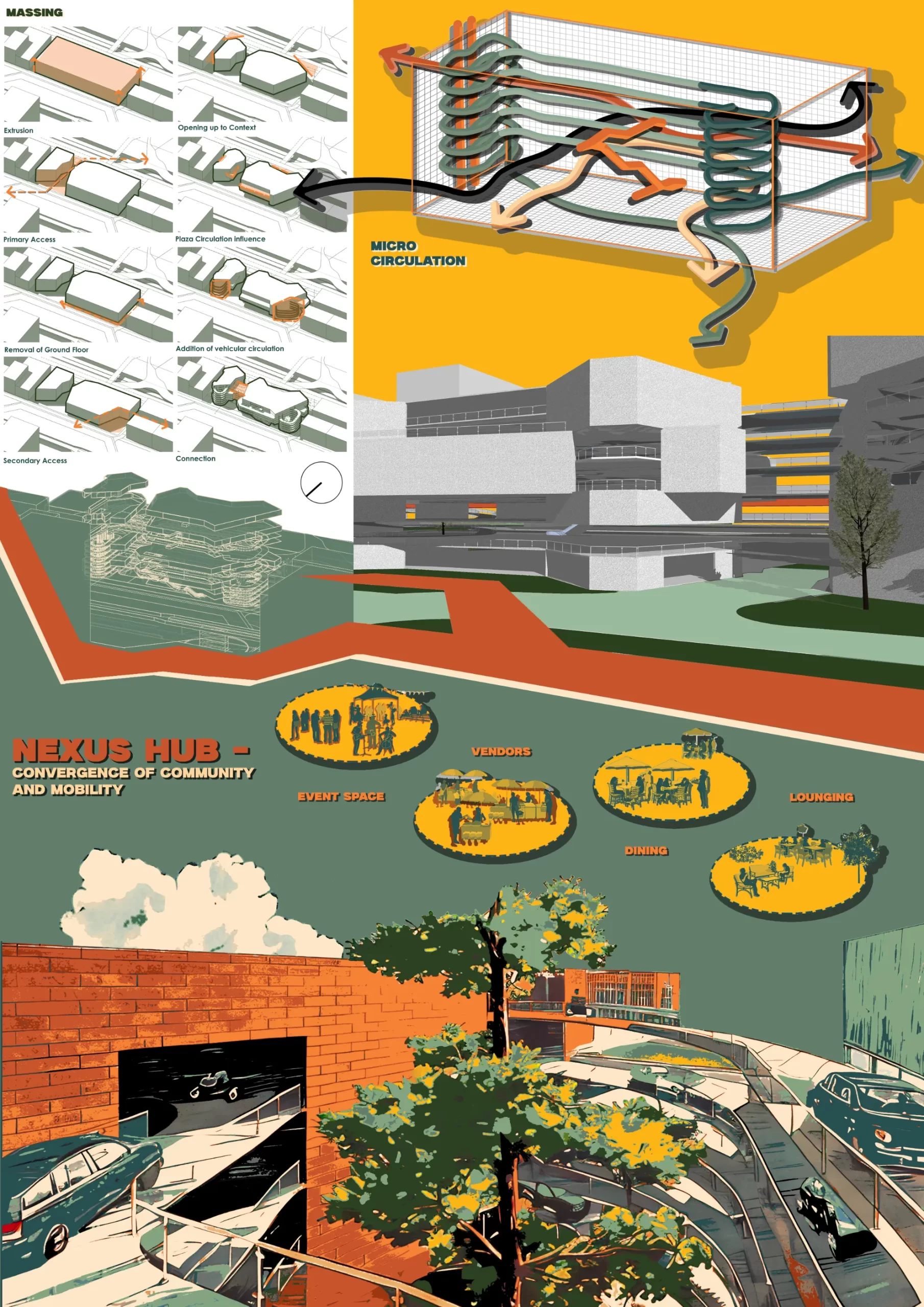
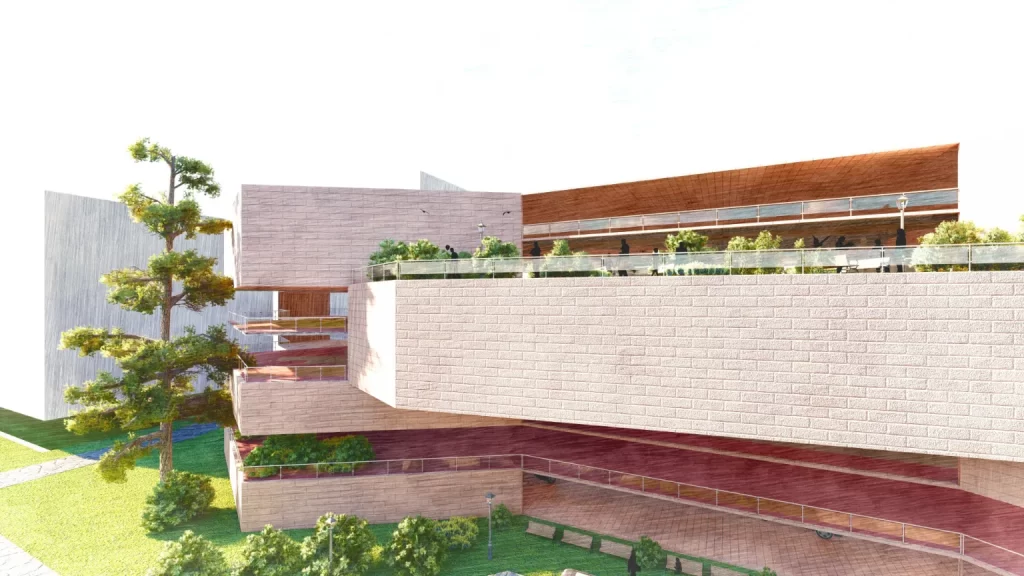
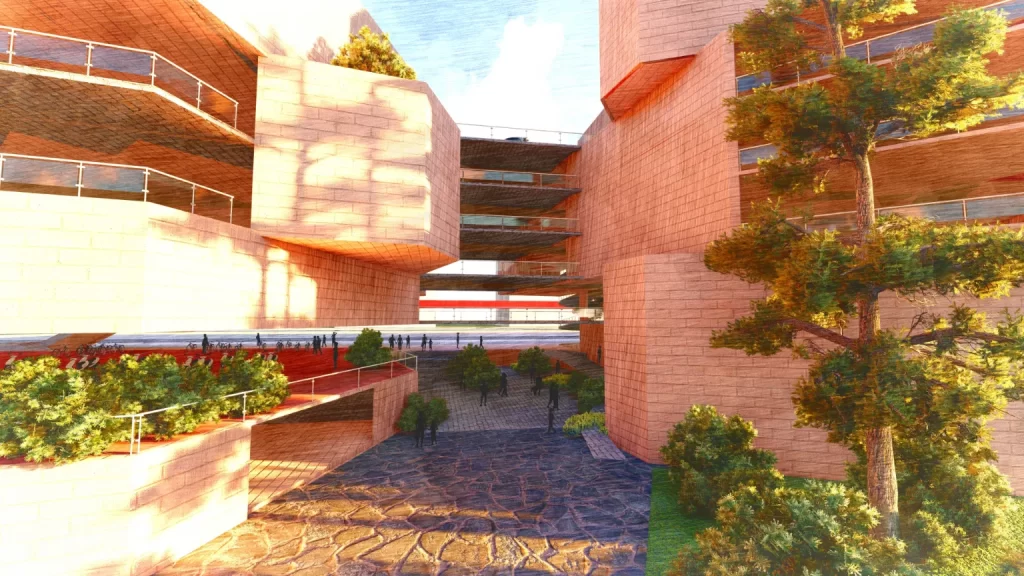
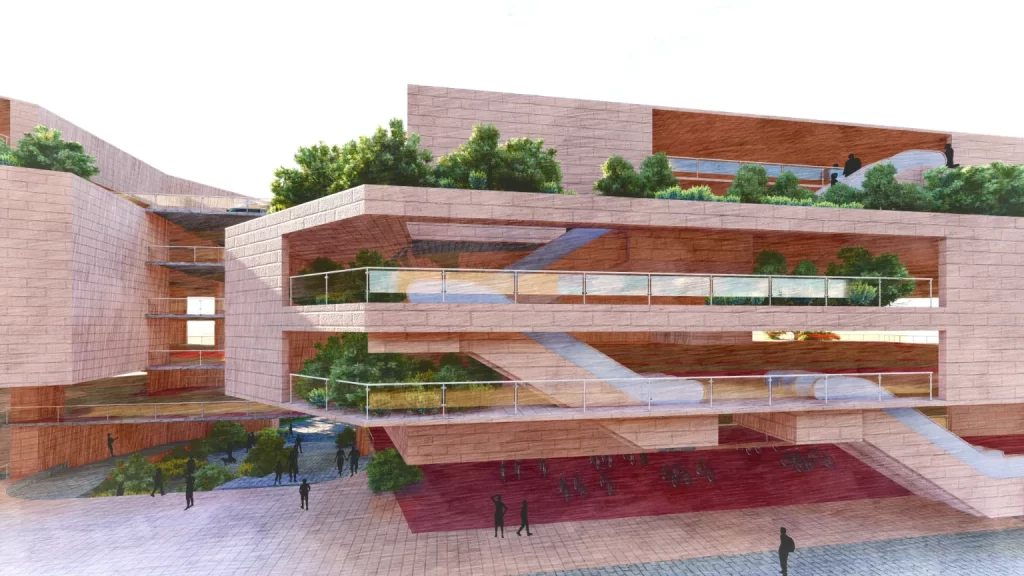
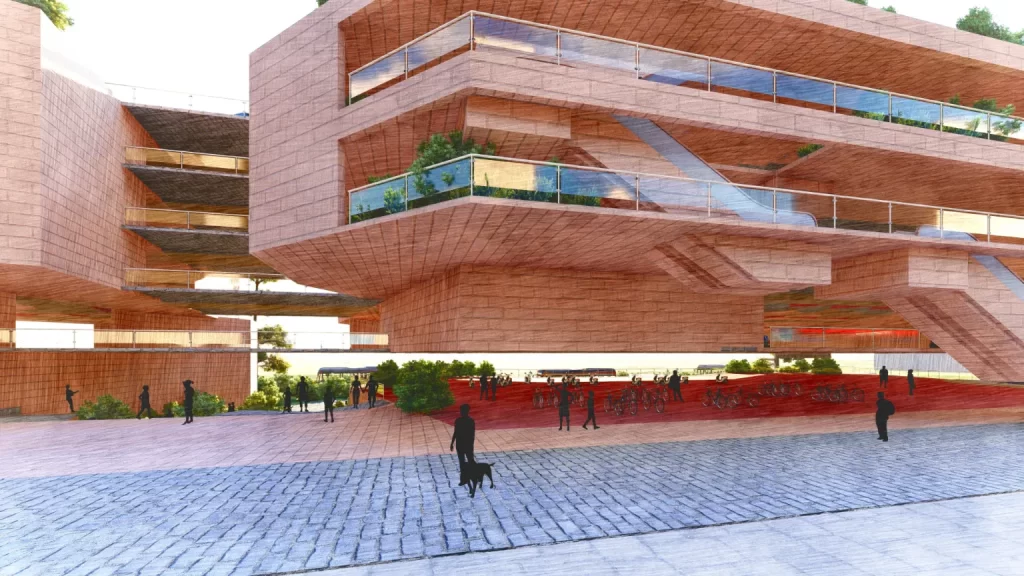
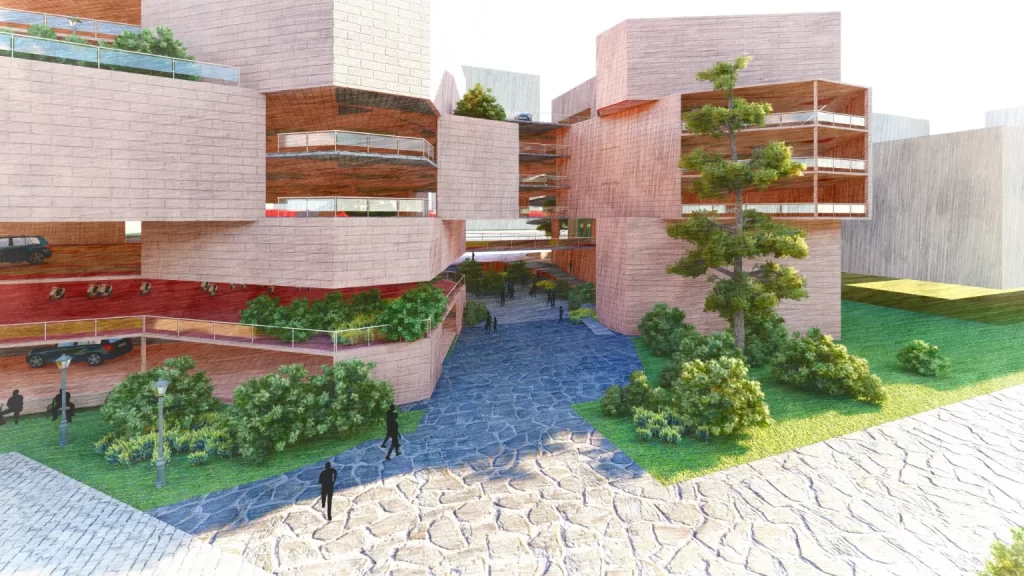
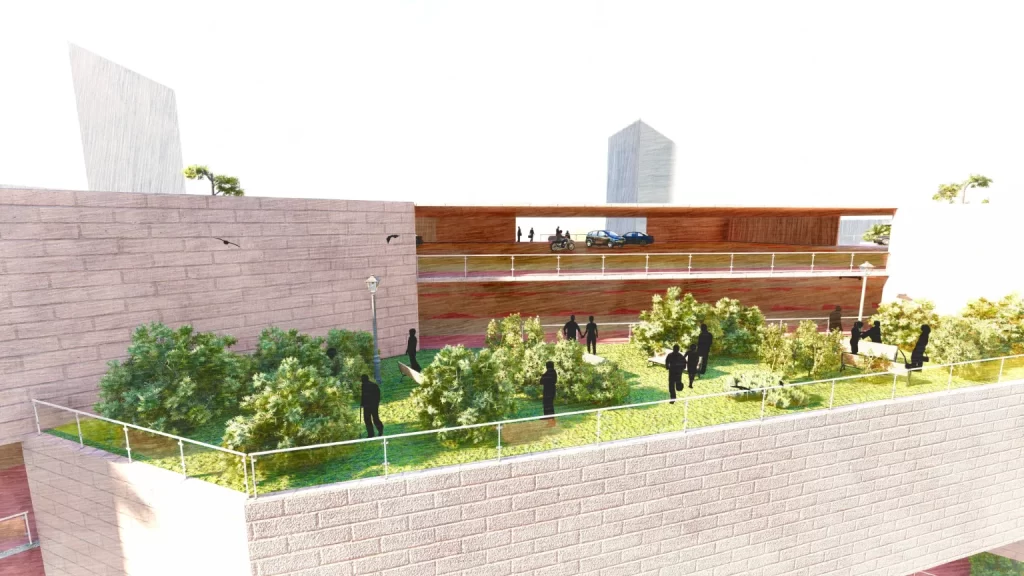
The micro-level design of the building focuses on one significant spatial gesture: the crack. It splits the building to allow natural pedestrian flow, creating permeability in the rigid plan of Islamabad. Vertical circulation is made transparent and engaging, promoting intuitive way-finding and layered engagement. The ground floor is removed to allow cyclists and pedestrians to filter through, whereas the cars are tucked away on the upper levels. The form of the building reflects the surrounding mobility patterns by responding to user flows within and around the site.
From a social lens, the hub links diverse user backgrounds and acts as the converging point of the city by creating dignified and designated spaces for the informal vendors. The office workers and visitors can engage with these vendors in shared environments, contributing to economic exchange and social conversation. These increased levels of activity result in safe and vibrant atmospheres. The previously disjointed experience of walking is replaced by a new urban phenomenon, where the dialogue between 'formal' and 'informal' is treated as an important aspect of the vibrancy of city life.
From an environmental lens, the hub reduces the Urban Heat Island effect by replacing the extensive road surfaces with grassy patches, rain gardens, and permeable pavers. The shaded social crack and the tree-lined walkways help cool the pedestrian realm, while green terraces integrated within the parking create microclimates and reduce runoff. The hub not only reduces the environmental stress, but also revisits the idea of a ‘Green Islamabad’, which has been lost in the vehicular-centric policies and developments made.
From an urban lens, the hub provides a scalable and adaptable model, where the layered approach to mobility is applicable in any car-dominant urban zone. It aligns with the common global goals aiming for emission reduction, enhanced livability of cities, and reduced social disparities. At the same time, it’s still deeply rooted in Islamabad’s cultural, spatial, and economic dynamics, contextualizing the design solution to the unique, multicultural aspects of the city.
The Nexus Hub ultimately responds to the emerging challenges of urban cities, where those once excluded now walk in the same spaces, with the same dignity, and with the same sense of belonging, a crucial step in the efforts to reclaim streets and reduce the urban divide.
Showcase your design to an international audience
SUBMIT NOW
Image: Agrapolis Urban Permaculture Farm by David Johanes Palar
Top
The Nexus Hub // Convergence of Community and Mobility - Vertical Restructuring of Flows The extreme effects of global urbanization, growing populations, and environmental degradation are continuously increasing in cities today, leading to a state of crisis. While cars are dominating roads, public life is shrinking and being pushed to the side. Environmental stress and isolation are no longer theoretical, but experienced daily where streets serve vehicles instead of people. The Nexus Hub addresses these challenges as a multimodal transit facility that reclaims public space, bridges social divides, and envisions a resilient urban future based on local realities, yet shaped by global aspirations. Cities are predicted to accommodate over five billion people by 2030, urging the need for creation of spaces that sustain the booming population without worsening already existing divides. The Blue Area of Islamabad is concerned with these emerging dilemmas, where expansive road surfaces separate communities, retain heat, and become obstacles for the underprivileged, requiring revision through a deep understanding of community needs. Islamabad isn’t just a city that grew with time, but was drawn, imagined, and constructed as a modernist dynapolis. The lack of a traditional city center makes the commercial and business spine, the Blue Area, act as a convergence point. However, as the city evolved, the disparities also grew. The rigid functional zoning reinforced socio-economic divides, where the elite were housed in the planned residential quarters, and the workers who sustained the city’s daily life, such as the sanitation staff, street vendors, and domestic workers, were excluded from the formal plan, settling in informal colonies within the city’s gaps. Blue Area eventually began acting as a physical barrier between privilege and informality. The Nexus Hub instead suggests a shift in narrative where the street is returned to pedestrians by pushing vehicles underground and elevating public transit above ground. This reconfigured mobility network reclaims valuable space, allowing people to interact and thrive. The macro-level intervention layers the current road infrastructure into a stacked mobility network. Uninterrupted traffic flow is established and surface-level congestion is reduced, allowing for a pedestrian corridor with designated activity platforms, based on contextual needs. Parking, often a dead zone, now acts as a major seam linking both sides of the site by limiting vehicles to a structured, smart, and time-based parking system. These interventions not only reduce the reliance on cars but also transform this infrastructure into a tool of inclusion and sustainability by integrating users' lifestyles into the urban environment. The micro-level design of the building focuses on one significant spatial gesture: the crack. It splits the building to allow natural pedestrian flow, creating permeability in the rigid plan of Islamabad. Vertical circulation is made transparent and engaging, promoting intuitive way-finding and layered engagement. The ground floor is removed to allow cyclists and pedestrians to filter through, whereas the cars are tucked away on the upper levels. The form of the building reflects the surrounding mobility patterns by responding to user flows within and around the site. From a social lens, the hub links diverse user backgrounds and acts as the converging point of the city by creating dignified and designated spaces for the informal vendors. The office workers and visitors can engage with these vendors in shared environments, contributing to economic exchange and social conversation. These increased levels of activity result in safe and vibrant atmospheres. The previously disjointed experience of walking is replaced by a new urban phenomenon, where the dialogue between 'formal' and 'informal' is treated as an important aspect of the vibrancy of city life. From an environmental lens, the hub reduces the Urban Heat Island effect by replacing the extensive road surfaces with grassy patches, rain gardens, and permeable pavers. The shaded social crack and the tree-lined walkways help cool the pedestrian realm, while green terraces integrated within the parking create microclimates and reduce runoff. The hub not only reduces the environmental stress, but also revisits the idea of a ‘Green Islamabad’, which has been lost in the vehicular-centric policies and developments made. From an urban lens, the hub provides a scalable and adaptable model, where the layered approach to mobility is applicable in any car-dominant urban zone. It aligns with the common global goals aiming for emission reduction, enhanced livability of cities, and reduced social disparities. At the same time, it’s still deeply rooted in Islamabad’s cultural, spatial, and economic dynamics, contextualizing the design solution to the unique, multicultural aspects of the city. The Nexus Hub ultimately responds to the emerging challenges of urban cities, where those once excluded now walk in the same spaces, with the same dignity, and with the same sense of belonging, a crucial step in the efforts to reclaim streets and reduce the urban divide.

The AYDA Awards is part of Nippon Paint’s vision to nurture the next generation of Architectural and Interior Design talents. It serves as a platform to inspire students of these disciplines to develop their skills through cross-learning.