Project Agkat
Community Hub of the Yangil Tribe in Zambales
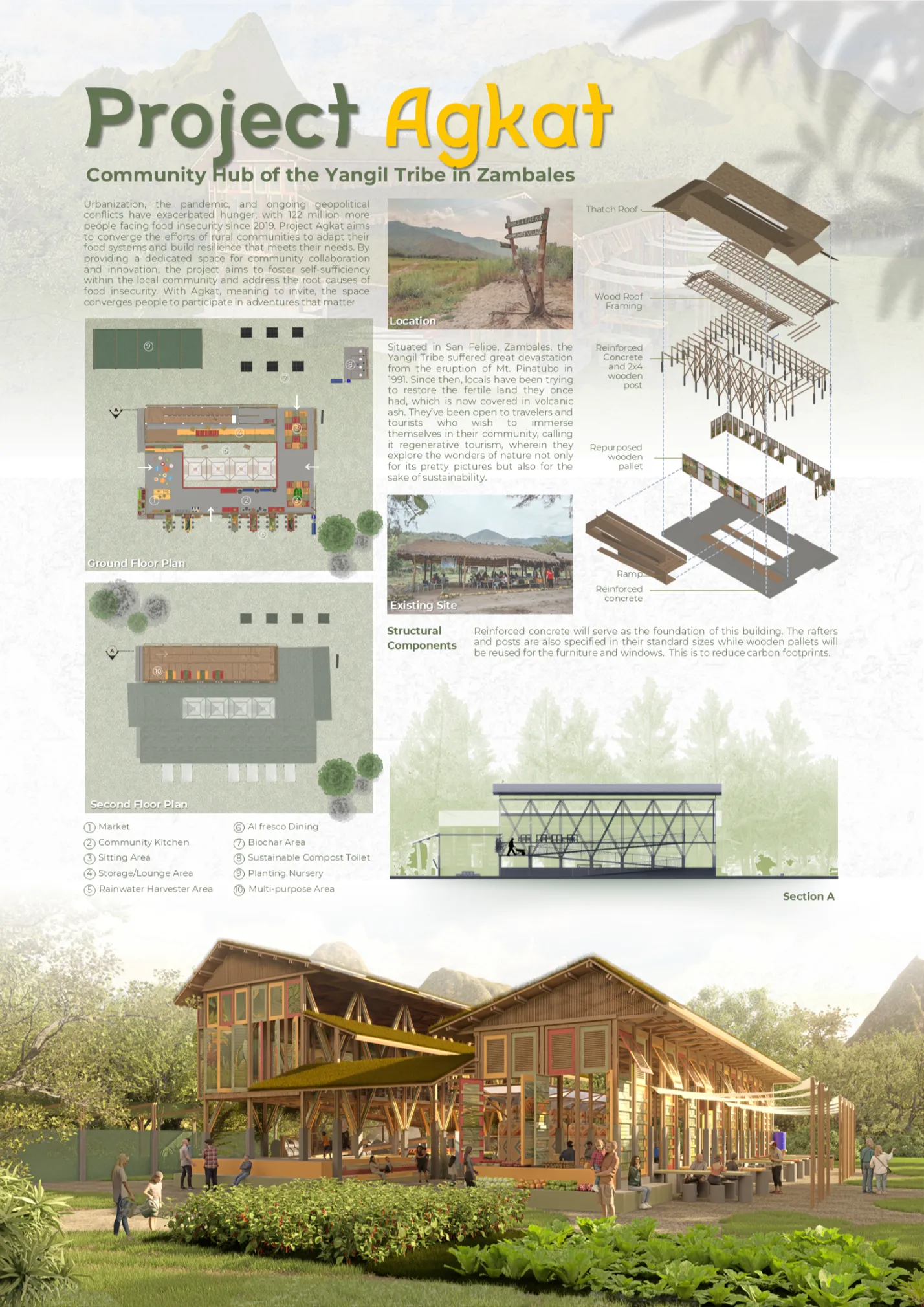
Money from the tourists is fleeting, planting trees that support our livelihood keeps our community alive, those were the words of the chieftain of the Yangil Tribe. This is the core philosophy of Project Agkat, to foster sustainable development and ensure food security within their community.
As days pass, our global food system continuously faces unprecedented challenges, rapid urbanization, the pandemic, and geopolitical conflicts, which lead to widespread food insecurity and malnutrition. This creates a demand for an increase in food production. Even the World Health Organization’s 2023 report on global food security and nutrition highlights the alarming rise in hunger, with 122 million more people affected since 2019. Recognizing this urgent need, Project Agkat aims to empower far-flung communities to adapt their food systems and create a self-sustaining one.
Zooming in to the Social Issue
Situated in San Felipe, Zambales, the Yangil Tribe is a community of Aetas who suffered great devastation from the eruption of Mt. Pinatubo in 1991. Since then, locals have been trying to restore the life of the 4,000-hectare land they once had, which is now covered in volcanic ash. They’ve been open to travelers and tourists who wish to immerse themselves in their community, called regenerative tourism, wherein they explore the wonders of nature not only for its pretty pictures but also for the sake of sustainability. This includes experiencing the beauty of caring for their planting nursery and showcasing their traditions where locals teach tourists the know-how of their hunting techniques. With Project Agkat, we create spaces with long-term impact that converge and connect the local community and the outside reach.

The Community Hub
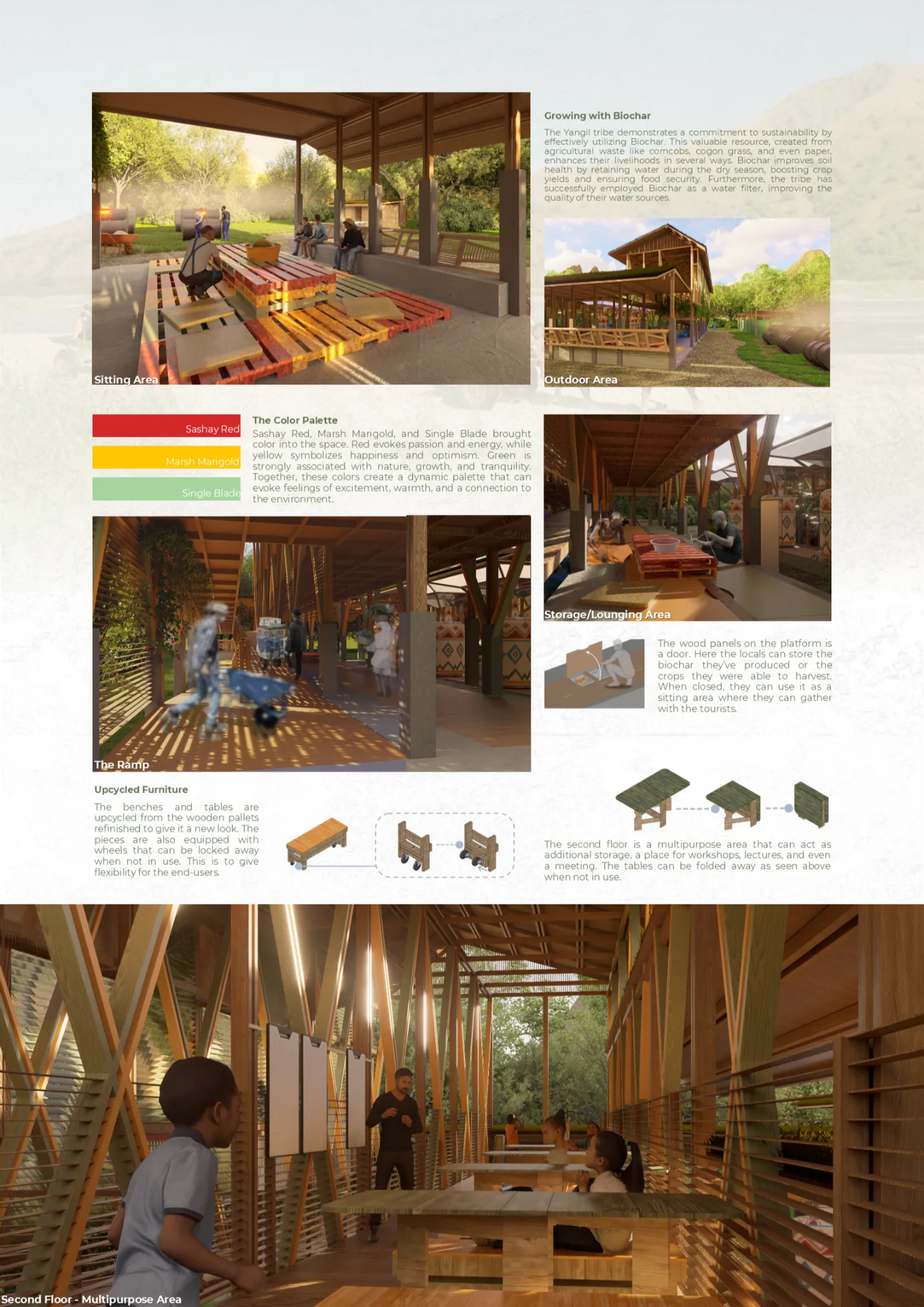
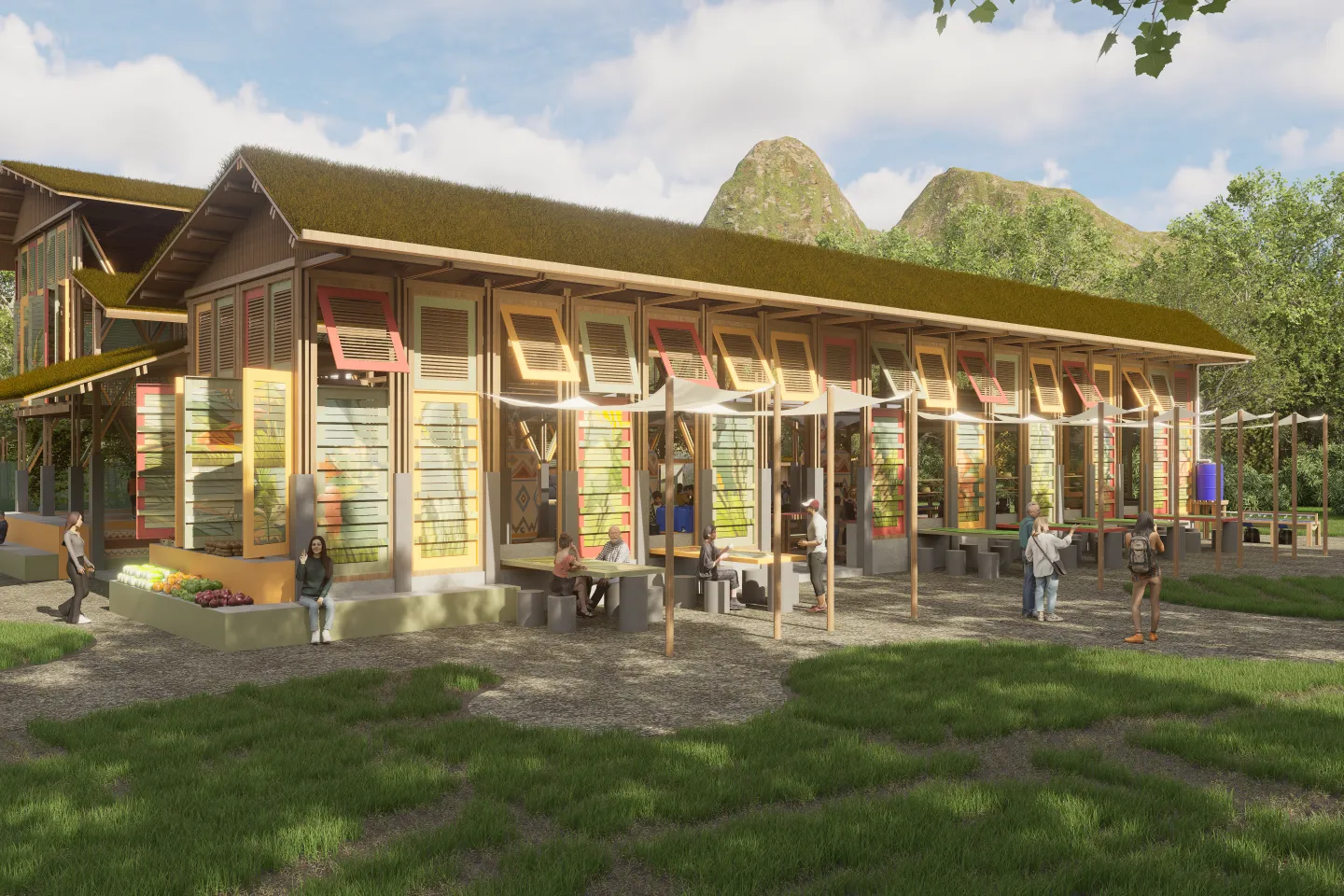
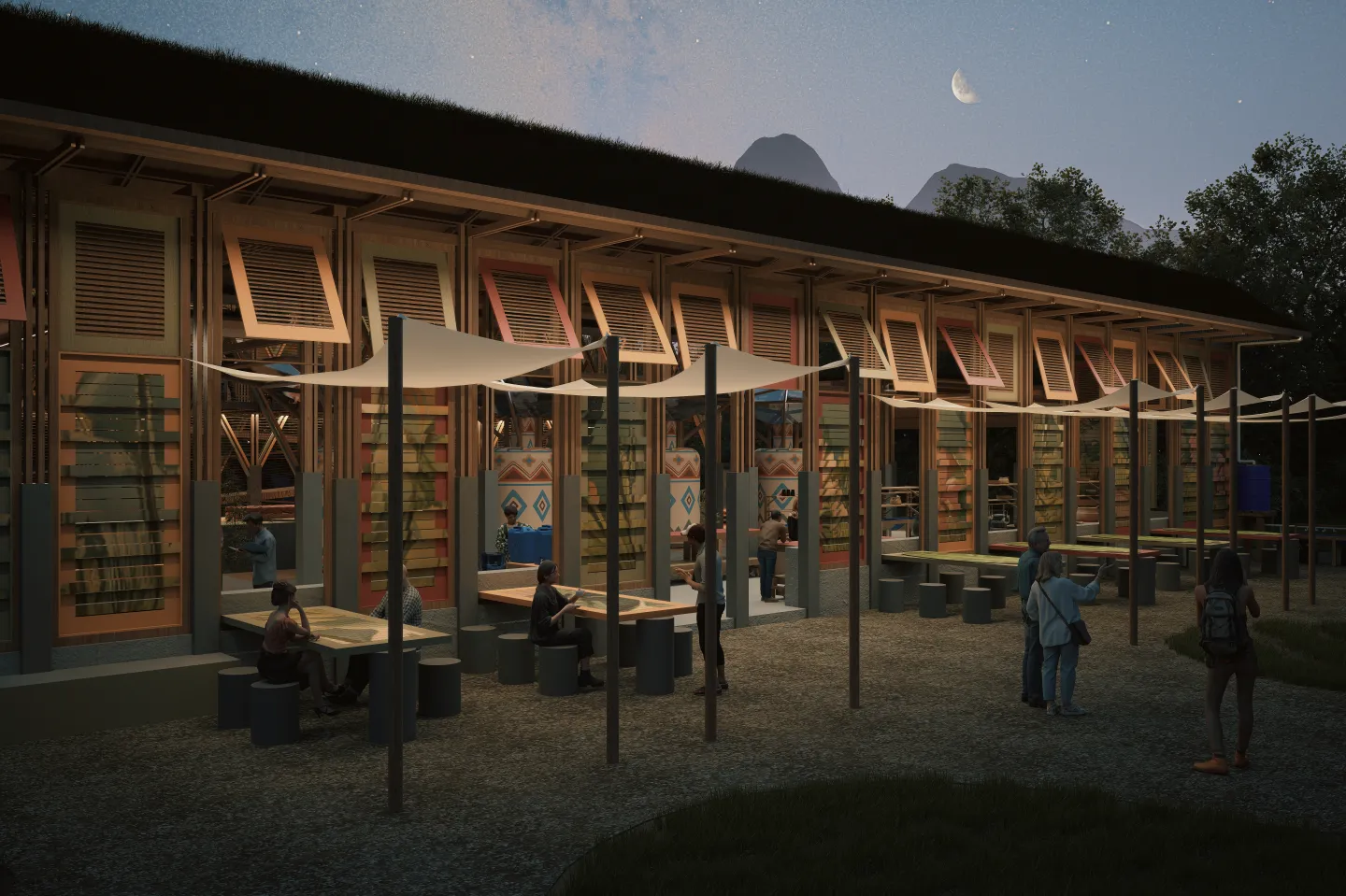
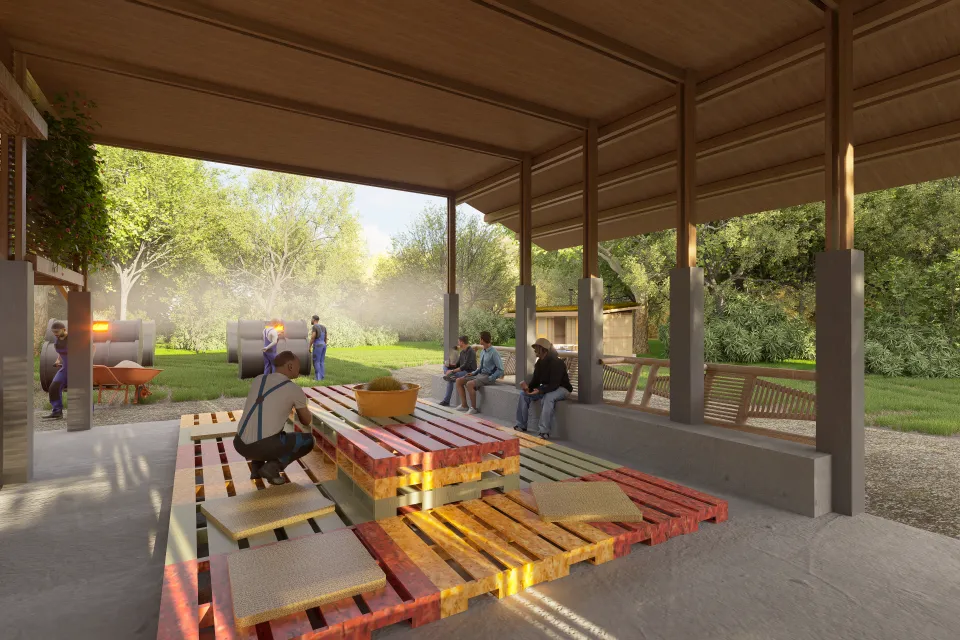
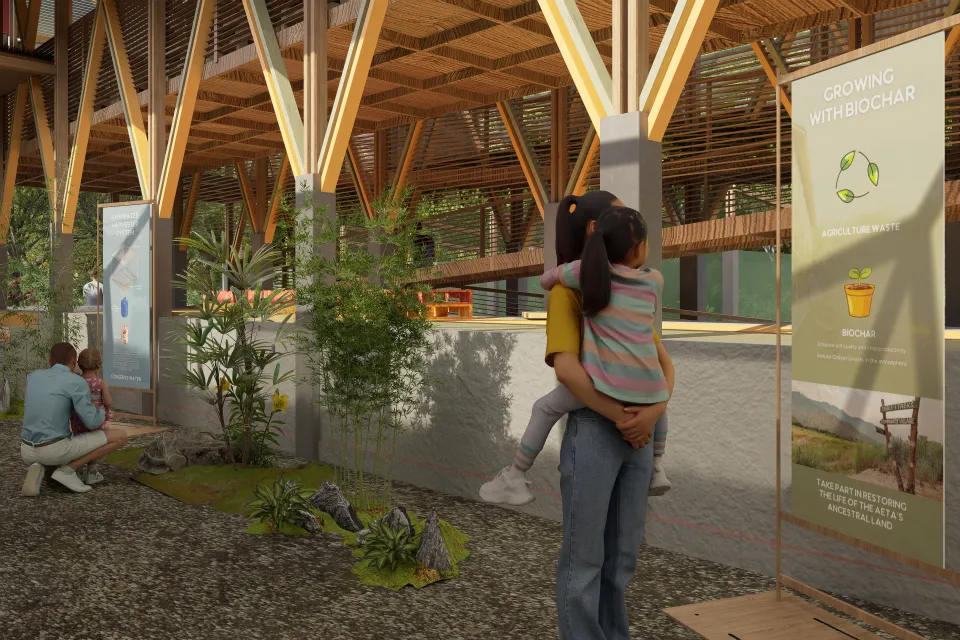
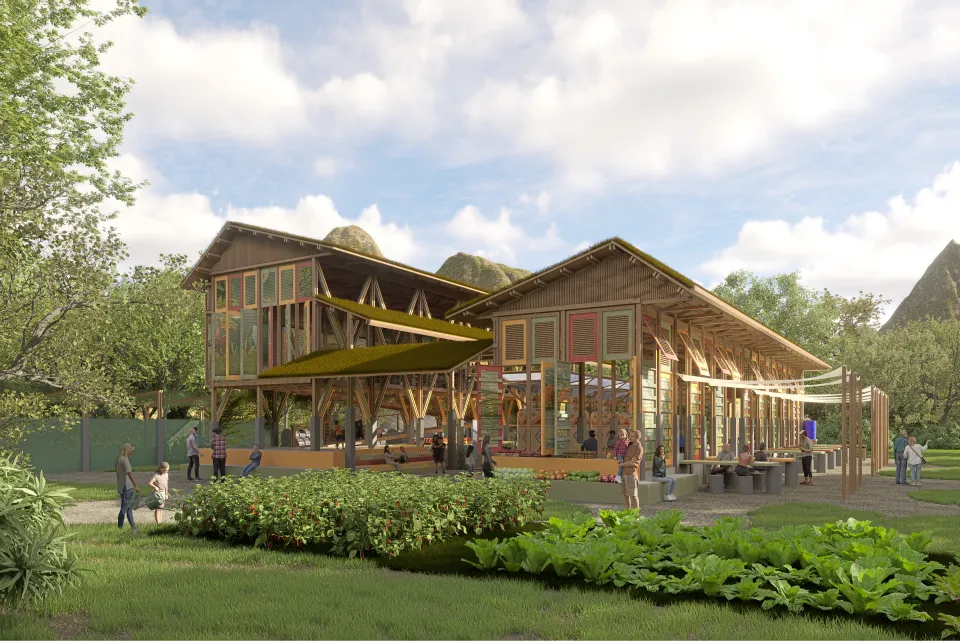
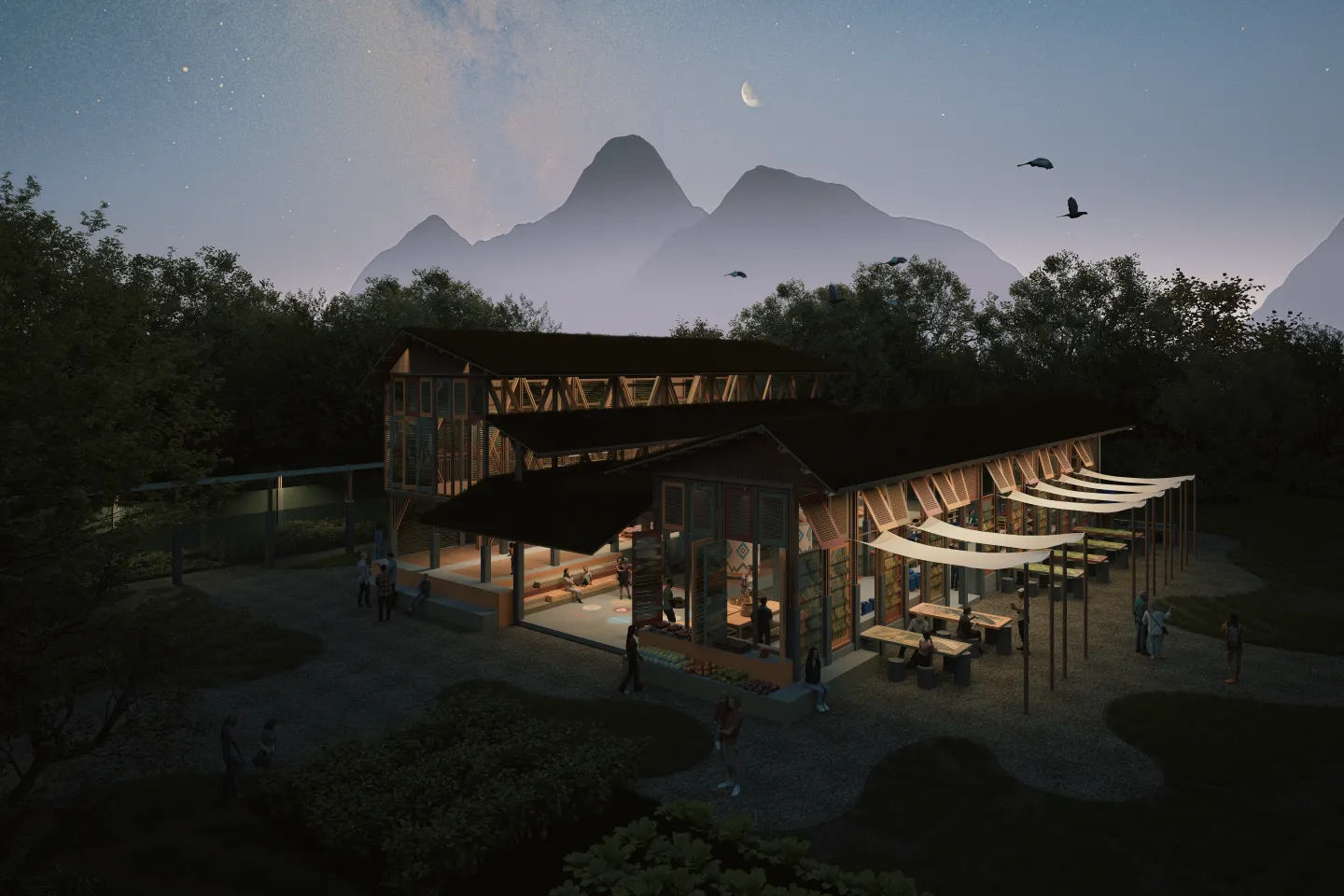
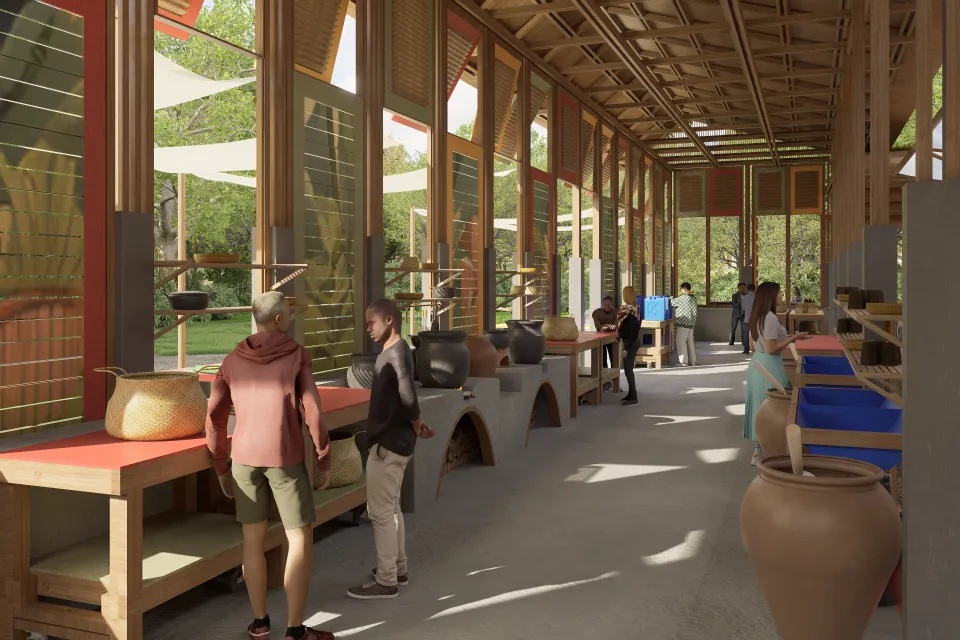
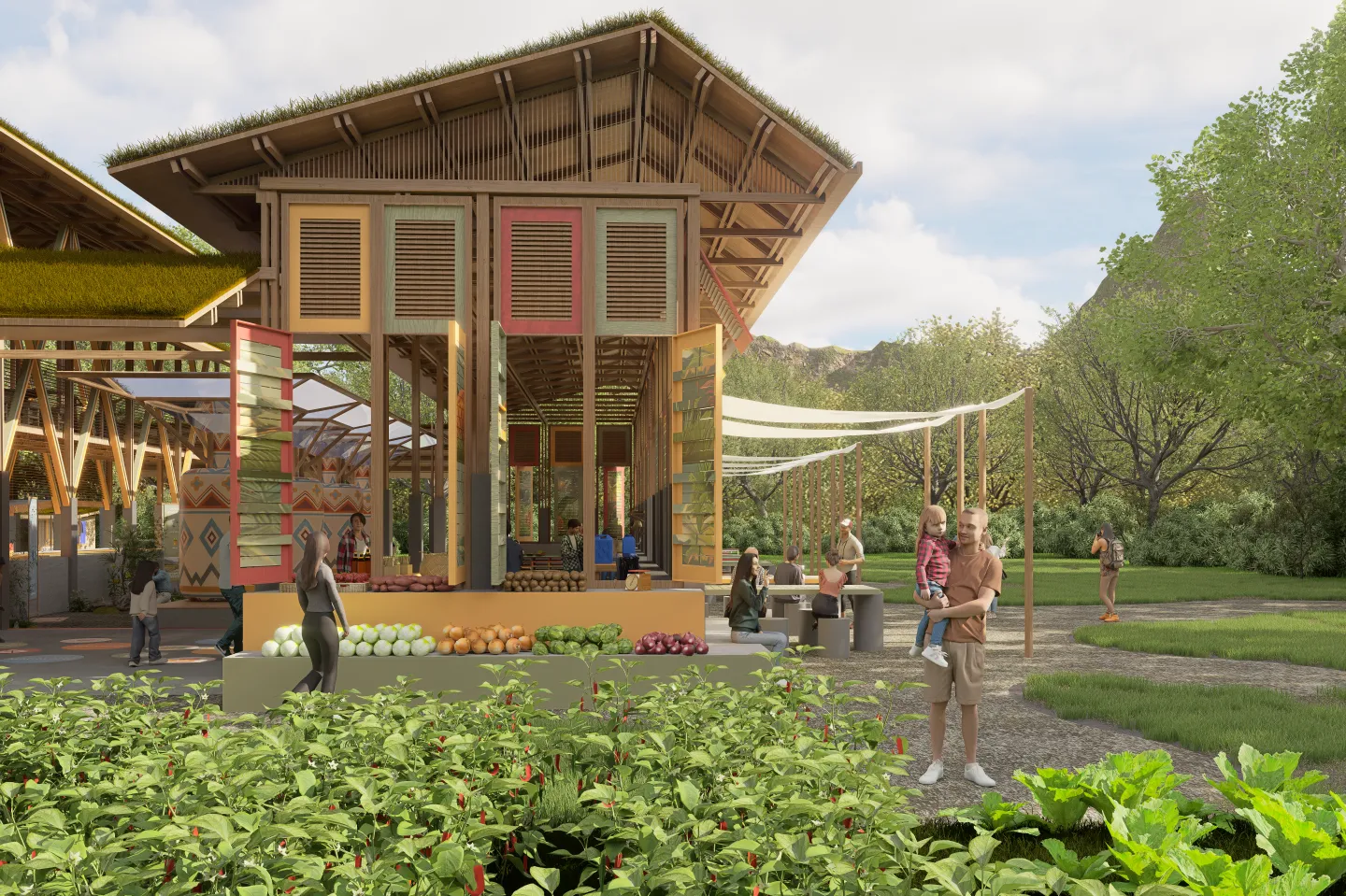
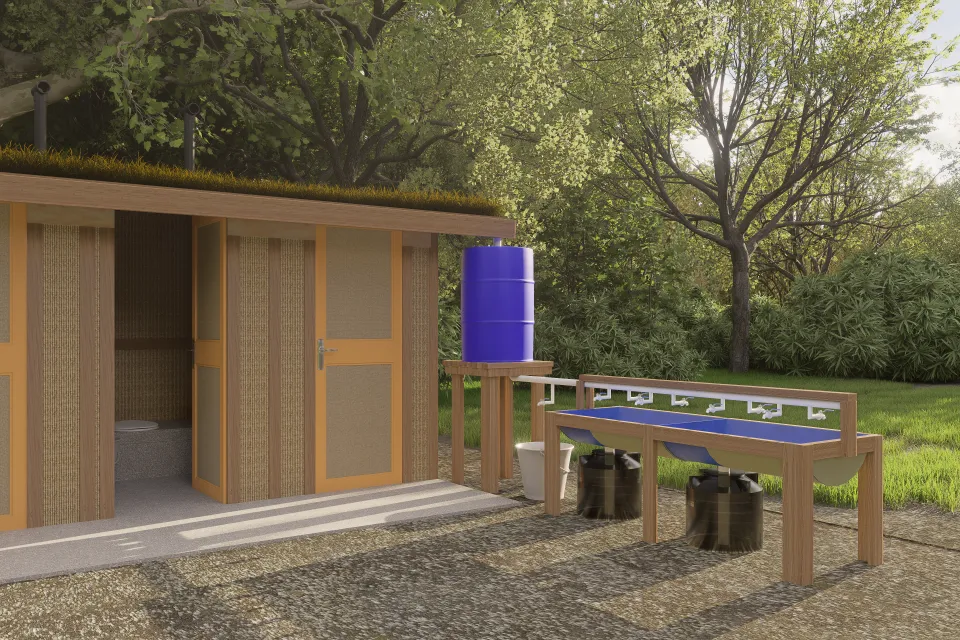
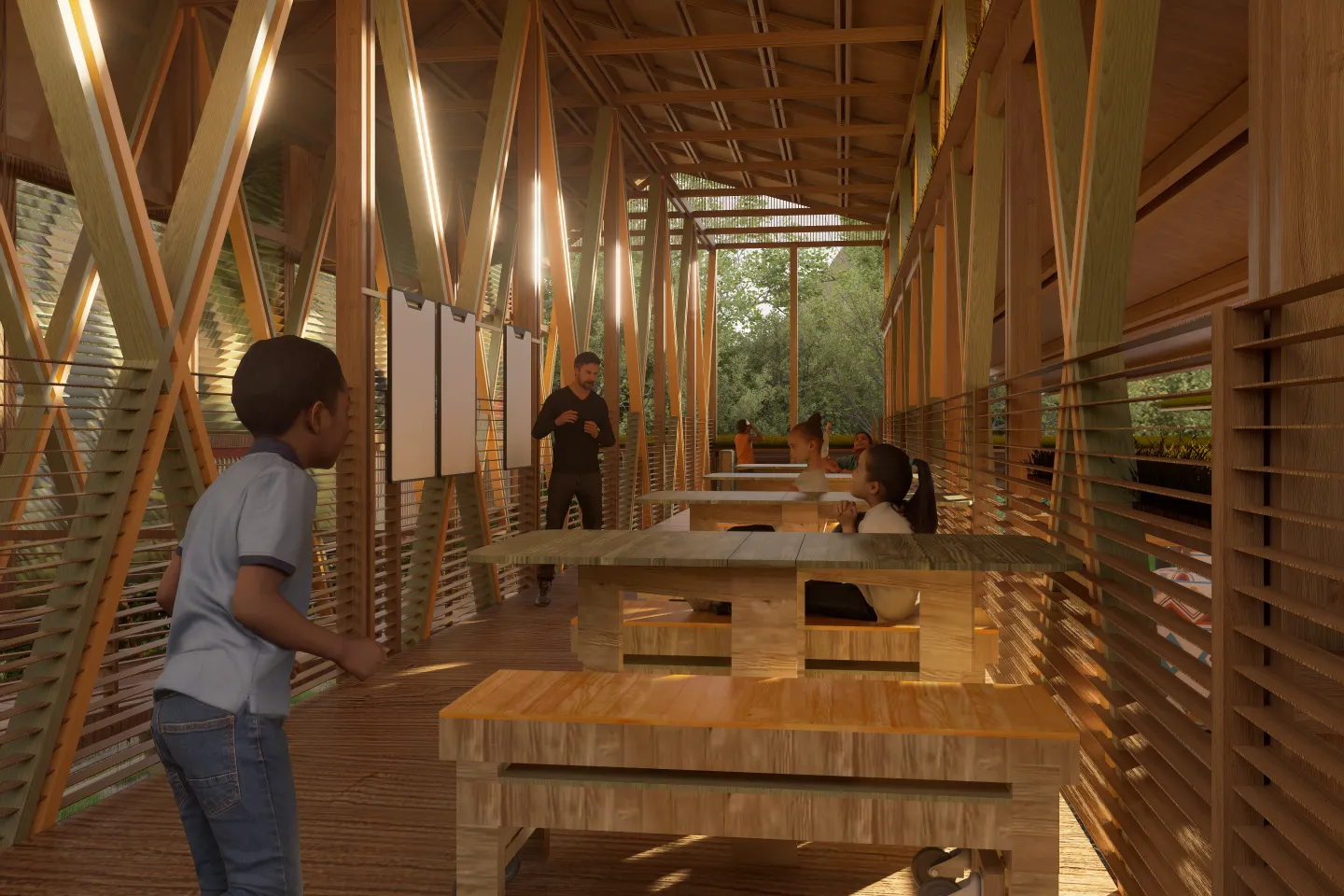
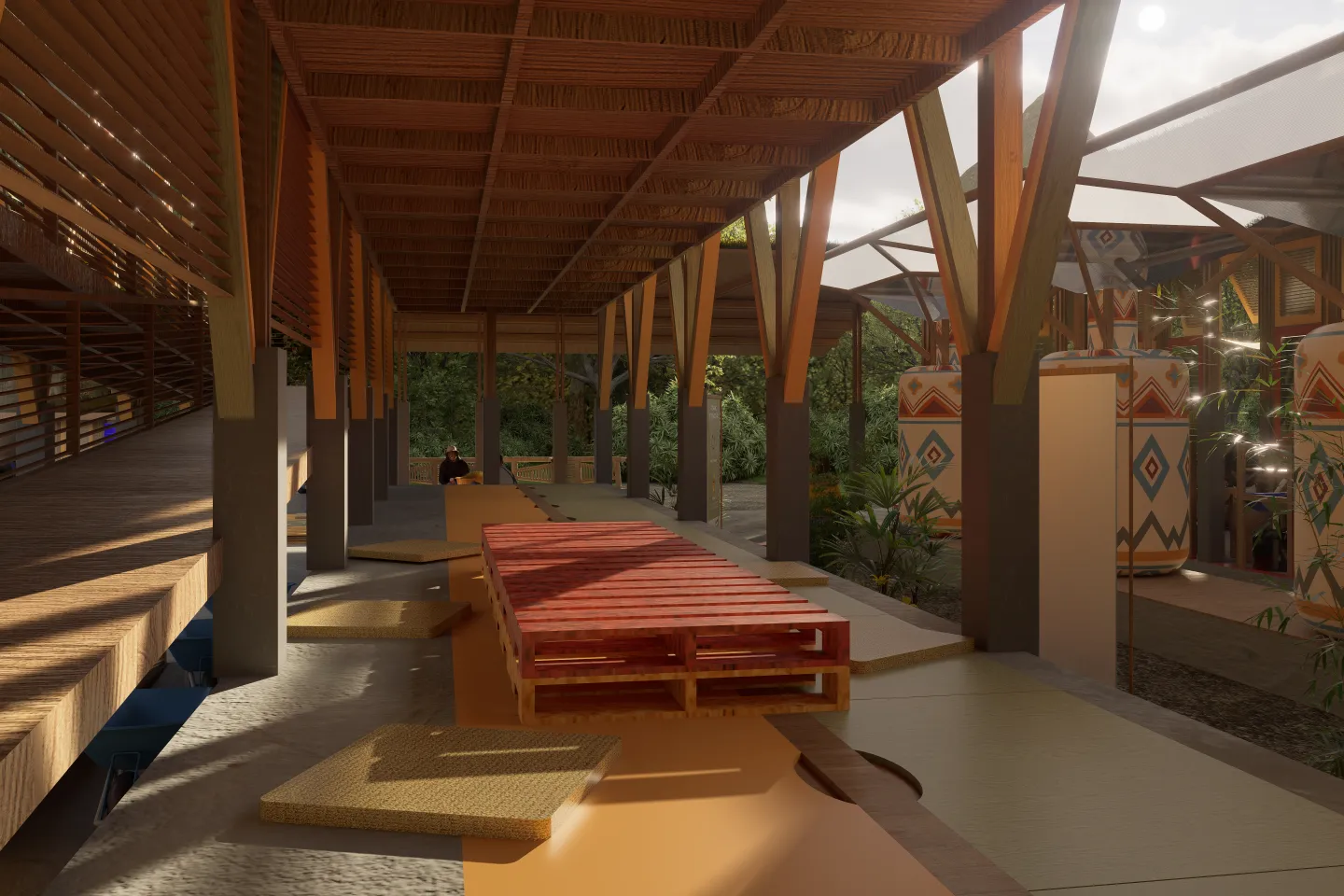
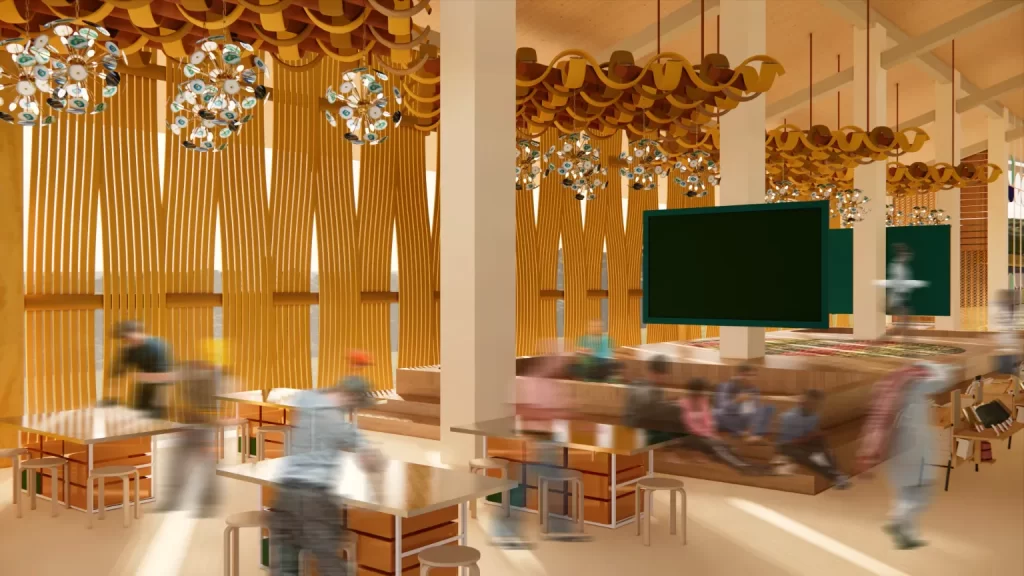
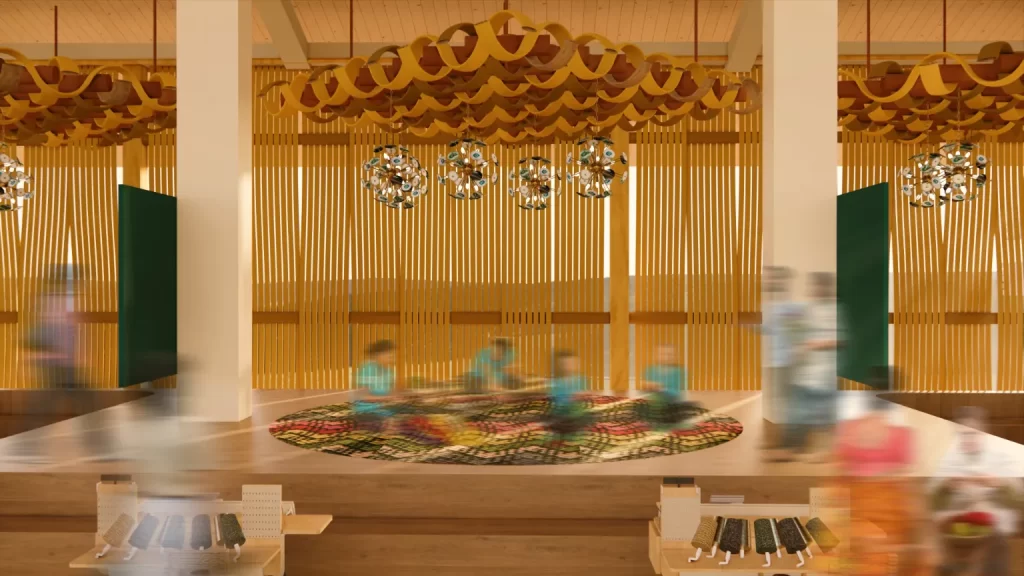
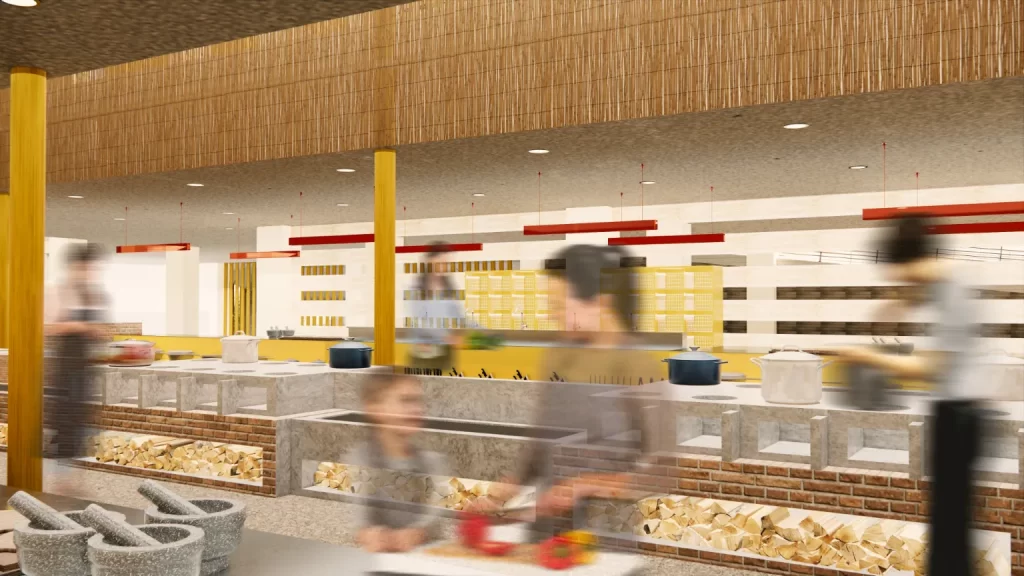
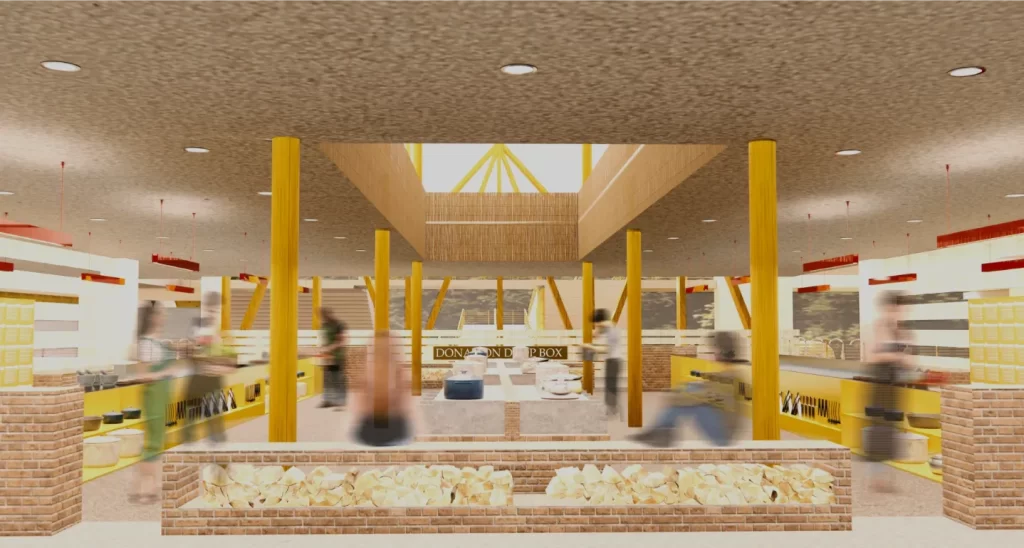
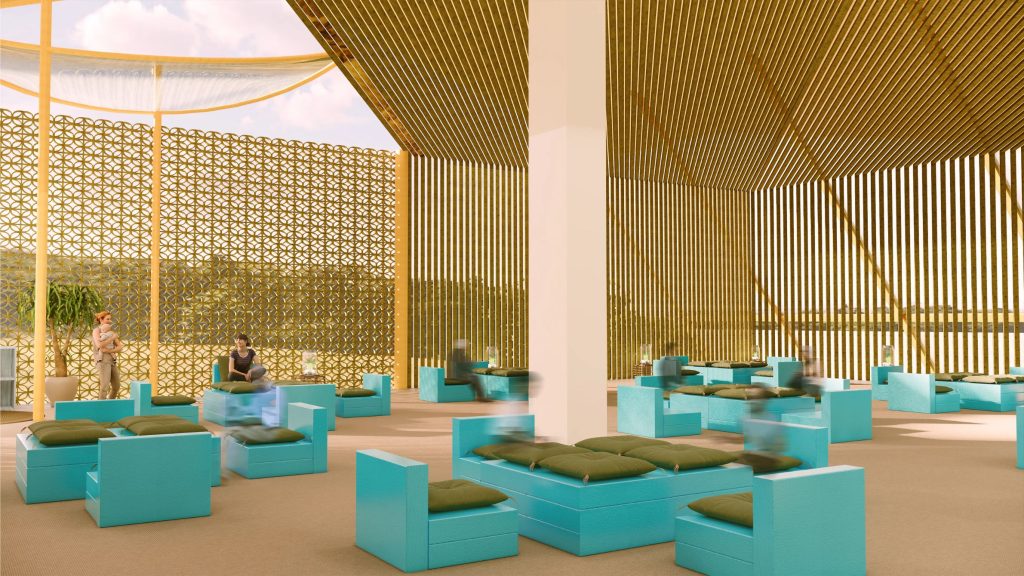
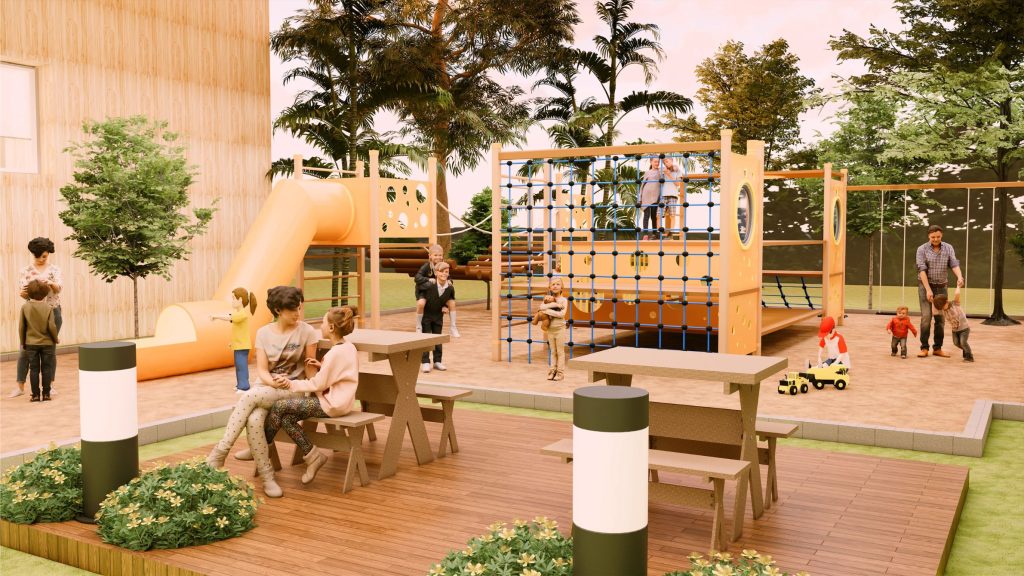
The design of the community includes a space for the rainwater harvester, a community kitchen, al fresco dining, sustainable toilet compost, communal gathering spaces, and a zone for Biochar-related activities. The community is empowered with Biochar, one of their key livelihoods. They turn flammable cogon grass, agricultural wastes from their poultry, corn cobs, and coconut husks into a charcoal-like product that helps keep moisture in their soil. This helped them enhance the quality of their soil, which enabled them to nourish the 65,000 trees they had been able to plant since 2017 through the help of visitors.
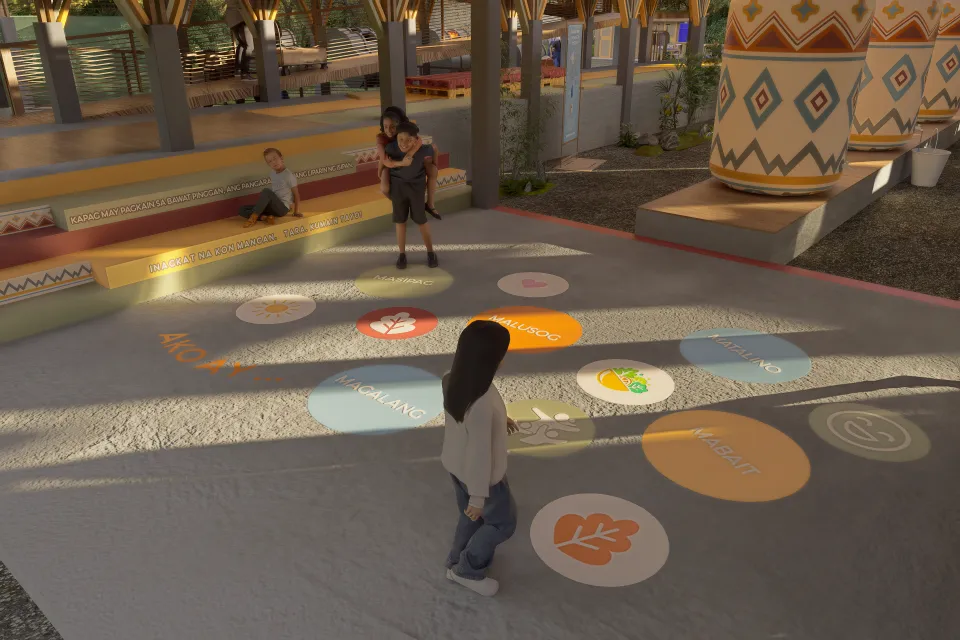
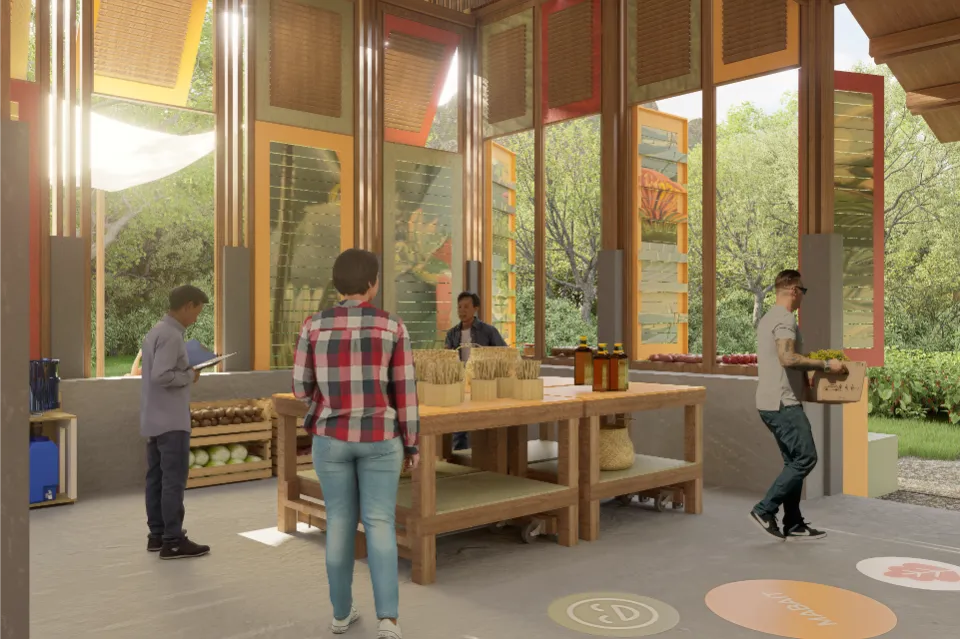
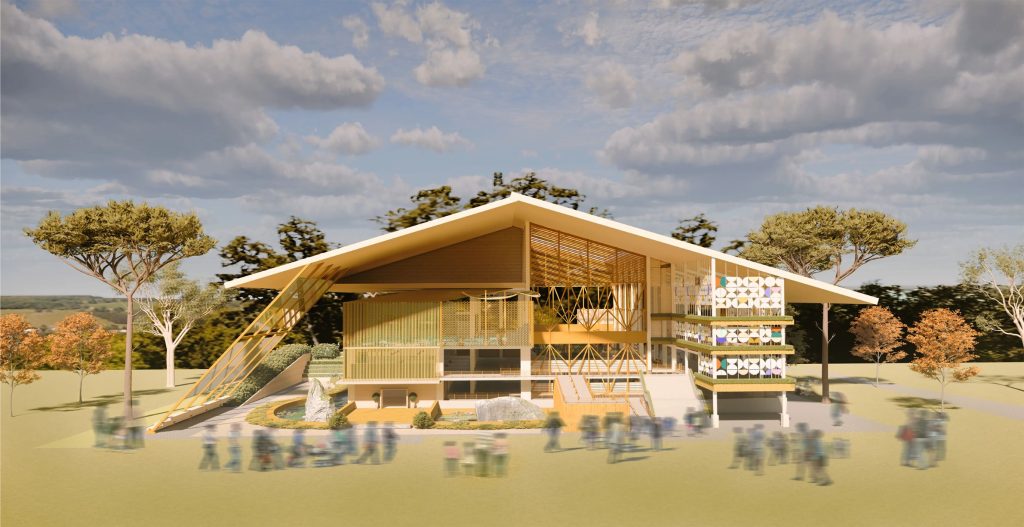
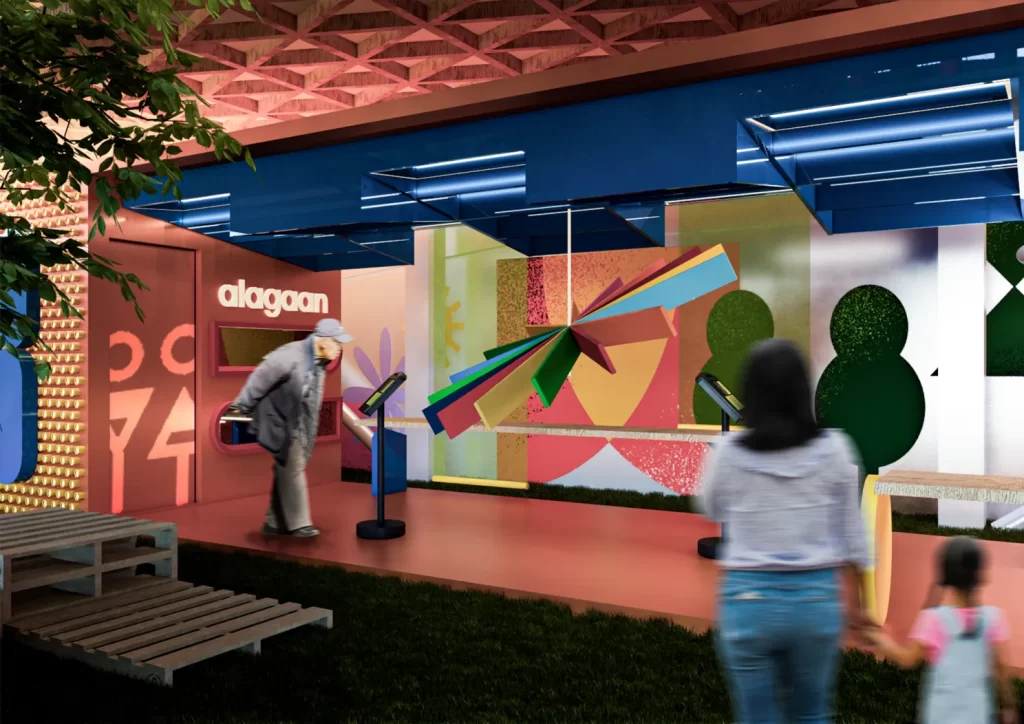
Moreover, the project's design reflects a commitment to sustainability. Reused wooden pallets will be used for the furniture and windows, minimizing environmental impact. The color palette – Sashay Red, Marsh Marigold, and Single Blade – evokes passion, and optimism, that does not stray away from the hues of nature.
The key features of Project Agkat include:
Rainwater Harvesting
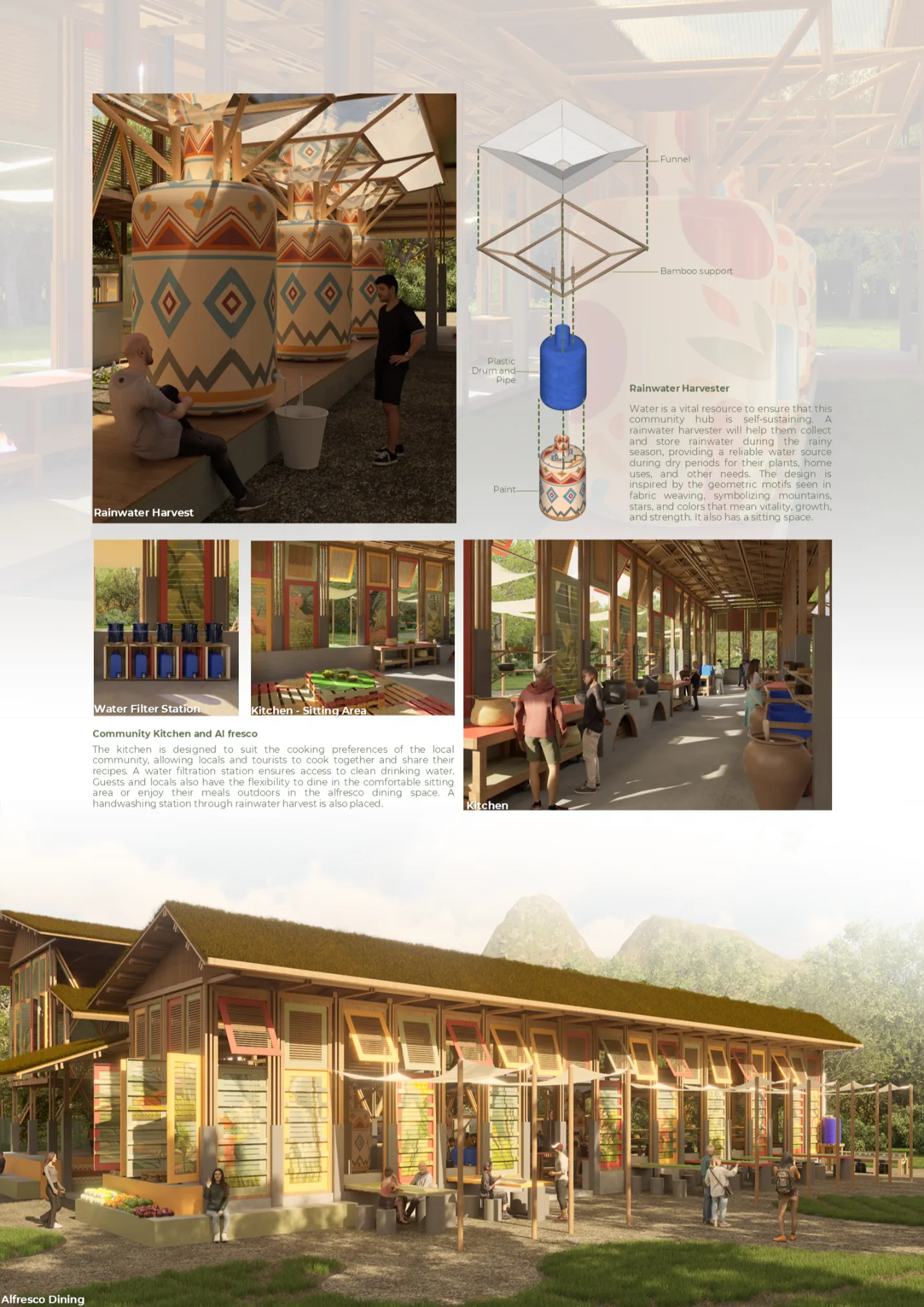
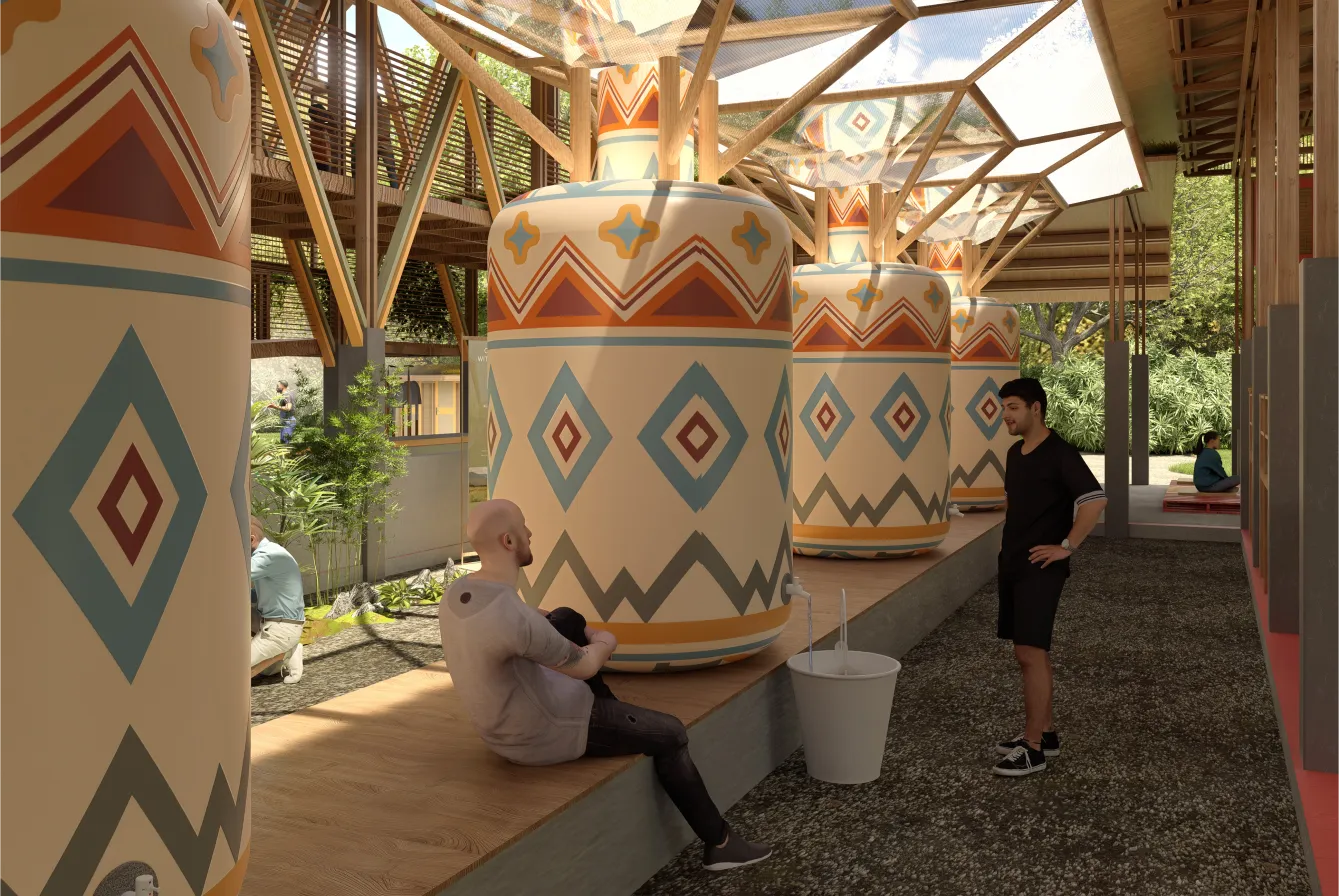
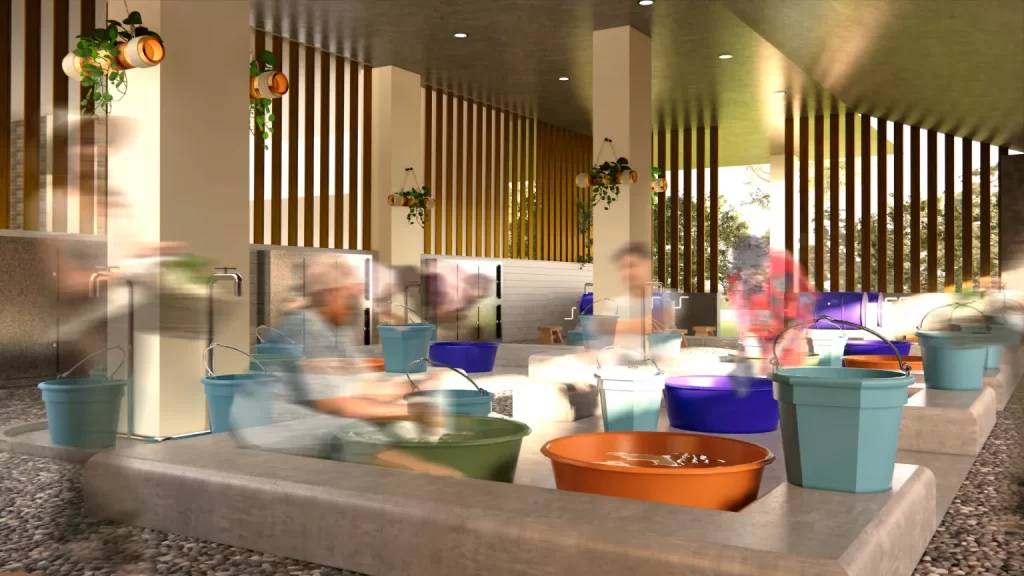
Water is a vital resource to ensure that this community hub is self-sustaining. To enhance water security, a rainwater harvesting system is incorporated. This will collect and store rainwater during the rainy season, providing a reliable water source during dry periods. This stored water will be utilized for watering plants, household needs, and other essential purposes, significantly increasing the community's resilience to droughts
Community Kitchen
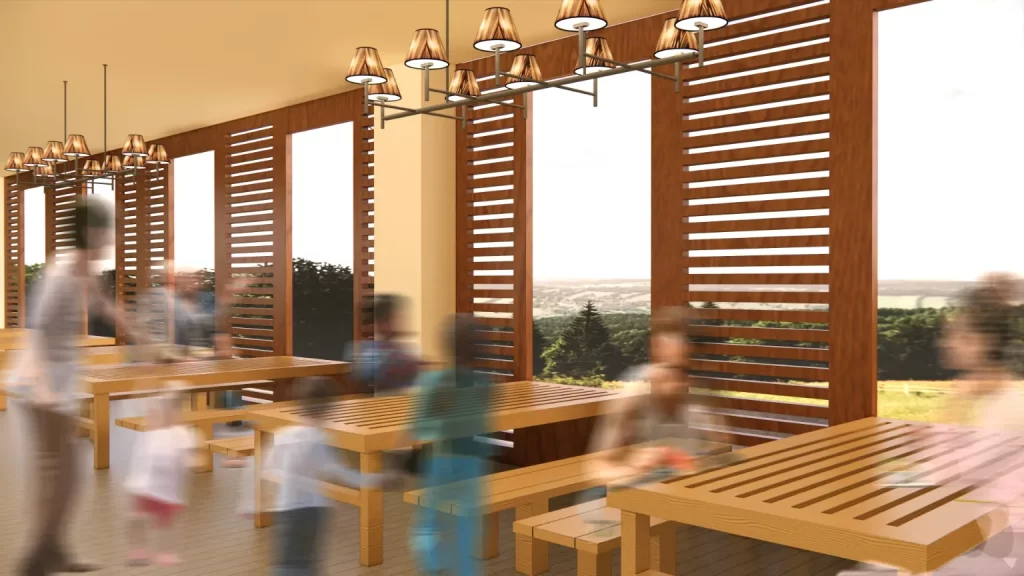
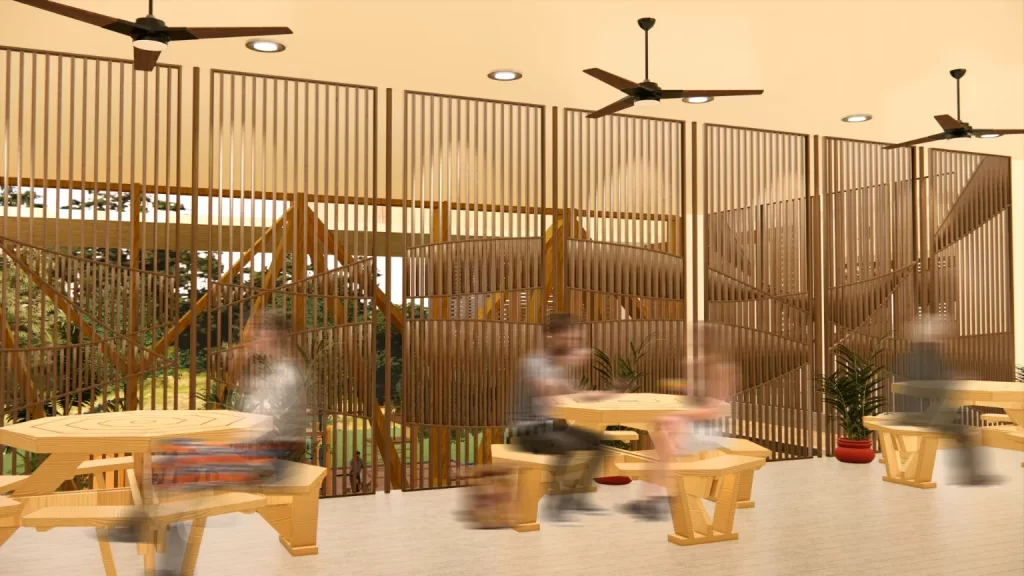
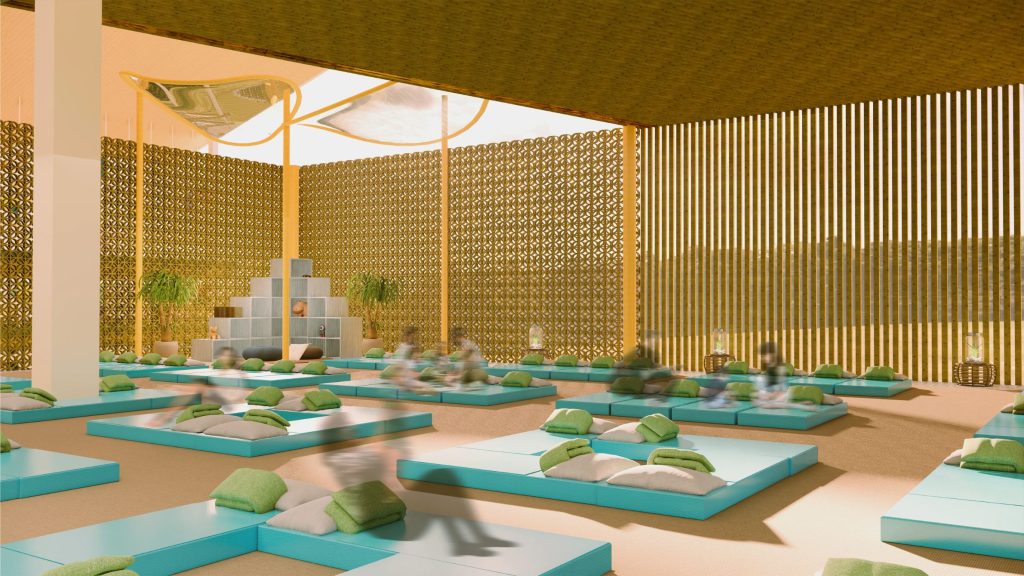
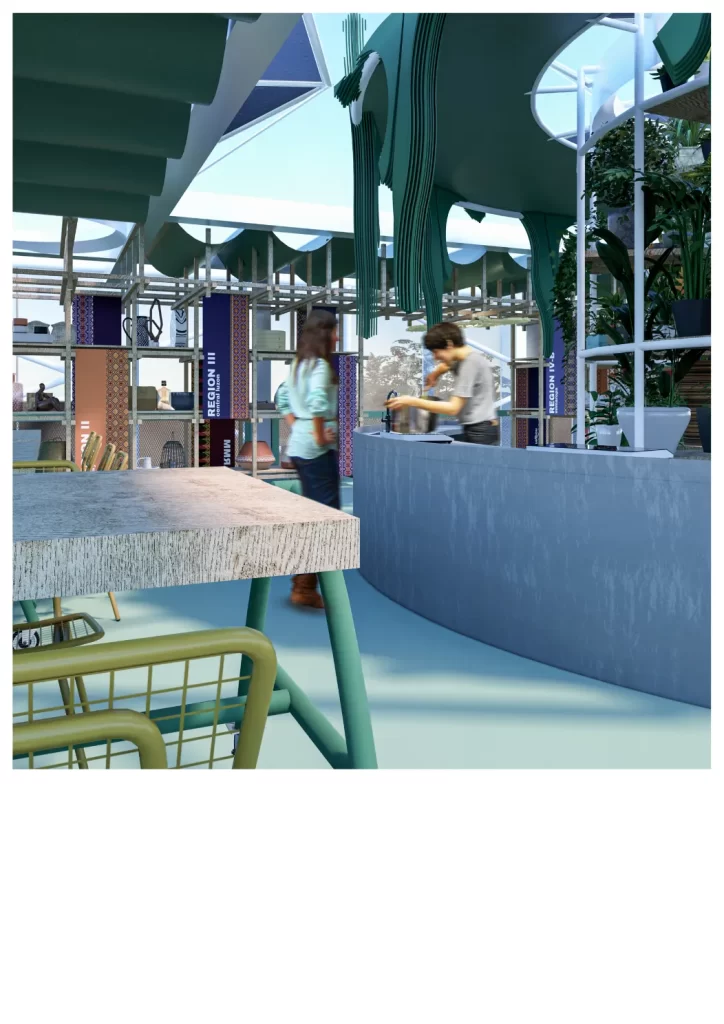
The kitchen is designed to suit the cooking preferences of the local community, allowing locals and tourists to cook together and share their recipes. The tables are movable to allow flexibility for the end-users. A water filtration station ensures access to clean drinking water. Guests and locals can dine in the sitting area, inspired by their way of sitting on a mat, or enjoy their meals outdoors in the alfresco dining space.
Market Space
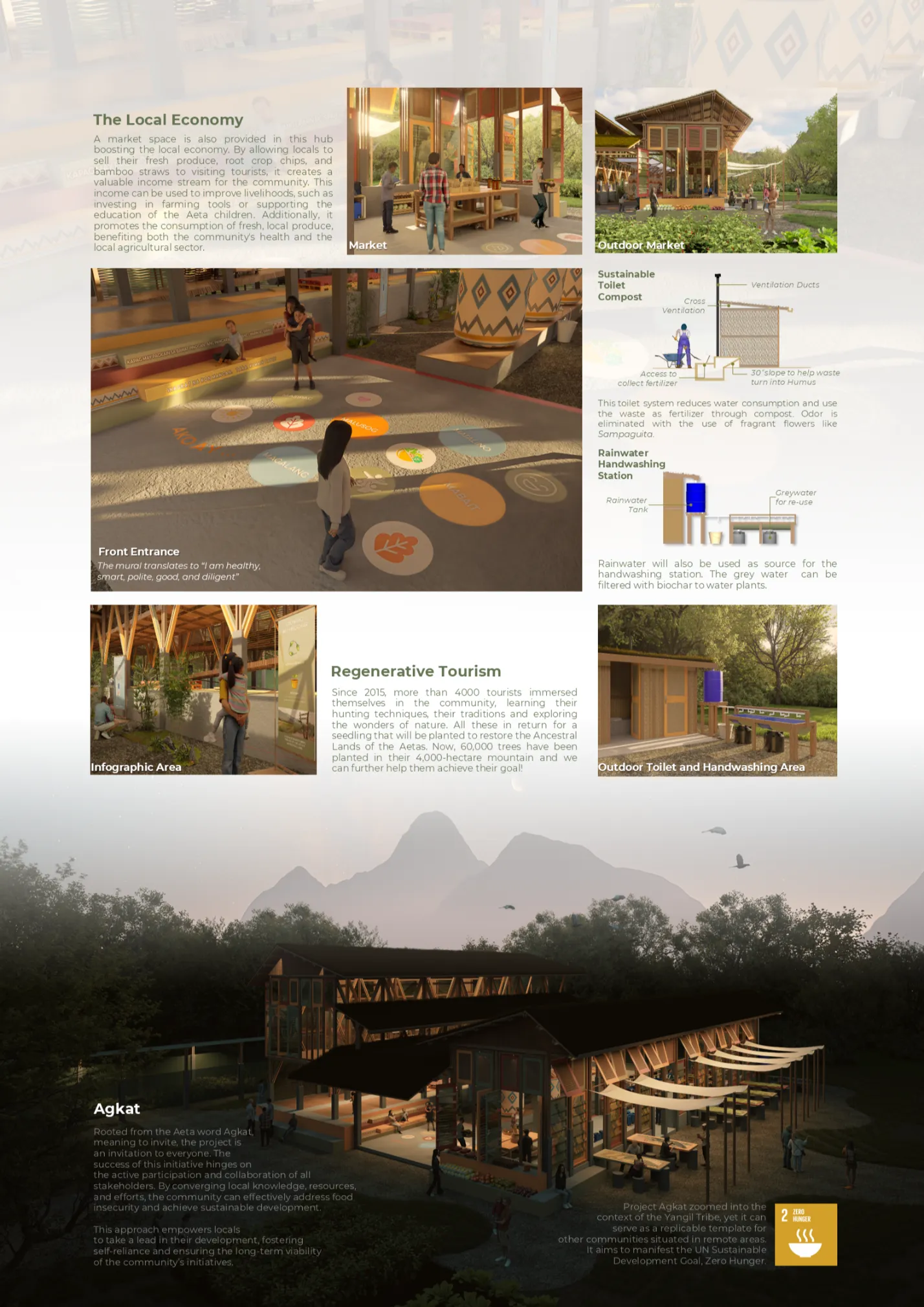
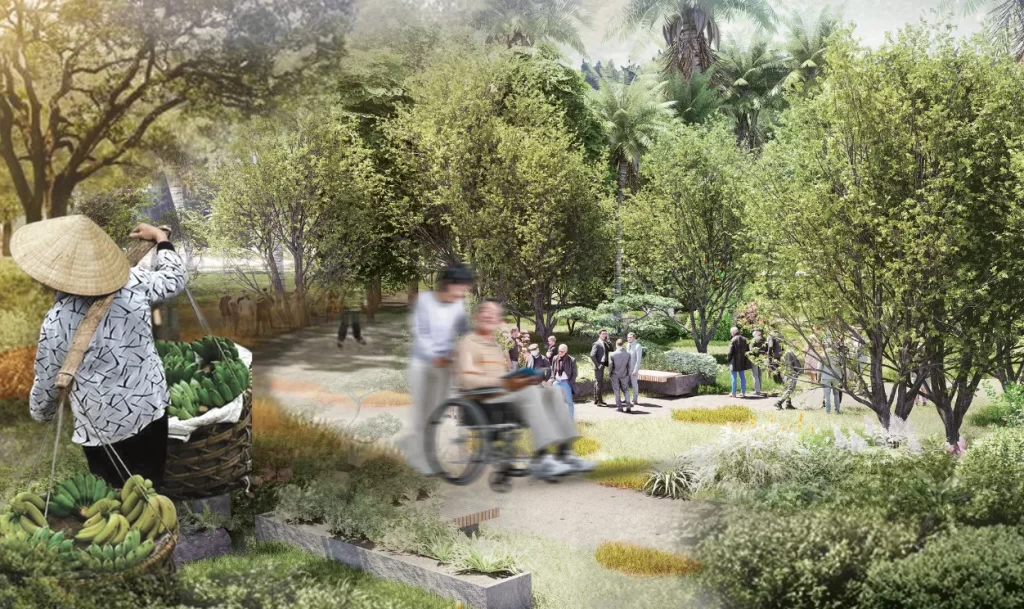
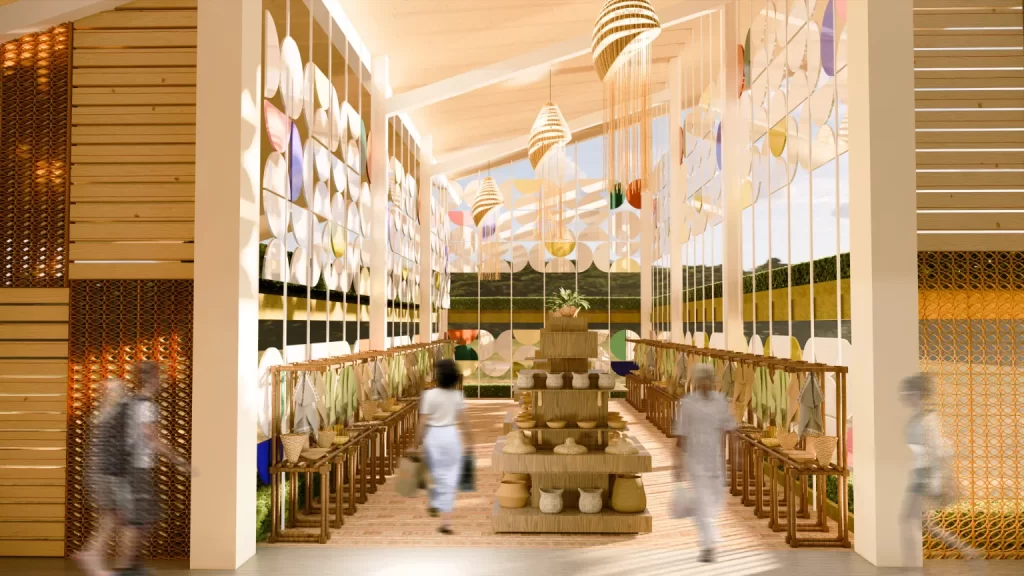
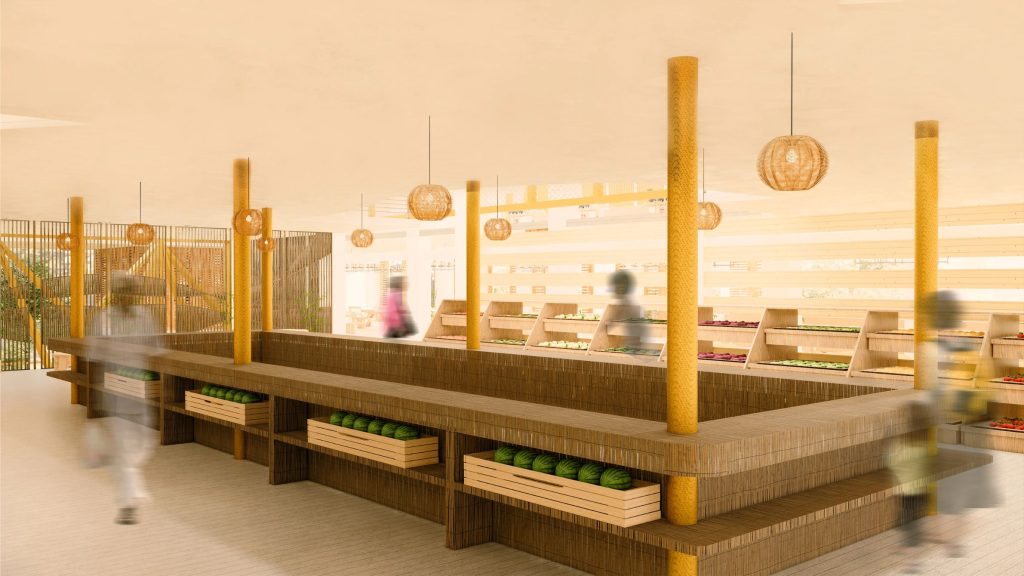
This hub also provides a market space, boosting the local economy. By allowing locals to sell their fresh produce, bamboo straws, honey jars, and root crop chips to visiting tourists, the community creates a valuable income stream. This income can be used to improve livelihoods, such as investing in farming tools or supporting the education of the Aeta children. Additionally, it promotes the consumption of fresh, local produce, benefiting both the community's health and the local agricultural sector.
Rooted from the word Agkat, meaning to invite, the project is an invitation to everyone. The success of this initiative hinges on the active participation and collaboration of all stakeholders. By converging local knowledge, resources, and efforts, the community can effectively address food insecurity and achieve sustainable development. This approach empowers locals to take a lead in their development, fostering self-reliance and ensuring the long-term viability of the community's initiatives.
Project Agkat zoomed into the context of the Yangil Tribe, yet it can serve as a replicable template for other communities situated in remote areas. It aims to manifest the UN Sustainable Development Goal, Zero Hunger.
Design Concept:Industrial to Ecological Reuse.
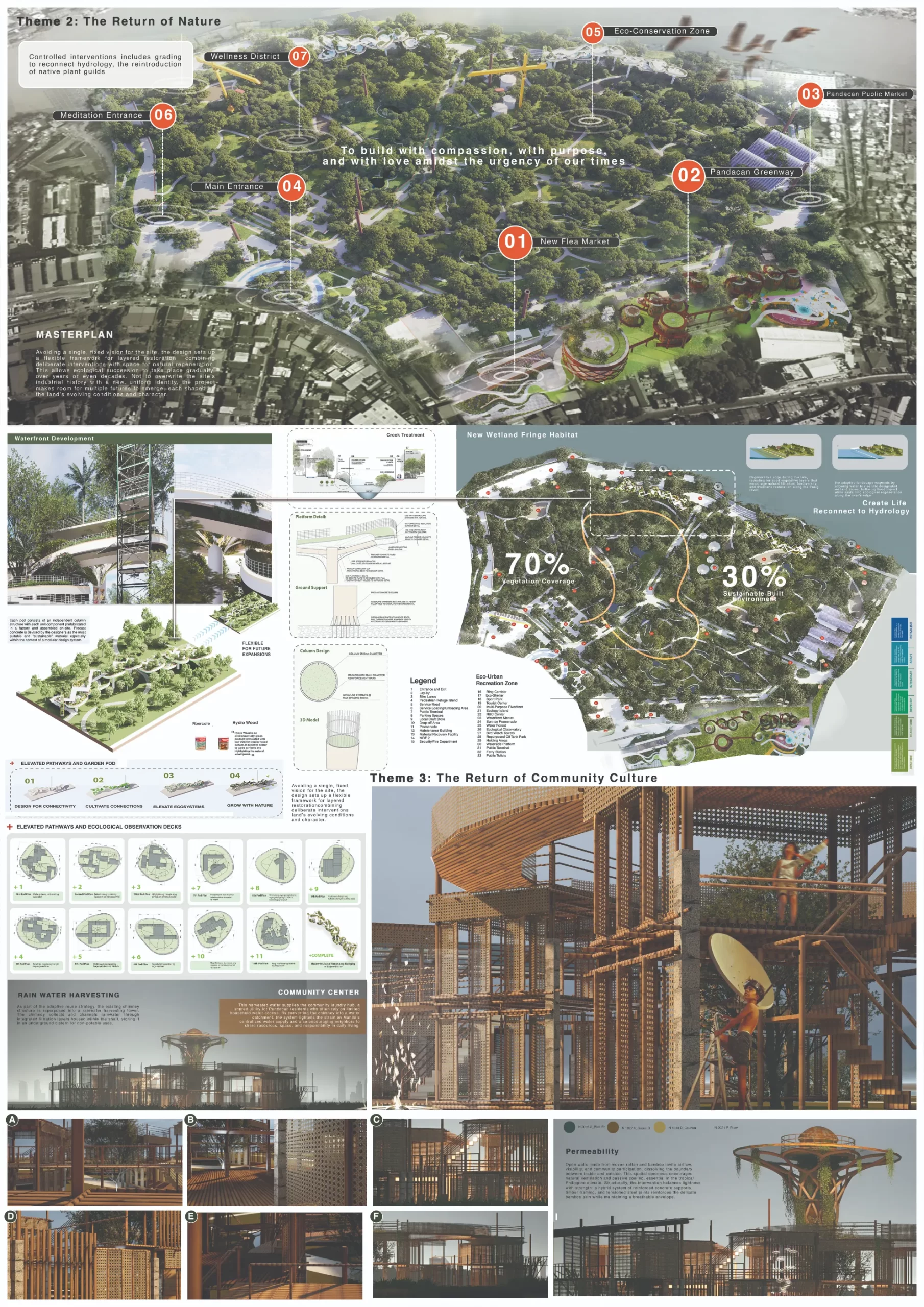
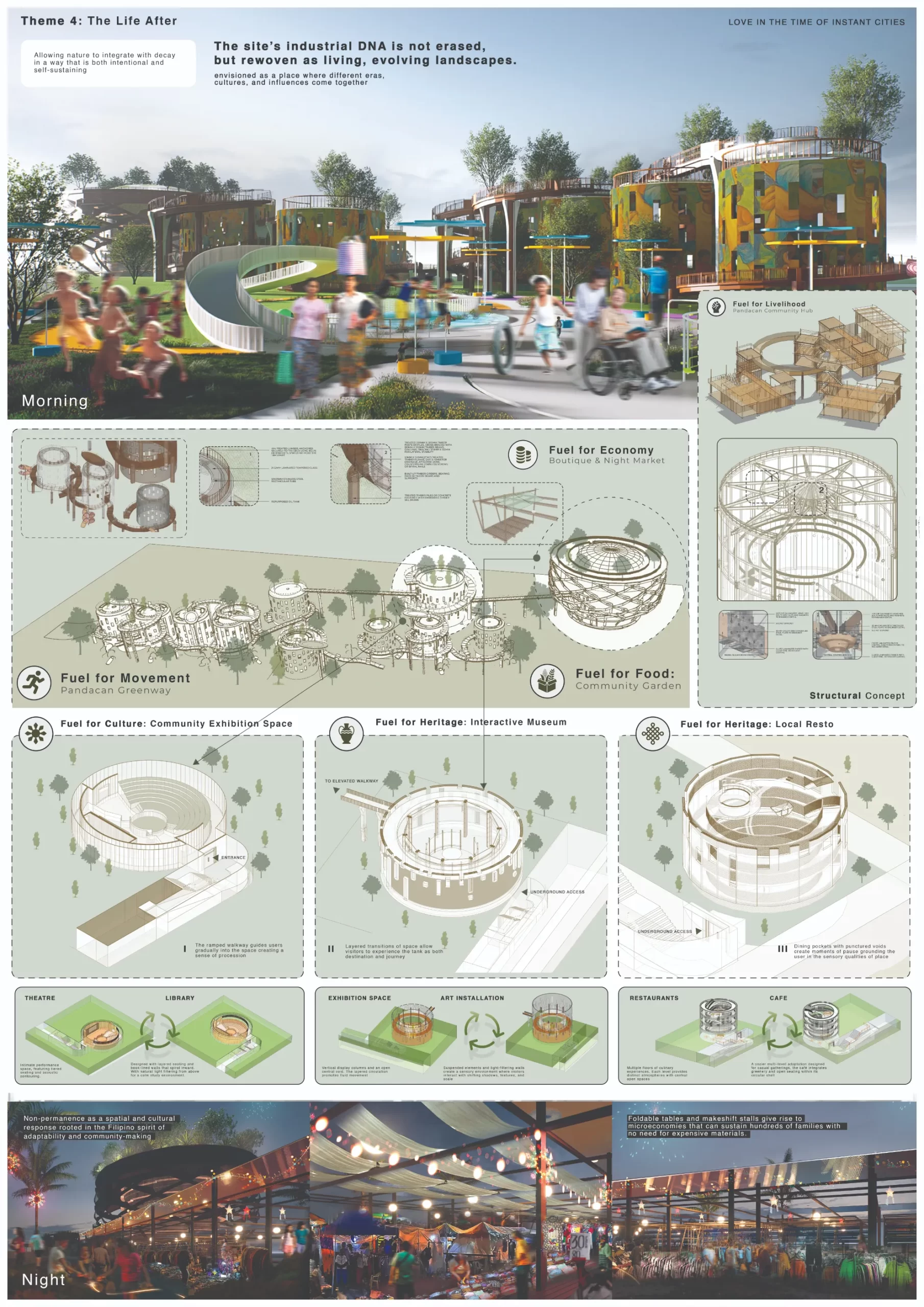
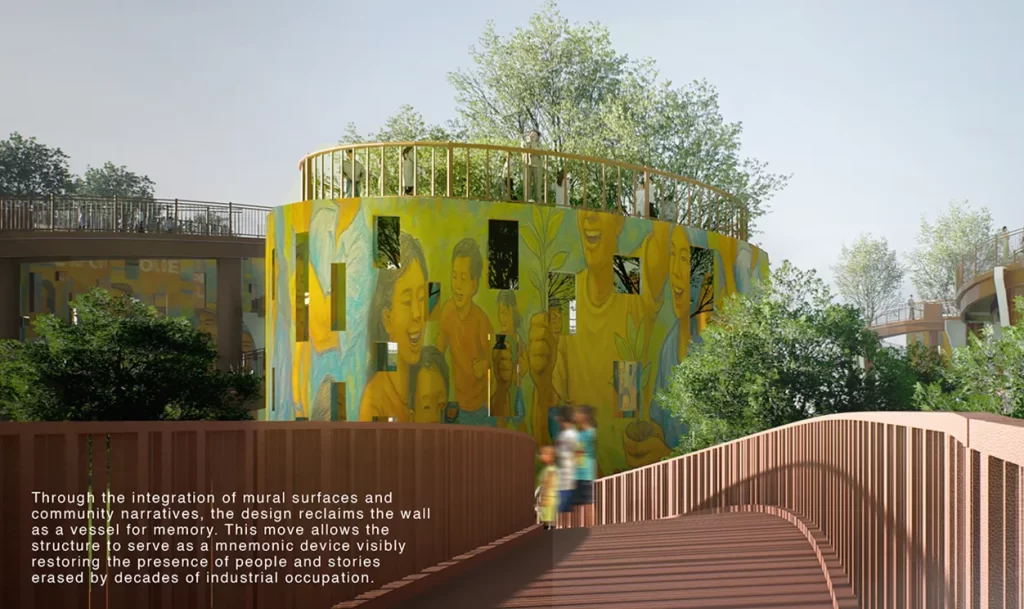
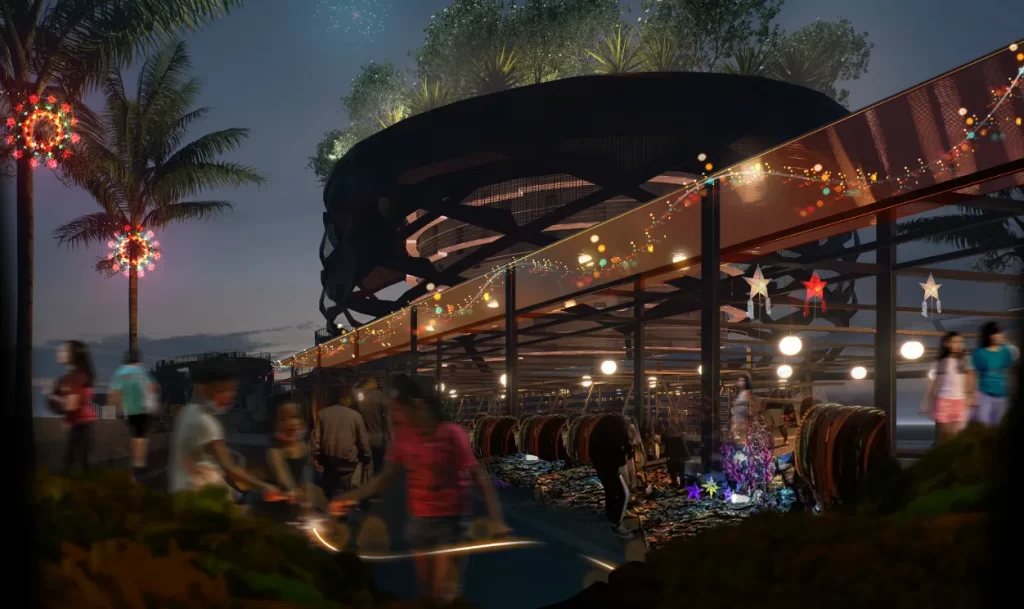
The site’s industrial DNA is not erased, but rewoven as living, evolving landscapes.
Love In The Time of Instant Cities
Transforming The Pandacan Oil Depot from Post-Industrial to Eco-Urban, Manila
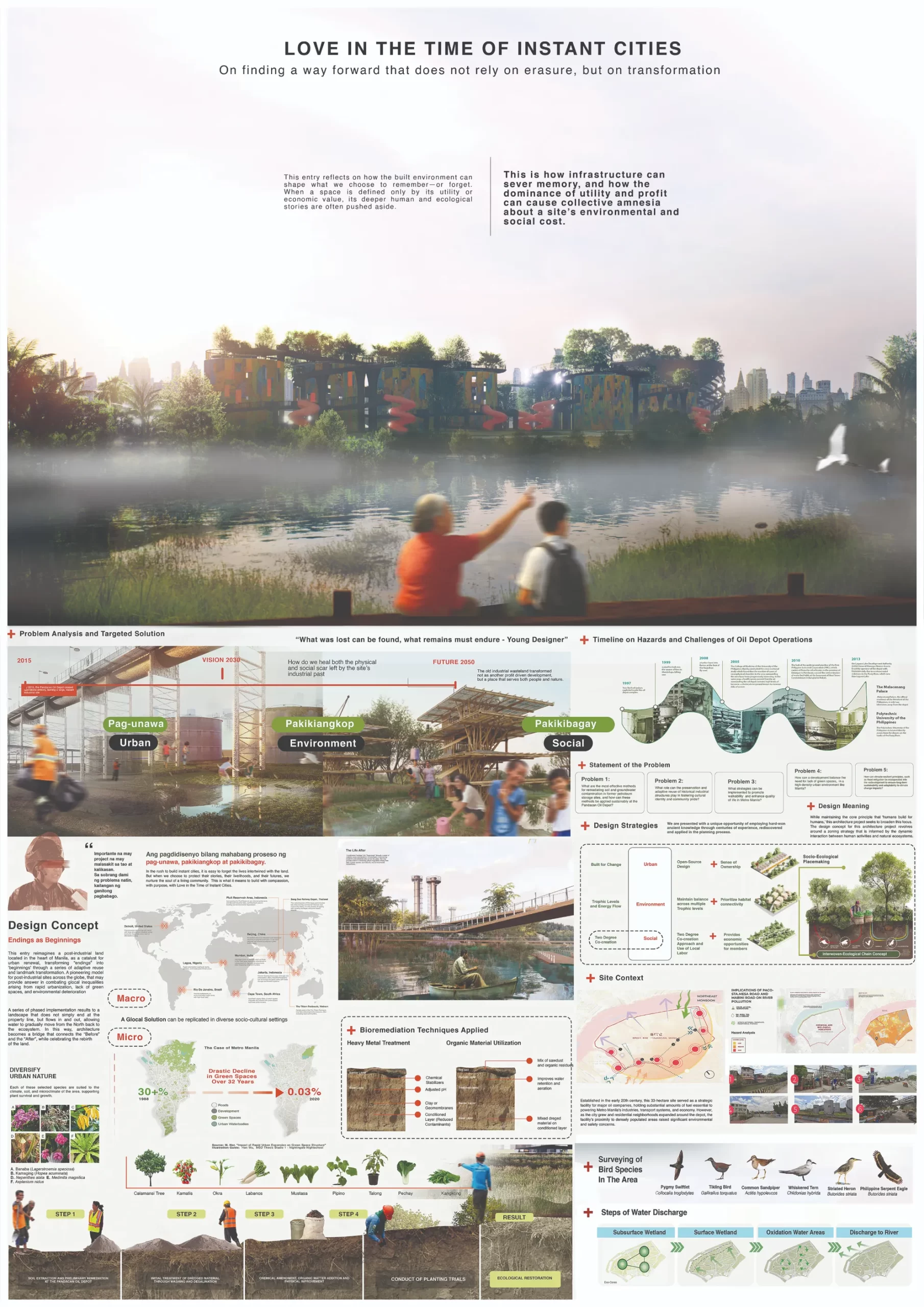
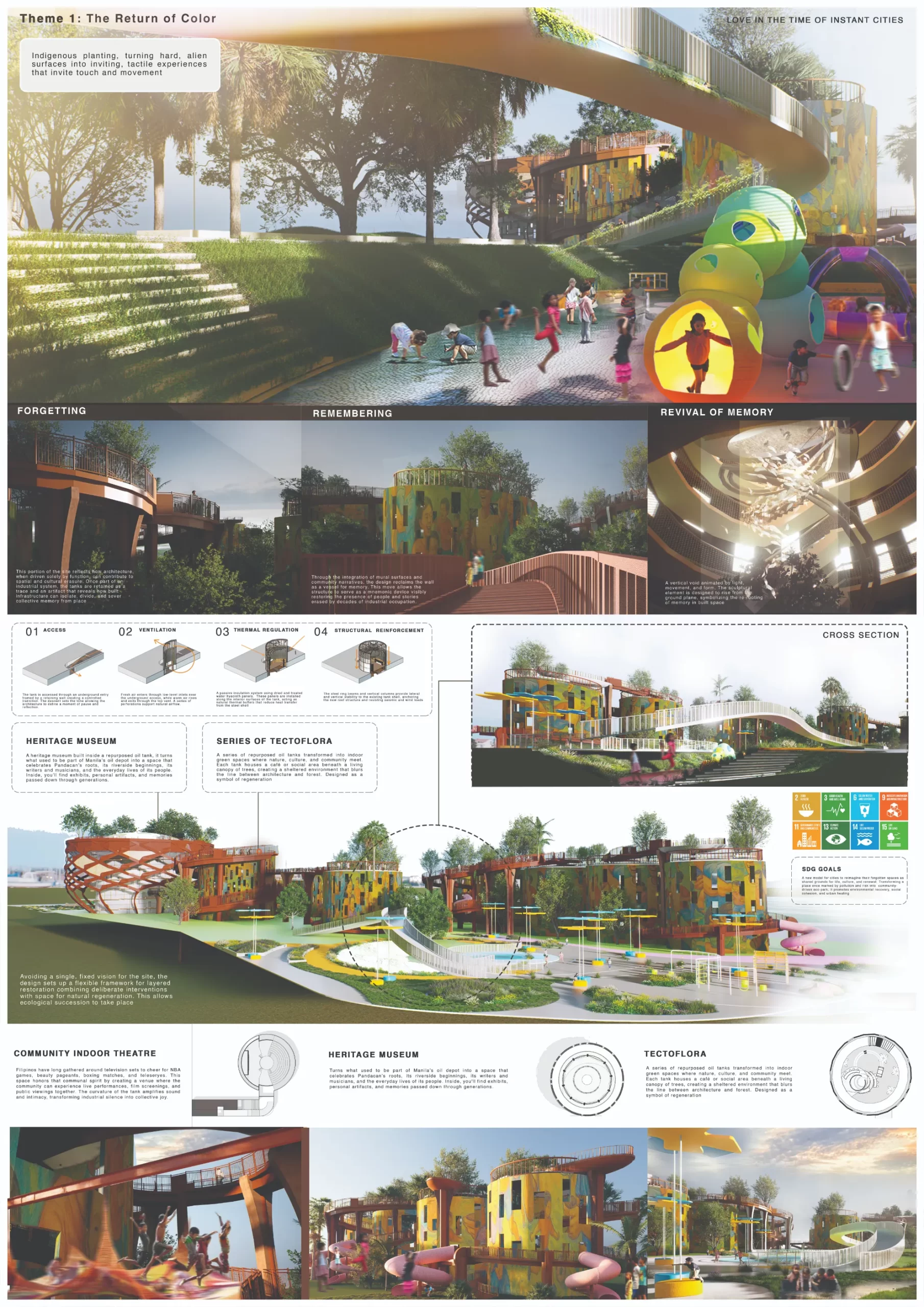
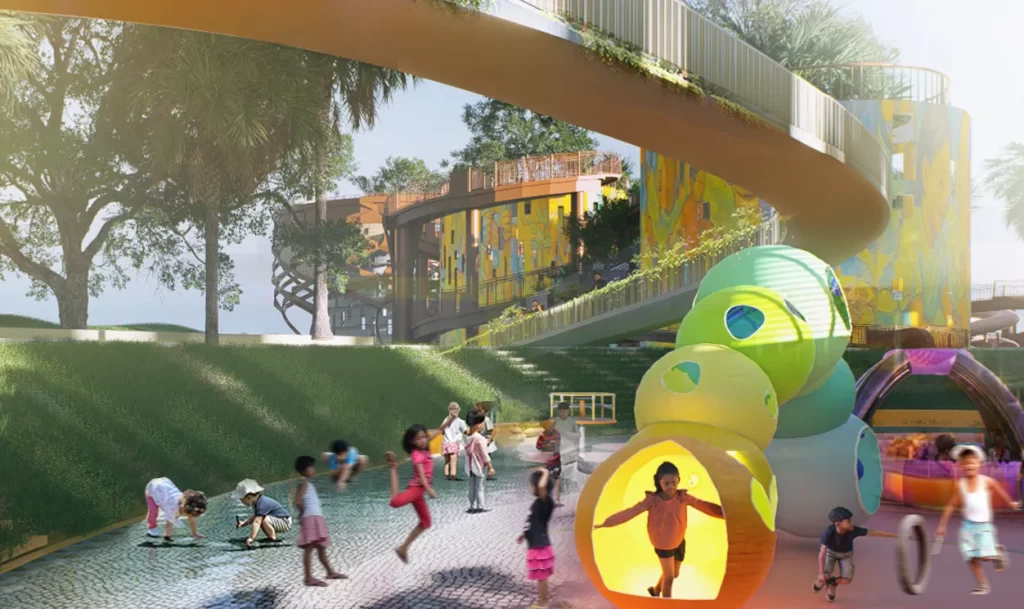
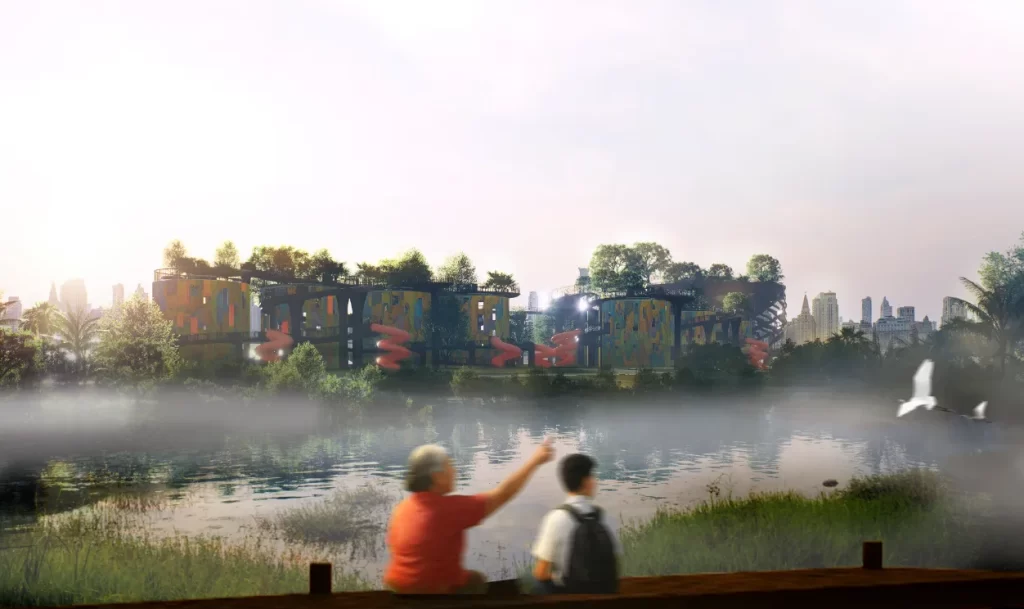
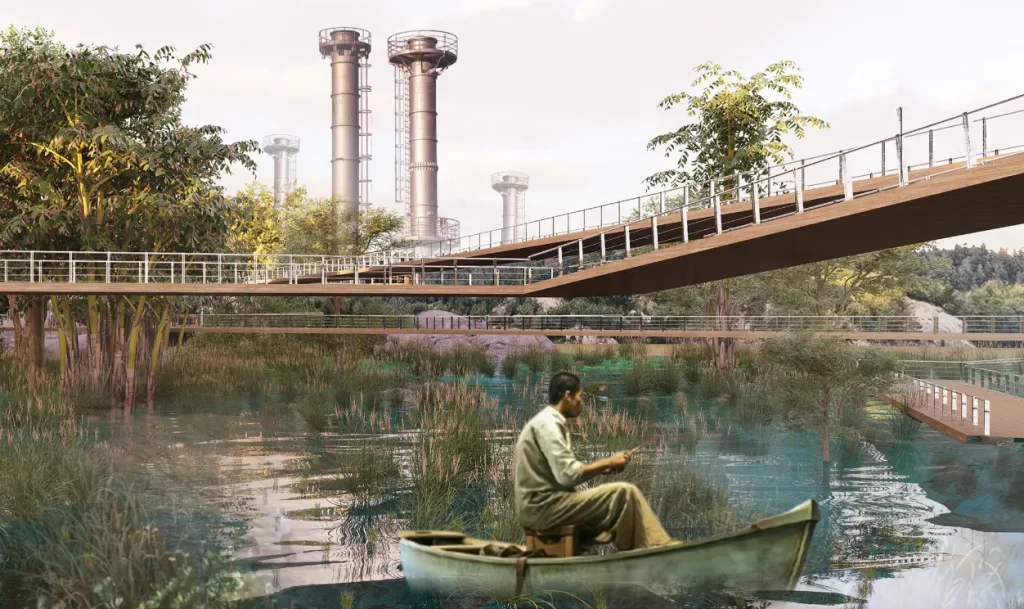
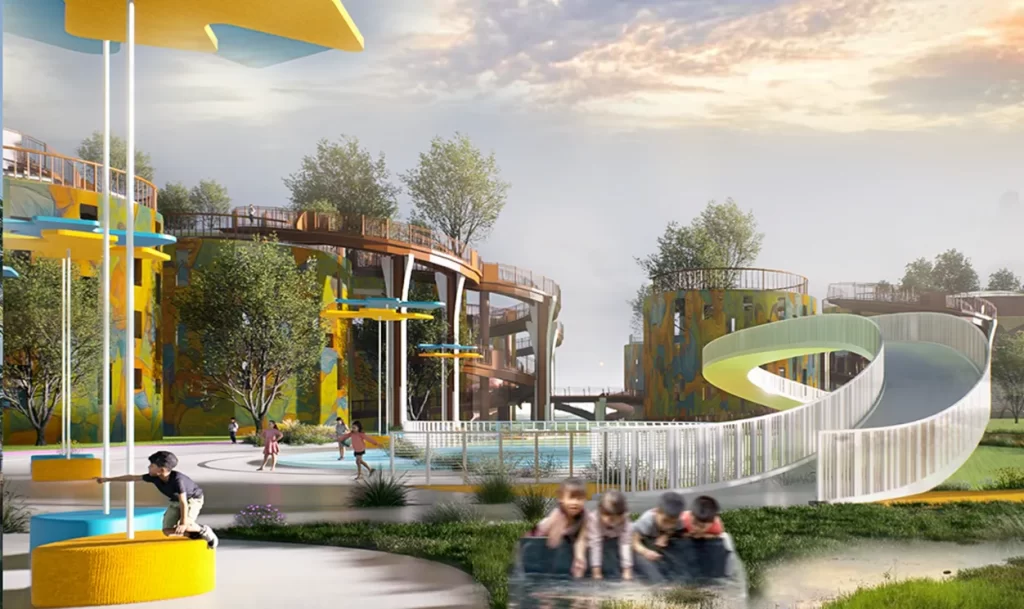
This entry reimagines a post-industrial land located in the heart of Manila, as a catalyst for urban renewal, transforming “endings” into “beginnings” through a series of adaptive reuse and landmark transformation. A people’s garden recovering lost ecosystems, diversifying urban nature, and promoting social cohesion through the integration of built and natural landscapes in a series of socio-ecological placemaking. A pioneering model for post-industrial sites across the globe, that may provide answer in combating glocal inequalities arising from rapid urbanization, lack of green spaces, and environmental degradation.
The Pandacan Oil Depot, located along the banks of the Pasig River in Manila, Philippines, has historically played a critical role as a storage and distribution hub for petroleum products. Over the years, several incidents highlighted the risks associated with storing and distributing hazardous materials in an urban area. Concerns about air pollution, fire hazards, and potential soil and water contamination due to petroleum leaks intensified as the depot continued operations in a rapidly urbanizing district. By 2015, the Pandacan Oil Depot ceased operations entirely, leaving a large, vacant industrial site in the core of Manila, close to both commercial and residential zones. With the oil depot gone, we are faced with a moment in history to redefine a vast industrial wasteland, not as another profit driven development, but a place that serves both people and nature. Reclaiming the narrative and answering the people’s resounding call for an eco-park.
DESIGN THINKING
If we employ both natural and human capital into an integrated system that allows post industrial sites to reach full potential, improves well-being, and adapts to ever- changing climate. How might we envision a different future not only for Pandacan residents but for greater Manila?
THE MASTERPLAN
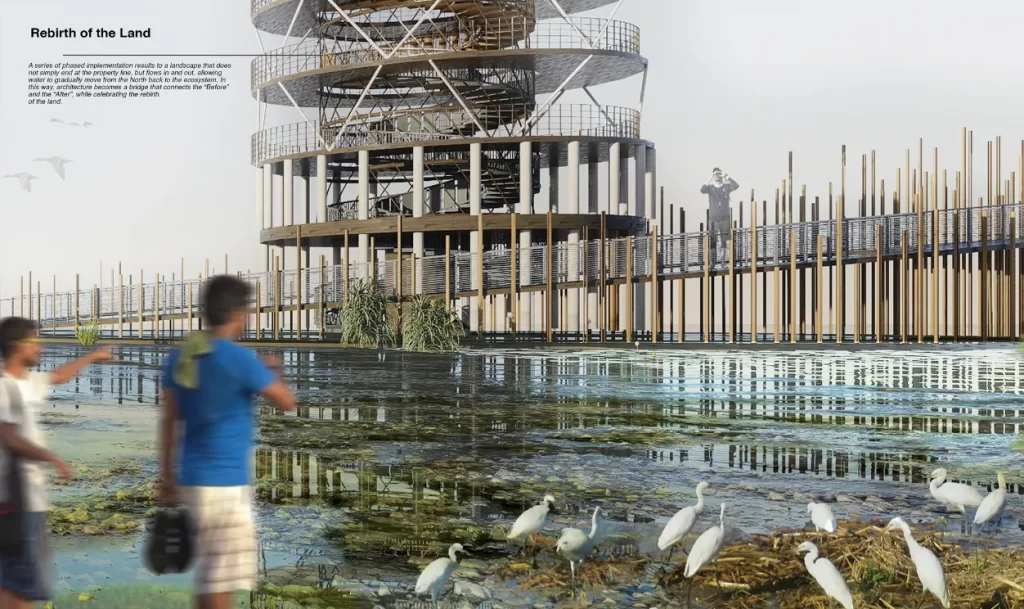
A series of phased implementation results to a landscape that does not simply end at the property line, but flows in and out, allowing water to gradually move from the North back to the ecosystem. In this way, architecture becomes a bridge that connects the “Before” and the “After”, while celebrating the rebirth of the land.
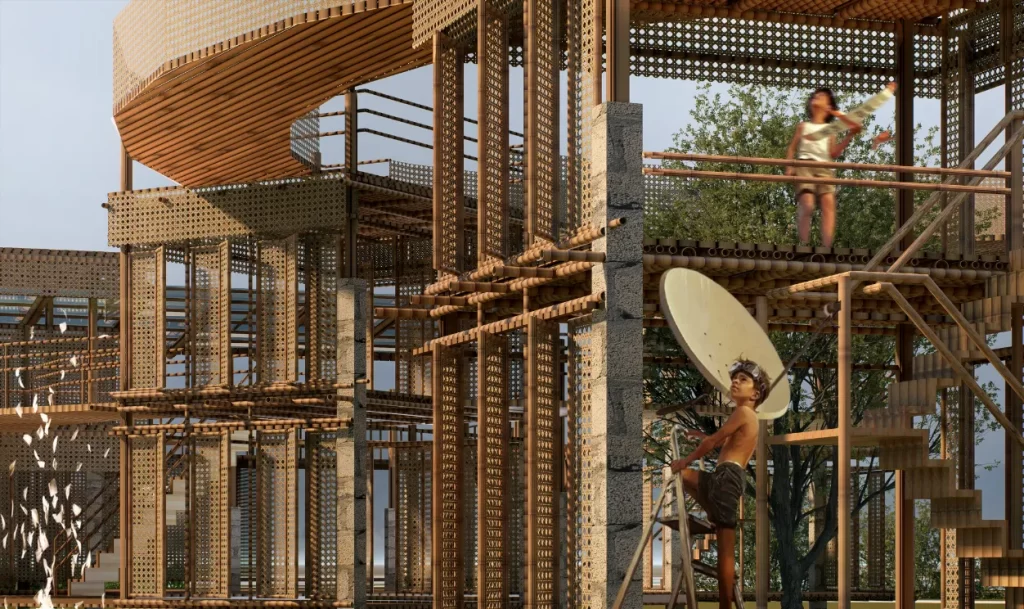
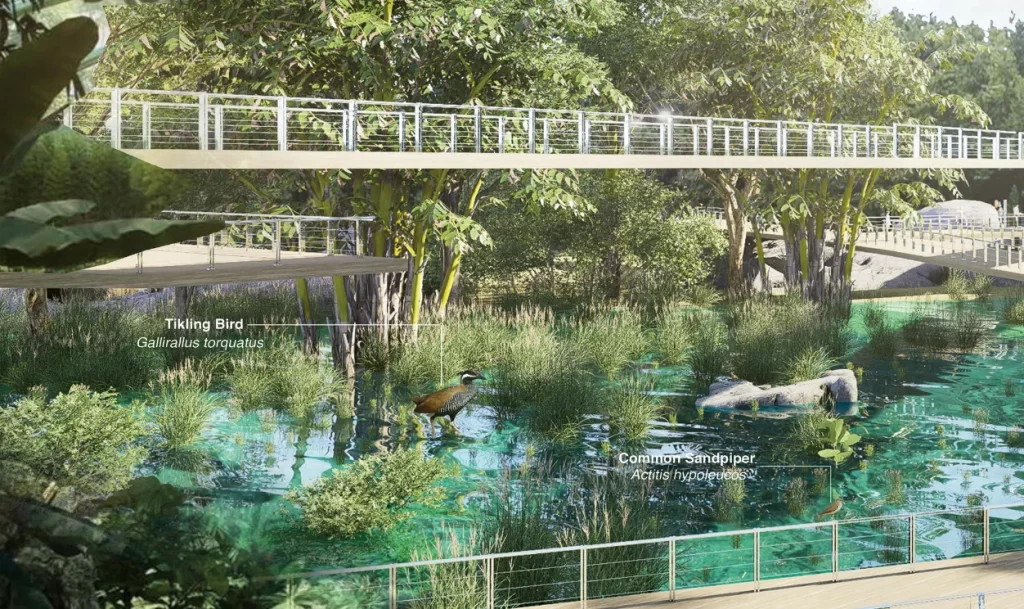
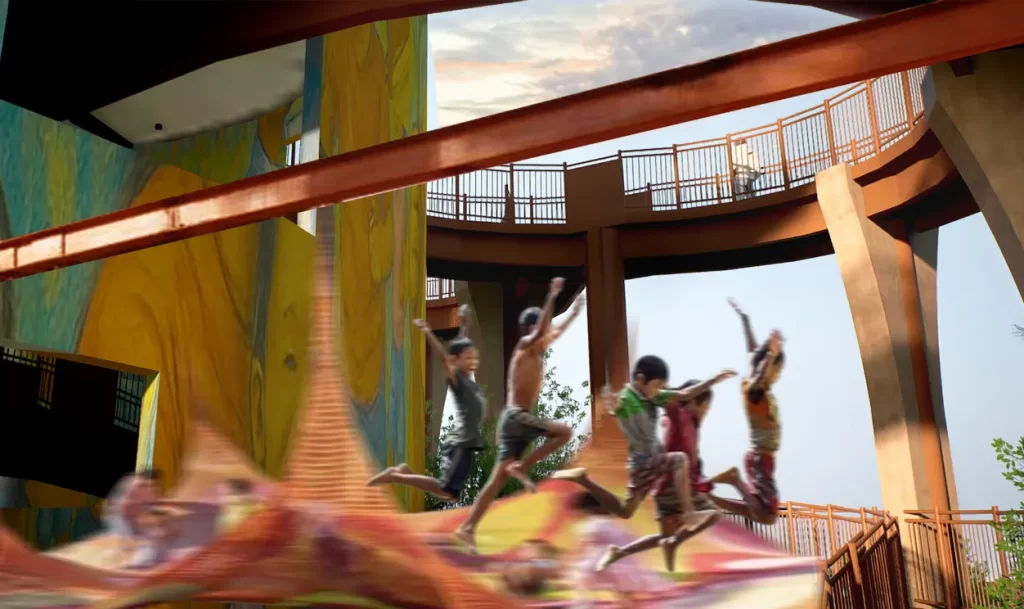
The strategy focuses on maintaining ecological balance by diversifying ecological patches that accommodate varied life-history needs and facilitate genetic exchange. Ecological observation platforms are carefully layered and staggered to create dynamic terraces and courtyards, elevating the experiential spaces while allowing nature to flourish on the ground below. By carefully selecting native plant species that are well-suited to the site’s condition, plants and pollinators draw in insects, setting off a vital ecological chain. Over the next ten years, these pioneering plants are expected to spread, promote the growth of new trees that will link and integrate the entire system.
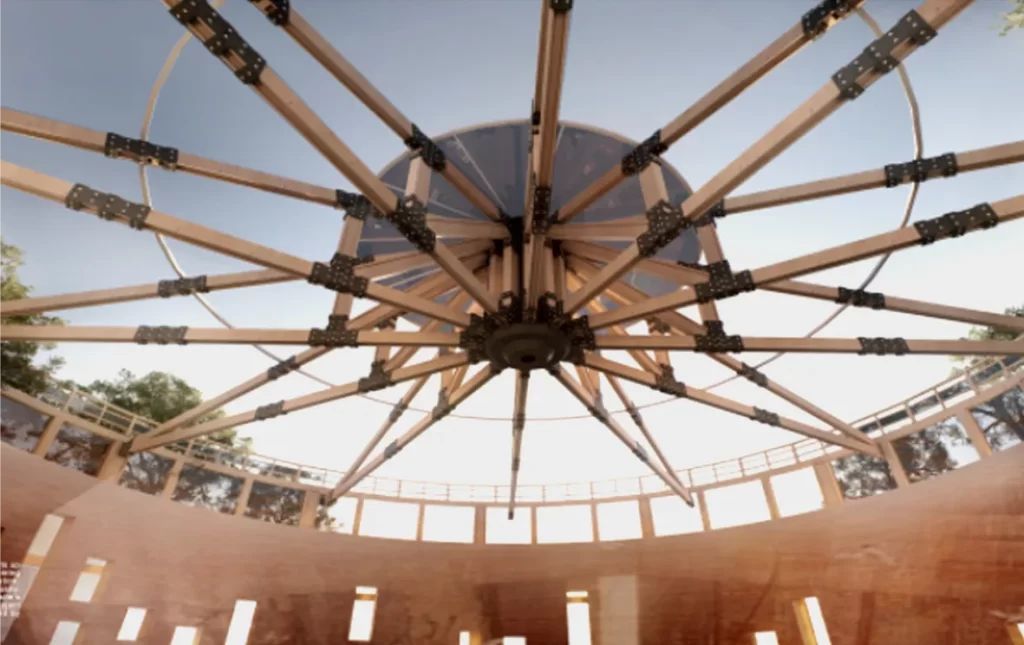
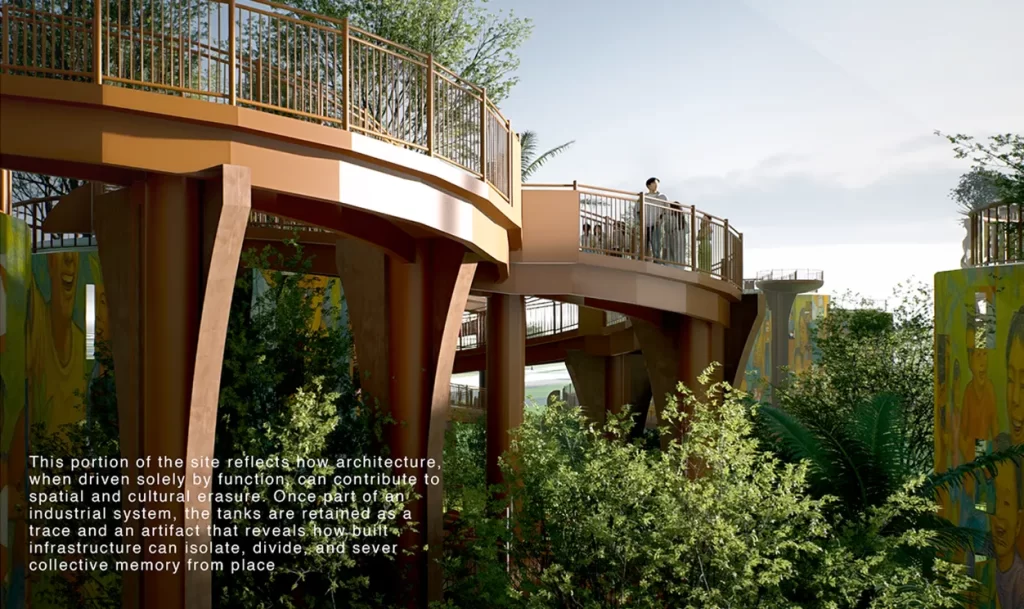
The Pandacan greenway is a series of walkways and repurposed tanks on an underground entry framed by a retaining wall. Layered transitions of space allow visitors to experience the tank as both destination and journey. Fresh air enters through low-level inlets near the underground access, while warm air rises and exits through the top vent.
The project introduces a clean biofuel facility and bag weaving community hub that turns water hyacinth an invasive species clogging the Pasig River into eco-charcoal, offering both an ecological solution and a livelihood source for nearby communities. The eco-charcoal facility offers a practical and sustainable alternative to traditional fuel sources. A Filipino household only needs 1.69 kilos of eco-charcoal to cook three meals a day less than half the 3.5 kilos typically required when using regular charcoal. This increased efficiency means less biomass is needed, helping to reduce environmental pressure. At the same time, the process of harvesting, processing, and distributing eco-charcoal creates livelihood opportunities for nearby communities. By removing invasive water hyacinth from the Pasig River, the facility supports the recovery of aquatic ecosystems sustaining life below water.
Spatial clustering of human activities is zoned with consideration for reduced pollution and easy clean up. The buildings are design with minimal footprint as much as possible, with toilet and sanitation design that uses urine diversion and dry composting techniques.
Just as water has perfect memory and forever finds its way back to the sea, we too are drawn to the familiar places that shaped us. In my case, that familiar place is a river somewhere in a rural area of Batangas that my lolo would take me to catch tiny fish to be put on Stick-O jars. Unlike the Pasig River, that river is now lifeless and beyond saving. In its death, I realized, it took with it the memories that other children, like I once was, will never have.

Project Title:
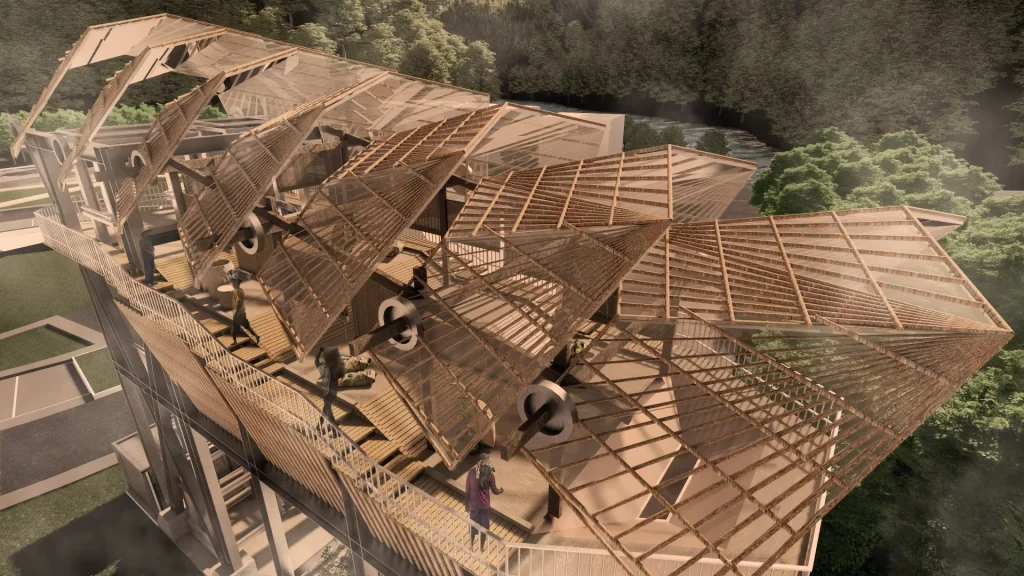
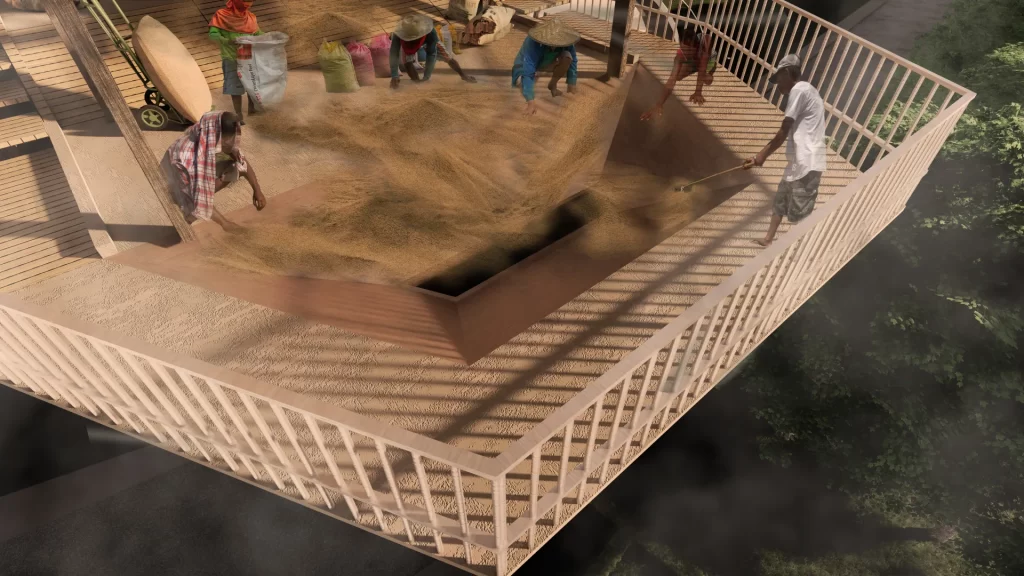
BILAG: “From Scattered to Gathered Space for Sunbathed Grains”.
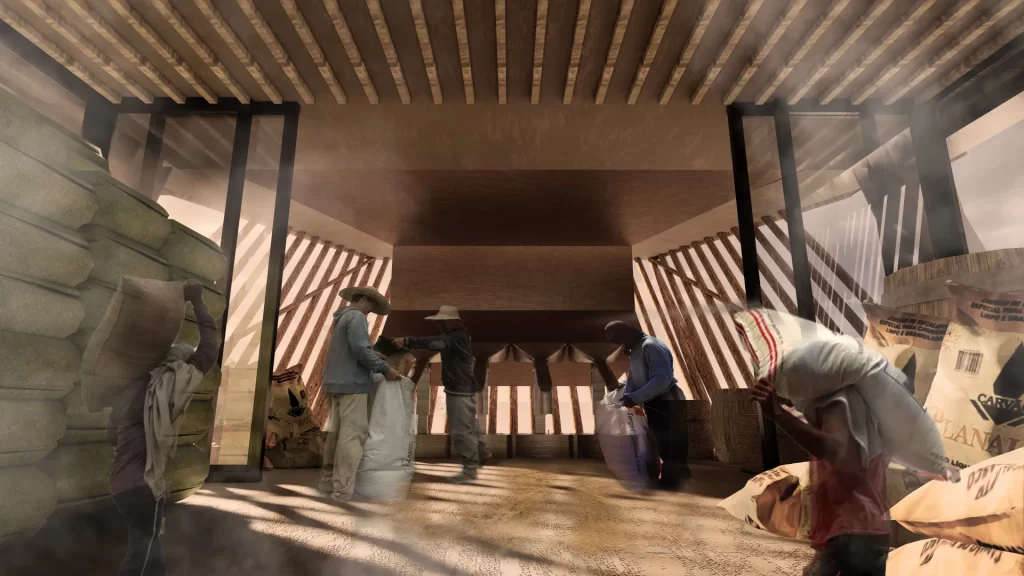
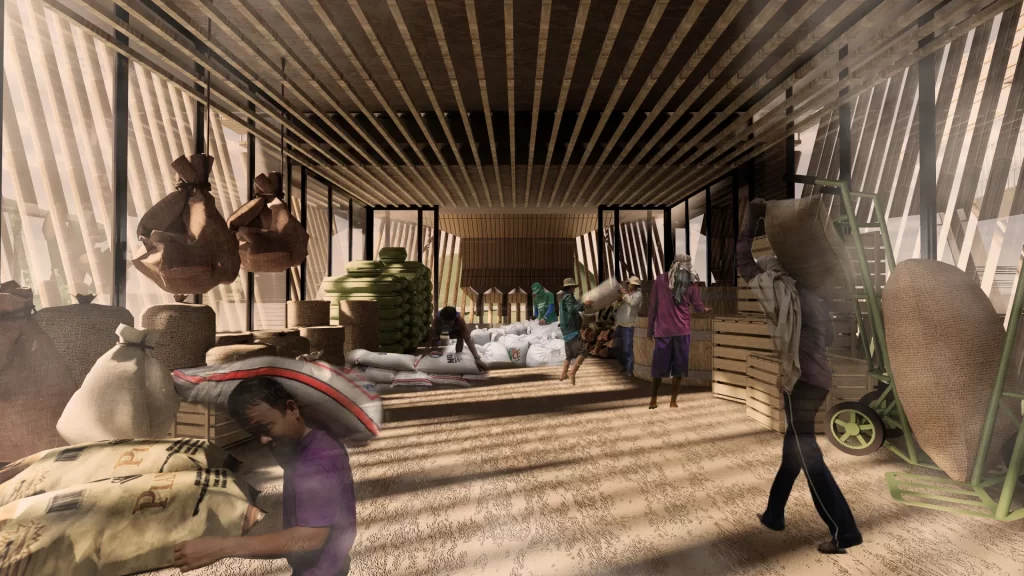
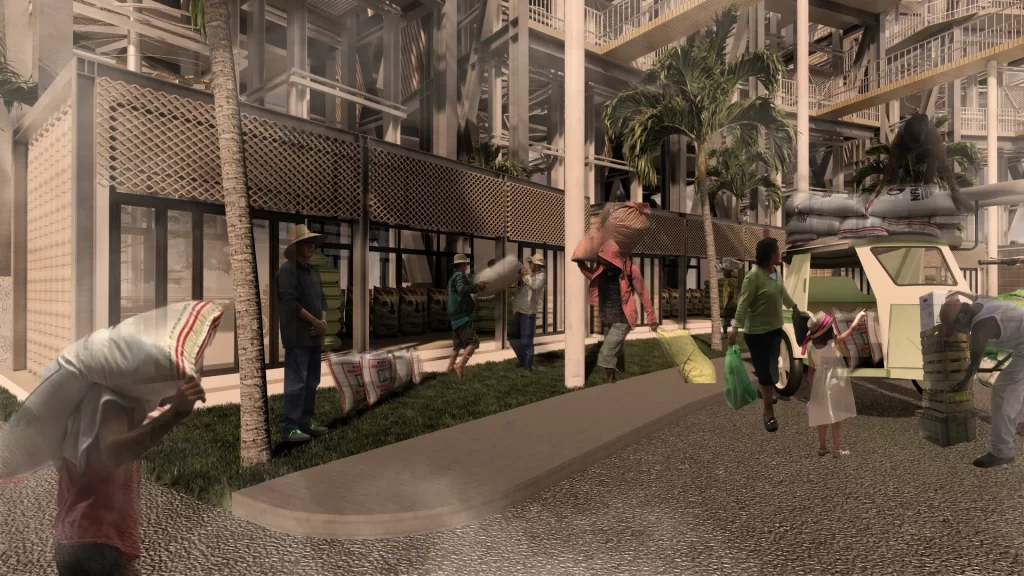
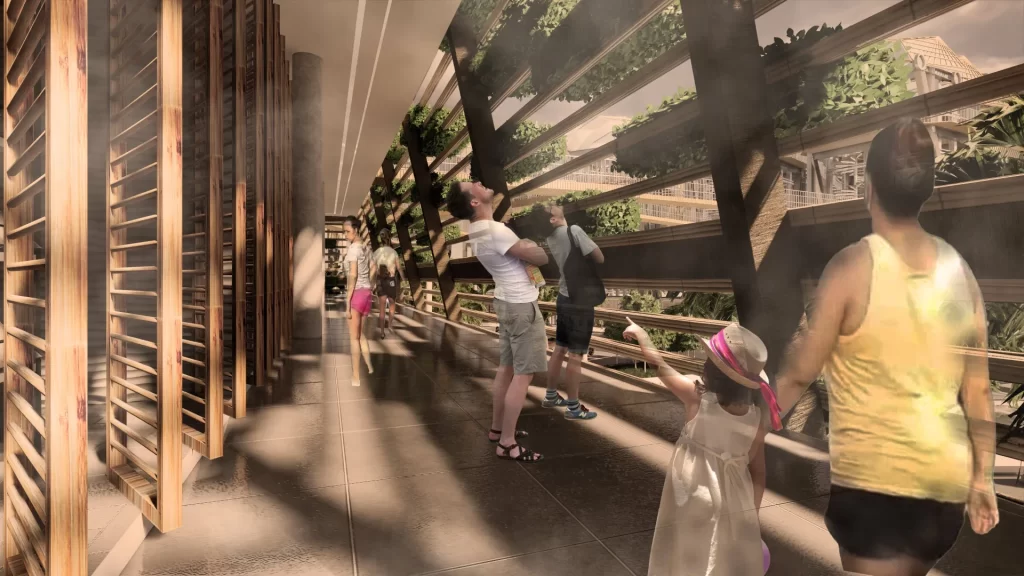
Integration of Rice Drying Observation Tower to a Community Development Center for Rice Farmers.
Design Concept Statement:
“Converging Replicable Spaces through Agri-tecture”.
Consider the worst-case scenario in agriculture when we envision crops ravaged by an unforeseen catastrophe, particularly in a typhoon-prone country like the Philippines. Imagine the tireless efforts of rice farmers battling heat and floods during the harvesting period, where the fruits of their labor may vanish in just a blink of an eye. These challenges not only undermine the farming industry but also necessitate a shift towards more resilient methods to revive the country’s agricultural identity.
In the Philippines, rice holds an unparalleled position among agricultural produce, serving as a staple food for every Filipino. Its significance transcends mere sustenance, evolving into an economic juggernaut that propels the nation's growth trajectory and profoundly influences the livelihoods of the nation’s farming community. Moreover, this prominence extends beyond Philippine shores, resonating throughout Asia, where rice similarly holds sway as a dietary cornerstone for millions.
While many perceive rice farming as simply planting and harvesting, it's imperative to recognize the unforeseen element in its production which is the drying process. This vital stage of rice production significantly impacts the quality of the rice produced. The meticulous management of this process is often overlooked, yet it plays a crucial role in ensuring the final product meets the highest standards of quality and value.
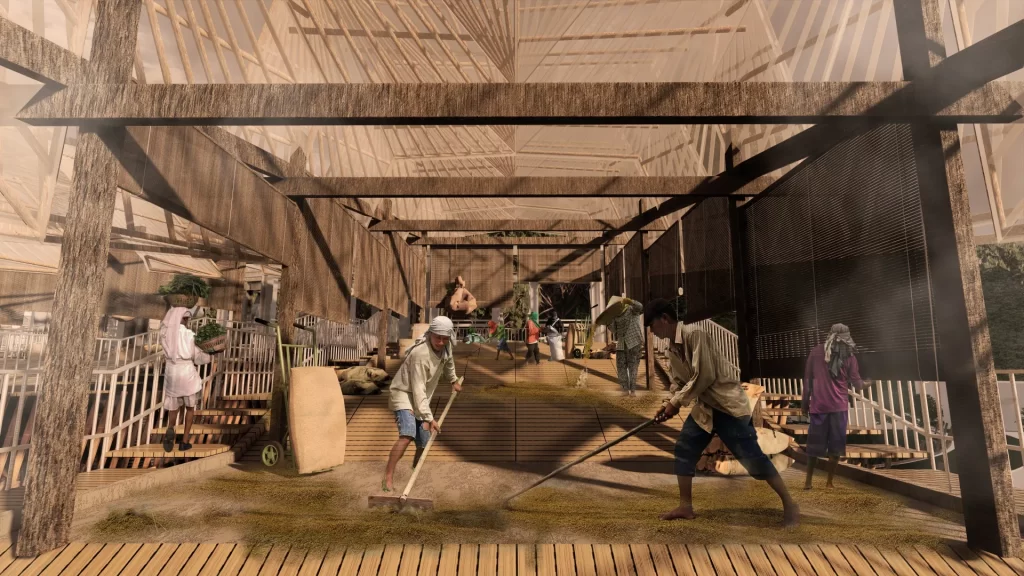
The traditional method, known as "Panagi-Bilag," an Ilocano term meaning "to dry under the sunlight," is a process often observed on streets, sidewalks, and open courts to take advantage of natural light for quicker drying, bypassing the need for costly drying machines. However, this approach comes with its own set of challenges, particularly regarding food safety. Utilizing roadsides for drying leads to traffic congestion and grain loss, especially during extreme weather like unexpected typhoons, increasing postharvest losses, and affecting both the quantity and quality of the rice produced.
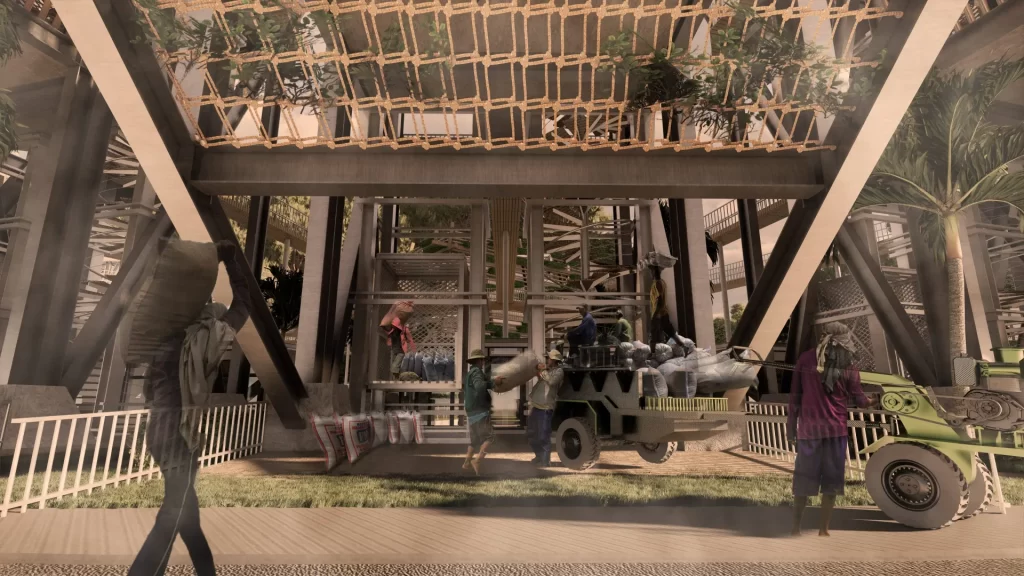
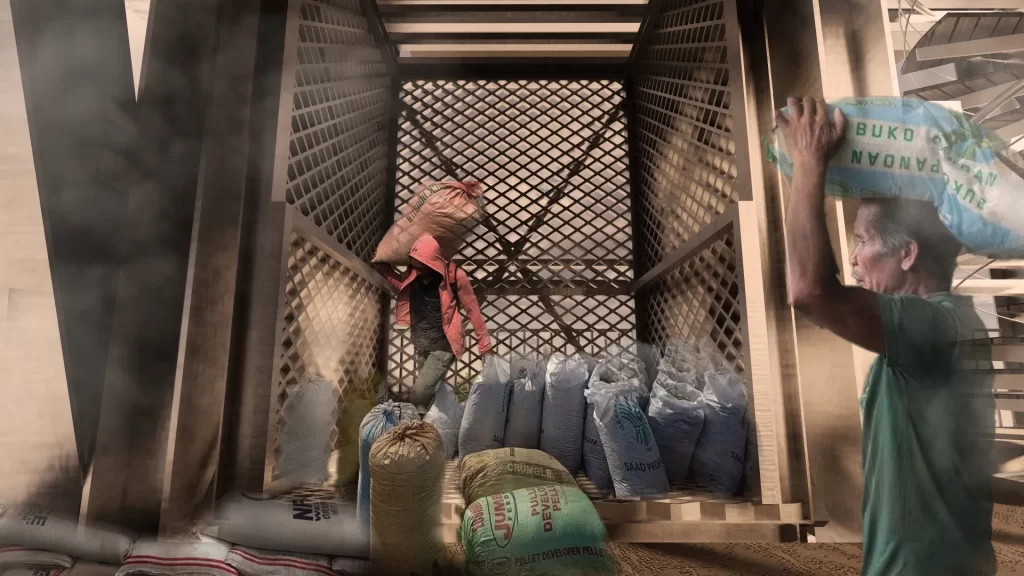
Addressing these micro-problems requires innovative solutions, such as the Idea of "Drying Experience in Greater Heights," which entails the creation of a prototype structure that improves the process of rice drying by merging it into an observation tower to attain efficiency. Such towers are typically constructed from scaffolding, assembled temporarily, and placed randomly in various spaces. Despite its minimal function and unnoticeable character, this structure possesses an advantage due to its dynamic and transformable features. Conventional observation towers are commonly found in rice fields to facilitate crop management. Thus, modifying them into a multifunctional structure elevates their initial purpose, achieving productivity during the rice drying process.
Integrating various farming development components, such as research facilities, agricultural training areas, community spaces, and rice production spaces, among others, into a cohesive development is a prime objective. The concept not only ensures the safety of rice produced from unforeseen natural calamities and other micro problems but also aims to foster solidarity and economic growth within farming communities. Through its research, social, training, and trading spaces, it serves as a venue for collaboration and progress.
The concept also provides areas for various farming needs, as well as spaces that respect one’s customs and values. The provision of areas intended for traditional and local modes of transportation, the integration of new and innovative spaces and components, and the incorporation of one’s cultural identity are the concept's strategy to uplift the morale of the farming community.
The agricultural development center for rice farmers, with the integration of rice drying towers, heralds a transformative vision which is to unite scattered agricultural components into cohesive spaces for development. It stands as a testament to the power of purposeful design, where architecture harmonizes with agriculture, cultivating a brighter future for farmers, communities, and humanity as a whole.






KITA-KITA
“Shaping Resilient Futures Together”
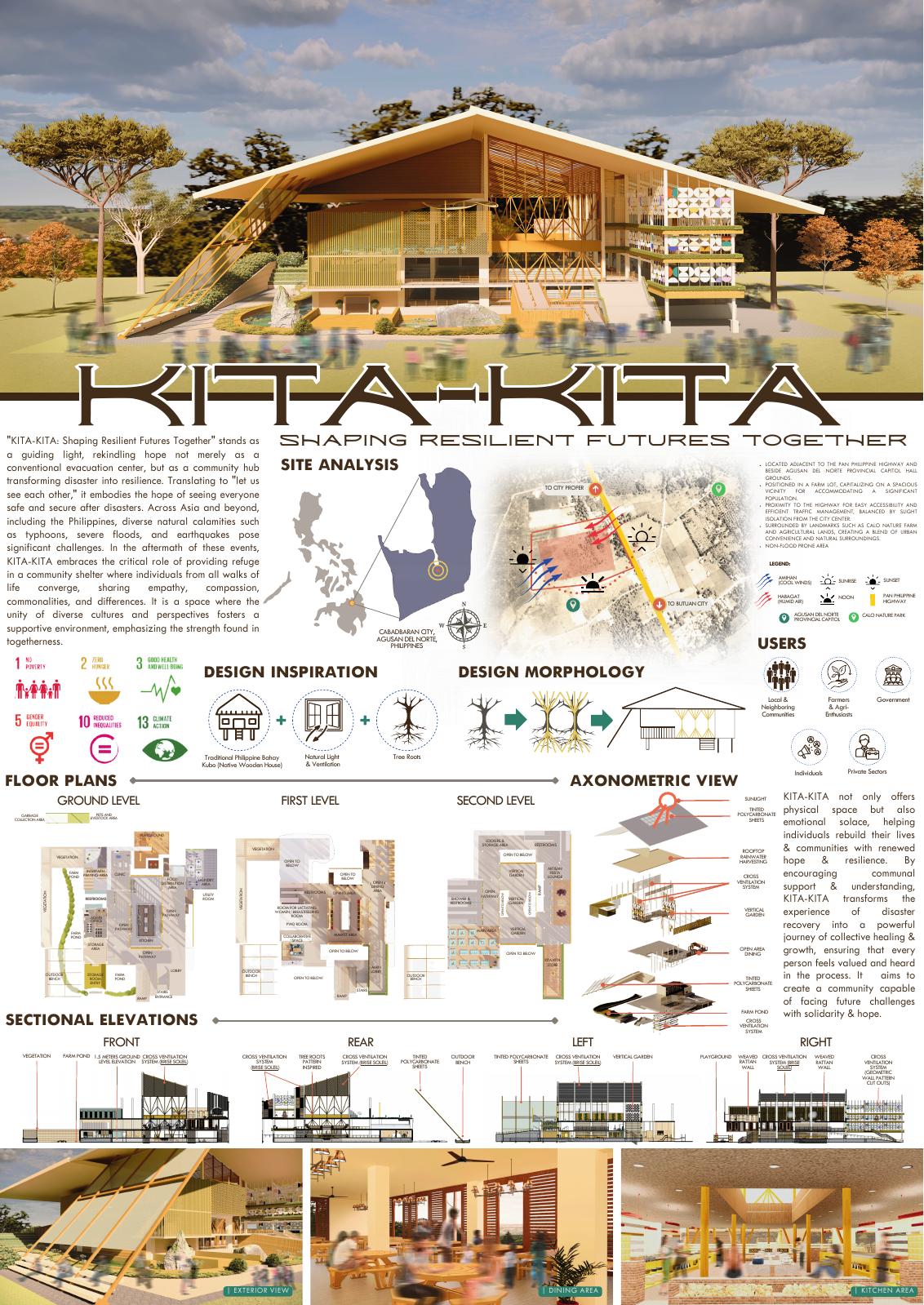
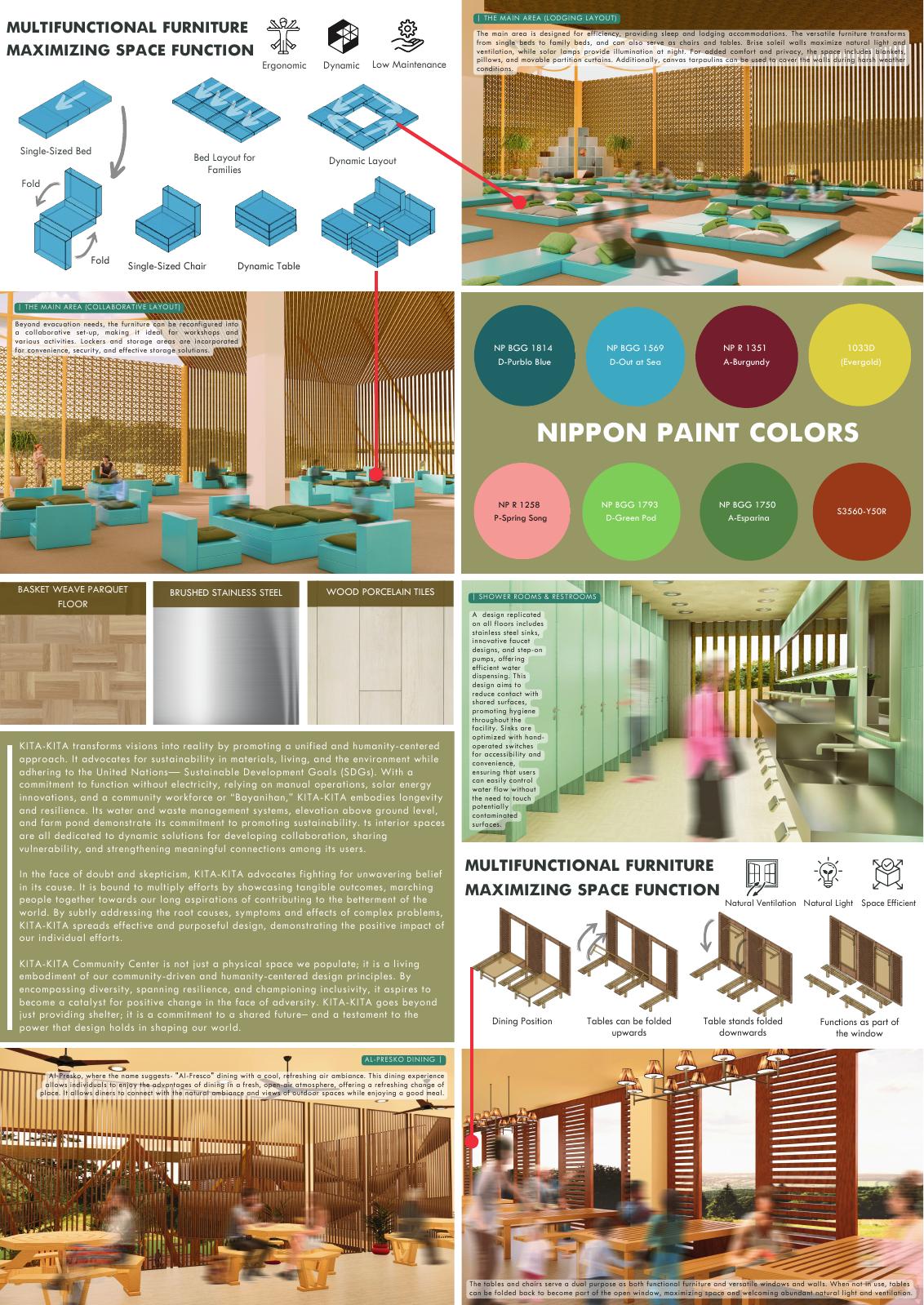
Now and then, I find myself contemplating how I can effectively embark on my interior design journey, not just about pursuing it as a professional endeavor, but also as an odyssey of personal experiences and stories that goes together with every design intention, choice, and decision. As a student designer, it is crucial to bring not only technical knowledge and skills, but also life encounters that have shaped my understanding of the profound impact that interior spaces have on our daily lives. Embracing inspiration from our ability to confront life’s challenges, stumble, and courageously rise again, I present KITA-KITA: a project that breathes hope, security, and protection.
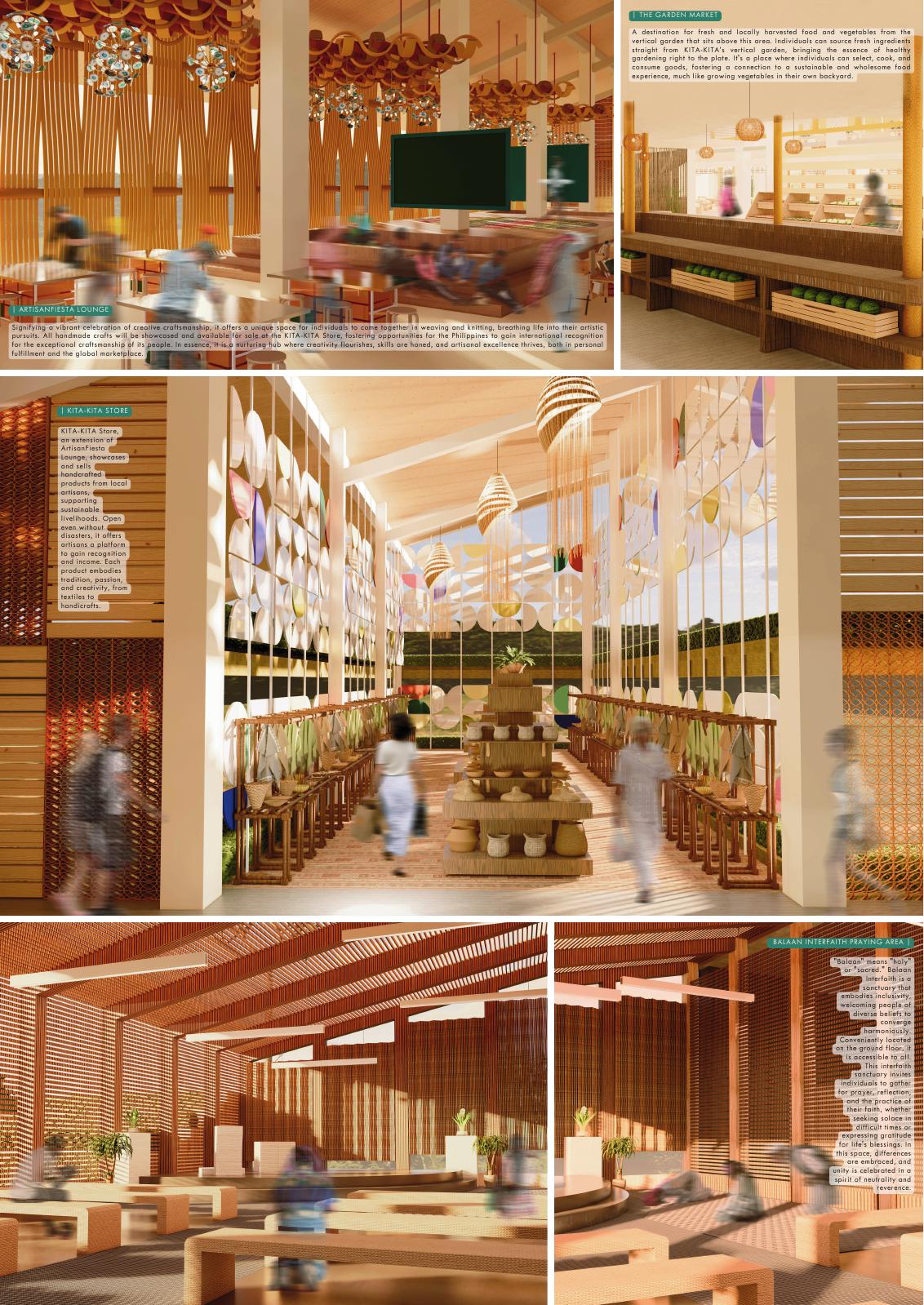
"KITA-KITA: Shaping Resilient Futures Together" stands as a guiding light, rekindling hope not just as a conventional evacuation center, but as a community center transforming disaster into resilience. Translating to "let us see each other," it embodies the hope of seeing everyone safe and secure after disasters. Across Asia and beyond, including the Philippines, diverse natural calamities such as typhoons, severe floods, and earthquakes pose significant challenges. In the aftermath of these events, KITA-KITA embraces the critical role of providing refuge in a community shelter where individuals from all walks of life converge, sharing empathy, compassion, commonalities, and differences. It is a space where the unity of diverse cultures and perspectives fosters a supportive environment, emphasizing the strength found in togetherness. KITA-KITA not only offers physical space but also emotional solace, helping individuals rebuild their lives & communities with renewed hope & resilience. By encouraging communal support & understanding, KITA-KITA transforms the experience of disaster recovery into a journey of collective healing & growth, ensuring that every person feels valued and heard in the process. It aims to create a community capable of facing future challenges with solidarity & hope.
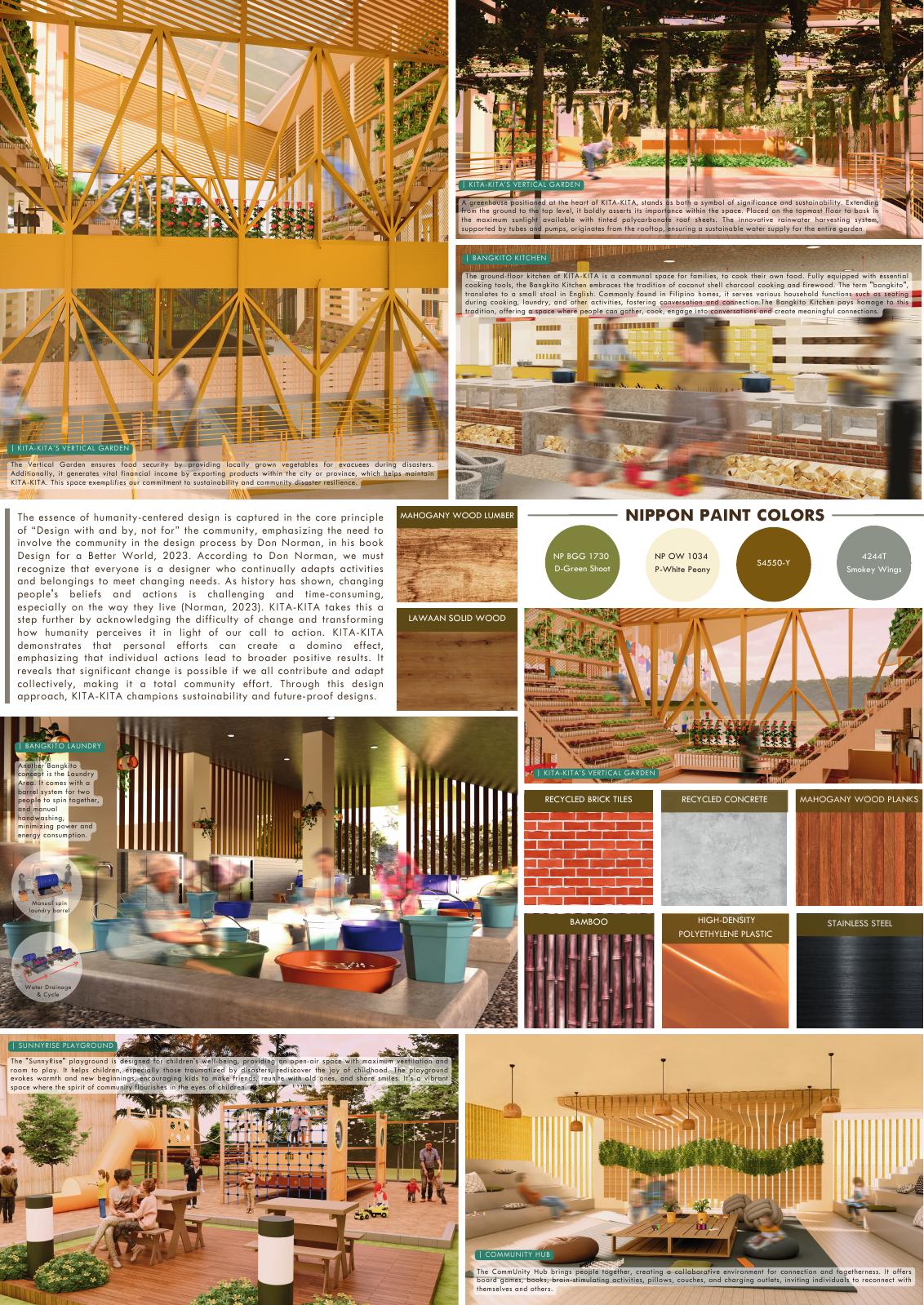
The essence of humanity-centered design is captured in the core principle of “Design with and by, not for” the community, emphasizing the need to involve the community in the design process by Don Norman, in his book Design for a Better World, 2023. According to Don Norman, we must recognize that everyone is a designer who continually adapts activities and belongings to meet changing needs. As history has shown, changing people's beliefs and actions is challenging and time-consuming, especially in the way they live (Norman, 2023). KITA-KITA takes this a step further by acknowledging the difficulty of change and transforming how humanity perceives it in light of our call to action. KITA-KITA demonstrates that personal efforts can create a domino effect, emphasizing that individual actions lead to broader positive results. It reveals that significant change is possible if we all contribute and adapt collectively, making it a total community effort. Through this design approach, KITA-KITA champions sustainability and future-proof designs.
KITA-KITA transforms visions into reality by promoting a unified and humanity-centered approach. It advocates for sustainability in materials, living, and the environment while adhering to the United Nations— Sustainable Development Goals (SDGs). With a commitment to function
without electricity, relying on manual operations, solar energy innovations, and a community workforce or “Bayanihan,” KITA-KITA embodies longevity and resilience. Its water and waste management systems, elevation above ground level, and farm pond demonstrate its commitment to promoting sustainability. Its interior spaces are all dedicated to dynamic solutions for developing collaboration, sharing vulnerability, and strengthening meaningful connections among its users.
KITA-KITA advocates for community unity and embodies Filipino values globally, addressing local and global challenges. It celebrates human disaster resilience in facing life's adversities, reminding us of our shared humanity. KITA-KITA symbolizes solidarity and hope, akin to the unwavering presence of the sun each day. It reflects the Filipino spirit of "bayanihan," showcasing the power of collective action. The phrase "KITA-KITA TA DIDTO" translates to “let us see each other there.” It encapsulates a positive message of reassurance and unity, promising to meet again in safety and togetherness. It signifies a shared commitment to support one another, reflecting the essence of community disaster resilience reminding us that together, we are stronger and can overcome any challenge.
As I journeyed to an answer, I found out that it is through purposeful and innovative designs that we truly grasp the transformative power that design holds in shaping our world. KITA-KITA inspires us to believe deeply in the potential for change when individuals, communities, and nations come together in unity. KITA-KITA encourages us to embrace a sense of collective responsibility, recognizing that our future is intertwined and that together, we can create a future that is more compassionate, sustainable, and disaster resilient for all.
REFERENCE
Norman, D. A. (2023). Design for a better world: Meaningful, Sustainable, Humanity Centered. MIT Press.




A One-stop-shop Government & Civic Center
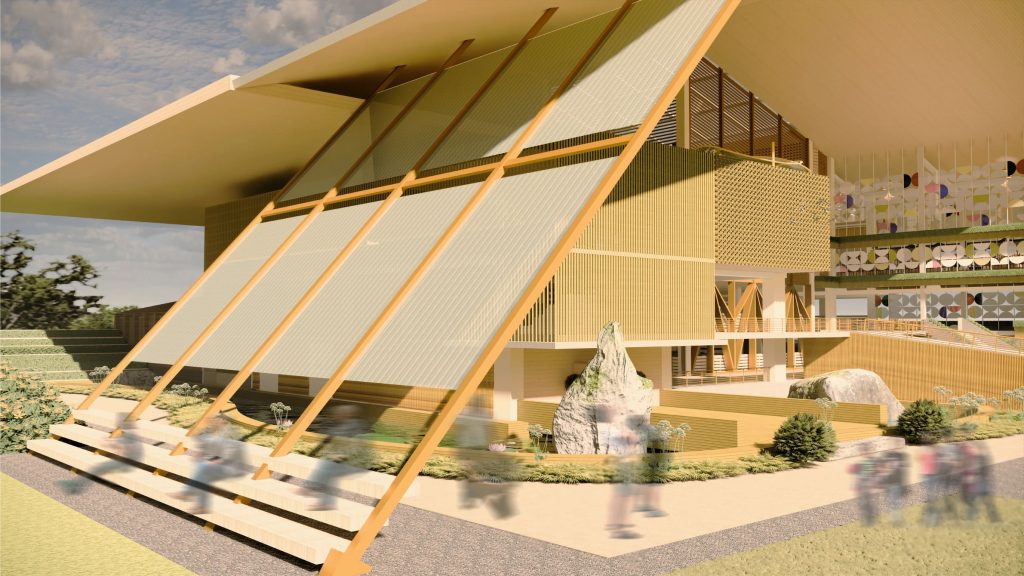
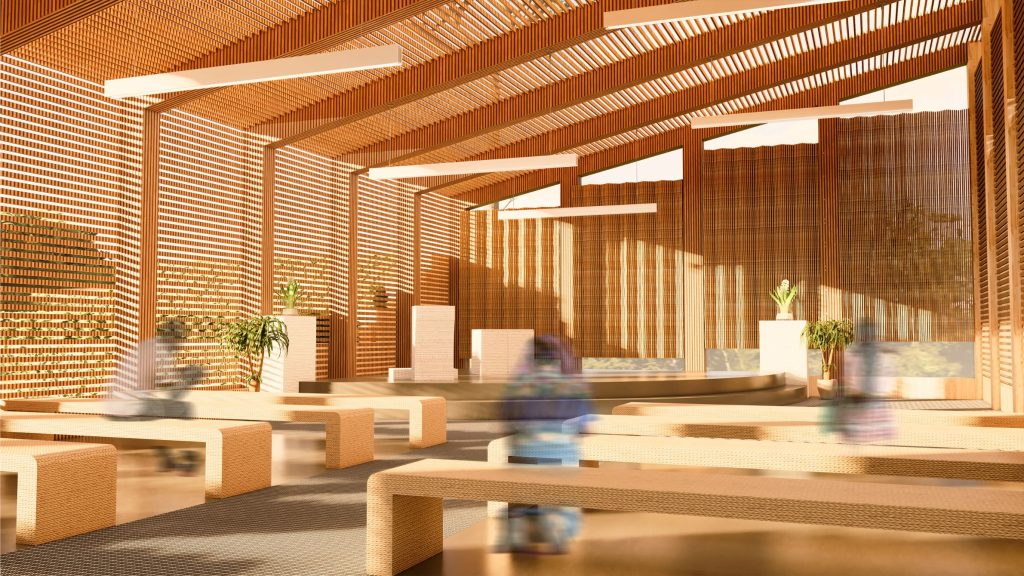
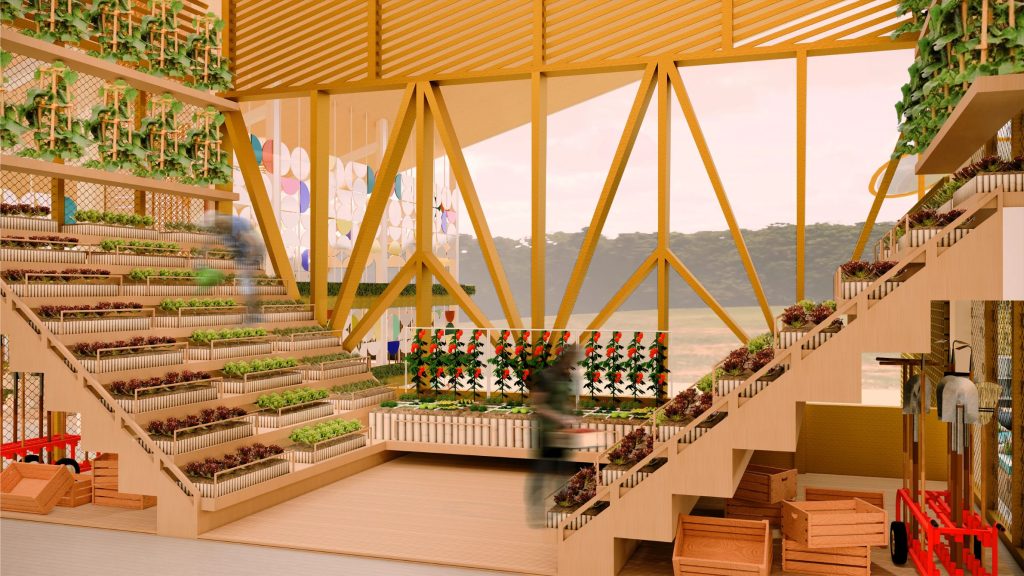
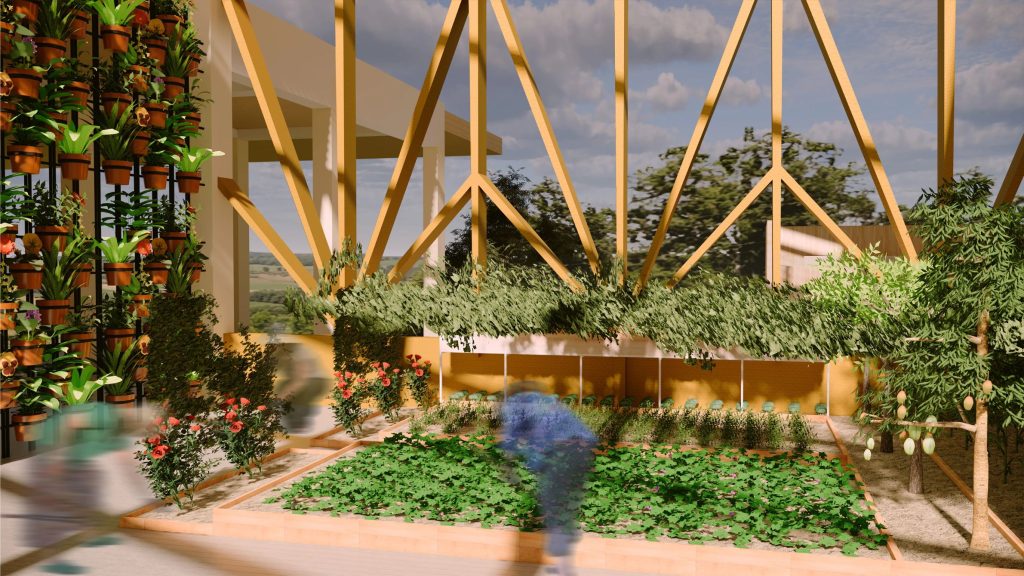
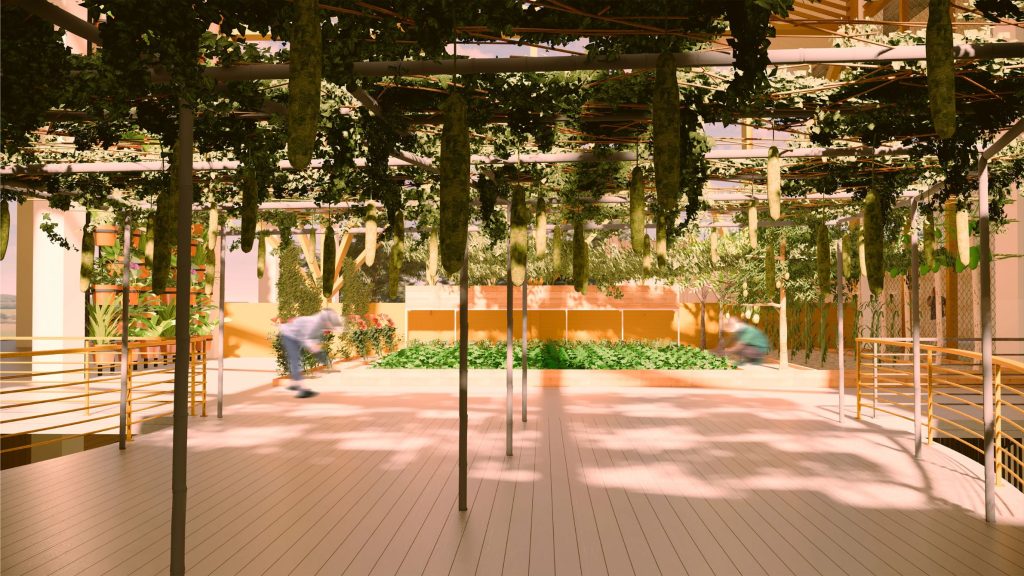
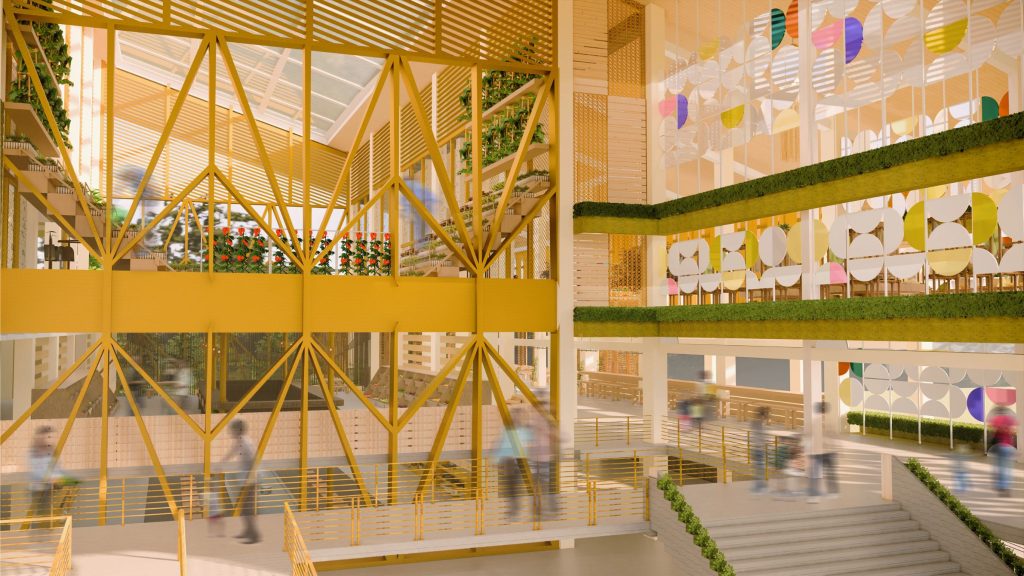
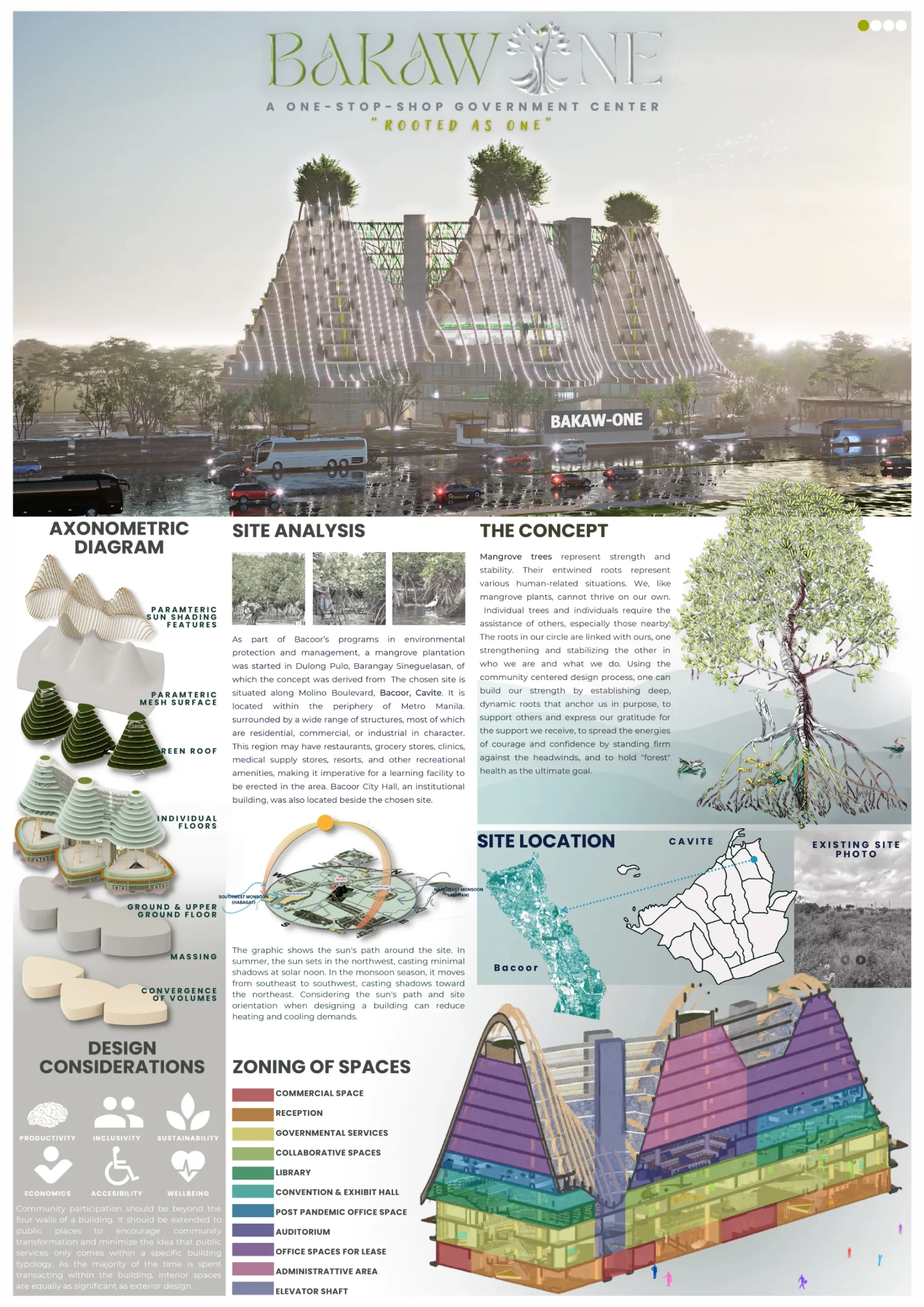
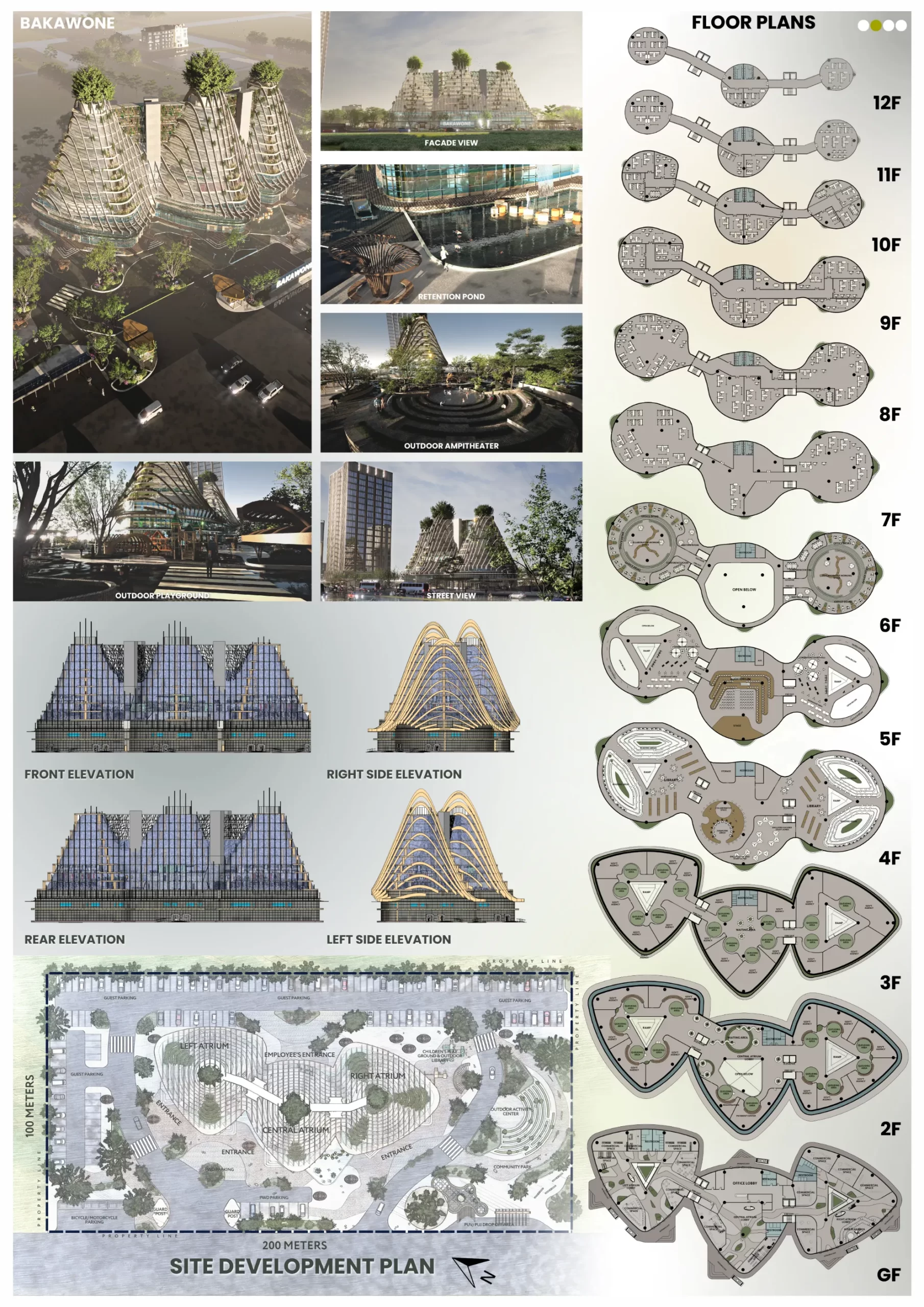
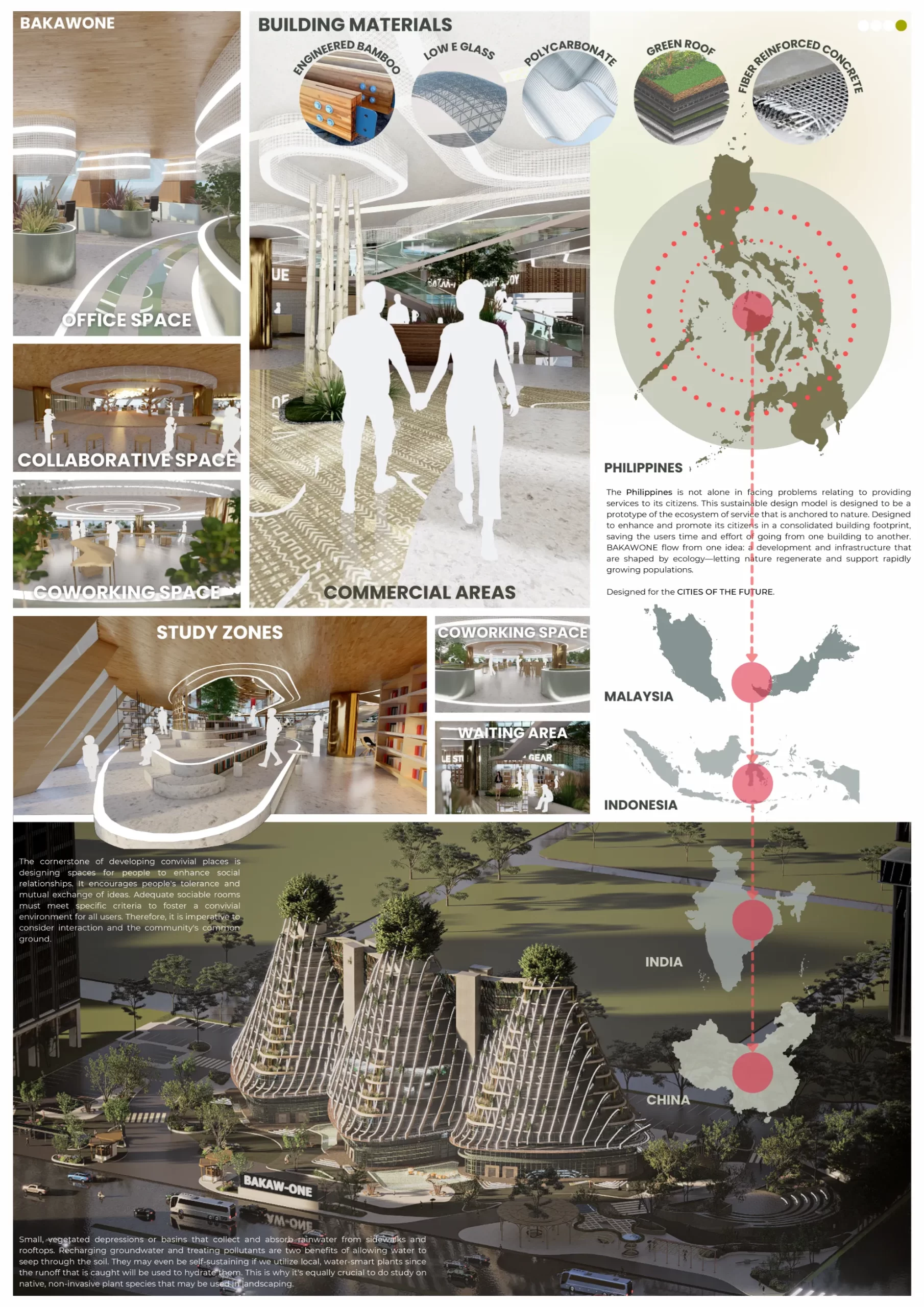
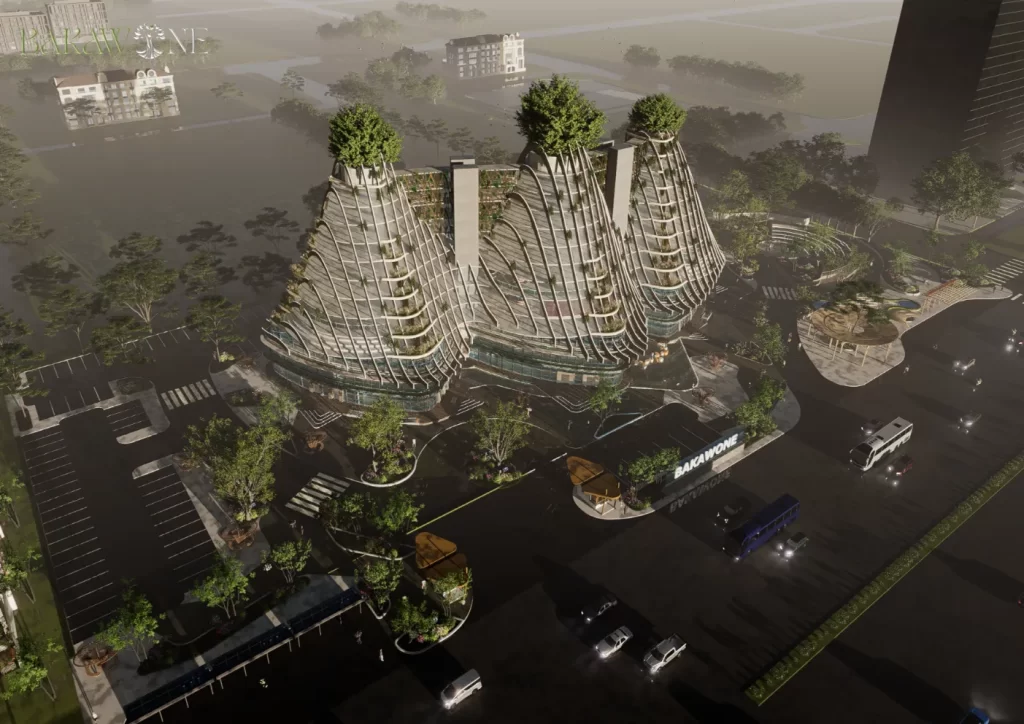
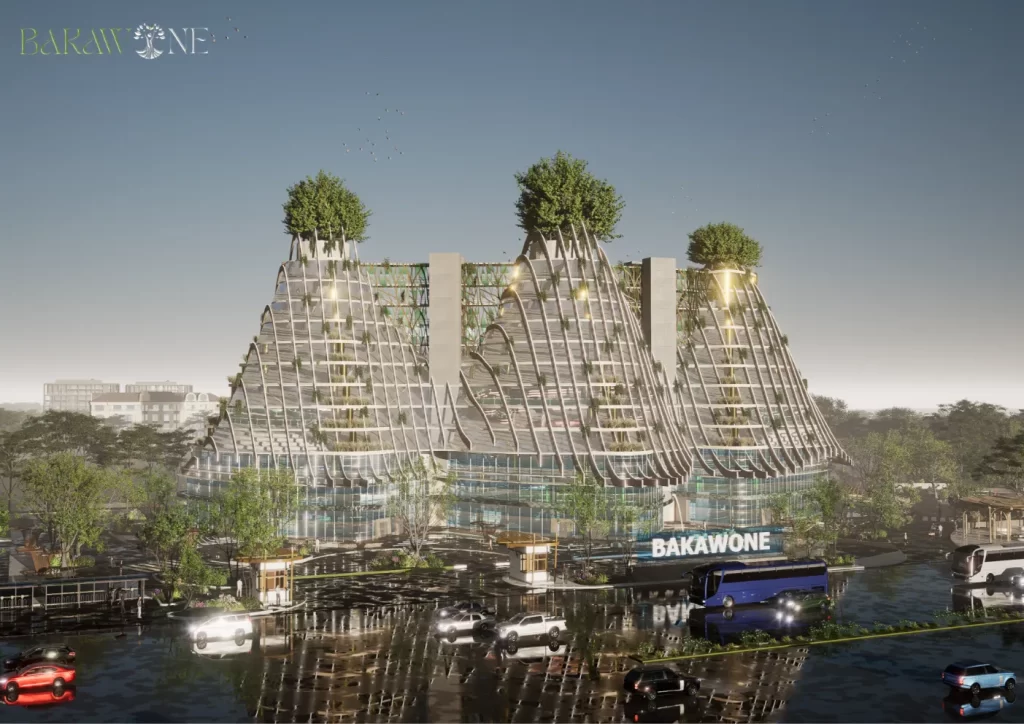
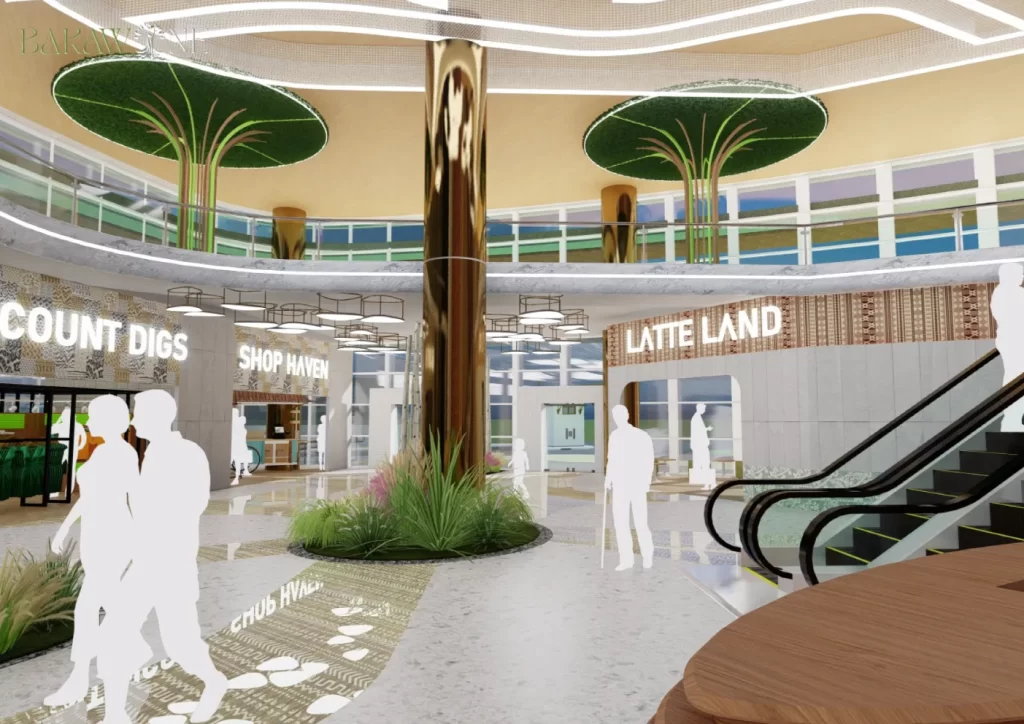
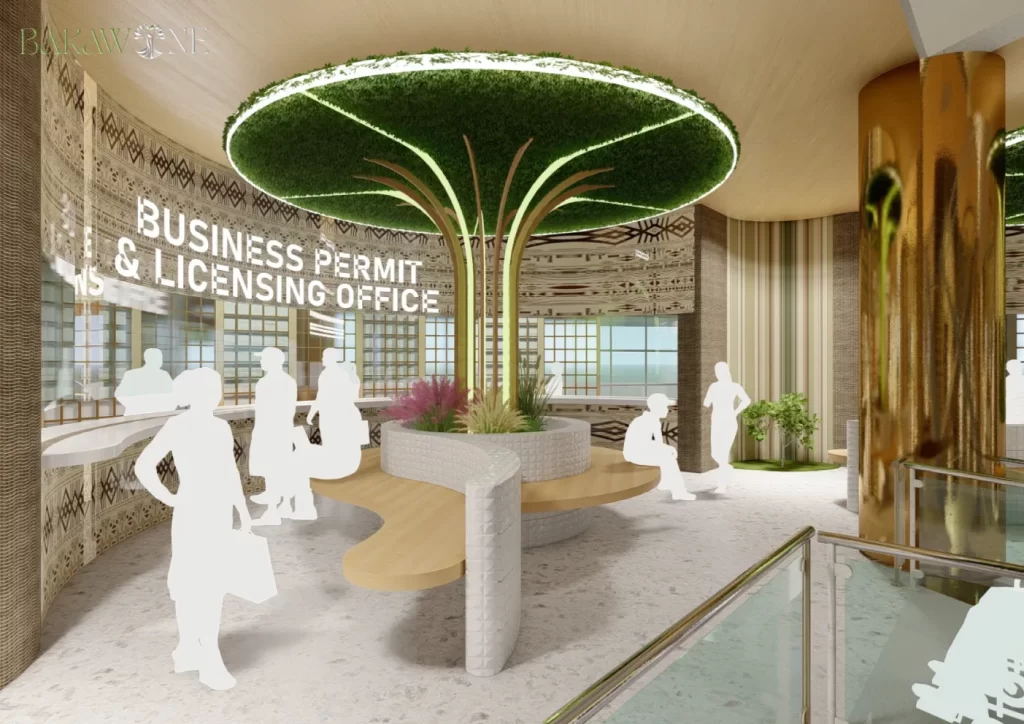
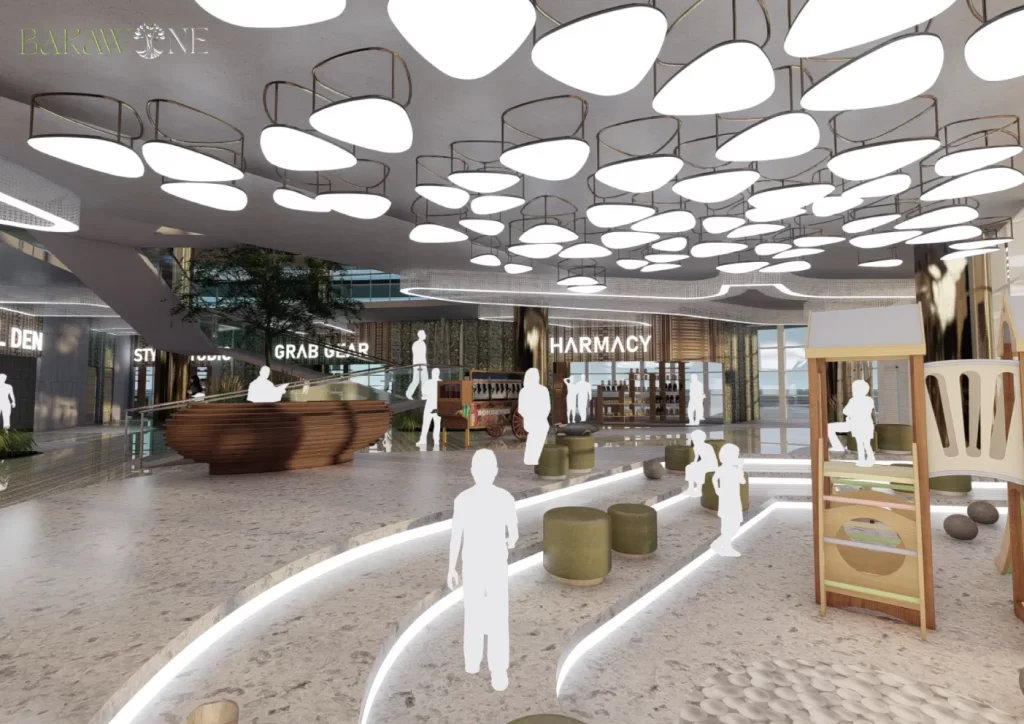
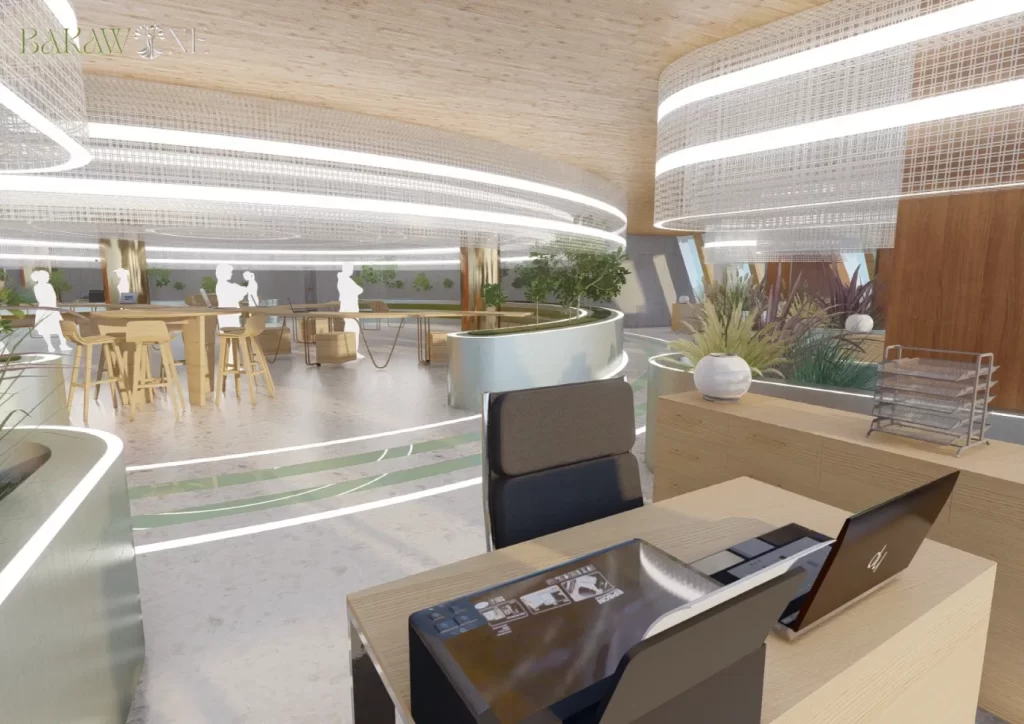
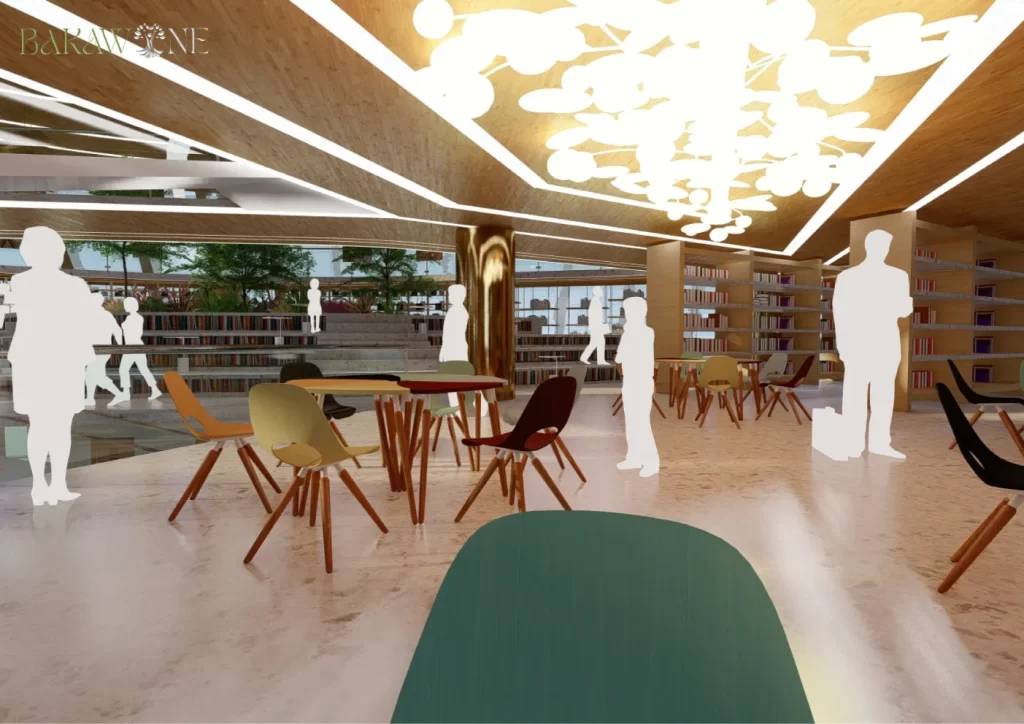
BAKAWONE is a one-stop-shop mixed-use building that aims to provide ease of access towards providing government services and public use necessities to the general mass. It aims to give Filipinos an identity leaning toward sustainability when it comes to producing spaces that are conducive to holistic development, productivity, and community-centred design. Inspired by mangroves, this building exhibits sustainable design strategies and spatial planning solutions that address post- pandemic design trends and the convergence of people in a given space. The structure acts metaphorically as purposeful as a mangrove tree. The building envelope mimics the mangrove tree as it shelters people of different diversity that CONVERGE in a given space, just as how biodiversity lives under a mangrove tree.
Oftentimes, we get amazed by how extravagant other countries’ public services are, as they prioritise well-being, sustainability, accessibility, and providing other basic necessities for the occupants of the building and the community as a whole. As for us, Filipino citizens still suffer from the lack of access to public service and experience difficulties in transacting for their basic needs since these spaces tend to be inaccessible or poorly zoned in the community. In these instances, Filipinos’ experience is a neglected issue which makes an imperative to amplify this demand and requires empathy and human considerations.
The Philippines is not alone in facing problems relating to providing services to its citizens. This sustainable design model is designed to be a prototype of the ecosystem of service that is anchored to nature. Designed to enhance and promote its citizens in a consolidated building footprint, saving the users time and effort of going from one building to another. BAKAWONE flow from one idea: a development and infrastructure that are shaped by ecology—letting nature regenerate and support rapidly growing populations. Designed for the CITIES OF THE FUTURE.
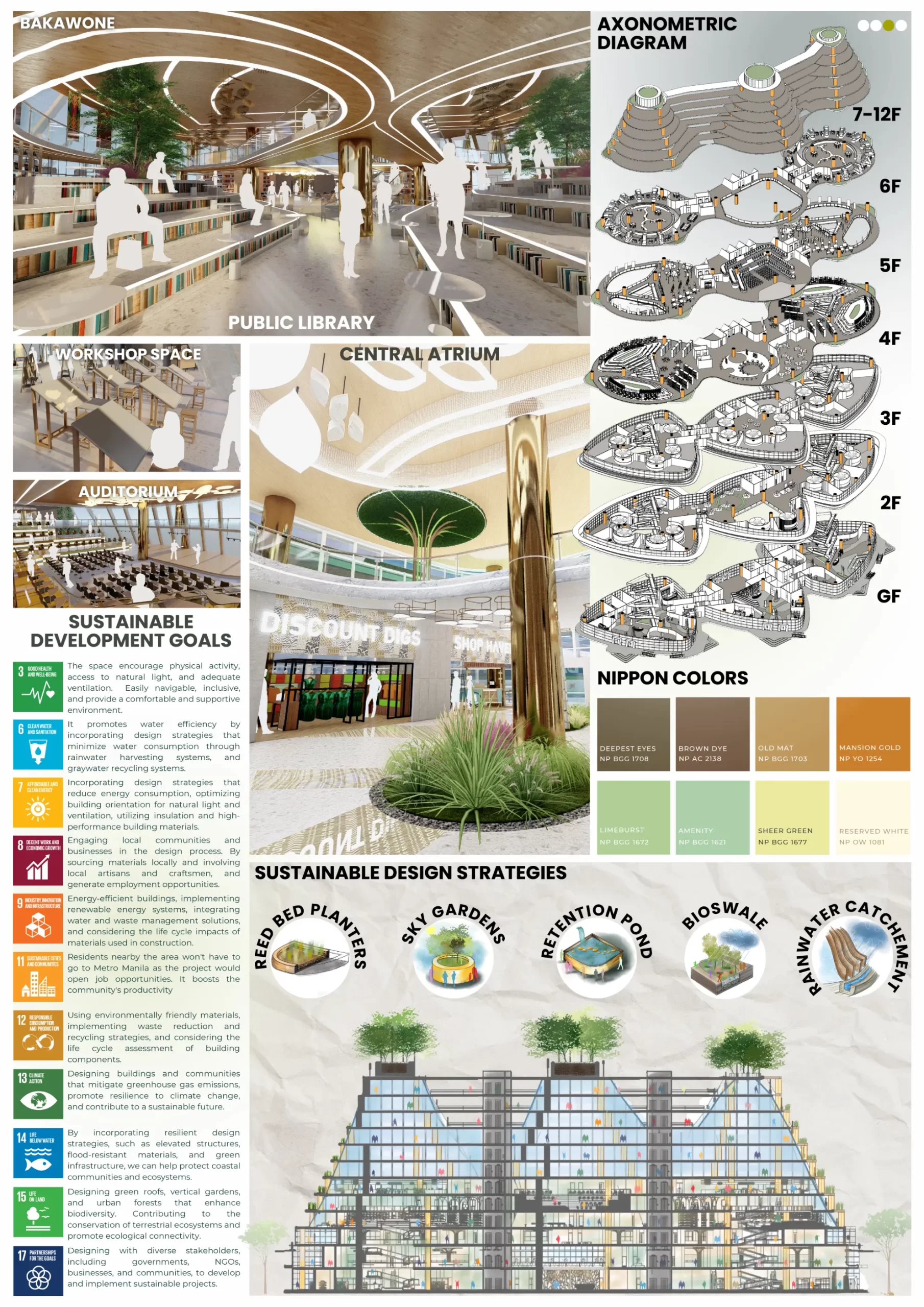
Aside from being essential to a growing economy, this mixed-use building design also features unique attributes that were integrated into a whole idea to further take a step towards something mammoth. It emphasises sustainability through a rainwater catchment system that directly goes into a retention pond in between the building towers that has undergone a process of filtration through its reed bed planters. This method would then produce a sustainable source of water since our tropical country experiences countless rainy kinds of weather. Applying this functionality would contribute to the clean water act and the conservation of water. Another feature of this structure is its vertical garden that was integrated into its modular structural system which would help the city to become greener and lessen the urban island heat effect.
The project shall incorporate sustainable development goals. Accessible quality services are essential for economic progress. This project creates interconnected agencies, eliminating the need for residents to visit multiple locations. It offers decent work and economic growth opportunities while promoting sustainability, entrepreneurship, and job creation through community partnerships. It aims to fit with the standards of every country's unique green building rating system so that future generations can enjoy the resources we savour today.
Overall, this project provides a tranquil, restorative space for the community to go forward with their needs. As they say, "Elements of natural beauty can often astound visually, but they are more inspiring when one considers the millions of complex details involved in their existence.“ Each important space was carefully placed to delineate essential functions so that it could operate as ONE effective space that generates a multitude of ideas and information transfer.
A significant conversation about how to protect, and how to EXPAND. It is not about us as leaders, designers, movers, or changemakers, but how we RESET the life of others. So that we can EMPOWER the story of people and make them feel that sense of reward that they truly deserve.



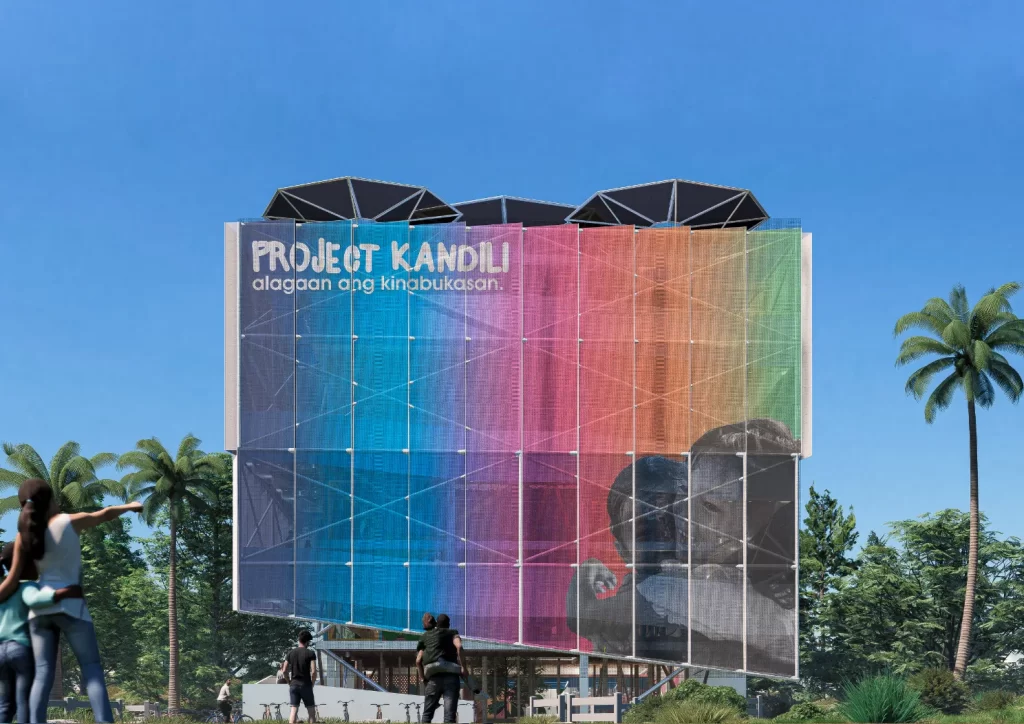
PROJECT KANDILI: TEMPORARY STRUCTURE, PERMANENT IMPACT
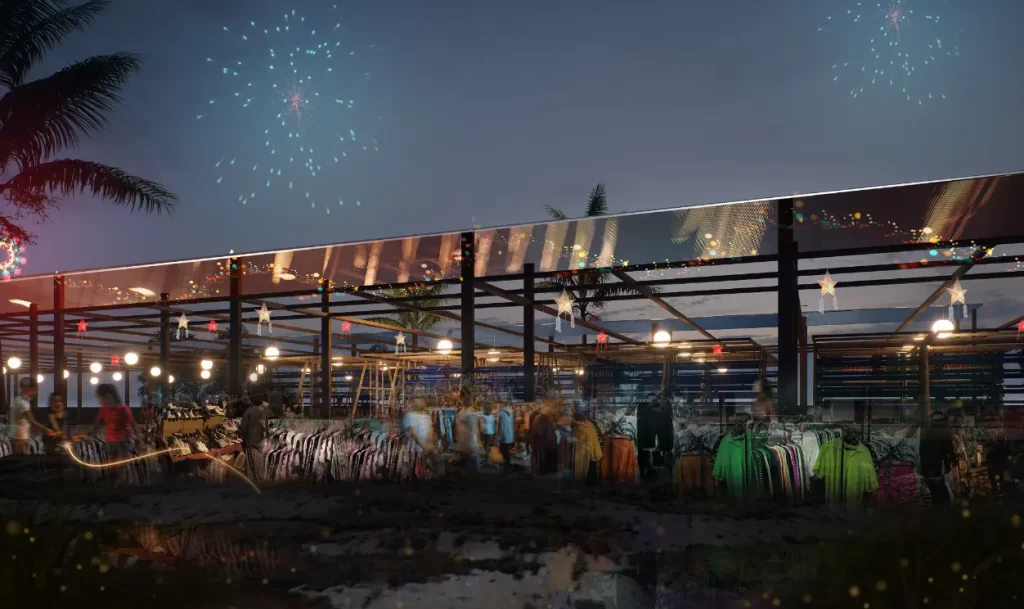
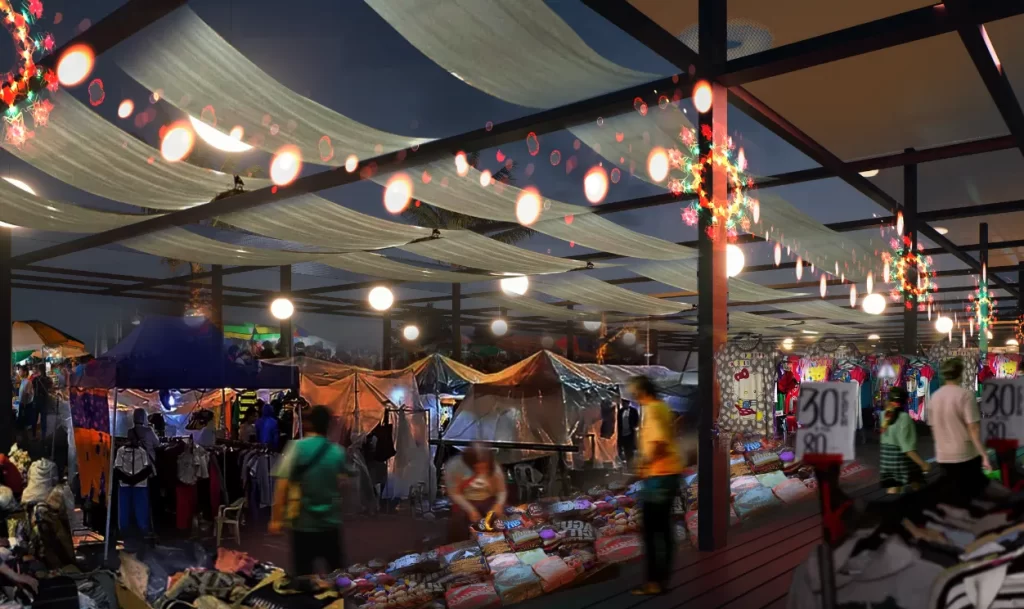
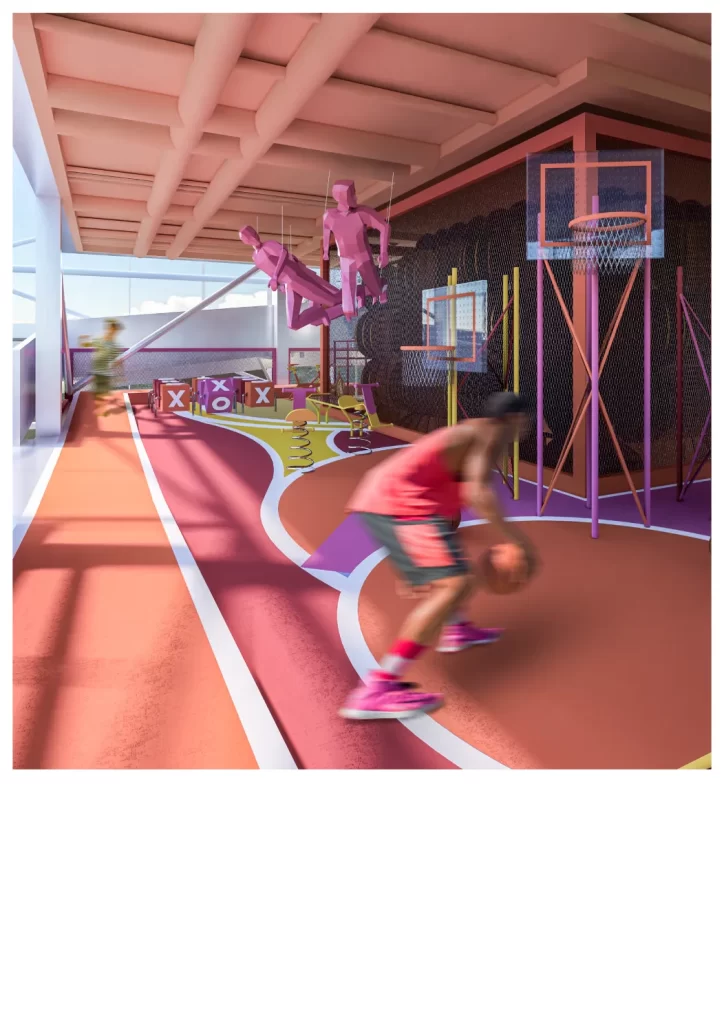
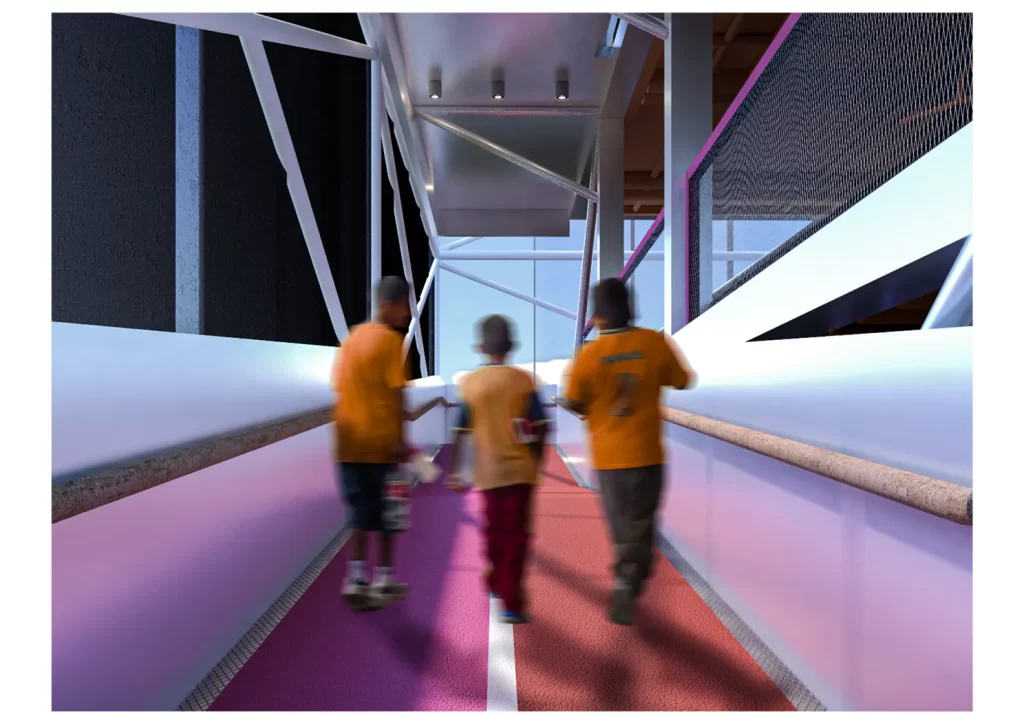
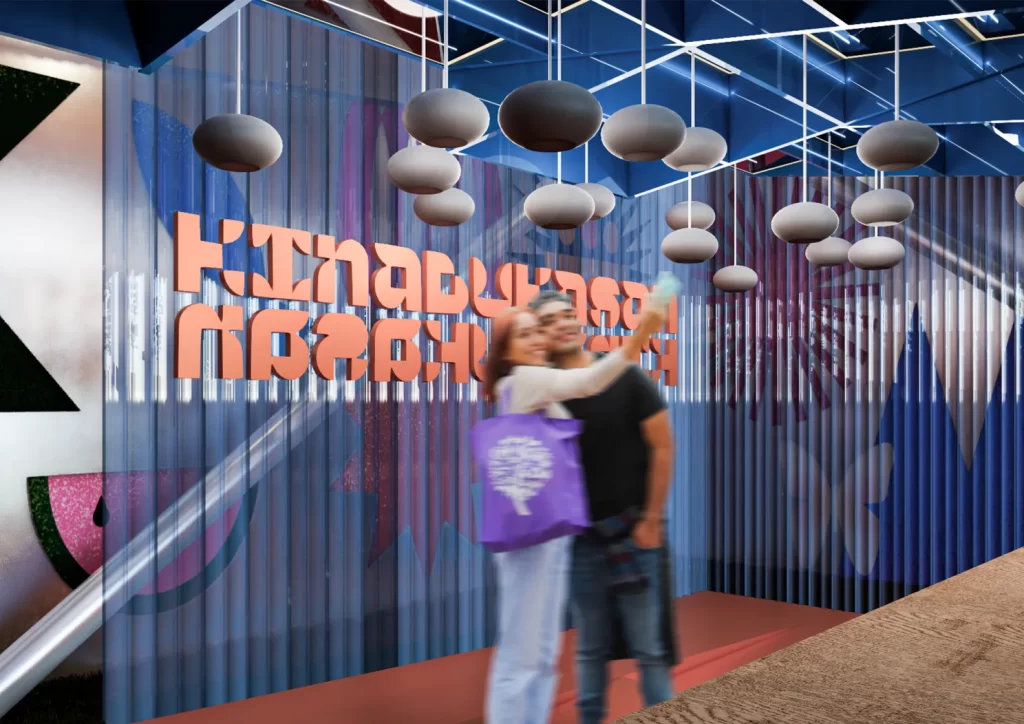
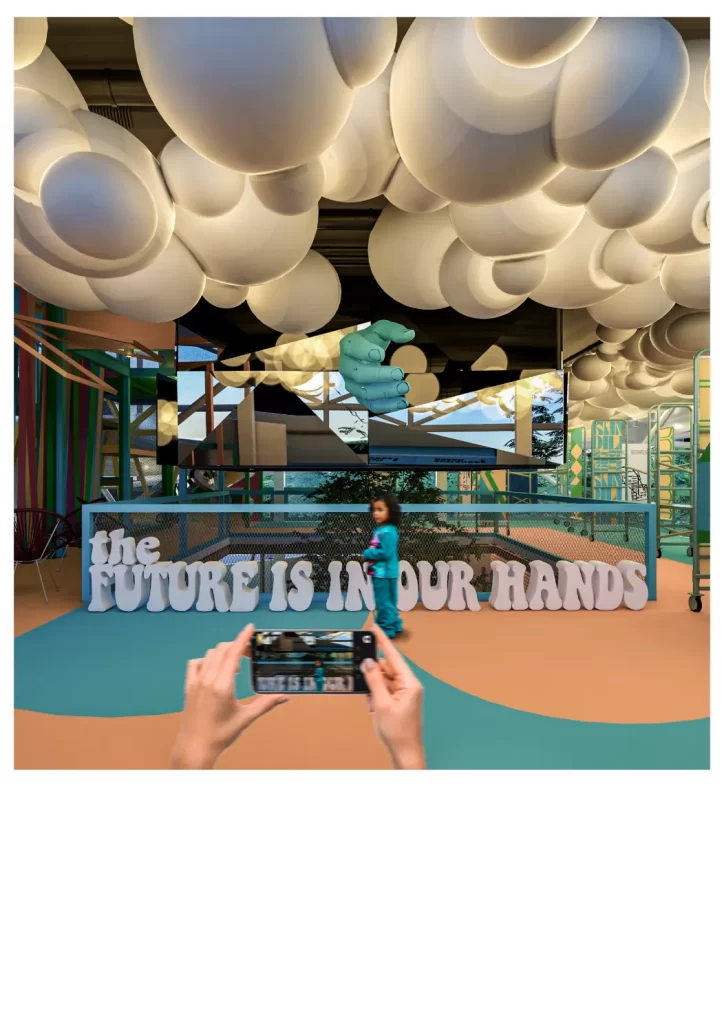
Project Kandili envisions a profound and transformative experience, weaving together the urgent call to address global warming and the resilient spirit of our inner children. In a world grappling with the consequences of climate change, we have crafted a temporary structure that not only offers a unique sanctuary but also sparks a collective movement towards sustainability, with Asia as our focal point.
Within this carefully designed and immersive space, every individual, regardless of background or belief, can embark on a journey of self-discovery, connection, and environmental stewardship. Project Kandili stands as a beacon of hope, fueling the dreams and aspirations of the youth who dare to believe in a brighter future.
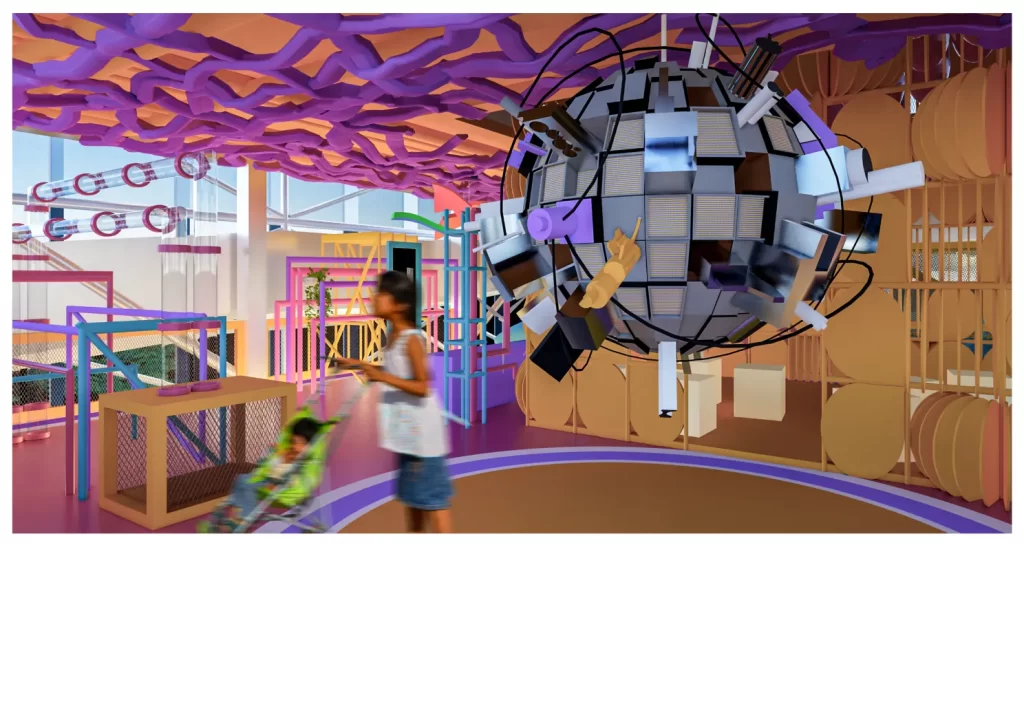
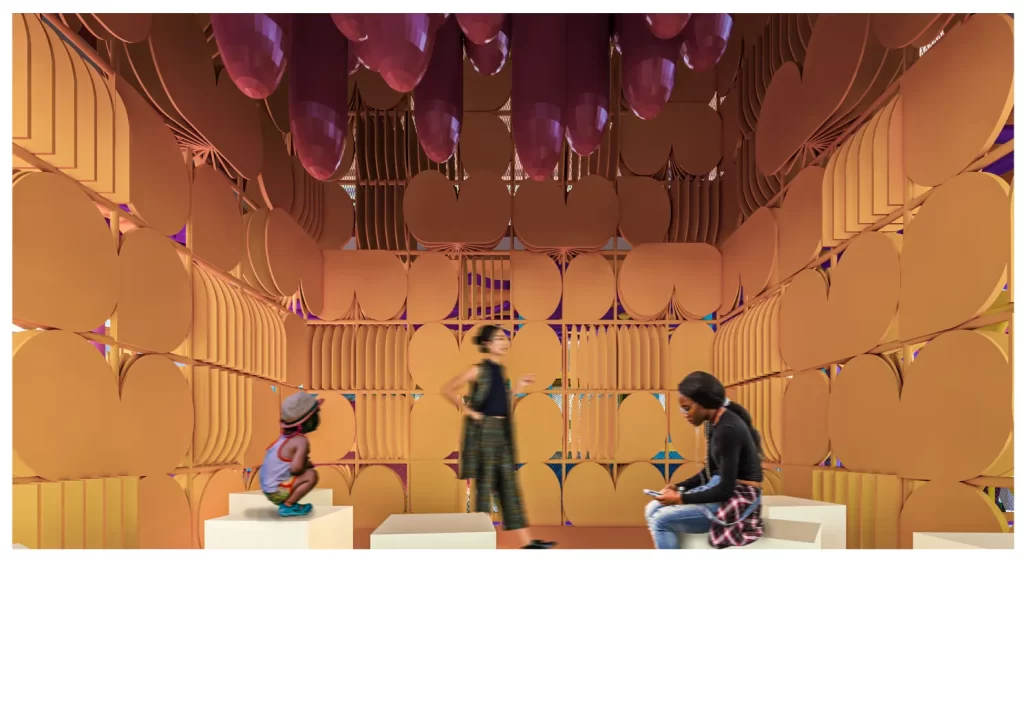
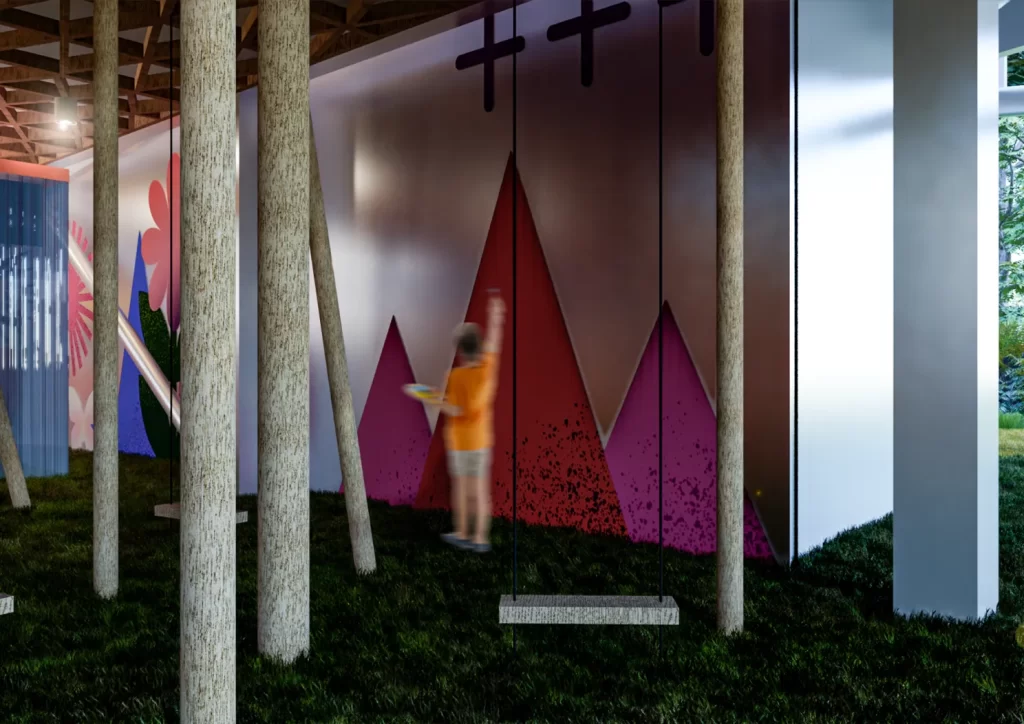
Venturing into the heart of this compact multi-sensory structure, visitors are embraced by an ambiance that stimulates curiosity, inspiration, and empathy. It becomes a sanctuary where they can witness their own dreams taking shape, as their imaginations intertwine with tangible solutions for a world in need. Here, technology becomes a catalyst for innovation, empowering those who have long been marginalised to create, learn, and contribute to a sustainable tomorrow.
Project Kandili transcends the limitations of traditional public spaces. It thrives as an inclusive haven, where physical and mental engagement blossoms without the burdens of cost or social status discrimination. As the Filipino people cherish their sense of community, this space becomes a vibrant tapestry of connection, where individuals converge, forge bonds, and collaborate in their shared commitment to overcoming the uncertainties that lie ahead.
Our dedication to the environment and the preservation of indigenous communities led us to design Project Kandili as a transient structure, unburdened by permanence. This mobility allows us to reach more communities, amplifying our advocacy and inspiring others to join the movement towards a better future. From the Philippines, our initiative spreads like ripples across Asia, fostering a united front against climate change and setting an example for the world to follow.
Project Kandili acts as a poignant reminder of the boundless joy and wonder of childhood. It beckons us to reclaim the awe-inspiring world we once knew, now threatened by rising temperatures and diminishing resources. In its expansive 20 x 20-metre embrace, we rally the Filipino people, Asia, and the world to unite in a resounding chorus, committed to transforming adversity into opportunity and safeguarding our planet for generations to come.
With Project Kandili as our guiding light, we embark on a transformative journey that transcends time and space. In this shared vision, we witness the convergence of innocence and unwavering belief, kindling a fire within us to shape a world that pulses with sustainability and vitality. With every step forward, we carry the weight of responsibility, knowing that the destiny of our planet rests firmly in our hands. The dreams of our inner children ignite the spark of inspiration that fuels our unwavering commitment to create lasting change. Together, bound by purpose and driven by passion, we forge a legacy that echoes through the annals of history—a testament to our collective power to breathe life into a future where harmony between humanity and nature reigns supreme.



The AYDA Awards is part of Nippon Paint’s vision to nurture the next generation of Architectural and Interior Design talents. It serves as a platform to inspire students of these disciplines to develop their skills through cross-learning.